Volume VII
Exercises: Side Turning Kick, Inward Blocks and Horizontal Strikes
Select an image to view it at full size.
35. Side Turning Kick (Yop Dollyo Chagi)
a. Side Stepping Kick Toward B
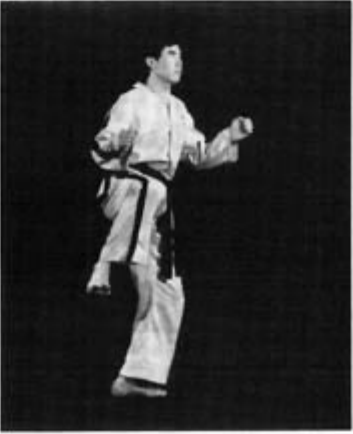
i. Execute a middle turning kick to B with the right foot, and then lower it to A, turning counter‑clockwise to form a ready posture toward D.
Side-stepping right turning kick
Exercise sequence and original captions, printed page 92
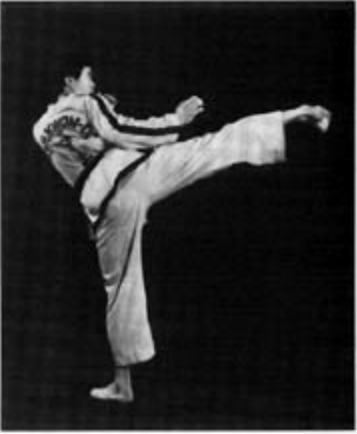
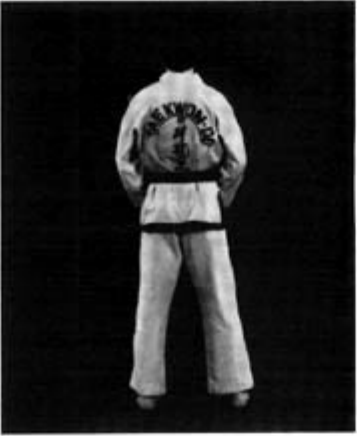
Side-stepping left turning kick
ii. Execute a middle turning kick to A with the left foot, and then lower it to B, turning clockwise to form a ready posture toward D.
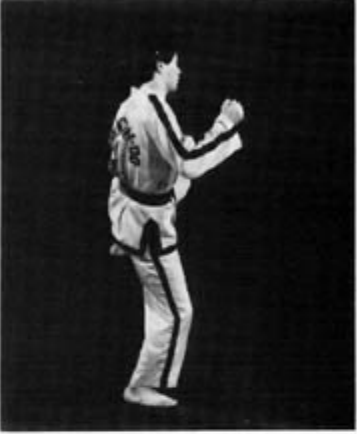
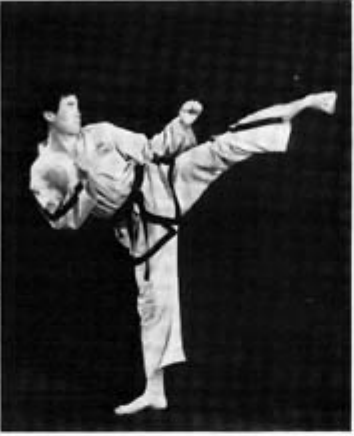
Application
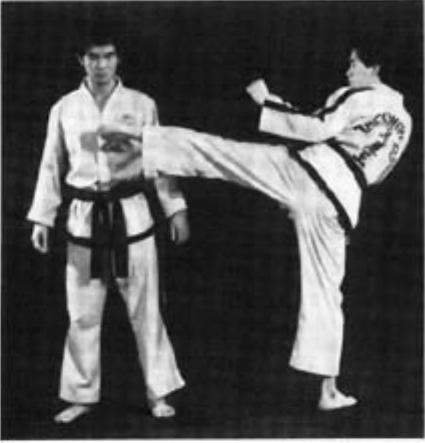
View original source illustration
Open original imageb. Forward Stepping Kick
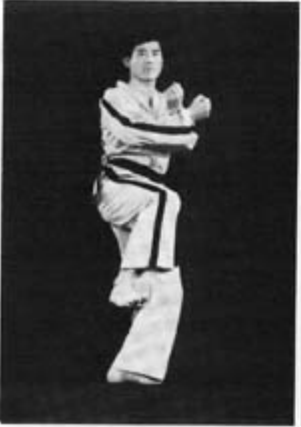
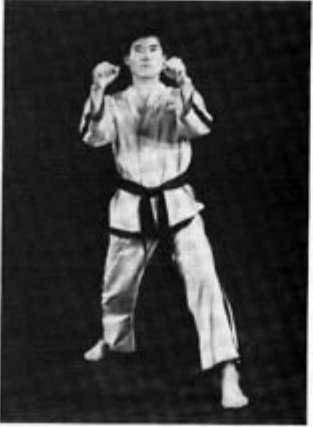
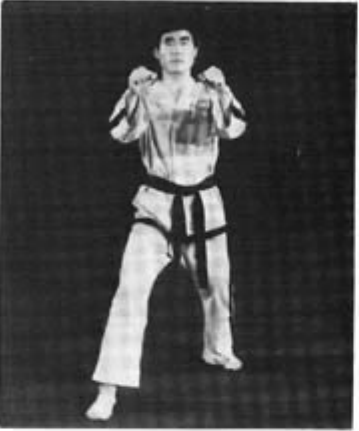
i. Execute a middle turning kick to D with the right foot, and then lower it to D, forming a right walking stance toward D while executing a wedging block to D with the outer forearm.
Forward right turning kick and wedging block
Exercise sequence and original captions, printed page 93
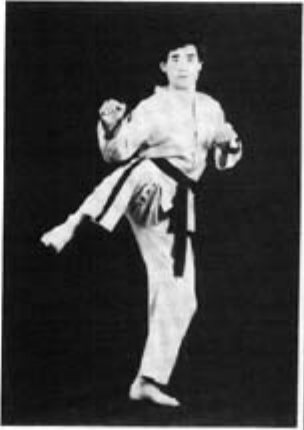
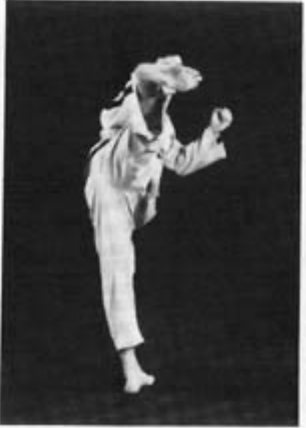
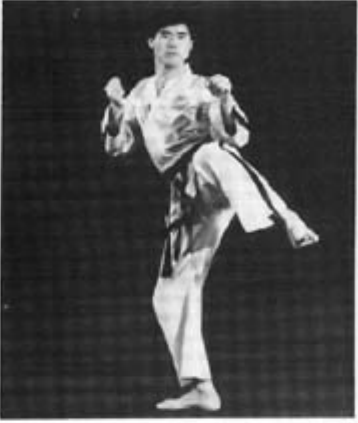
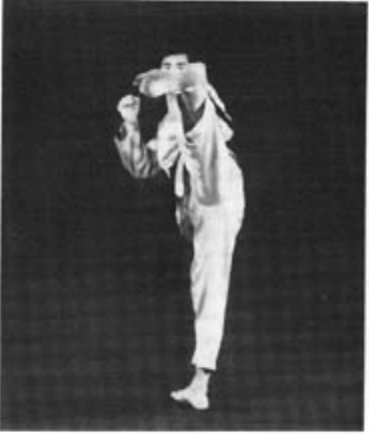
Forward left turning kick and wedging block
ii. Execute a middle turning kick to D with the left ball of the foot, and then lower it to D, forming a left walking stance toward D while executing a wedging block to D with the outer forearm.
View original source illustration
Open original image36. Rear Foot Stance Knife‑Hand Inward Block (Dwitbal So Sonkal Anuro Makgi)
a. Forward Stepping Block
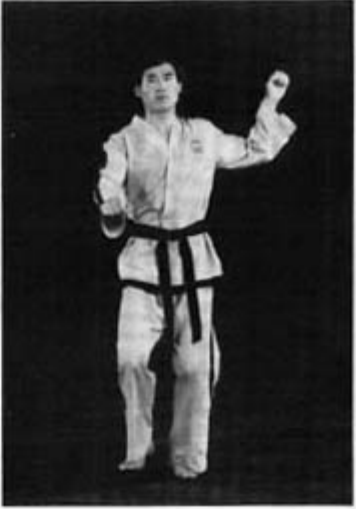
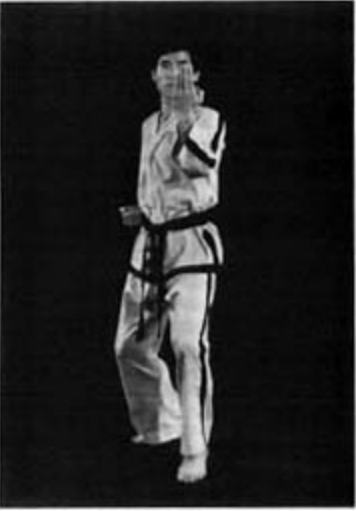
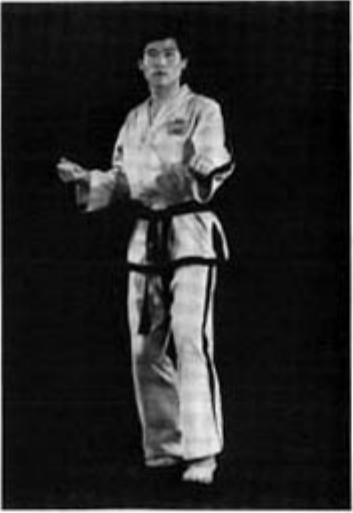
i. Move the left foot to D, forming a right rear foot stance toward D while blocking to D with the left knife‑hand, and then execute a downward punch with the right fist while forming a left walking stance toward D, slipping the left foot.
Forward left knife-hand block and right downward punch
1. At the start of blocking, keep the palm faced the opponent.
2. Keep the back fist full facing the opponent at the moment of block.
Exercise sequence and original captions, printed page 94
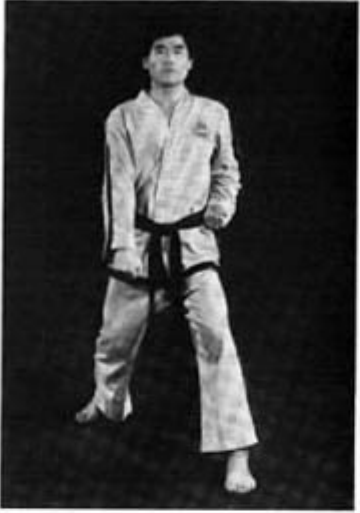
Opposite-side practice
ii. Move the right foot to D, forming a left rear foot stance toward D while blocking to D with the right knife‑hand, and then execute a downward punch with the left fist while forming a right walking stance toward D, slipping the right foot.
View original source illustration
Open original imageb. Backward Stepping Block
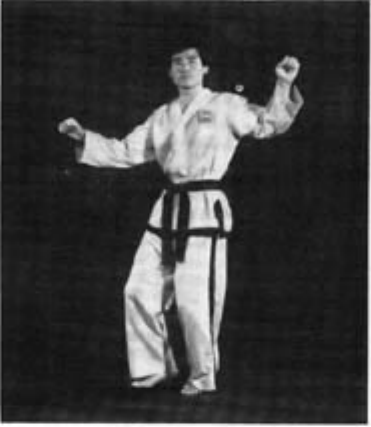
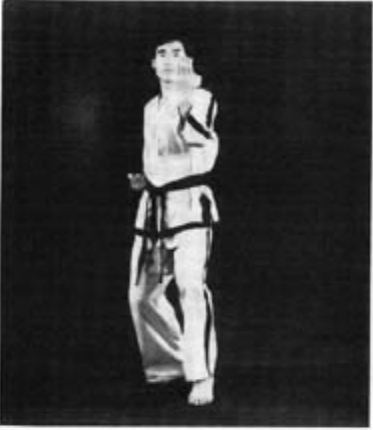
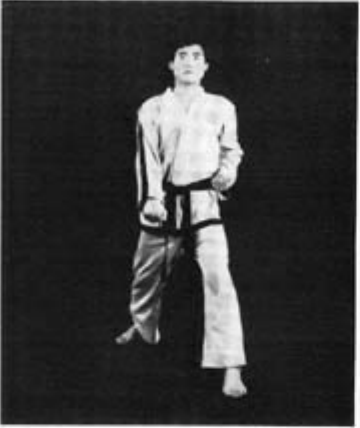
i. Move the left foot to C, forming a left rear foot stance toward D while blocking to D with the right knife‑hand, and then execute a downward punch with the left fist while forming a right walking stance toward D, slipping the left foot.
Backward right knife-hand block and left downward punch
Exercise sequence and original captions, printed page 95
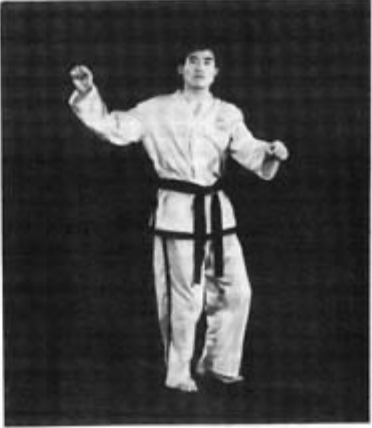
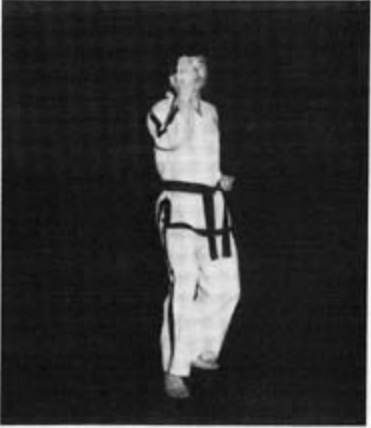
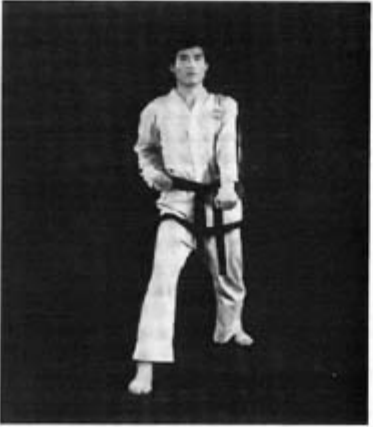
Backward left knife-hand block and right downward punch
ii. Move the right foot to C, forming a right rear foot stance toward D while blocking to D with the left knife‑hand, and then execute a downward punch with the right fist while forming a left walking stance toward D, slipping the right foot.
View original source illustration
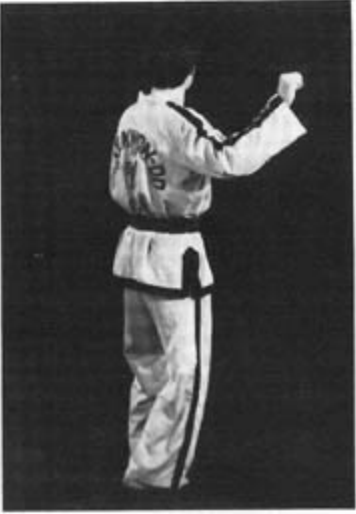
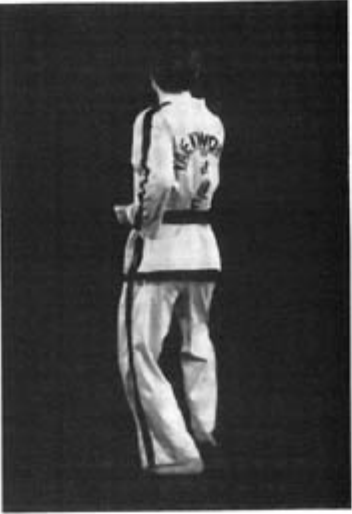
Open original imagec. Forward Double Step‑Turning
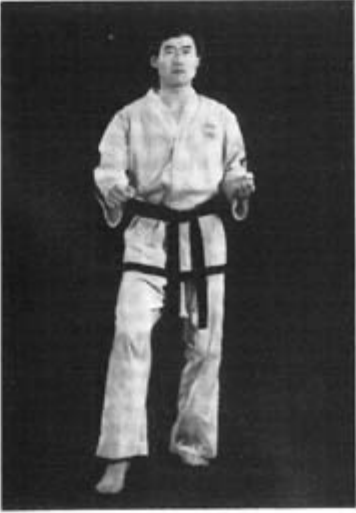
Move the right foot to D, and then turn counter‑clockwise, pivoting with the right foot to form a left rear foot stance toward C while blocking to C with the right knife‑hand.
Clockwise turning is not logical.
Counter-clockwise forward double-step turn
Exercise sequence and original captions, printed page 96
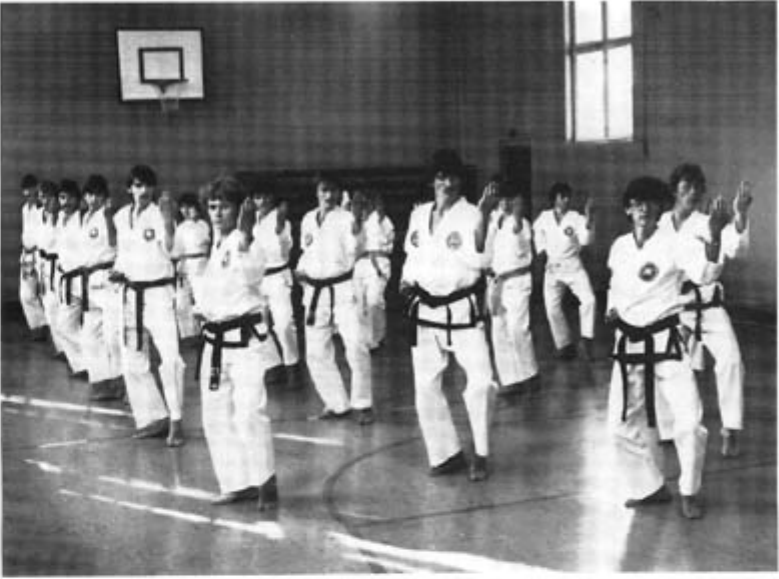
Group practice
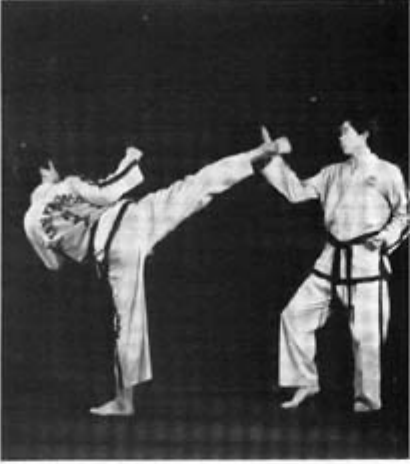
Application
View original source illustration
Open original image37. Rear Foot Stance Forearm Inward Block (Dwitbal So Palmok Anuro Makgi)
The method of blocking is the same as for a rear foot stance knife‑hand inward block.
Forward Stepping Block
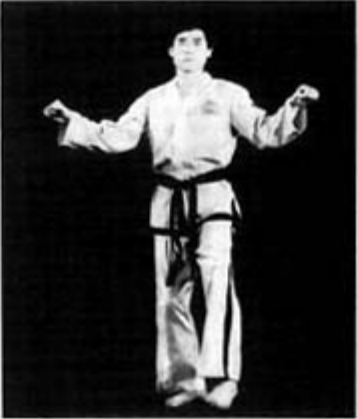
Right walking ready stance.
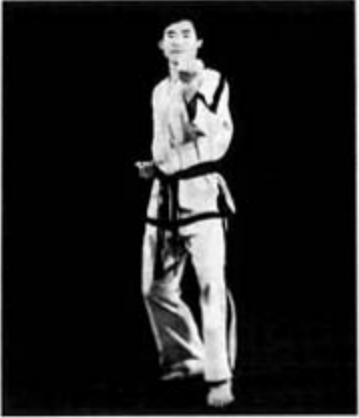
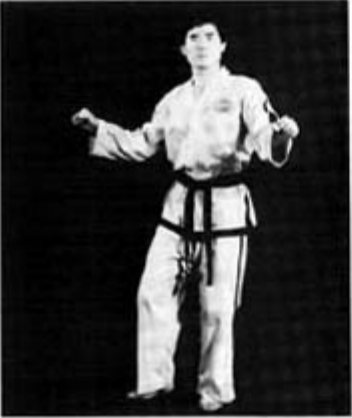
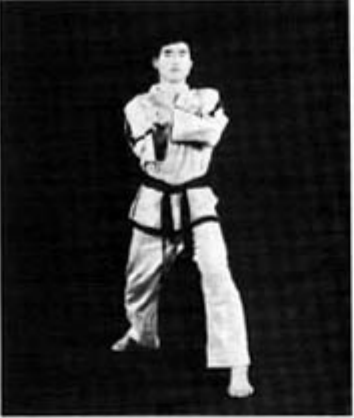
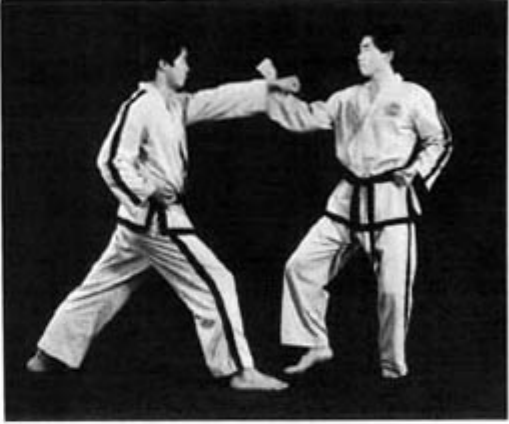
i. Move the left foot to D, forming a right rear foot stance toward D while blocking to D with the left forearm, and then execute an upset punch to D with the right middle knuckle fist while forming a left walking stance toward D, slipping the right foot.
Forward left forearm block and right upset punch
Exercise sequence and original captions, printed page 97
Opposite-side practice
ii. Move the right foot to D, forming a left rear foot stance toward D while blocking while the right forearm, and then execute an upset punch to D with the left middle knuckle fist while forming a left walking stance toward D, slipping the left foot.
Application
View original source illustration
Open original image38. L‑Stance Palm Inward Block (Niunja So Sonbadak Anuro Makgi)
a. Forward Stepping Block
Left L-ready stance.
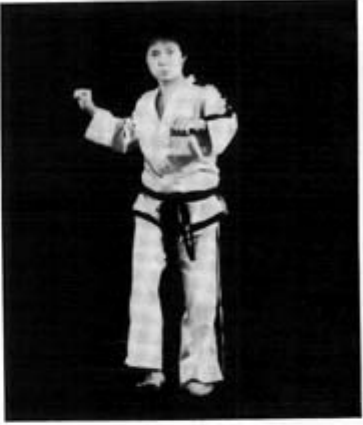
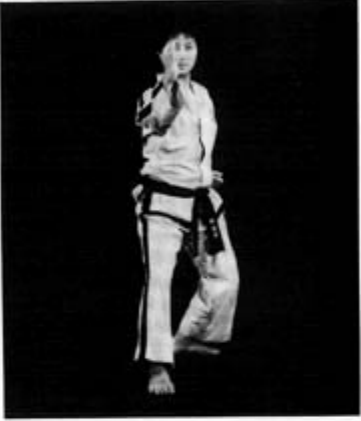
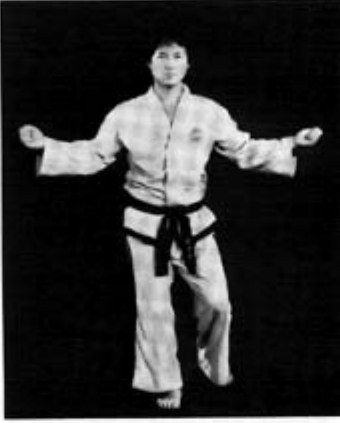
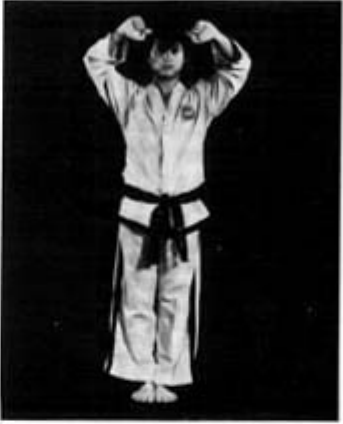
i. Move the left foot to D to form a right L‑stance toward D while blocking to D with the left palm, and then bring the right foot to the left foot, forming a close stance toward D while executing a high crescent punch with a twin fore‑knuckle fist.
Forward left palm block and twin crescent punch
Exercise sequence and original captions, printed page 98
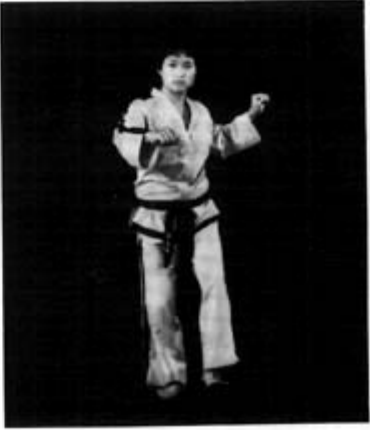
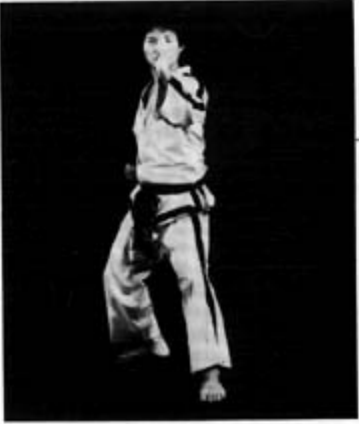
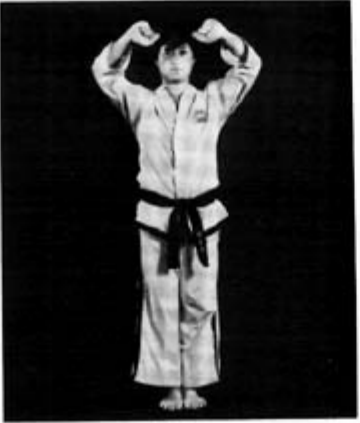
Forward right palm block and twin crescent punch
ii. Move the right foot to D, forming a left L‑stance toward D while blocking to D with the right palm, and then bring the left foot to the right foot to form a close stance toward D while executing a high crescent punch with a twin fore‑knuckle fist.
View original source illustration
Open original imageb. Backward Stepping Block
i. Move the right foot to C, forming a right L‑stance toward D while blocking to D with the left palm, and then bring the left foot to the right foot to form a close stance toward D while executing a high crescent punch with a twin fore‑knuckle fist.
Backward right palm block and twin crescent punch
ii. Move the left foot to C, forming a left L‑stance toward D while blocking to D with the right palm, and then bring the right foot to the left foot to form a close stance toward D while executing a high crescent punch with a twin fore‑knuckle fist.
Exercise sequence and original captions, printed page 99
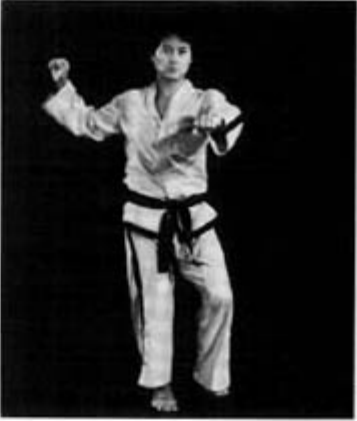
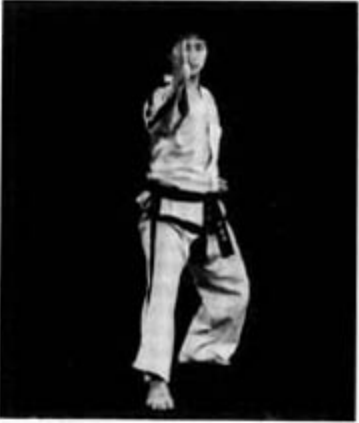
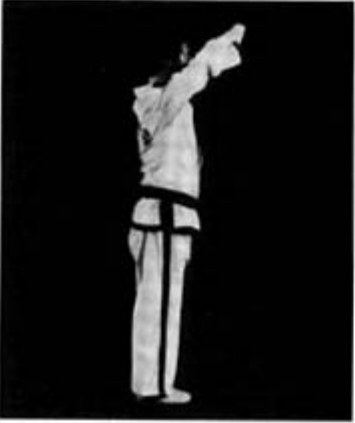
Fixed-stance variation
Both the method and procedure of exercise for a fixed stance palm inward block are the same.
Rear-foot-stance application
Rear foot stance palm inward block can be exercised in the same way.
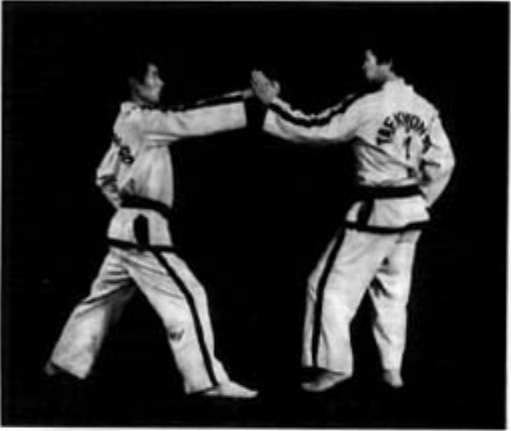
View original source illustration
Open original image39. Walking Stance Knife‑Hand Obverse Front Strike (Gunnun So Sonkal Baro Ap Taerigi)
Forward Stepping Strike
Left walking ready stance.
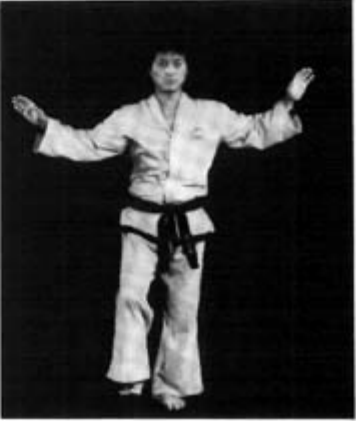
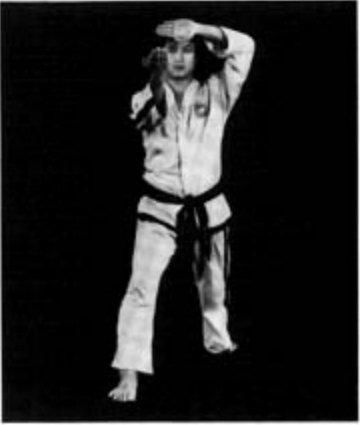
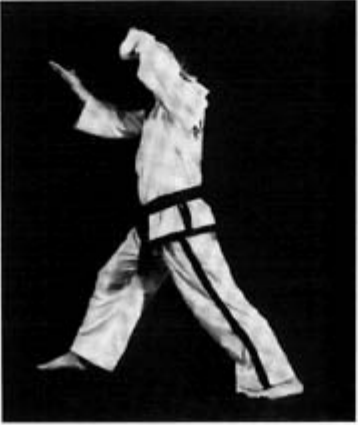
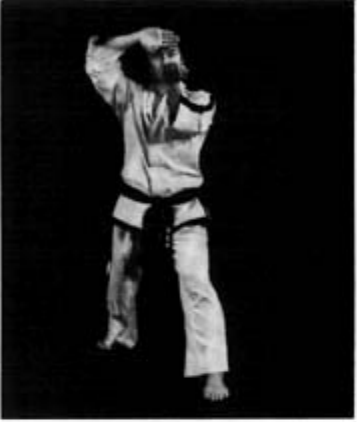
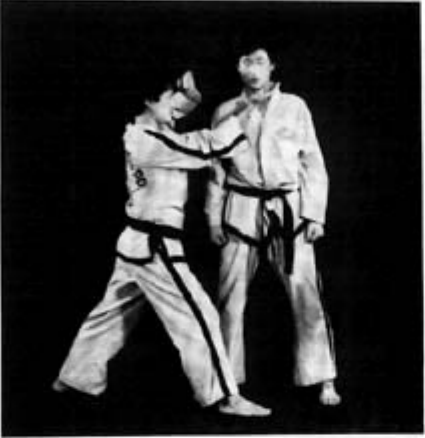
i. Move the right foot to D, forming a right walking stance toward D while striking to D with the right knife‑hand, bringing the left back hand in front of the forehead.
Forward right knife-hand front strike
Exercise sequence and original captions, printed page 100
Side view
Side View.
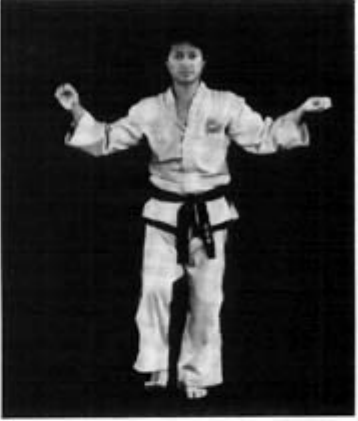
Forward left knife-hand front strike
ii. Move the left foot to D, forming a left walking stance toward D while striking to D with the left knife‑hand, bringing the right back hand in front of the forehead.
Application
View original source illustration
Open original image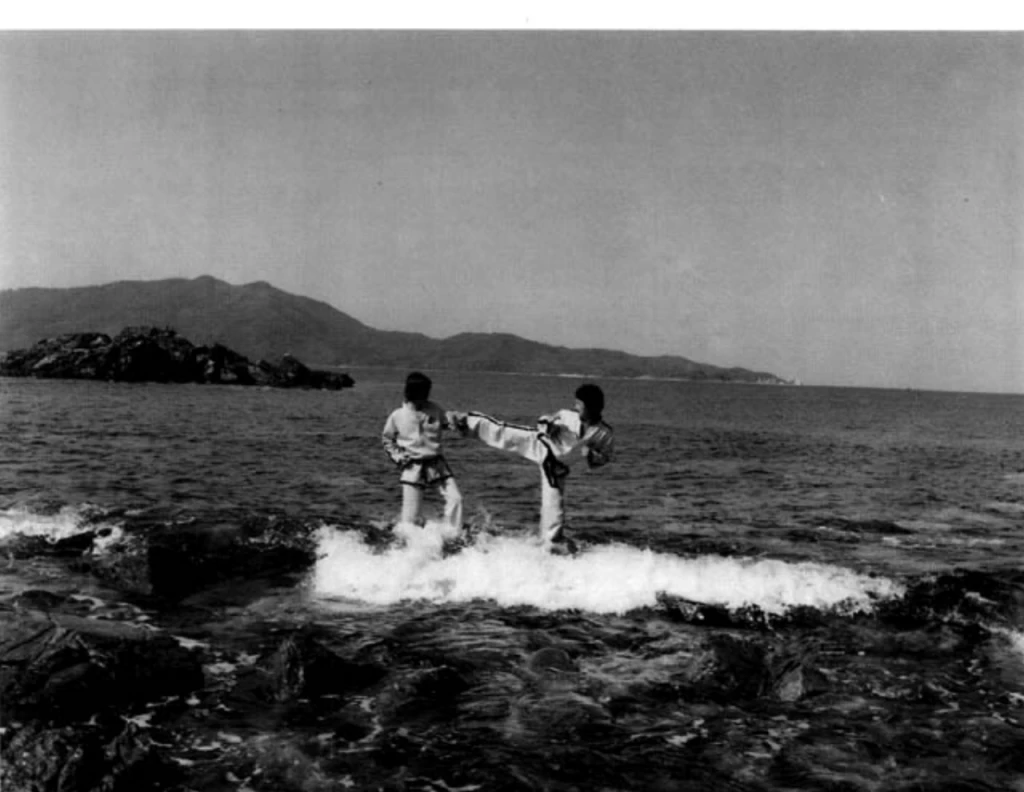
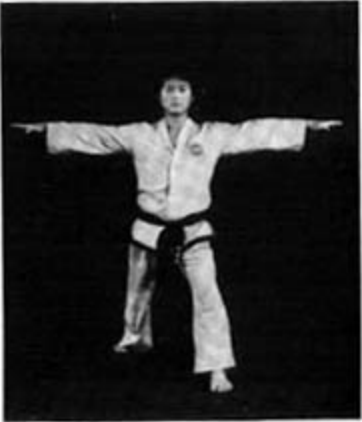
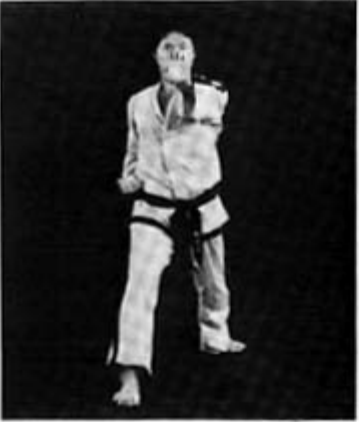
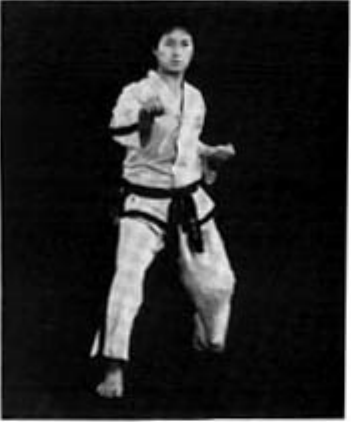
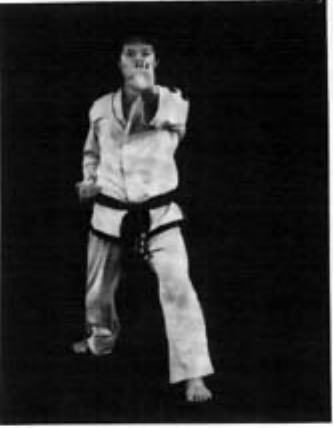
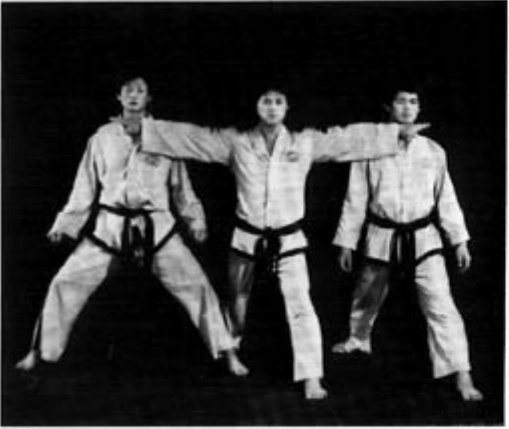
40. Walking Stance Twin Knife‑Hand Horizontal Strike (Gunnun So Sang Sonkal Soopyong Taerigi)
a. Forward Stepping Strike
i. Move the right foot to D, forming a right walking stance toward D while striking, and then punch to D with the left open fist, maintaining the same stance toward D.
ii. Move the left foot to D to form a left walking stance toward D while striking, and then punch to D with the right open fist, maintaining the same stance toward D.
Forward twin knife-hand strike and open-fist punch
Exercise sequence and original captions, printed page 102
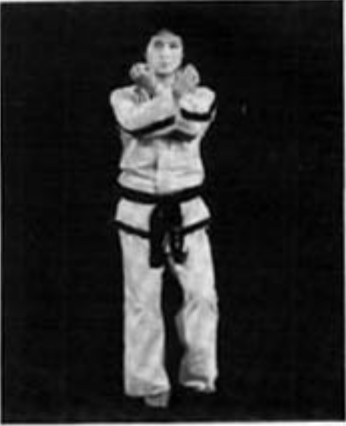
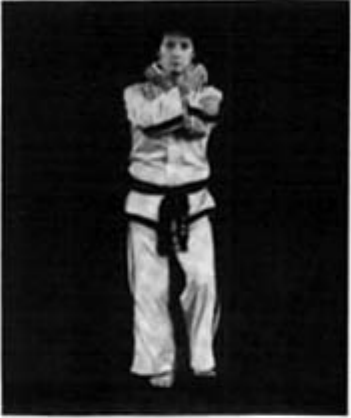
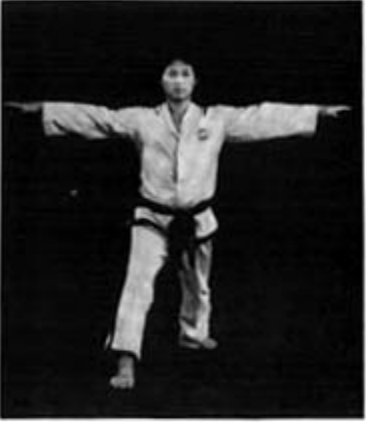
Backward twin knife-hand strike and open-fist punch
b. Backward Stepping Strike
i. Move the left foot to C, forming a right walking stance toward D while striking, and then punch to D with the left open fist, maintaining the same stance toward D.
View original source illustration
Open original imageii. Move the right foot to C to form a left walking stance toward D while striking, and then punch to D with the right open fist, maintaining the same stance toward D.
Backward double-step turn: direction comparison
c. Backward Double Step‑Turning
Move the left foot to C, and then turn clockwise or counter‑clockwise, pivoting with the left foot to form a right walking stance toward C while striking.
Counter‑clockwise. Clockwise. Top View.
Exercise sequence and original captions, printed page 103
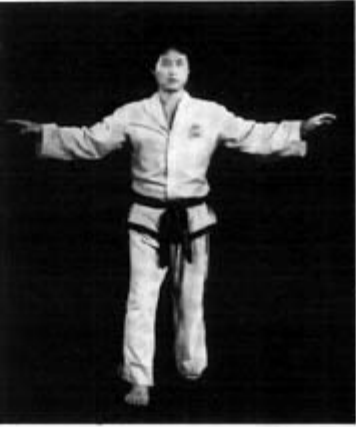
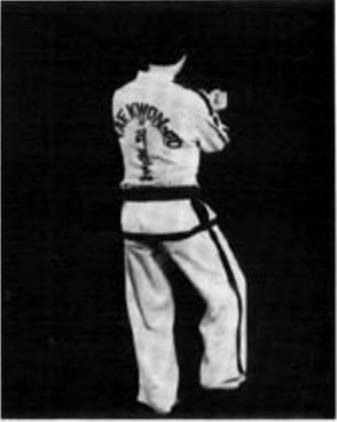
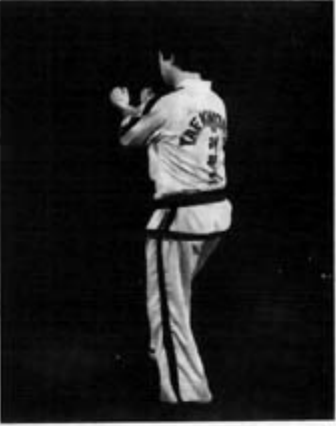
Application: top view
View original source illustration
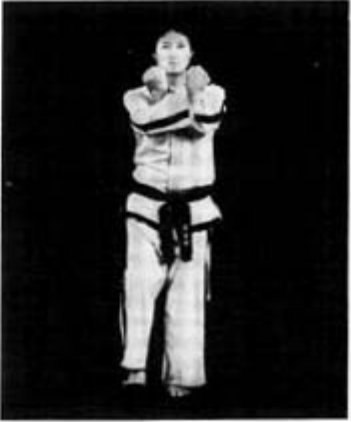
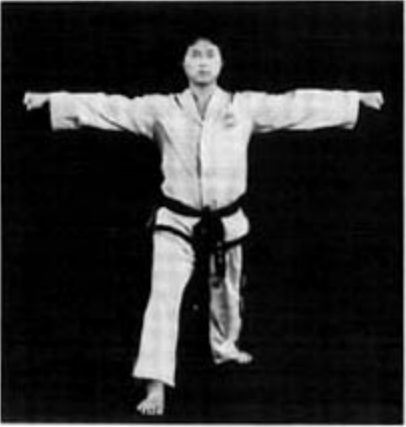
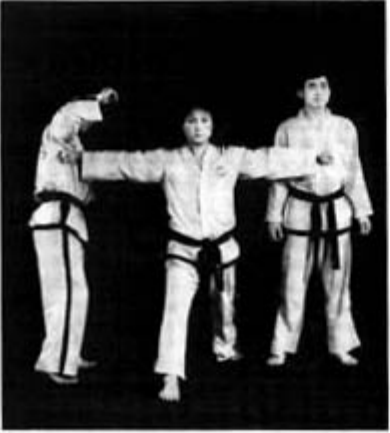
Open original image41. Walking Stance Twin Side Fist Horizontal Strike (Gunnun So Sang Yop Joomuk Soopyong Taerigi)
Both the method and procedure of exercise are the same as those of walking stance twin knife‑hand horizontal strike.
Forward Stepping Strike
Forward twin side-fist horizontal strike
Exercise sequence and original captions, printed page 104
Application
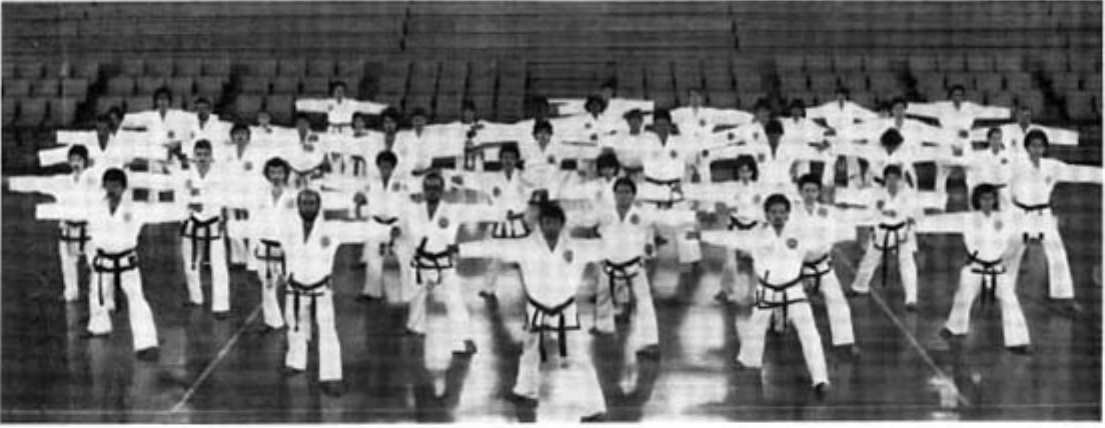
Group practice
View original source illustration
Open original image
Sources and references
Source Pages: 92, 93, 94, 95, 96, 97, 98, 99, 100, 101, 102, 103, 104, 105
References by passage
- Passage 1: 92
- Passage 2: 92
- Passage 3: 92
- Passage 4: 92
- Passage 5: 92
- Passage 6: 92
- Passage 7: 92
- Passage 8: 93
- Passage 9: 93
- Passage 10: 93
- Passage 11: 93
- Passage 12: 94
- Passage 13: 94
- Passage 14: 94
- Passage 15: 94
- Passage 16: 94
- Passage 17: 94
- Passage 18: 94
- Passage 19: 94
- Passage 20: 95
- Passage 21: 95
- Passage 22: 95
- Passage 23: 95
- Passage 24: 96
- Passage 25: 96
- Passage 26: 96
- Passage 27: 96
- Passage 28: 97
- Passage 29: 97
- Passage 30: 97
- Passage 31: 97
- Passage 32: 97
- Passage 33: 97
- Passage 34: 97
- Passage 35: 98
- Passage 36: 98
- Passage 37: 98
- Passage 38: 98
- Passage 39: 98
- Passage 40: 98
- Passage 41: 99
- Passage 42: 99
- Passage 43: 99
- Passage 44: 99
- Passage 45: 99
- Passage 46: 99
- Passage 47: 99
- Passage 48: 100
- Passage 49: 100
- Passage 50: 100
- Passage 51: 100
- Passage 52: 100
- Passage 53: 100
- Passage 54: 100
- Passage 55: 101
- Passage 56: 102
- Passage 57: 102
- Passage 58: 102
- Passage 59: 102
- Passage 60: 102
- Passage 61: 102
- Passage 62: 102
- Passage 63: 102
- Passage 64: 103
- Passage 65: 103
- Passage 66: 103
- Passage 67: 103
- Passage 68: 103
- Passage 69: 104
- Passage 70: 104
- Passage 71: 104
- Passage 72: 104
- Passage 73: 105