Volume II
Rear Foot and Low Stances
Select an image to view it at full size.
Rear Foot Stance (Dwitbal Sogi)
This is used for defense and occasionally for attack. The advantage of this stance is the ability to kick or adjust the distance from an opponent with the front foot which can move spontaneously without any additional shifting of the body weight to the rear foot.
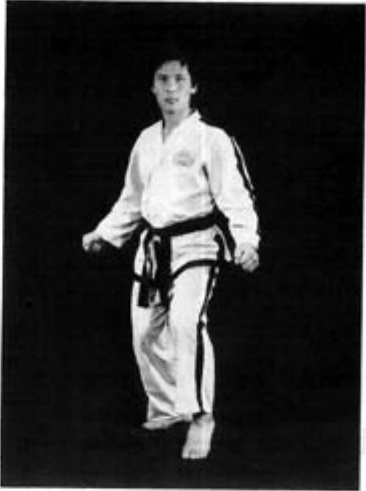
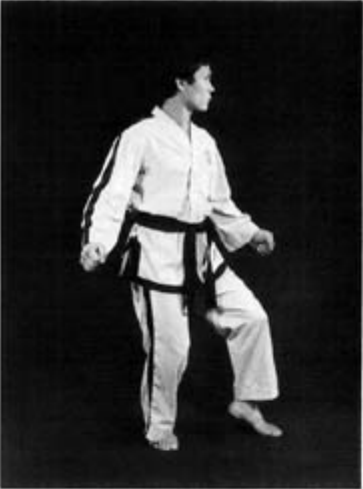
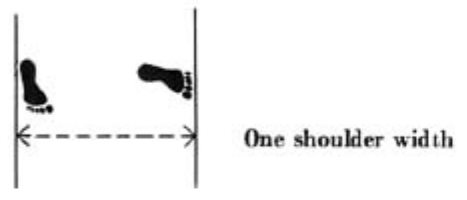
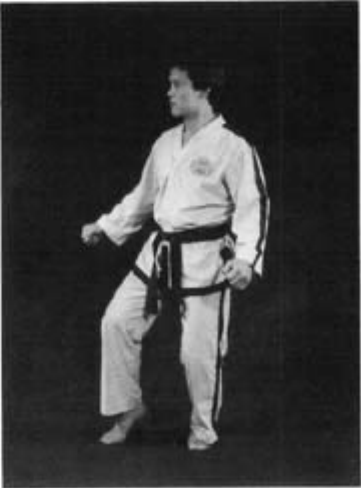
1. Move one foot to either the front or the rear at a distance of one shoulder width between the small toes.
2. Bend the rear leg until the knee comes over the toes, placing the heel slightly beyond the heel of the front foot.
3. Bend the front leg, touching the ground slightly with the ball of the foot.
4. Keep the toes of front foot pointing about 25 degrees and the toes of the rear foot about 15 degrees inward.
5. Distribute most of the body weight on the rear foot.
When the right foot is in the rear, the stance is called a right rear foot stance and vice‑versa. It is always half facing, both in attack and defense. Be sure to keep the knee of the rear leg pointing slightly inward.
Right rear foot stance
Right rear foot stance, front and side views; one shoulder width
View original source illustration
Open original imageLeft rear foot stance
Left rear foot stance, side and front views
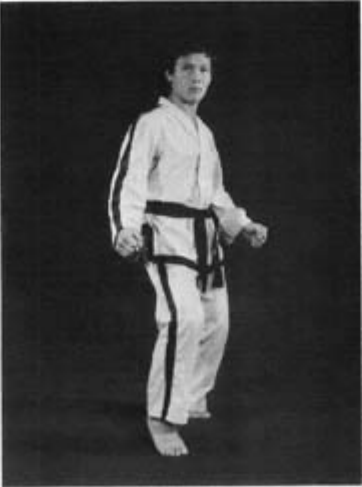
View original source illustration
Open original imagePhotograph
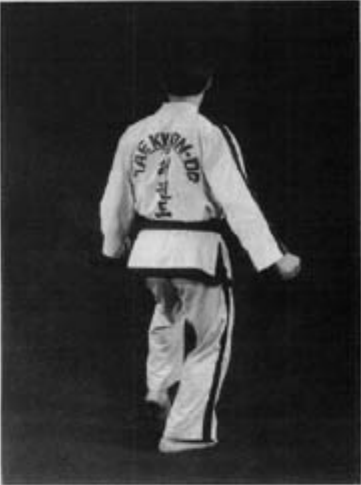
Right rear foot stance, back view
View original source illustration
Open original imagePhotograph
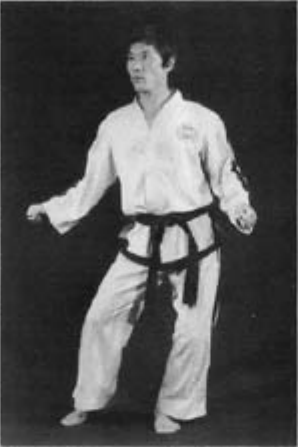
INCORRECT: The right knee points outward instead of inward.
View original source illustration
Open original imageLow Stance (Nachuo Sogi)
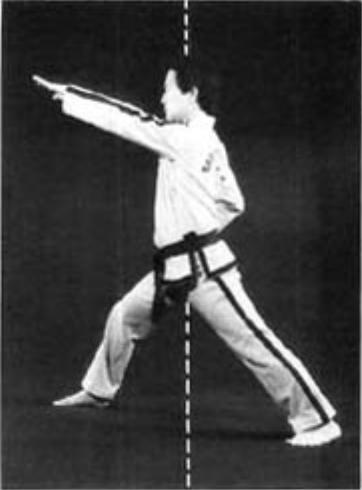
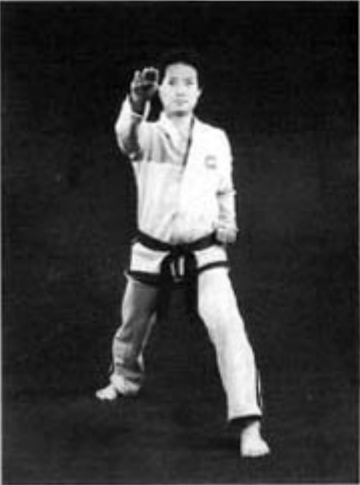
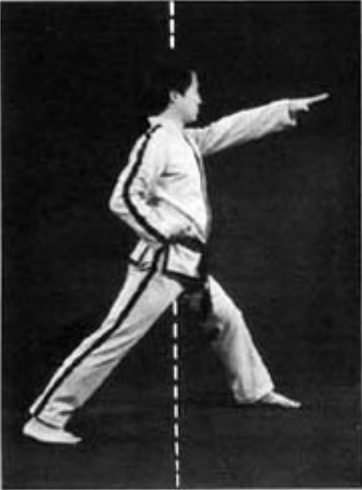
The advantage of this stance is the ease with which one can extend the attacking tool. It can also develop the leg muscles and is effective to adjust the distance to and from the target. It is similar to the walking stance, though longer by one foot. It can be either full facing or side facing.
Right low stance
Right low stance and left low stance, front and side views
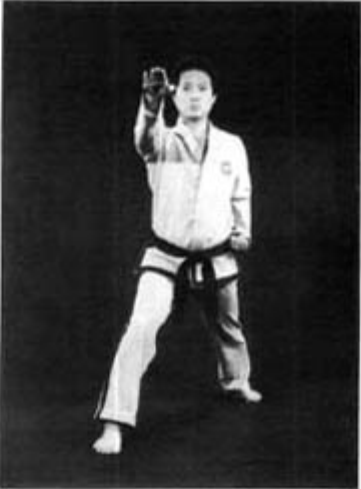
Left low stance
View original source illustration
Open original imageSources and references
Source Pages: 157, 158, 159
References by passage
- Passage 1: 157
- Passage 2: 157
- Passage 3: 157
- Passage 4: 157
- Passage 5: 157
- Passage 6: 157
- Passage 7: 157
- Passage 8: 157
- Passage 9: 157
- Passage 10: 157
- Passage 11: 158
- Passage 12: 158
- Passage 13: 158
- Passage 14: 159
- Passage 15: 159
- Passage 16: 159