Volume II
Stance Principles, Parallel and Open Stances
Select an image to view it at full size.
Stance (Sogi)
The forceful and finer techniques of attack and defence are largely dependent on a correct stance since the stance is the starting point of every Taekwon‑Do movement.
Stability, agility, balance and flexibility are the controlling factors.
Basic principles for a proper stance are:
1. Keep the back straight, with few exceptions.
2. Relax the shoulders.
3. Tense the abdomen.
4. Maintain a correct facing. The stance may be full facing, half facing or side facing the opponent.
5. Maintain equilibrium.
6. Make use of the knee spring properly.
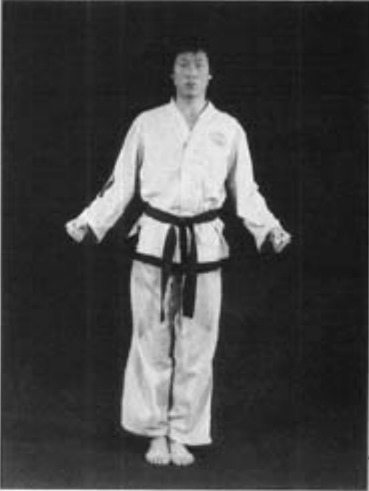
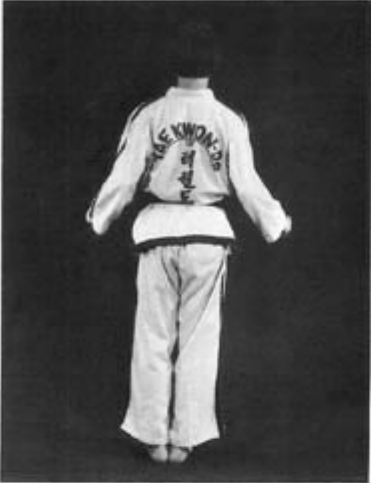
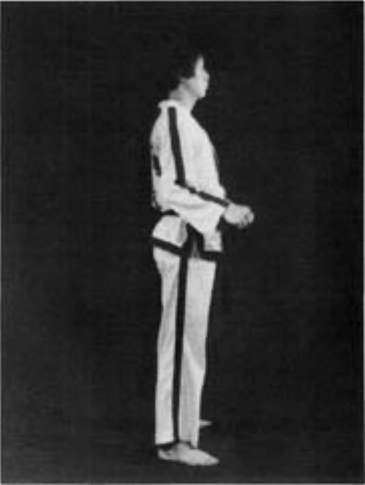
Close Stance (Moa Sogi)
Stand with the feet together. It can be either full facing or side facing.
Photograph
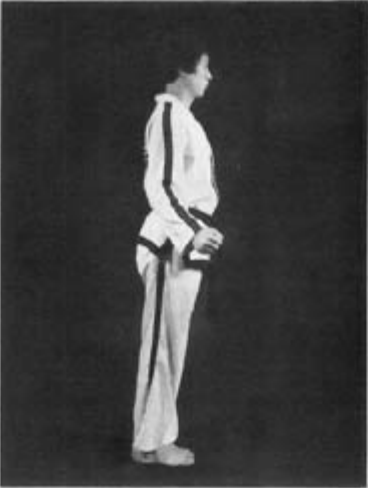
Side facing (Chuk Myon), side view
View original source illustration
Open original imageClose stance: full facing
Close stance: full facing (Jon sin), front and back views
View original source illustration
Open original imageParallel Stance (Narani Sogi)
Spread the feet parallel to shoulder width. Keep the toes pointing toward the front. It can be either full facing or side facing.
Knee spring refers to the function of the knee in raising and lowering the body.
Front foot refers to the foot which is advanced to the front. Rear foot refers to the foot which is placed at the rear.
Parallel stance
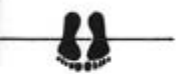
Parallel stance, front view and one shoulder width footprint guide
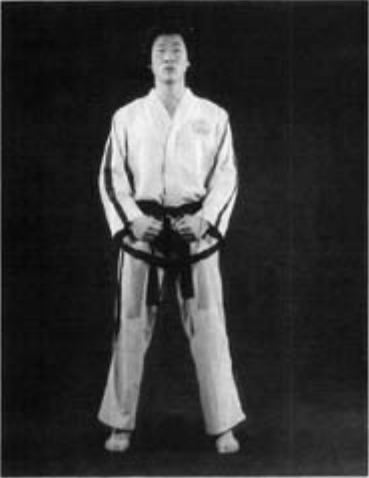
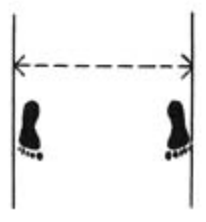
View original source illustration
Open original imagePhotograph
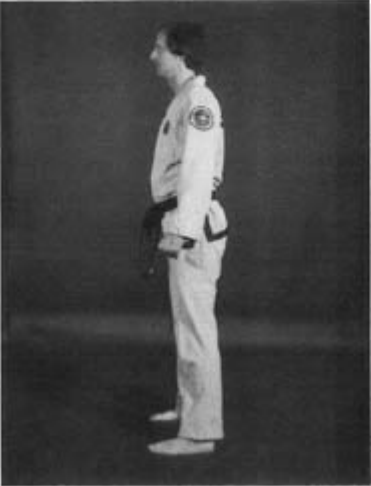
Parallel stance, side view
View original source illustration
Open original imagePhotograph
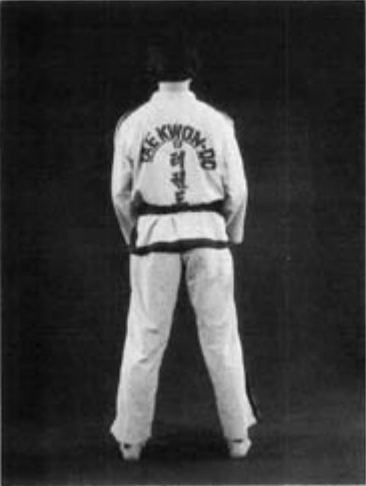
Parallel stance, back view
View original source illustration
Open original imagePhotograph
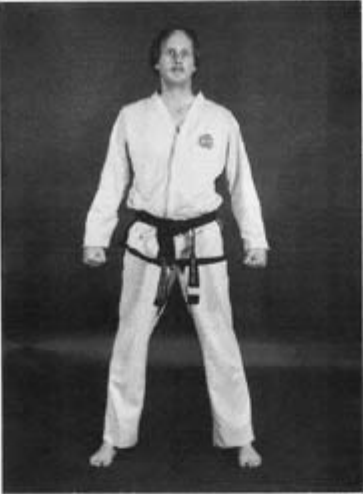
INCORRECT: It is not only weak against an attack from the front or rear but hampers the beauty of the leg lines because the distance between the feet is over one shoulder width.
View original source illustration
Open original imageOpen Stance (Palja Sogi)
This stance is divided into outer open stance and inner open stance. It can be either full facing or side facing. Both of these are seldom used due to the looseness of the leg muscles and lack of stability.
Inner Open Stance (An Palja Sogi)
Outer Open Stance (Bakat Palja Sogi)
These three stances serve primarily as preparatory actions though occasionally used for attack or defence.
Inner open stance
Keep the toes pointing slightly inward.
Inner open stance, front and side views
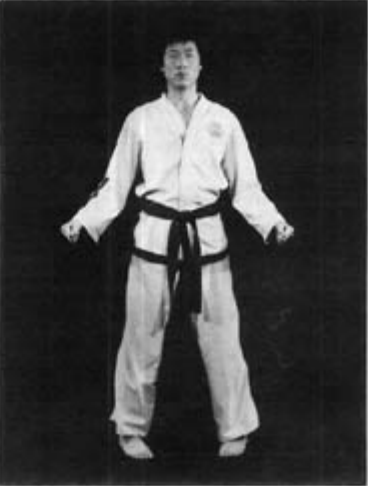
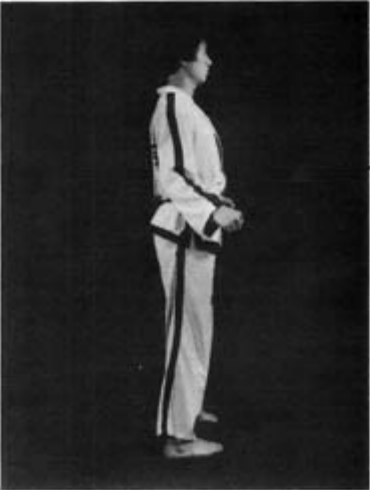
View original source illustration
Open original imageOuter open stance
Keep the toes pointing outward about 45 degrees.
Outer open stance, front and side views
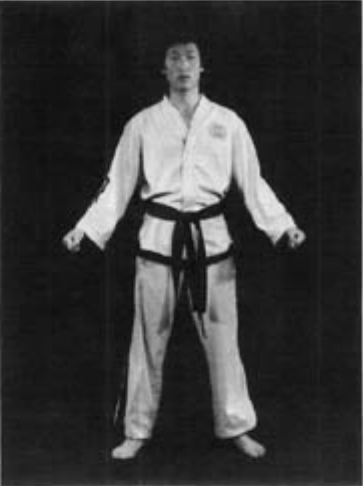
View original source illustration
Open original imageSources and references
Source Pages: 135, 136, 137
References by passage
- Passage 1: 135
- Passage 2: 135
- Passage 3: 135
- Passage 4: 135
- Passage 5: 135
- Passage 6: 135
- Passage 7: 135
- Passage 8: 135
- Passage 9: 135
- Passage 10: 135
- Passage 11: 135
- Passage 12: 135
- Passage 13: 135
- Passage 14: 135
- Passage 15: 135
- Passage 16: 136
- Passage 17: 136
- Passage 18: 136
- Passage 19: 136
- Passage 20: 136
- Passage 21: 136
- Passage 22: 136
- Passage 23: 136
- Passage 24: 137
- Passage 25: 137
- Passage 26: 137
- Passage 27: 137
- Passage 28: 137
- Passage 29: 137
- Passage 30: 137
- Passage 31: 137
- Passage 32: 137