Volume II
Fixed Stance
Select an image to view it at full size.
Fixed Stance (Gojung Sogi)
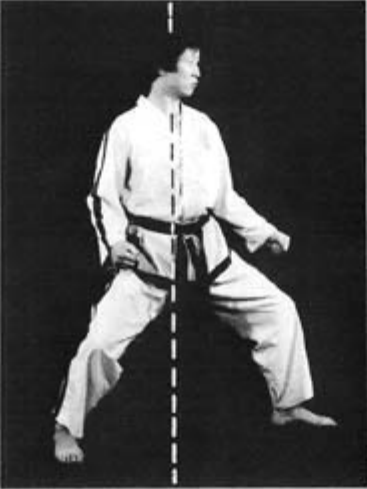
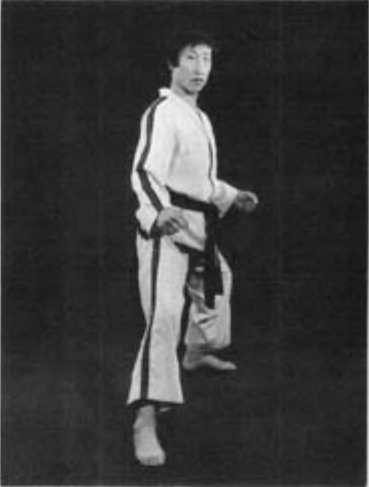
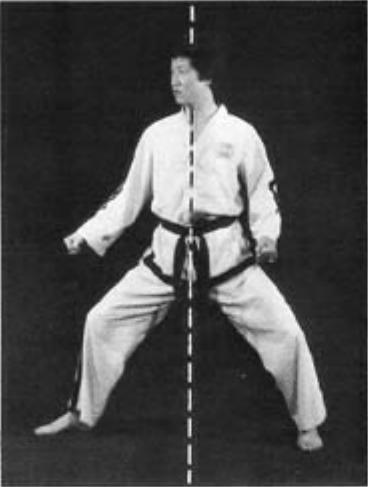
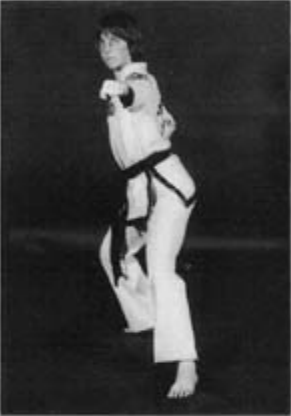
It is an effective stance for attack and defense to the side. This stance is similar to the L‑stance with the following exceptions:
1. The body weight is distributed on both legs evenly.
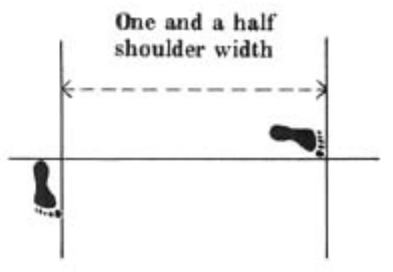
2. The distance between the feet is about one and a half shoulder width.
When the right foot is advanced, the stance is called a right fixed stance and vice‑versa. It is always half facing, both in attack and defense.
Fixed stance: views and measurements
Left fixed stance and right fixed stance: front and side views; one and a half shoulder width
View original source illustration
Open original imageRight fixed stance
Right fixed stance, side and back views
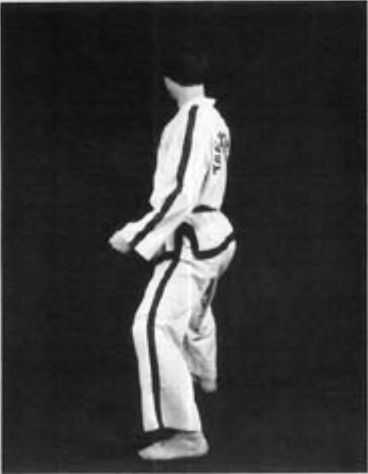
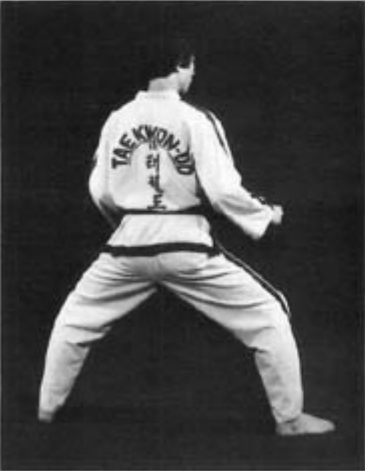
View original source illustration
Open original imageIncorrect: delayed response
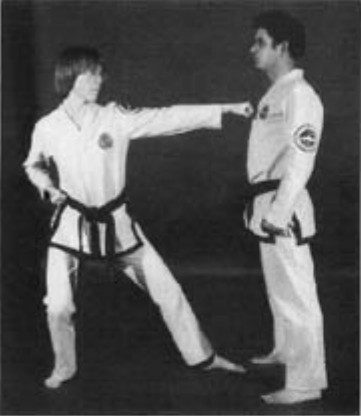
INCORRECT: The opponent attacks before the defender has a chance to raise her foot. INCORRECT: The right knee is pushed too far to the rear. The punch is not as forceful as it should be.
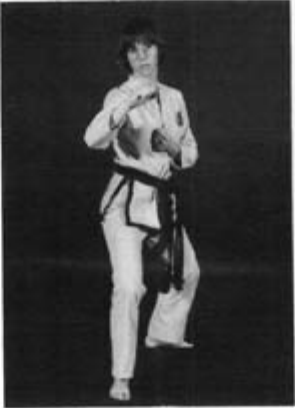
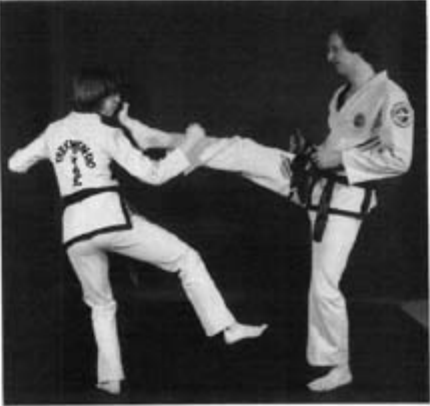
Incorrect: right knee too far back
View original source illustration
Open original imageSources and references
Source Pages: 146, 147