Volume II
L‑Stance
Select an image to view it at full size.
L‑Stance (Niunja Sogi)
This is widely used for defense, though used in attack as well. The front foot is readily available for kicking with a slight shift of the body weight and with the advantage of half facing as well as body shifting.
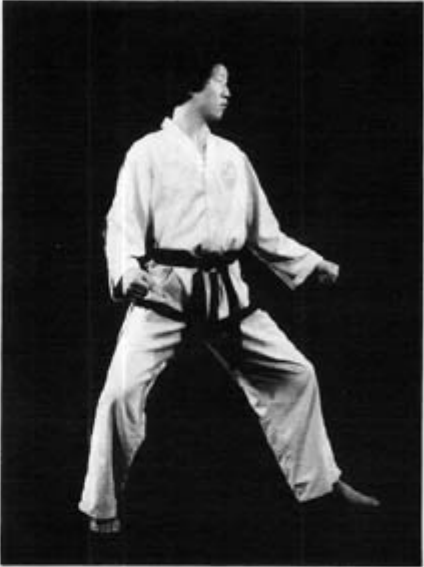
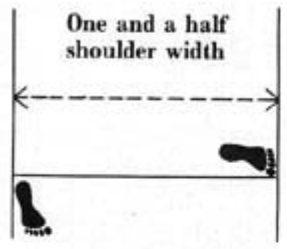
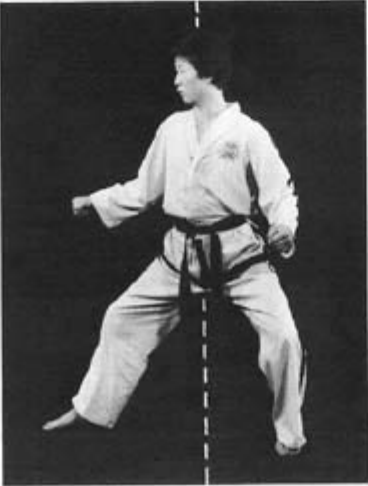
1. Move one foot to either front or rear to a distance of approximately one and a half times the shoulder width from the footsword of the rear foot to the toes of the front foot, forming almost a right angle. It is recommended that the toes of both feet point about 15 degrees inward, placing the front heel beyond the heel of the rear foot about 2.5 centimeters to gain better stability.
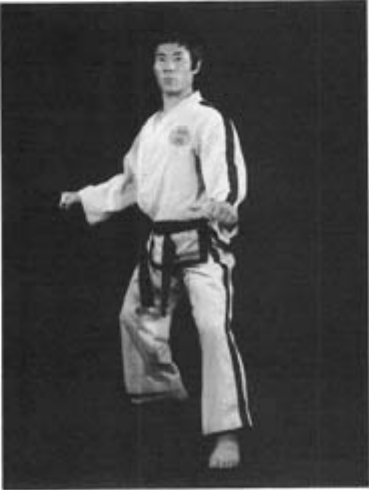
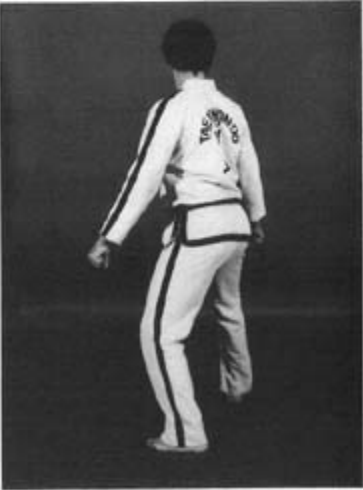
2. Bend the rear leg until the knee cap forms a vertical line with the toes, bending the front leg proportionally.
3. Keep the hip aligned with the inner knee joint.
4. The ratio of the body weight is about 70 percent on the rear leg and 30 percent on the front leg.
When the right leg is bent it is called a right L‑stance and vice‑versa. It is always half facing, both for attack and defense.
Right L-stance
Right L‑stance and footprint guide: one and a half shoulder width
View original source illustration
Open original imageL-stance: views and balance
L‑stance front view, back view and centre of gravity
View original source illustration
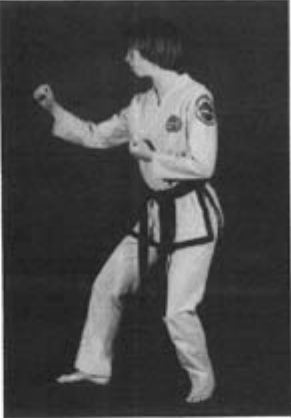
Open original imageIncorrect: excessive bend in the left leg
INCORRECT: Damage is done to the left leg which is excessively bent.
View original source illustration
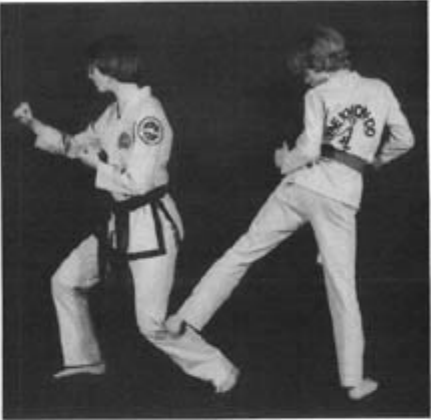
Open original imageIncorrect: front foot too far inside
INCORRECT: The front foot is placed too far inside making it susceptible to a foot sweep.
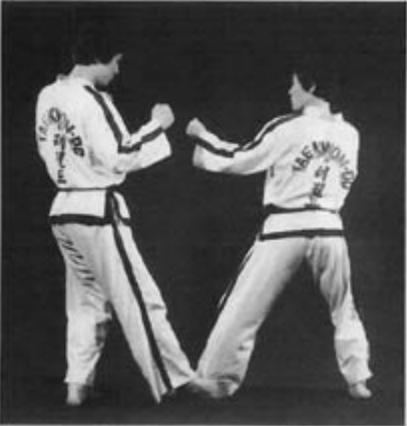
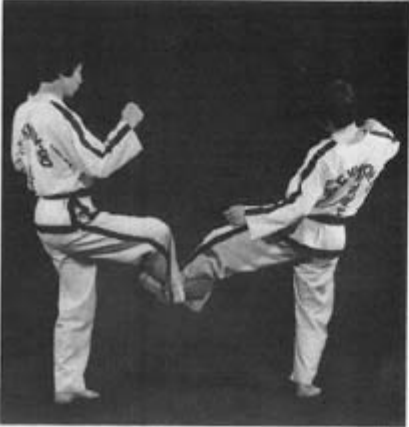
View original source illustration
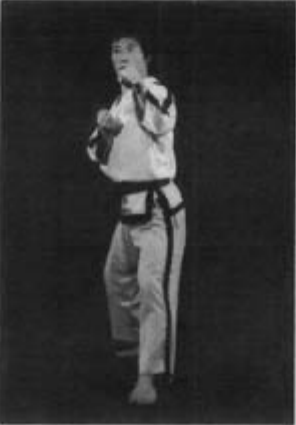
Open original imageIncorrect: hips pushed too far back
INCORRECT: The bottom is pushed too much to the rear thus failing to block effectively.
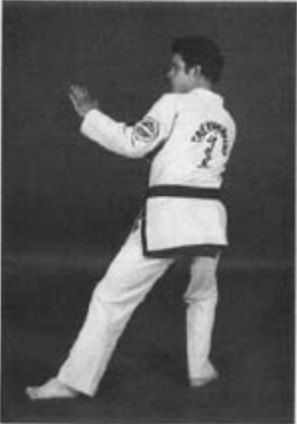
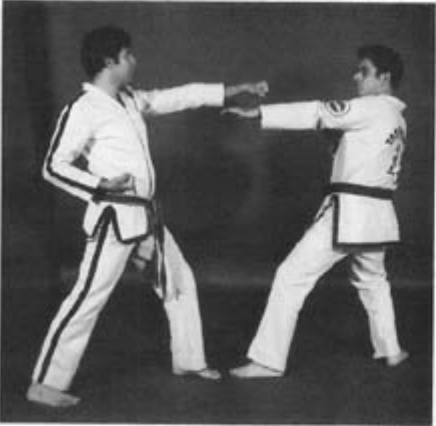
View original source illustration
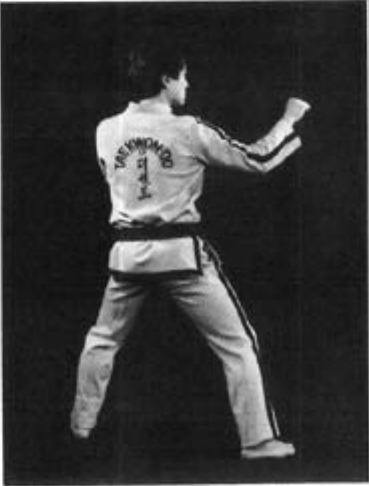
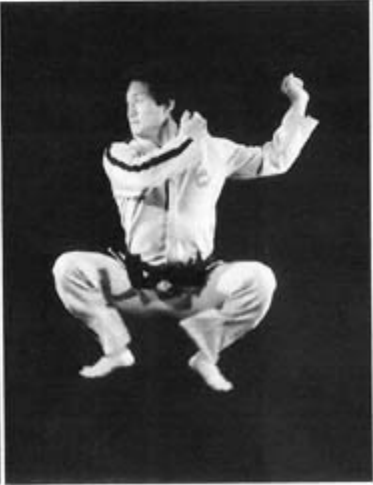
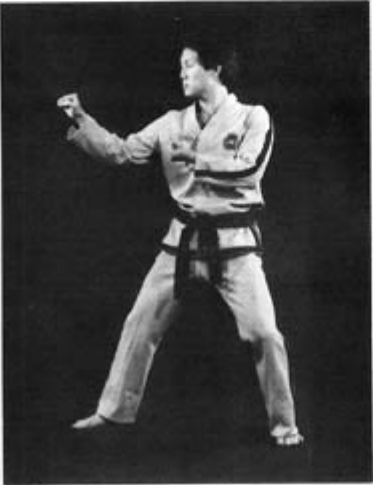
Open original imageCorrect: recovering the stance after a jump
CORRECT: Jumping. Original posture has been recovered correctly.
View original source illustration
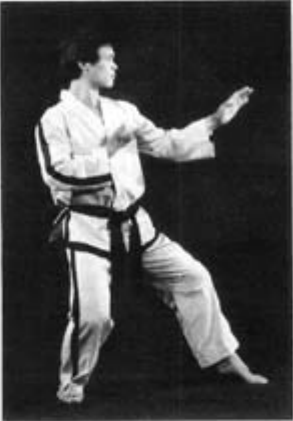
Open original imageIncorrect: recovering the stance after a jump
INCORRECT: Jumping. Failed to recover the original posture.
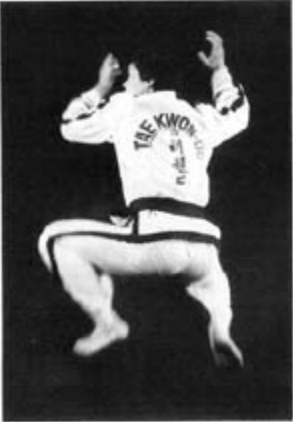
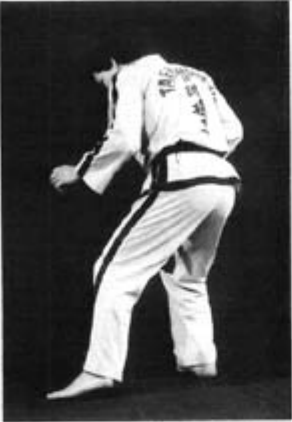
View original source illustration
Open original imageIncorrect: stance too wide
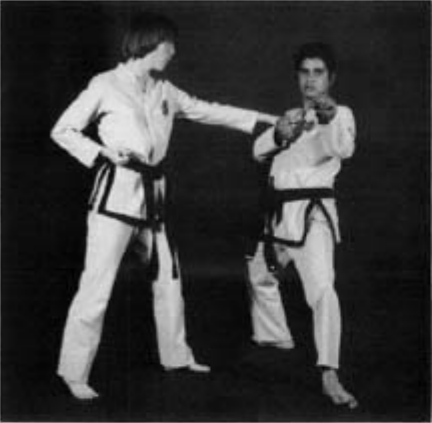
INCORRECT: The opponent attacks before the defender has a chance to raise his foot since the stance is too wide.
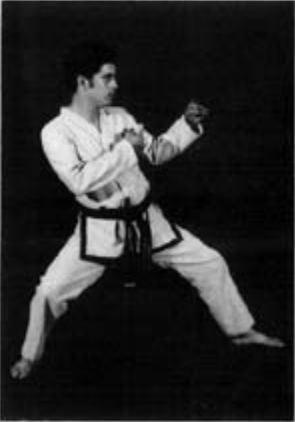
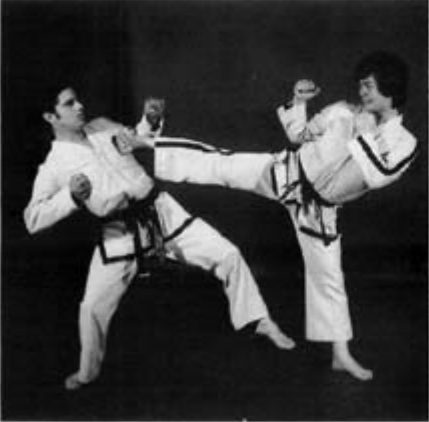
View original source illustration
Open original imageIncorrect: excessive bend in the right knee
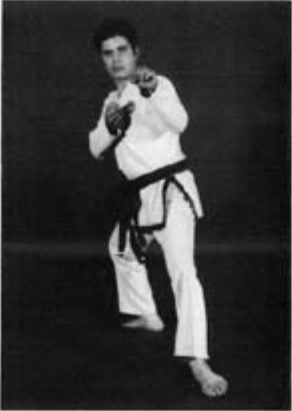
INCORRECT: The right knee is excessively bent. INCORRECT: Toes are pointed outward. Easily toppled.
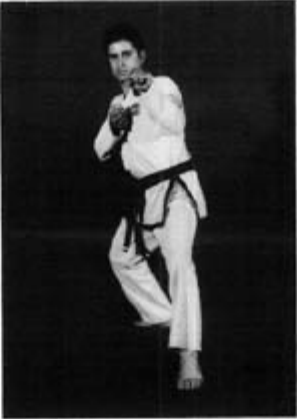
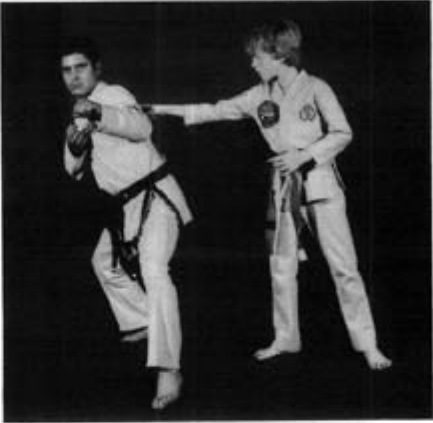
Incorrect: toes pointing outward
View original source illustration
Open original imageSources and references
Source Pages: 141, 142, 143, 144, 145
References by passage
- Passage 1: 141
- Passage 2: 141
- Passage 3: 141
- Passage 4: 141
- Passage 5: 141
- Passage 6: 141
- Passage 7: 141
- Passage 8: 141
- Passage 9: 141
- Passage 10: 142
- Passage 11: 142
- Passage 12: 143
- Passage 13: 143
- Passage 14: 144
- Passage 15: 144
- Passage 16: 145
- Passage 17: 145