Volume IV
Stepping: Curved and Straight Lines
Select an image to view it at full size.
Outcurved Line
In this method, the stepping foot reaches the destination passing the center line between the feet.
From a Left Walking Stance
Stepping forward — front view
Outcurved‑line stepping from left walking stance, front view with foot paths
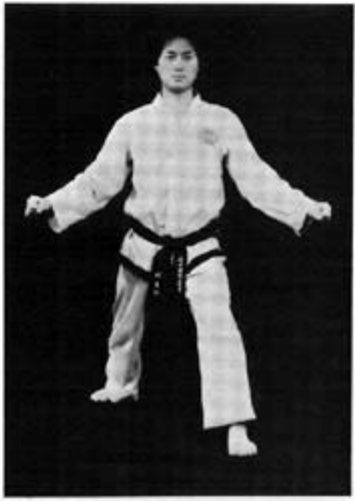
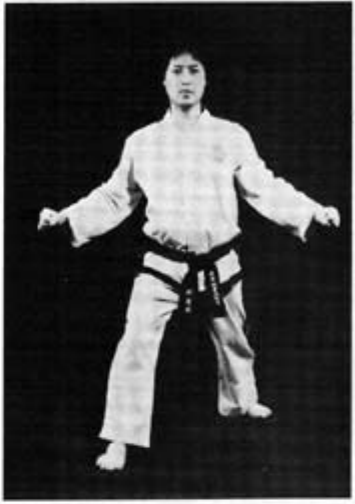
Foot path

Stepping backward — front view
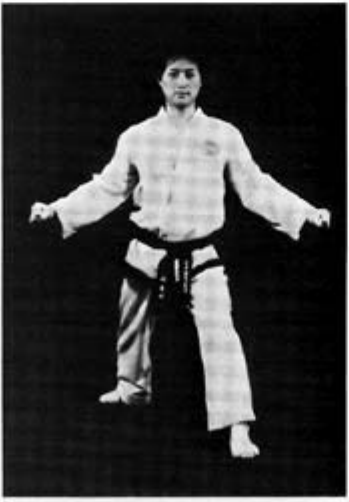
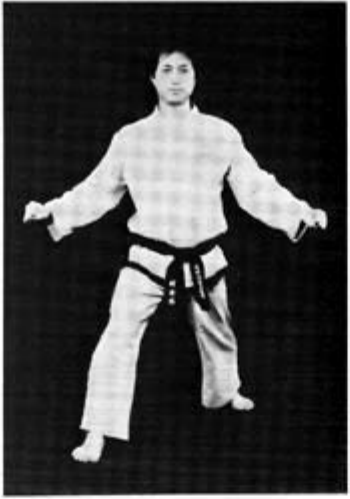
Foot path

View original source illustration
Open original imageFrom a Right Walking Stance
Stepping forward — side view
Outcurved‑line stepping from right walking stance, side views and foot paths
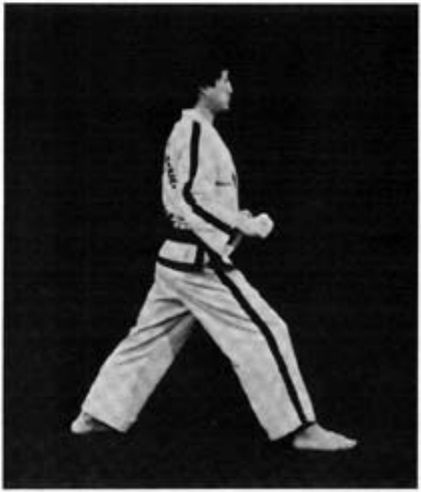
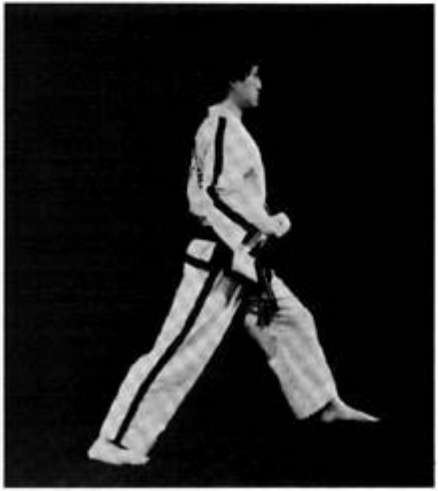
Foot path

Stepping backward — side view
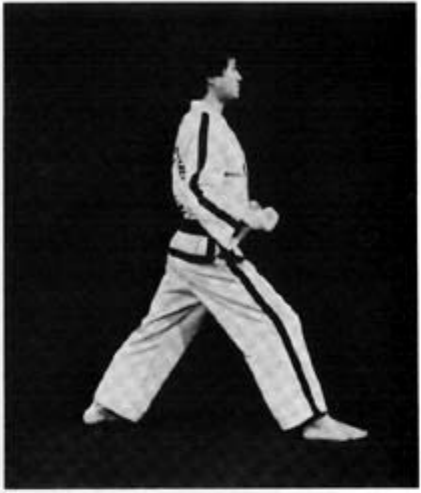
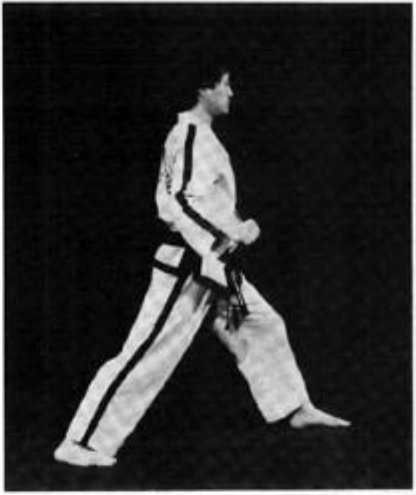
Foot path

View original source illustration
Open original imageStepping forward with a punch
Outcurved‑line forward stepping, keep left foot slightly pivoted
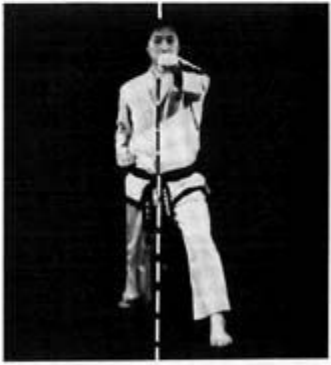
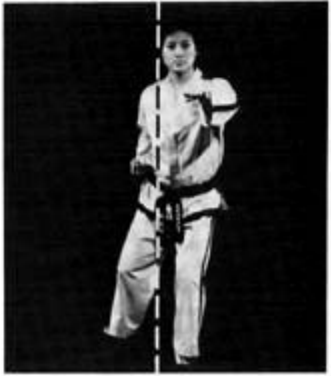
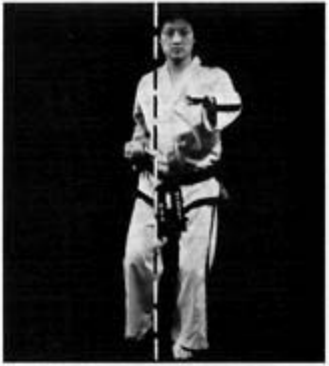
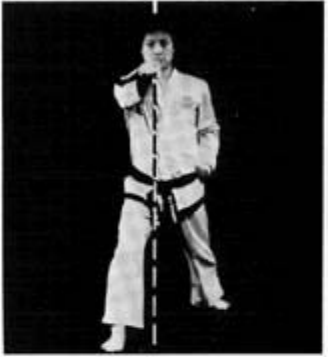
Stepping forward with a block
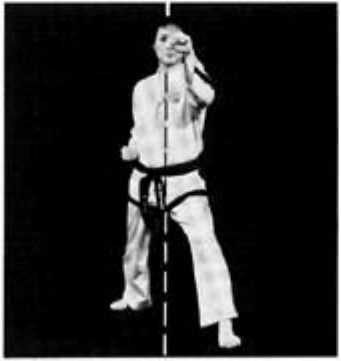
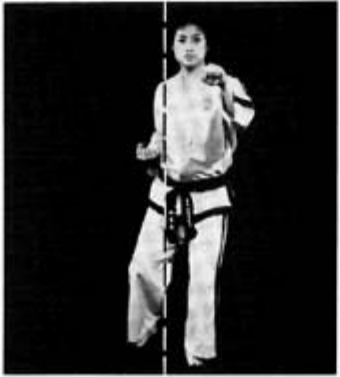
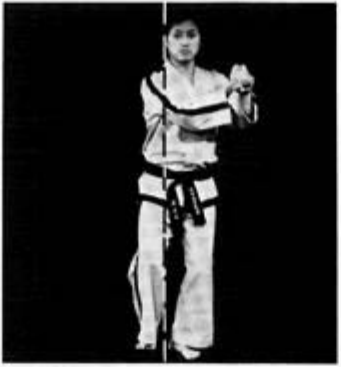
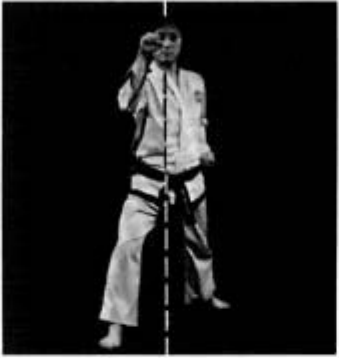
Foot path

View original source illustration
Open original imageAdvantages
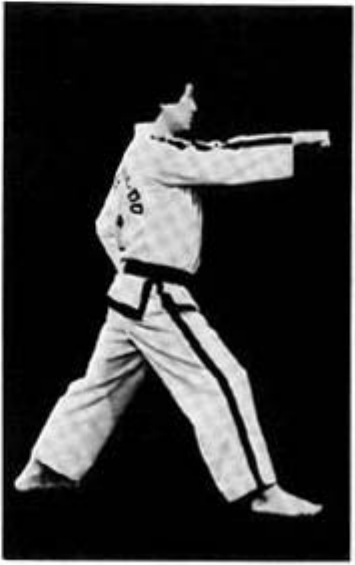
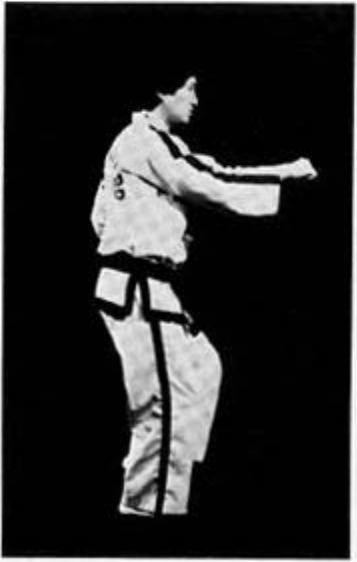
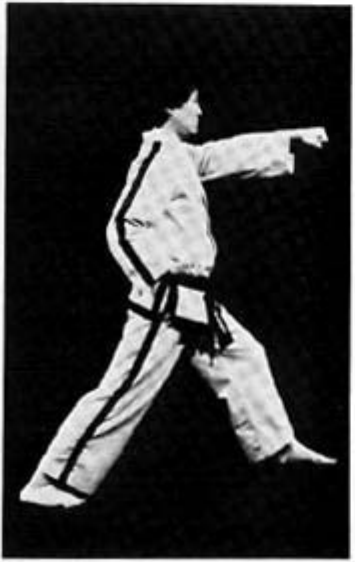
1. A. The knee spring of the stationary leg, in this case the left leg, has started to function and the muscles of the hip and abdomen are ready to jerk.
B. Both attacking and blocking tools have started to move in the same direction as the hip or abdomen does.
2. A. There is less of an opening for an attack since the body becomes half facing the opponent. The movement must be conducted smoothly and swiftly because the entire body is relaxed while dynamic stability is well maintained.
3. A. A maximum of power is produced, for the muscles of the hip and abdomen are fully utilized while the mass or body weight is added maintaining, static balance.
B. The side block is performed logically and the whole body is protected by the blocking forearm.
The same principle is applicable to L-, rear foot, fixed and low stances.
Stepping forward — side view
Outcurved‑line stepping, side view
View original source illustration
Open original imageStepping backward with a punch
Outcurved‑line backward stepping, keep right foot pivoting
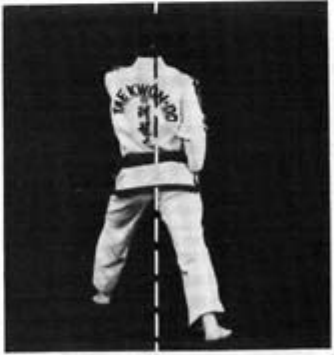
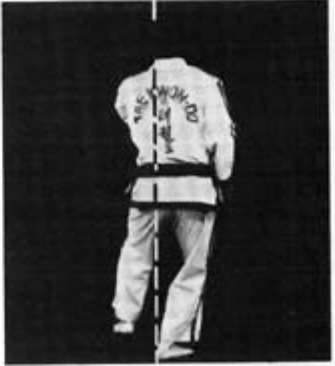
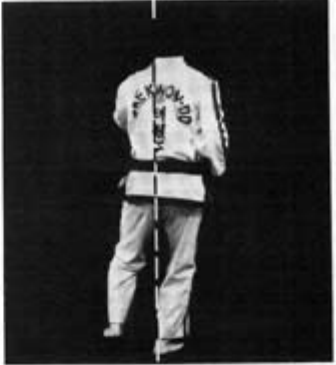
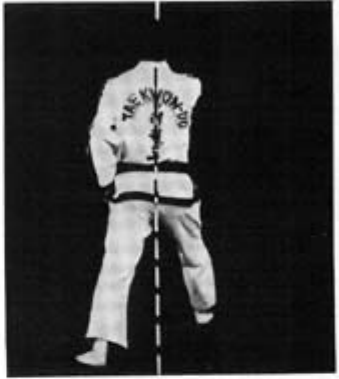
Stepping backward with a block
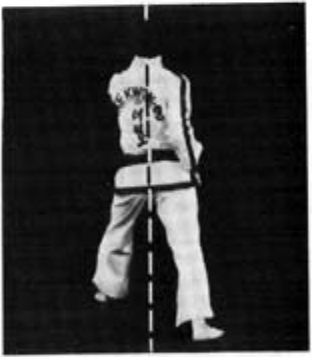
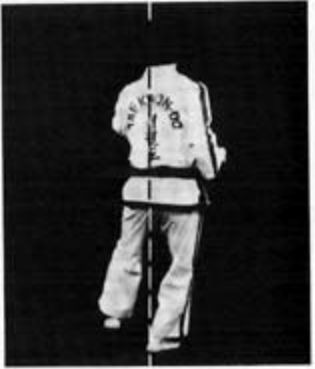
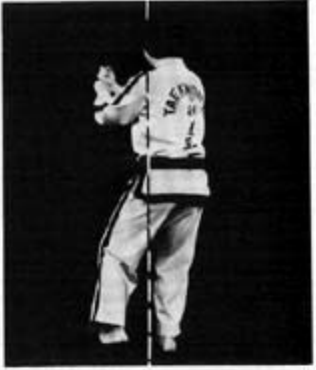
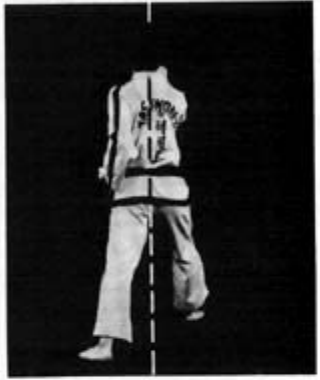
Foot path

View original source illustration
Open original imageFrom a Right L‑Stance
Stepping forward — front view
Outcurved‑line stepping from right L‑stance, forward and backward
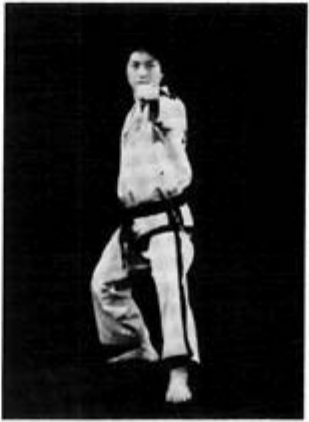
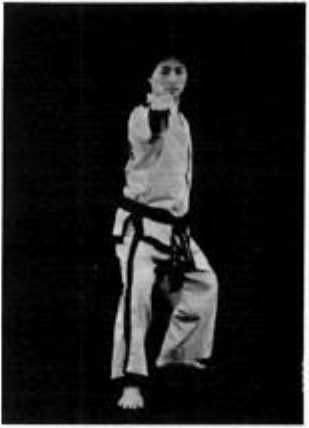
Foot path

Stepping backward — rear view
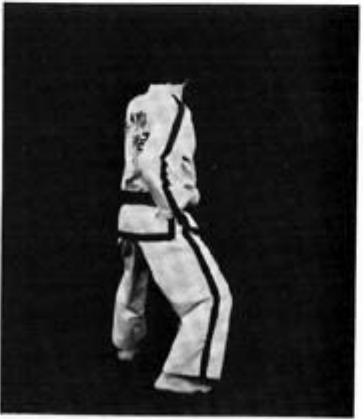
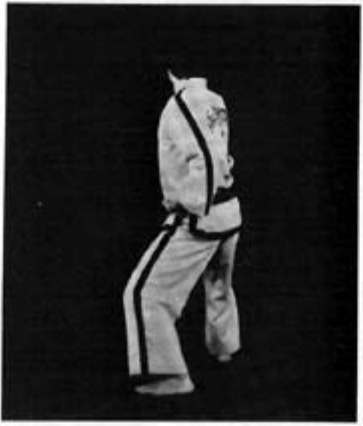
Foot path

Stepping forward — side view
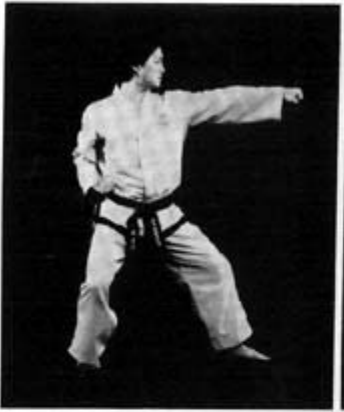
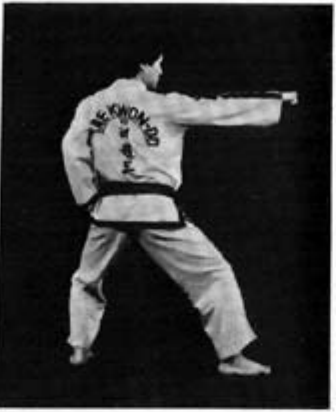
Foot path

View original source illustration
Open original imageStepping forward
Outcurved‑line stepping from L‑stance, keep the respective foot pivoting
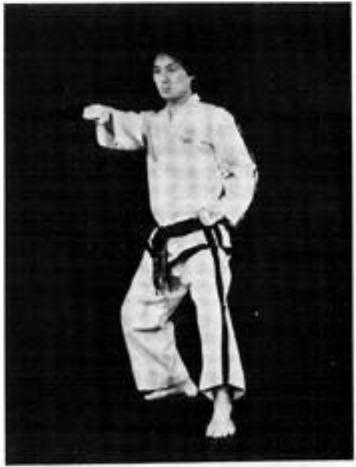
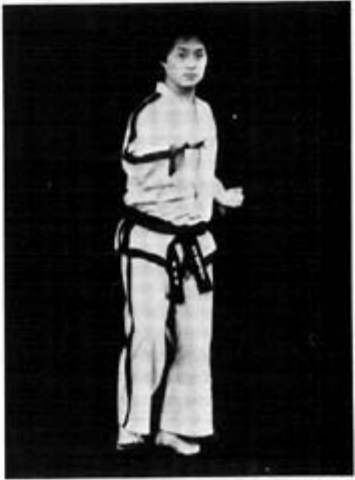
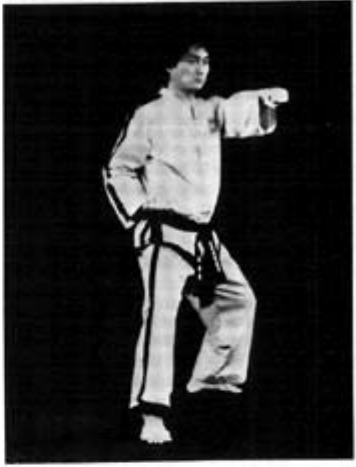
Foot path

Stepping backward
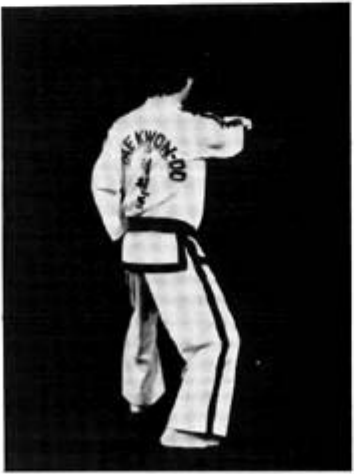
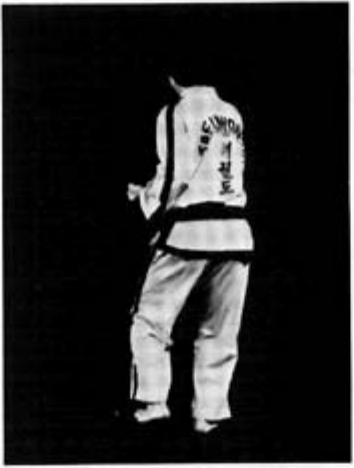
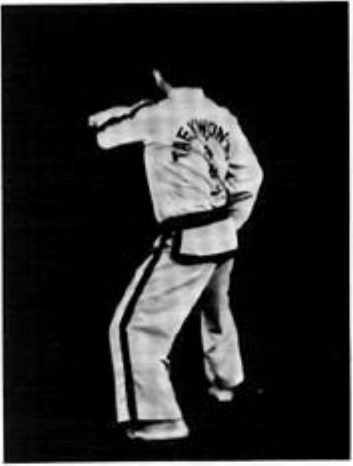
Foot path

View original source illustration
Open original imageFrom a Left L‑Stance
Stepping backward
Outcurved‑line stepping from left L‑stance, backward and forward
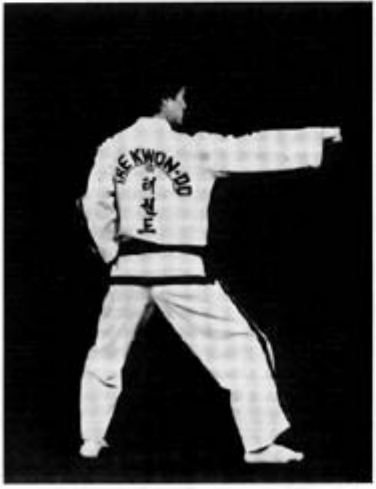
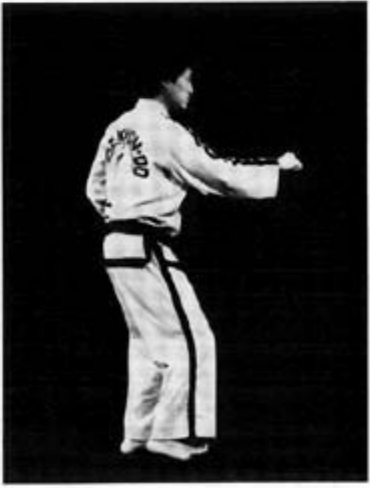
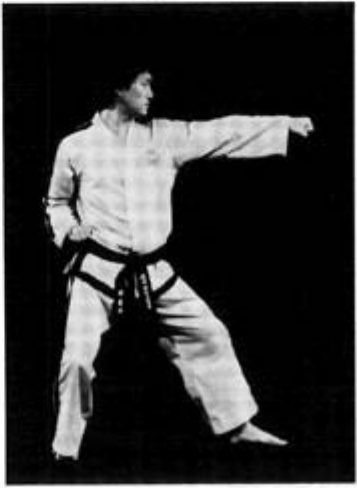
Foot path

Stepping forward
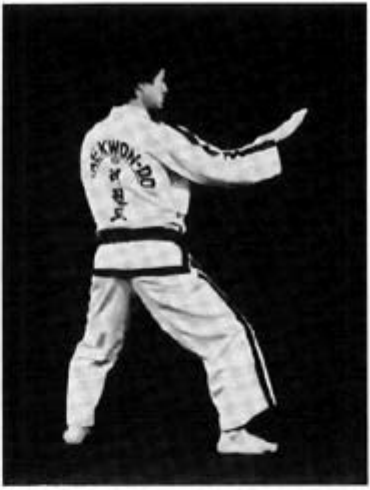
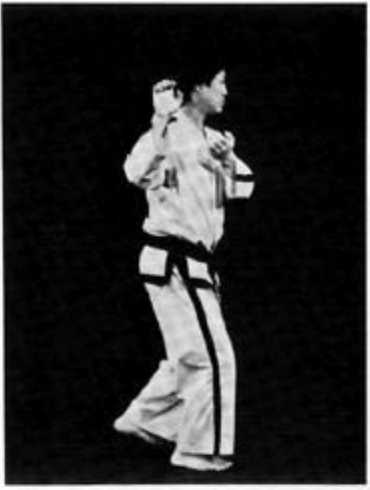
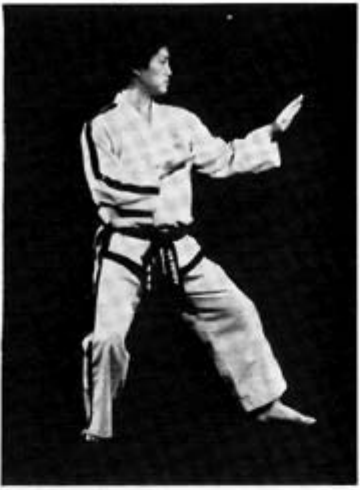
Foot path

View original source illustration
Open original imageFrom a Left Rear Foot Stance
Stepping backward — rear view
Outcurved‑line stepping from left rear foot stance
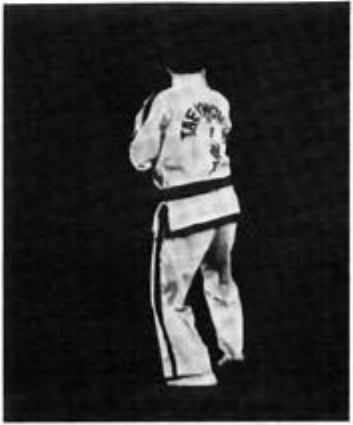
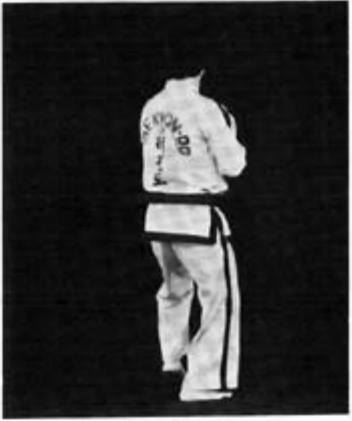
Foot path

Stepping forward — front view
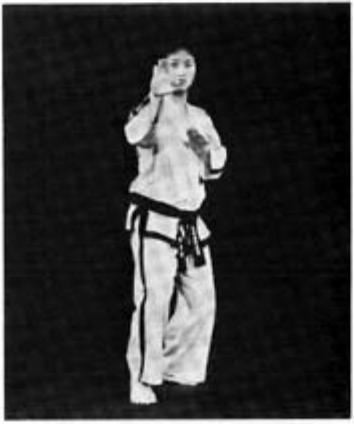
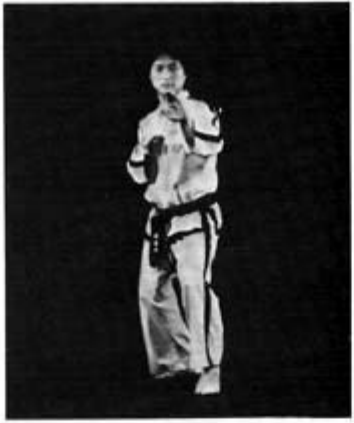
Foot path

Stepping forward — side view
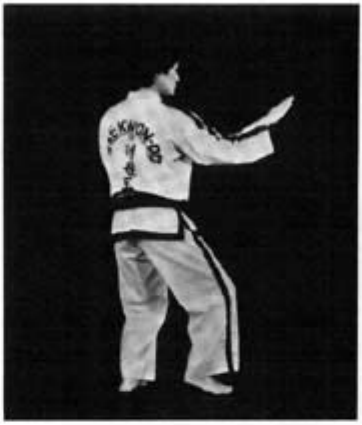
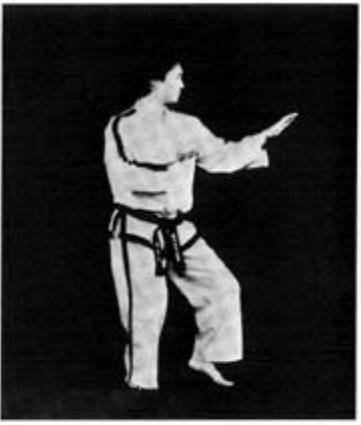
Foot path

View original source illustration
Open original imageStepping forward
Outcurved‑line stepping from rear foot stance, forward and backward
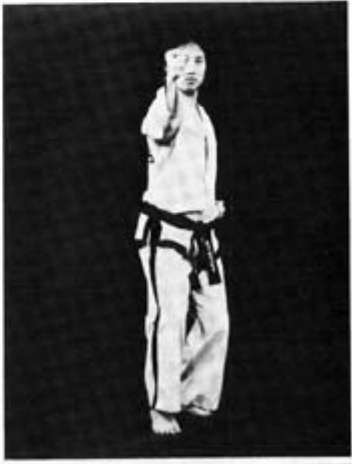
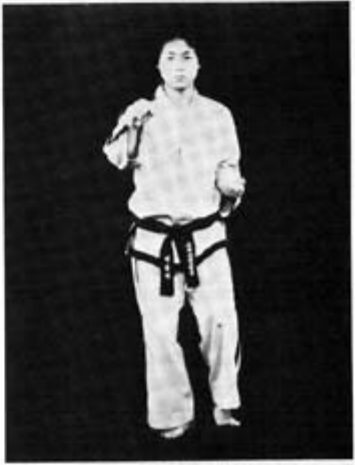
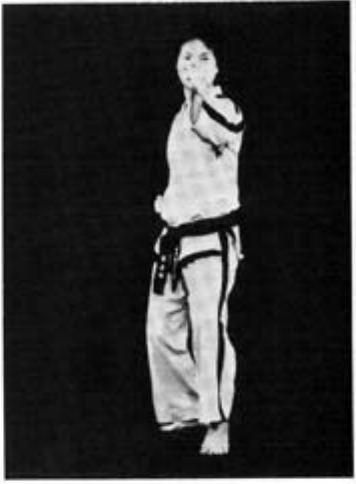
Foot path

Stepping backward
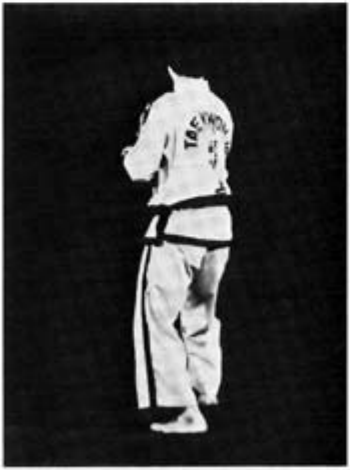
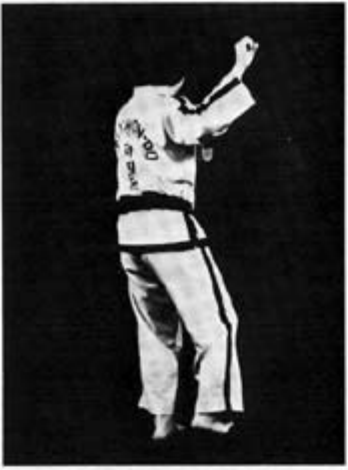
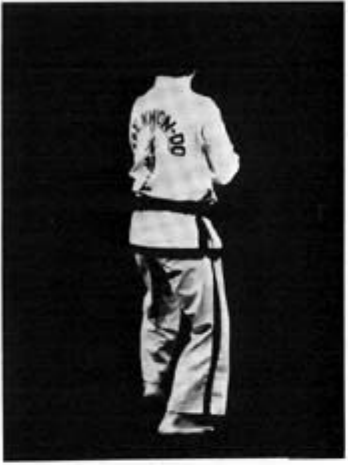
Foot path

View original source illustration
Open original imageFrom a Sitting Stance
To the right
Outcurved‑line stepping from sitting stance, right and left
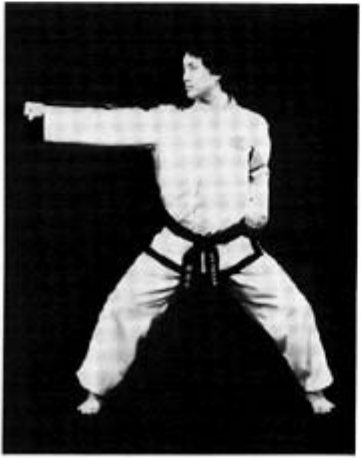
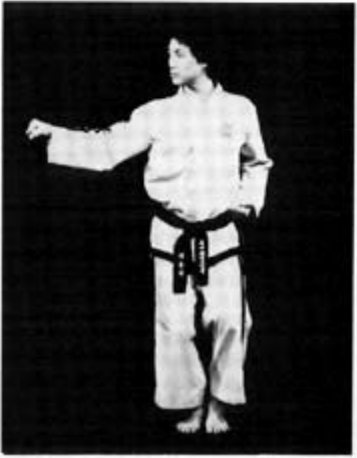
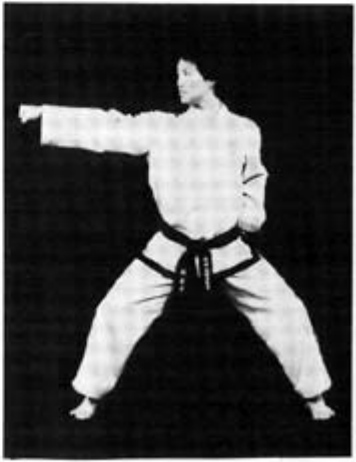
Foot path

To the left
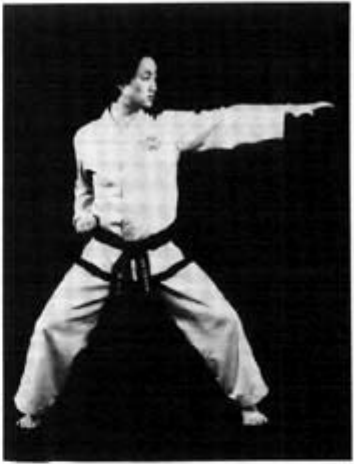
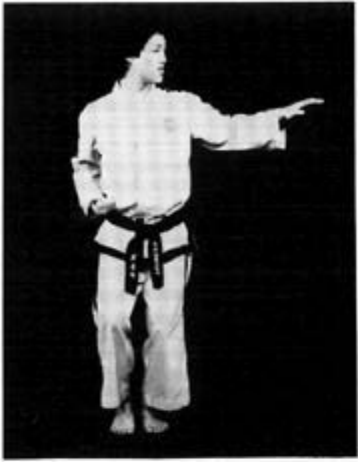
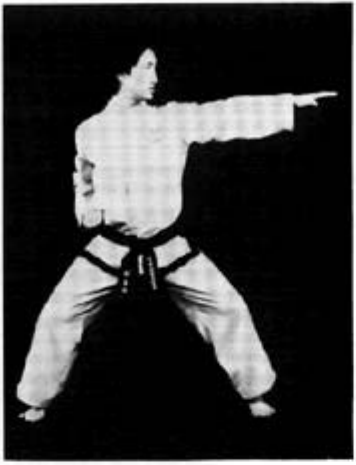
Foot path

View original source illustration
Open original imageFrom a Diagonal Stance
Lateral stepping — rear view
Outcurved‑line stepping from diagonal stance
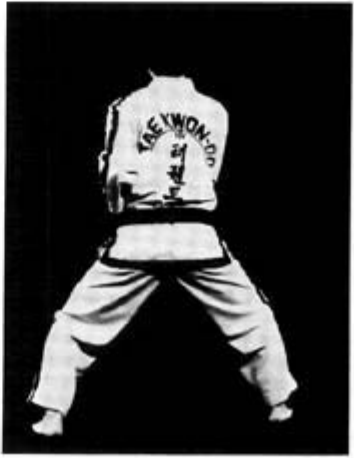
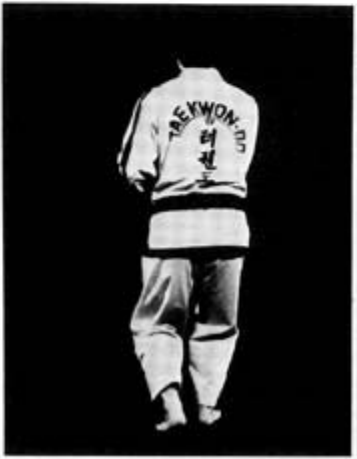
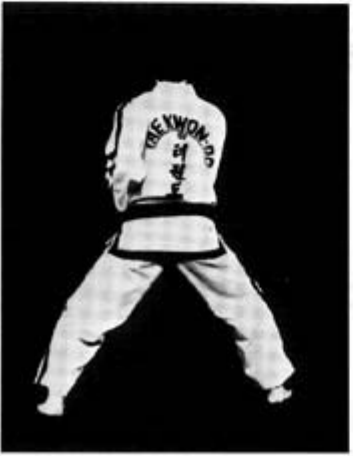
Foot path

To the left — front view
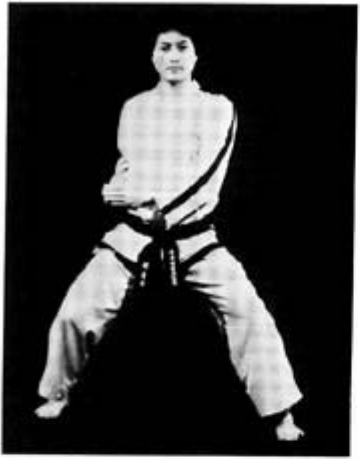
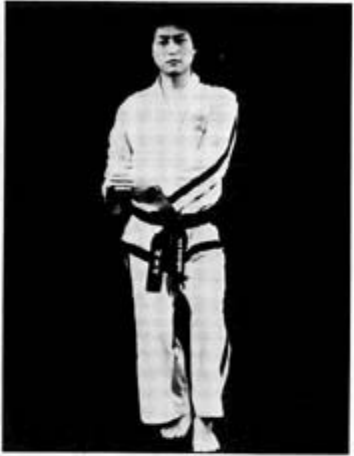
Foot path

View original source illustration
Open original imageStraight Line
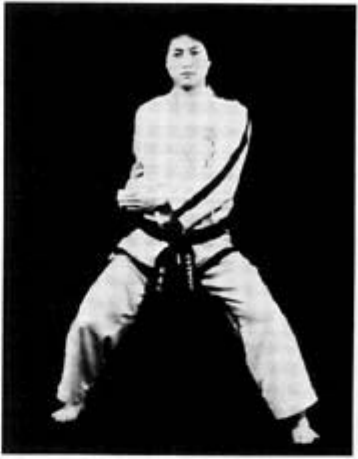
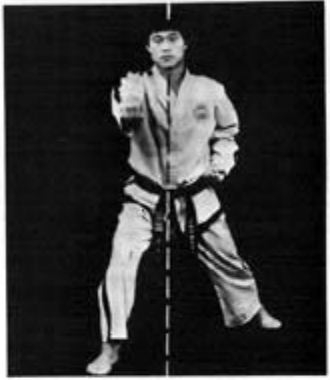
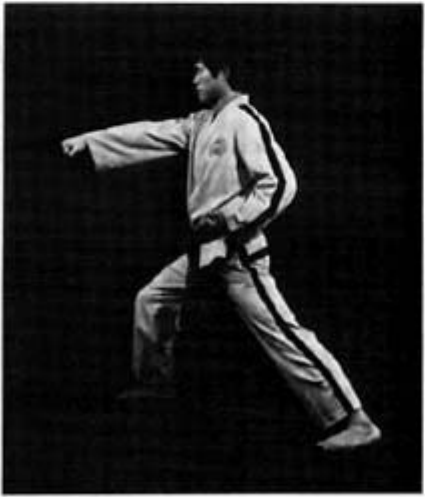
Incorrect straight-line stepping — punching
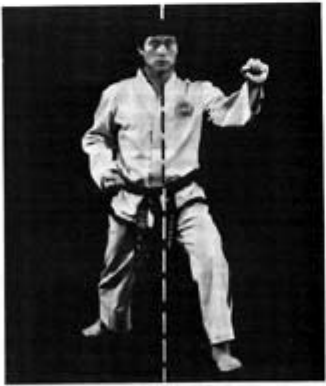
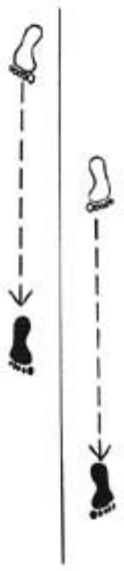
Straight‑line stepping, front views and foot paths
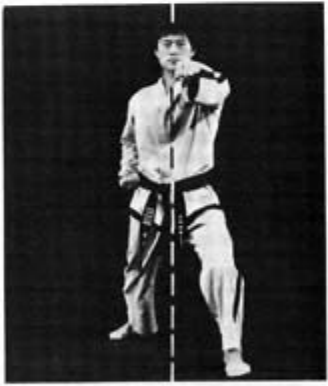
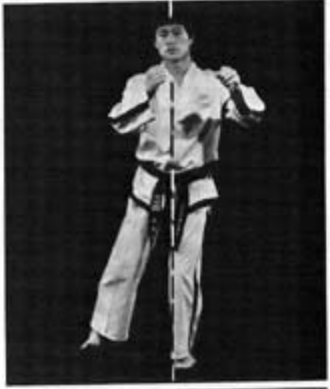
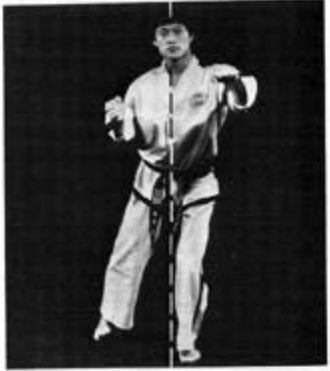
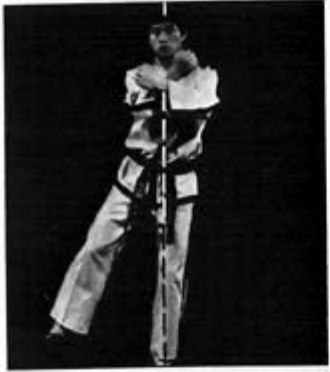
Incorrect straight-line stepping — blocking
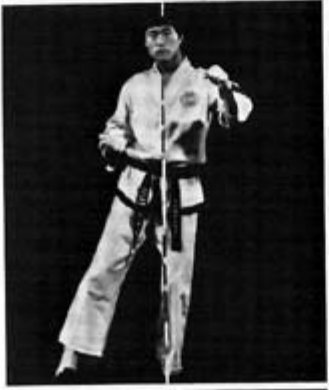
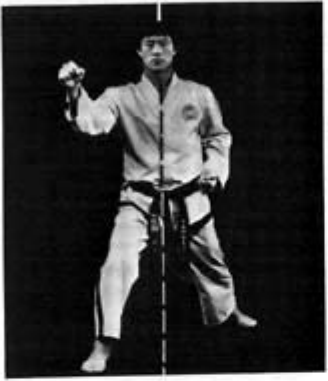
Foot path
View original source illustration
Open original image
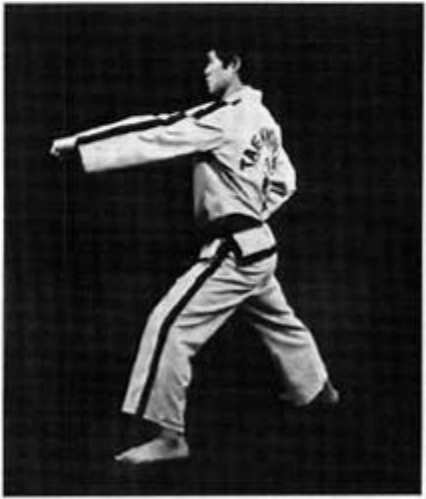
Incorrect straight-line stepping — backward stepping
Straight‑line backward stepping, side view
Disadvantages
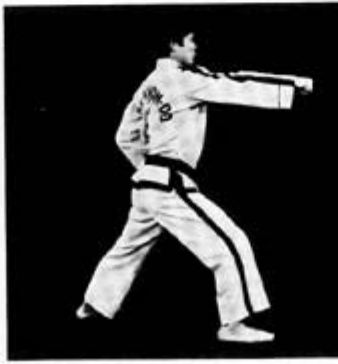
1. The body is unprotected and open to the opponent. The student is in a poor position to utilize the muscles of hip and abdomen.
2. A. In this position it is extremely difficult to produce maximum power because the knee spring of the stationary leg is not utilized. It is difficult to bring hands and feet into action simultaneously.
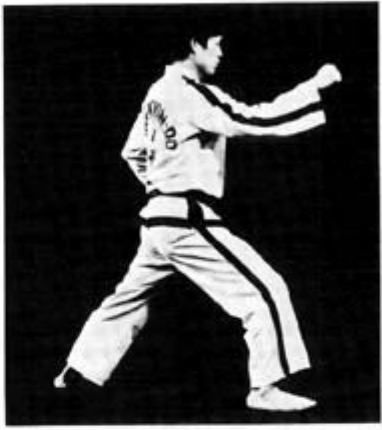
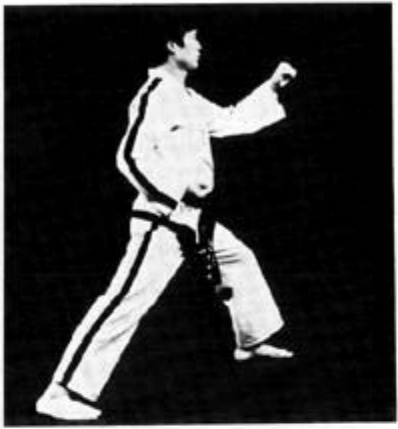
B. The forearms are crossed at the center of the body rather than in front of the chest because the student is in an awakward posture.
3. Stance is too short and wide after continuous movement putting the student in an unbalanced posture. This becomes more apparent in backward stepping motion. Both the dynamic and static stability can hardly be maintained.
A. The punch has failed to produce maximum power.
B. The block is extended beyond the point of focus because of full facing position instead of half facing.
View original source illustration
Open original imageFrom a Walking Stance
Incorrect straight-line stepping — backward stepping — rear view
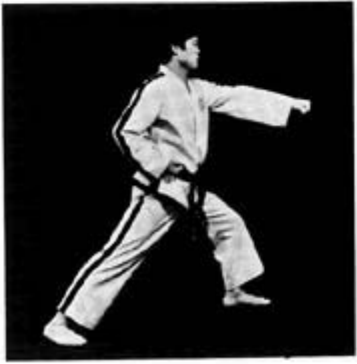
Straight‑line stepping from walking stance, backward and forward
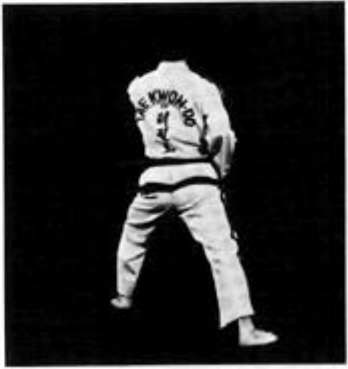
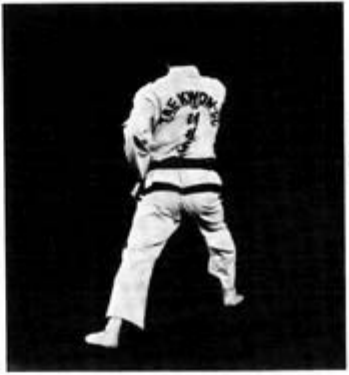
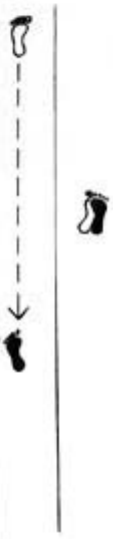
Foot path
Incorrect straight-line stepping — forward stepping — punch
Foot path

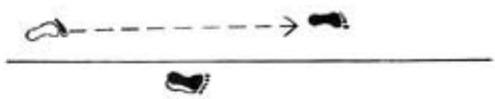
Incorrect straight-line stepping — forward stepping — block
Foot path
View original source illustration
Open original imageIncorrect straight-line stepping — forward stepping
Straight‑line stepping: stance becomes shorter and wider
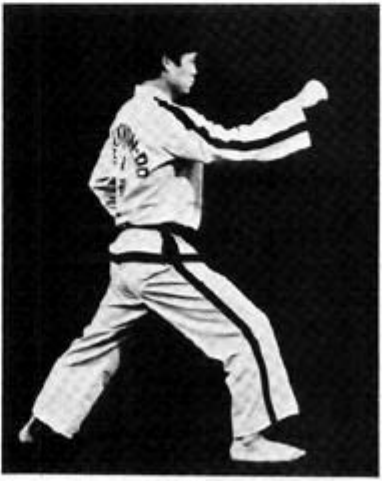
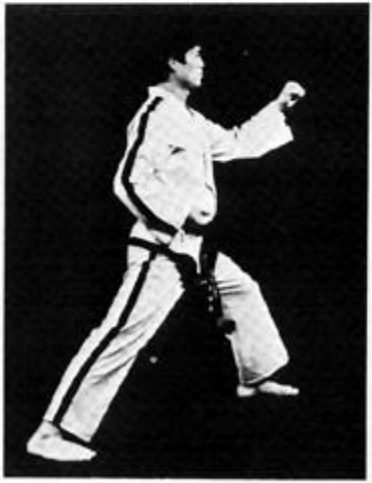
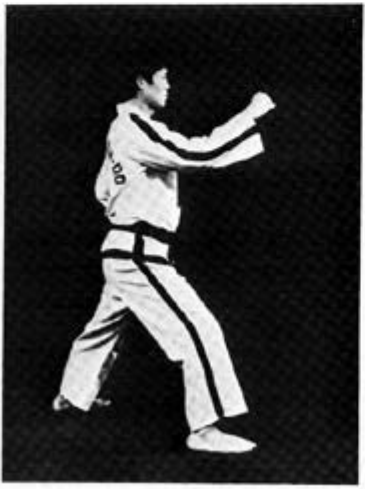
Foot path

Incorrect straight-line stepping — backward stepping
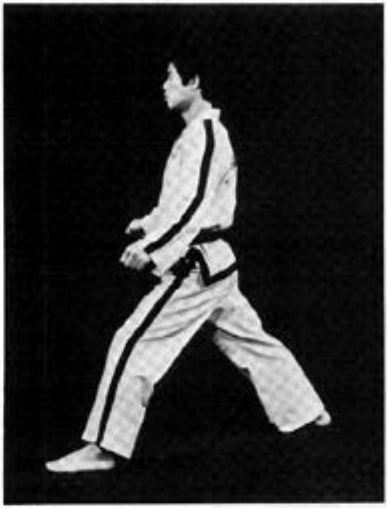
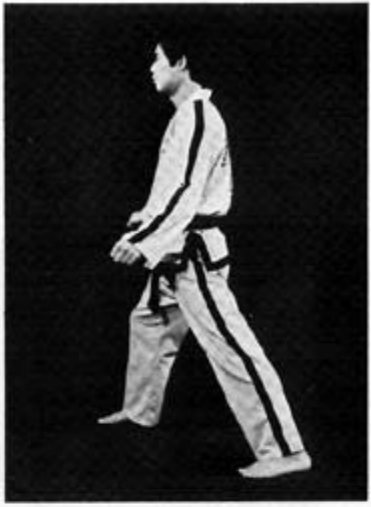
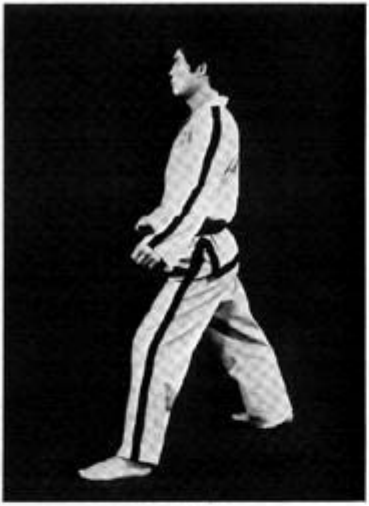
Foot path

View original source illustration
Open original imageFrom an L‑Stance
Incorrect straight-line stepping — backward stepping — rear view
Straight‑line stepping from L‑stance, shorter and wider stance
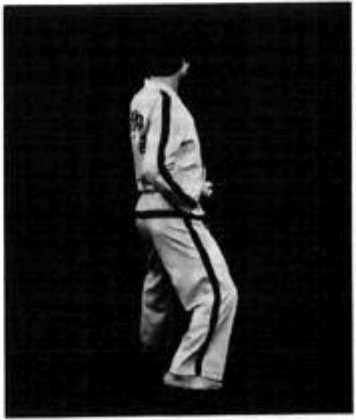
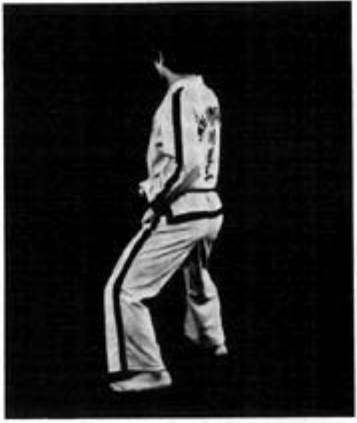
Foot path
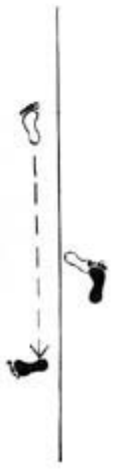
Incorrect straight-line stepping — forward stepping — front view
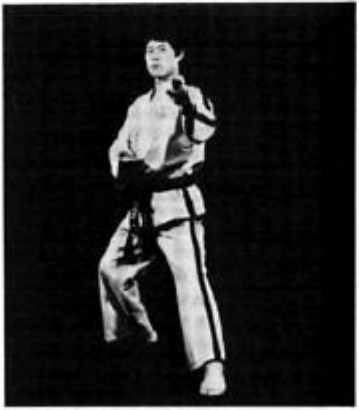
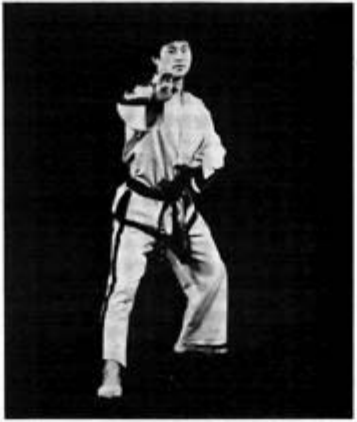
Foot path
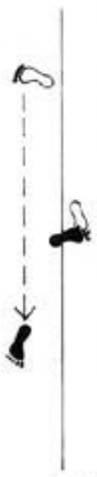
Incorrect straight-line stepping — forward stepping — side view
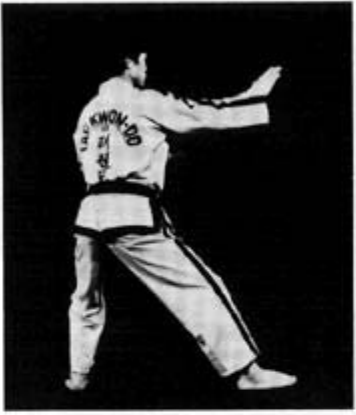
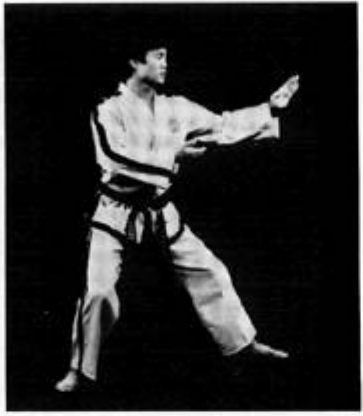
Foot path
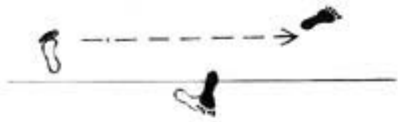
View original source illustration
Open original image
Sources and references
Source Pages: 210, 211, 212, 213, 214, 215, 216, 217, 218, 219, 220, 221, 222, 223, 224, 225, 226, 227
References by passage
- Passage 1: 210
- Passage 2: 210
- Passage 3: 210
- Passage 4: 210
- Passage 5: 210
- Passage 6: 211
- Passage 7: 211
- Passage 8: 212
- Passage 9: 213
- Passage 10: 213
- Passage 11: 213
- Passage 12: 213
- Passage 13: 213
- Passage 14: 213
- Passage 15: 213
- Passage 16: 213
- Passage 17: 214
- Passage 18: 215
- Passage 19: 215
- Passage 20: 216
- Passage 21: 217
- Passage 22: 217
- Passage 23: 218
- Passage 24: 218
- Passage 25: 219
- Passage 26: 220
- Passage 27: 220
- Passage 28: 221
- Passage 29: 221
- Passage 30: 222
- Passage 31: 222
- Passage 32: 223
- Passage 33: 223
- Passage 34: 223
- Passage 35: 223
- Passage 36: 223
- Passage 37: 223
- Passage 38: 223
- Passage 39: 223
- Passage 40: 223
- Passage 41: 224
- Passage 42: 224
- Passage 43: 225
- Passage 44: 226
- Passage 45: 226
- Passage 46: 227