Volume II
Diagonal, Crouched, X, One‑Leg and Vertical Stances
Select an image to view it at full size.
Diagonal Stance (Sasun sogi)
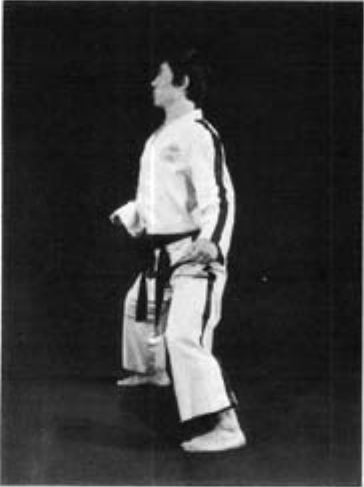
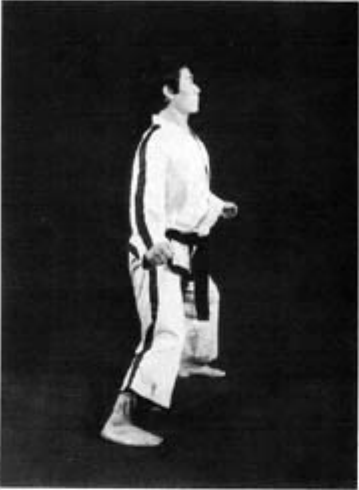
This is very useful for shifting into a walking stance without relocating the foot. The principle for a sitting stance is directly applied except that the heel of the front foot is placed on the same line with the toes of the rear foot. It is used for attacking and defending against the front or rear. When the right foot is advanced, the stance is called a right diagonal stance and vice‑versa. It can be either full facing or side facing both in attack and defense.
Photograph
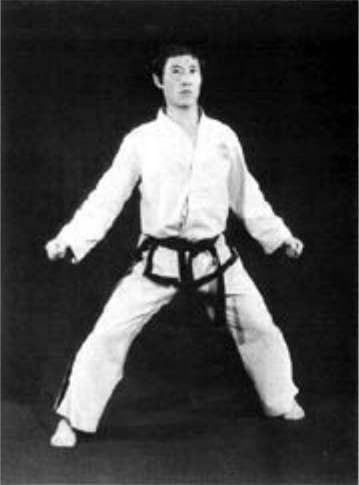
Right diagonal stance, front view
View original source illustration
Open original image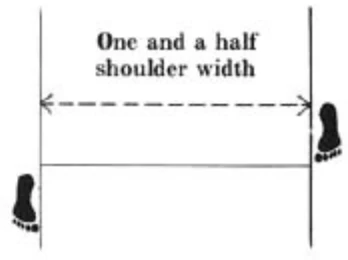
Diagonal stance: side views and foot placement
Right diagonal stance and left diagonal stance, side views and footprint guide
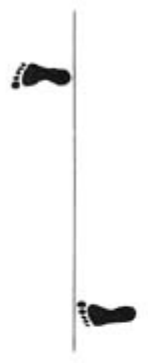
View original source illustration
Open original imageCrouched Stance (Oguryo Sogi)
This is a variation of the diagonal stance and makes use of leg tension by bending the knees inward. Although this stance provides some advantages for shifting into other stances quickly and presents flexible guarding posture to make the opponent move in free sparring, it is not used widely due to the weakness of the knee joints against attack from the sides. The distance between the feet can be flexible. When the right foot is advanced, it is called a right crouched stance and vice‑versa. It can be either full facing or side facing both in attack and defense.
Left crouched stance
Crouched stance, front, back and side views with footprint guides
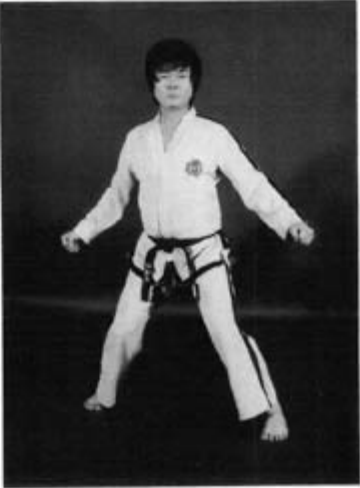
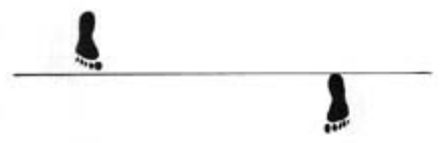
Right crouched stance
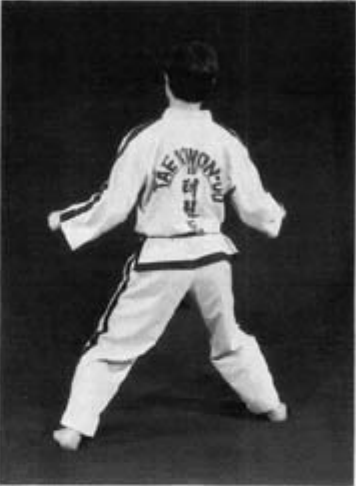
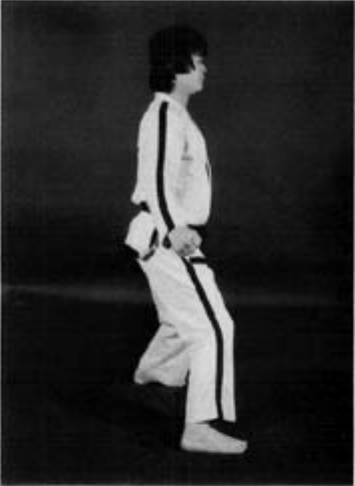
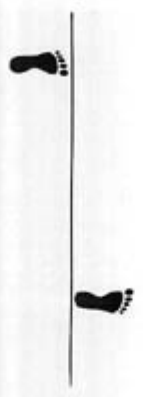
View original source illustration
Open original imageX‑Stance (Kyocha Sogi)
This is a very convenient stance for attacking the side or front. It is occasionally used for blocking and serves as a preparatory stance for moving into the next manoeuver.
1. Cross one foot over or behind the other, touching the ground slightly with the ball of the foot.
2. Place the body weight on the stationary foot.
When the weight is rested on the right foot, the stance is called a right X‑stance and vice‑versa. The other foot is usually placed in front of the stationary foot. It is either full facing or half facing, both in attack and defense.
Photograph
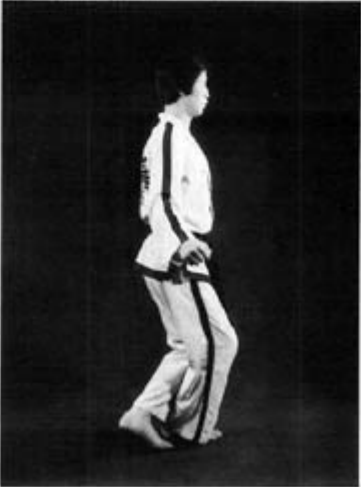
Right X‑stance, side view
View original source illustration
Open original imageX-stance: front view and foot placement
Right X‑stance, front view and footprint guide
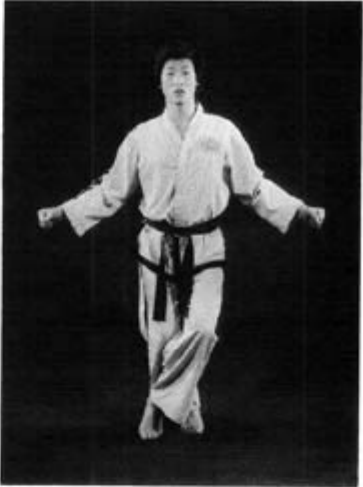
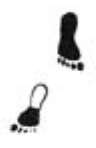
View original source illustration
Open original imagePhotograph
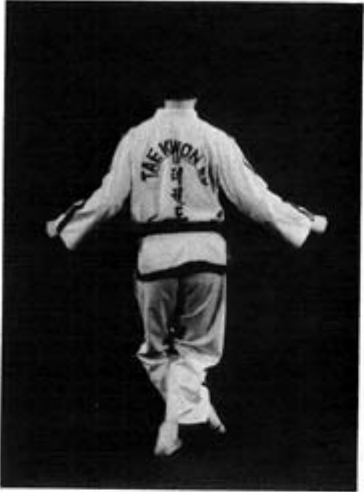
Right X‑stance, back view
View original source illustration
Open original imageOne‑Leg Stance (Waebal Sogi)
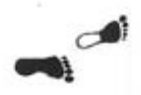
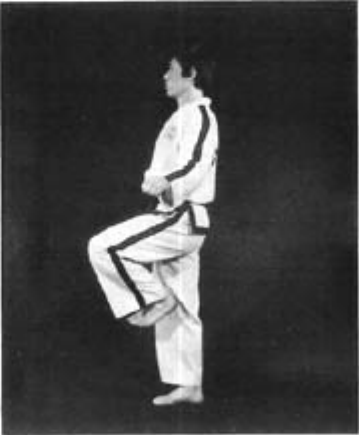
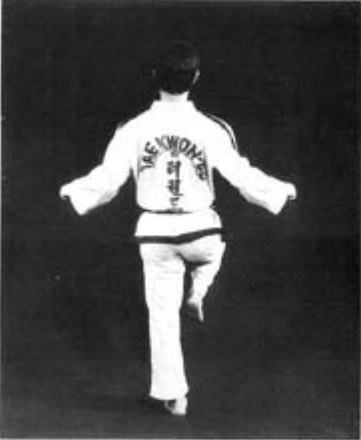
Though this stance is primarily used for balance exercise, it is occasionally utilized in attack and defense techniques. Stretch the stationary leg and bring the other reverse footsword on the knee joint or instep to the hollow. When standing with the right foot, it is called a right one‑leg stance and vice‑versa. It can be either full facing or side facing, both in attack and defense.
Photograph
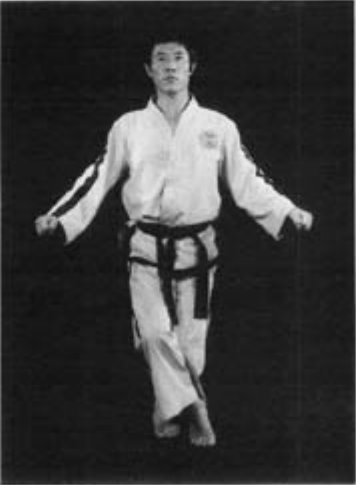
Left X‑stance, front view
View original source illustration
Open original imageLeft X-stance
Left X‑stance, side view and footprint guide
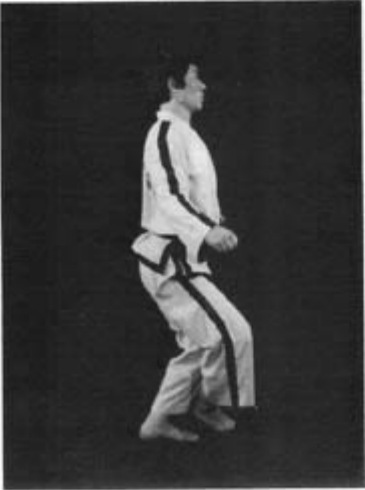
View original source illustration
Open original imagePhotograph
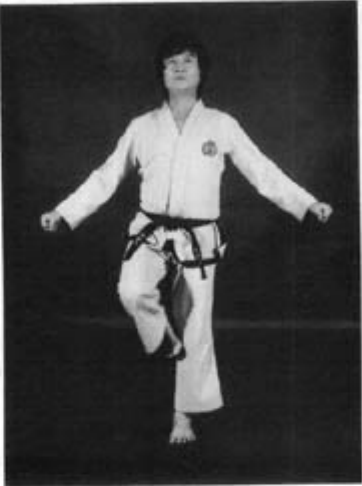
Right one‑leg stance, front view
View original source illustration
Open original imagePhotograph
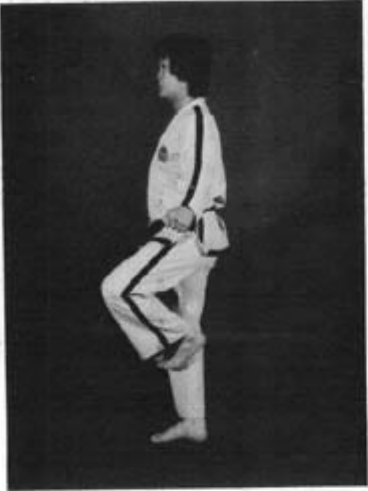
Left one‑leg stance, side view
View original source illustration
Open original imageBending Stance (Guburyo Sogi)
This serves as a preparatory stance for side and back kicks, though it is frequently used for defense techniques. When standing with a right foot it is called a right bending stance and vice‑versa. It is either full facing or half facing.
One-leg stance: alternate views
Right one‑leg stance, side view; left one‑leg stance, back view
View original source illustration
Open original image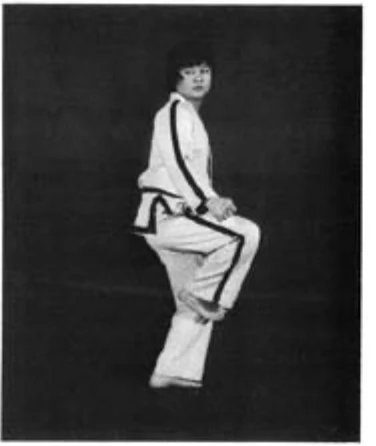
Photograph
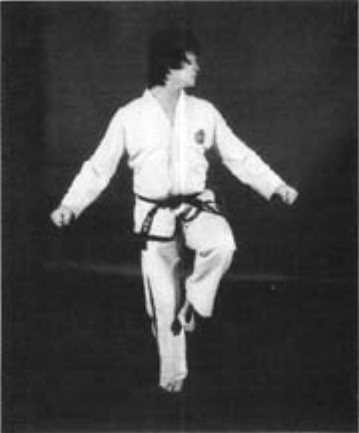
Right bending stance, side view
View original source illustration
Open original image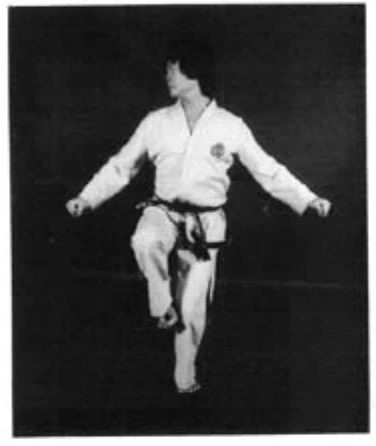
Vertical Stance (Soojik Sogi)
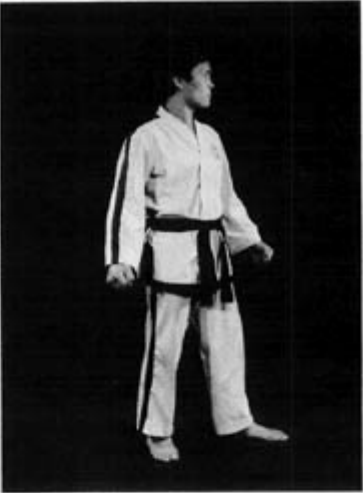
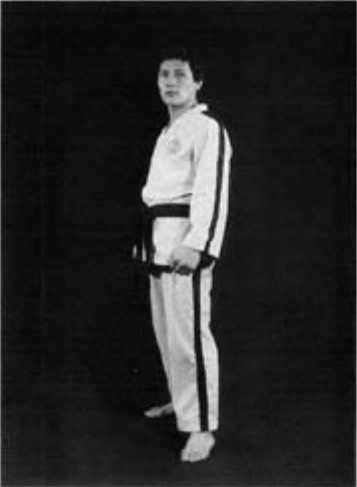
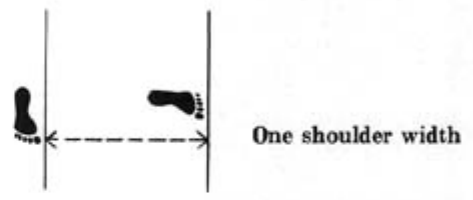
1. Move one foot to either front or side at a distance of one shoulder width between the big toes.
2. The ratio of body weight is 60 percent on the rear leg and 40 percent on the front leg.
3. Keep the toes of both feet pointed approximately 15 degrees inward.
4. Keep the legs straight.
When the right foot is in the rear, the stance is called a right vertical stance and vice‑versa. It is always half facing, both in attack and defense.
Photograph
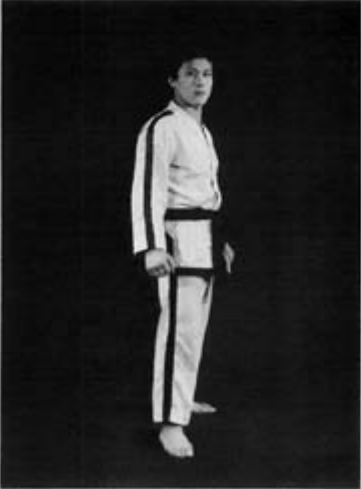
Left vertical stance, front view
View original source illustration
Open original imageRight vertical stance
Right vertical stance, side and front views; one shoulder width footprint guide
View original source illustration
Open original imageSources and references
Source Pages: 151, 152, 153, 154, 155, 156
References by passage
- Passage 1: 151
- Passage 2: 151
- Passage 3: 151
- Passage 4: 151
- Passage 5: 151
- Passage 6: 151
- Passage 7: 152
- Passage 8: 152
- Passage 9: 152
- Passage 10: 153
- Passage 11: 153
- Passage 12: 153
- Passage 13: 153
- Passage 14: 153
- Passage 15: 153
- Passage 16: 153
- Passage 17: 153
- Passage 18: 154
- Passage 19: 154
- Passage 20: 154
- Passage 21: 154
- Passage 22: 154
- Passage 23: 154
- Passage 24: 155
- Passage 25: 155
- Passage 26: 155
- Passage 27: 155
- Passage 28: 155
- Passage 29: 155
- Passage 30: 156
- Passage 31: 156
- Passage 32: 156
- Passage 33: 156
- Passage 34: 156
- Passage 35: 156
- Passage 36: 156
- Passage 37: 156