Volume II
Stance Mould, Punching Ball, Toughening Box and Mirror
Select an image to view it at full size.
Stance Mould (Sogi Pan)
This is a simple model of various stances fixed on a flat board. It is useful for learning and reinforcing a correct stance. Actually, it is best to use a mirror as well.
Illustrations: 1. Sitting stance. 2. Left walking stance. 3. Left L‑stance. 4. Right X‑stance. 5. Parallel stance. 6. Right rear foot stance. 7. Right vertical stance.
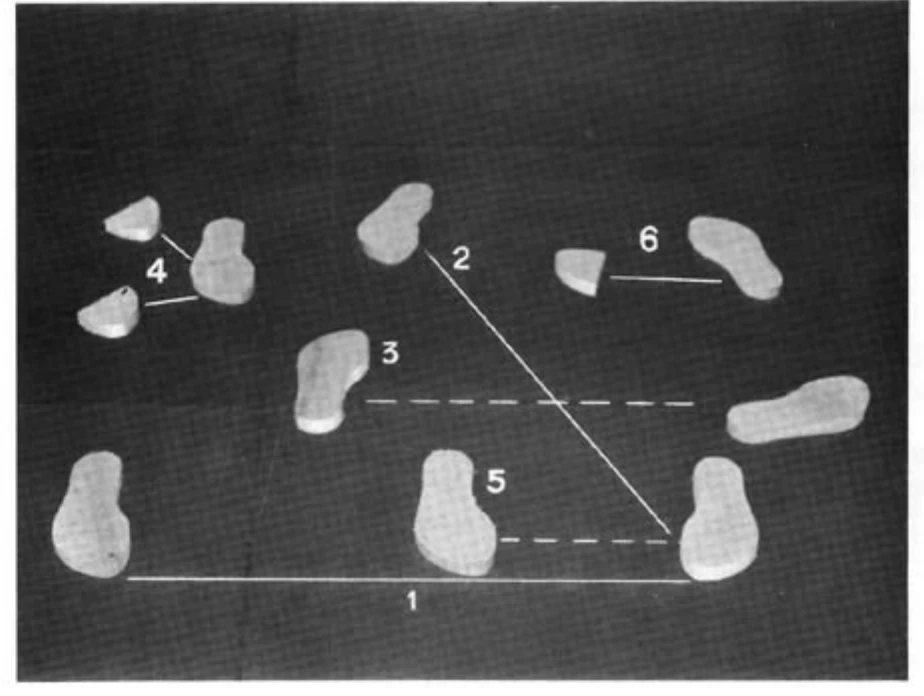
Stance mould practice
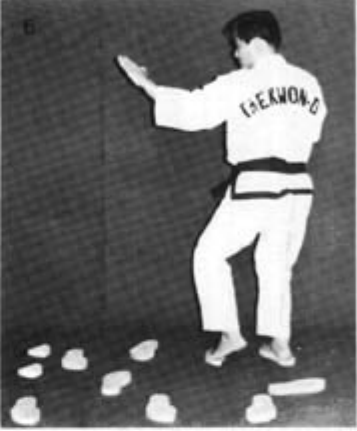
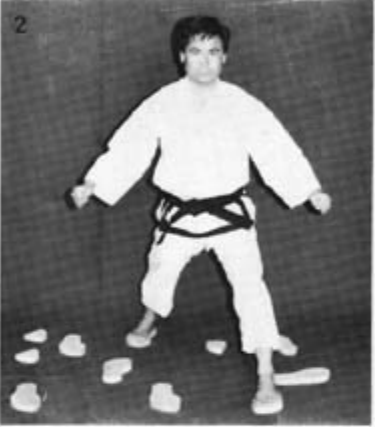
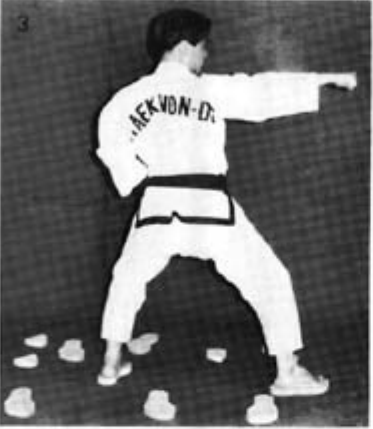
View original source illustration
Open original imagePunching Ball (Dallyon Gong)
There are two types of punching balls. A long ball is used for kicking and punching exercise; a round one, solely for kicking. This device is particularly good for developing timing in hand and foot techniques.
How to Install
Long punching ball
The long ball is usually attached to the wall of the training hall. The bottom of the ball should reach five feet off the ground. Though this can be flexible according to the height of the user.
Long punching ball: punching and kicking
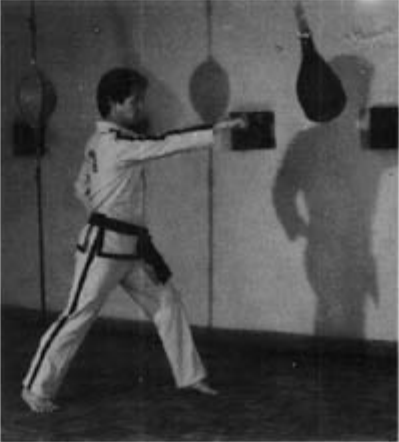
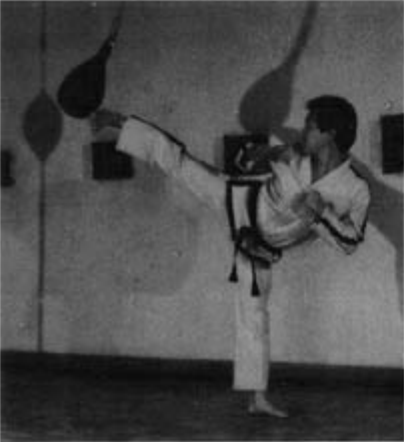
View original source illustration
Open original imageRound punching ball
The round ball is fastened between the ceiling and the floor with rubber or elastic thongs. This will make the ball flexible, allowing it to move freely. The center of the ball should reach the student’s armpit.
Round punching ball: middle twisting kick and flying front kick
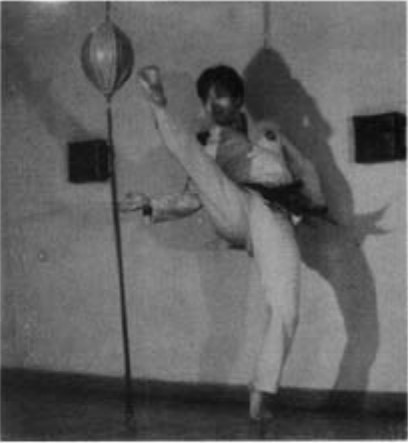
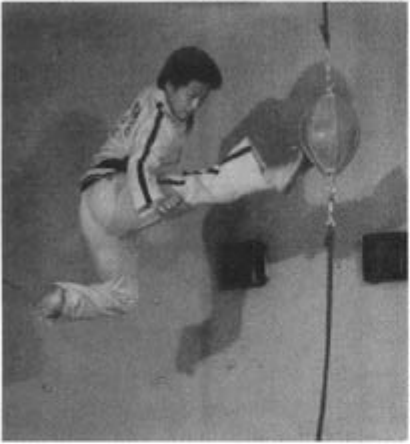
View original source illustration
Open original imageRound ball — additional kicks
Round punching ball: back piercing kick and reverse turning kick
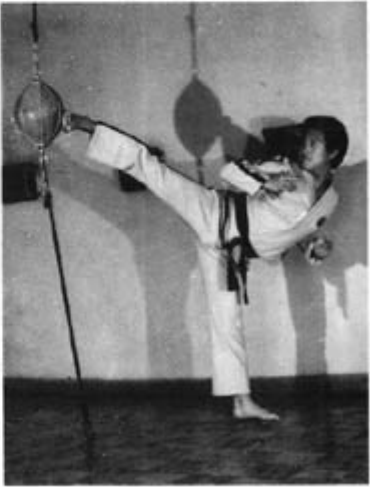
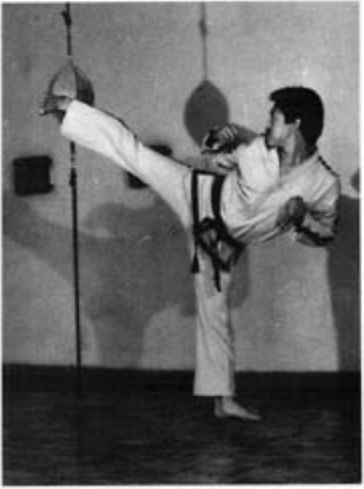
View original source illustration
Open original imageFinger toughening box
Finger Toughening Box (Dallyon Tong)
The bowl is filled with rice initially, then the contents are gradually replaced with sand. As the fingers are toughened, the sand is replaced with beans.
Finger toughening box
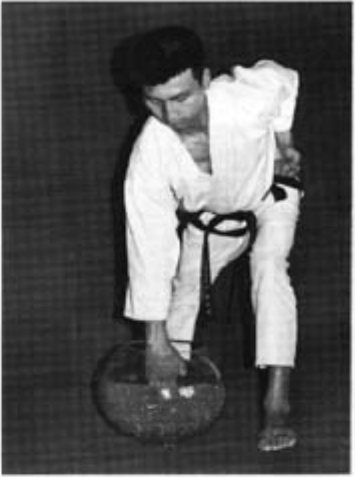
View original source illustration
Open original imageFoot raising bar
Foot Raising Bar (Dari Olligi Dae)
Foot raising bar (Dari Olligi Dae)
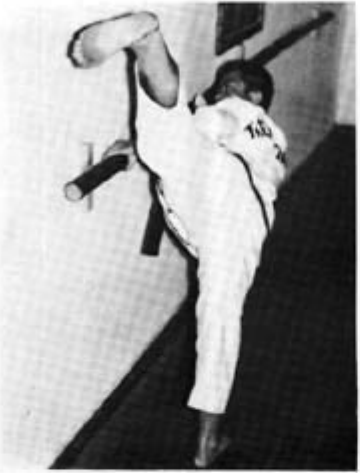
View original source illustration
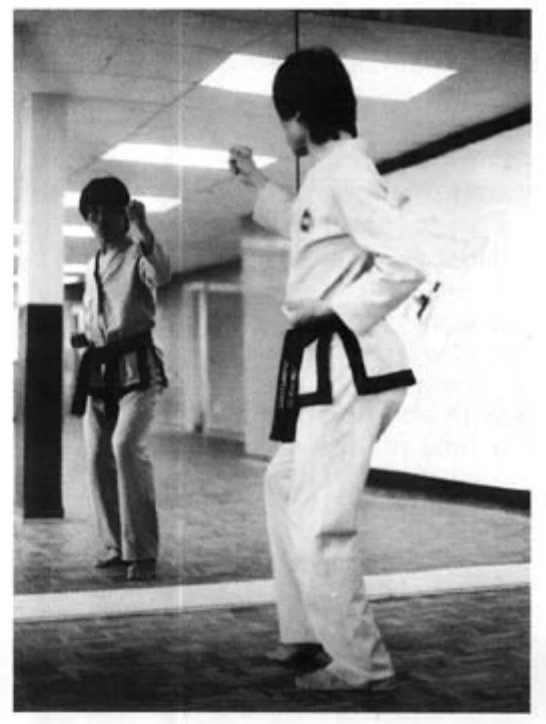
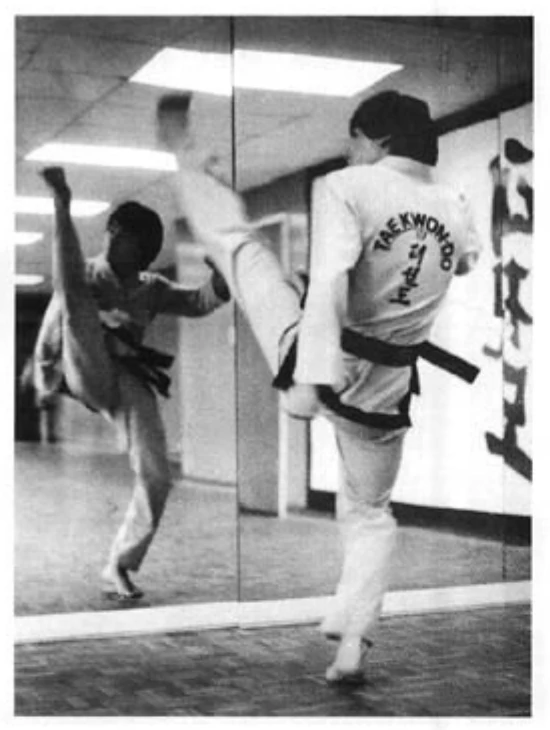
Open original imageMirror (Ko Ul)
A mirror definitely helps the student to observe and improve his techniques as learned from an instructor. Install full length mirrors on walls or columns so that the student can correct mistakes immediately before bad habits set in.
Sources and references
Source Pages: 276, 277, 278, 279
References by passage
- Passage 1: 276
- Passage 2: 276
- Passage 3: 276
- Passage 4: 276
- Passage 5: 276
- Passage 6: 276
- Passage 7: 277
- Passage 8: 277
- Passage 9: 277
- Passage 10: 277
- Passage 11: 277
- Passage 12: 277
- Passage 13: 277
- Passage 14: 278
- Passage 15: 278
- Passage 16: 278
- Passage 17: 278
- Passage 18: 278
- Passage 19: 278
- Passage 20: 279
- Passage 21: 279
- Passage 22: 279
- Passage 23: 279