Volume II
Power Holder, Power Indicator and Special Technique Holders
Select an image to view it at full size.
Power Holder (Gyokpa Dae)
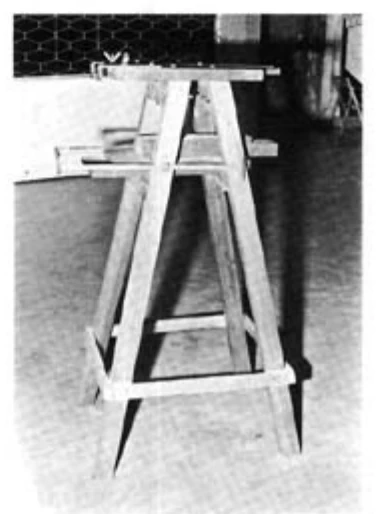
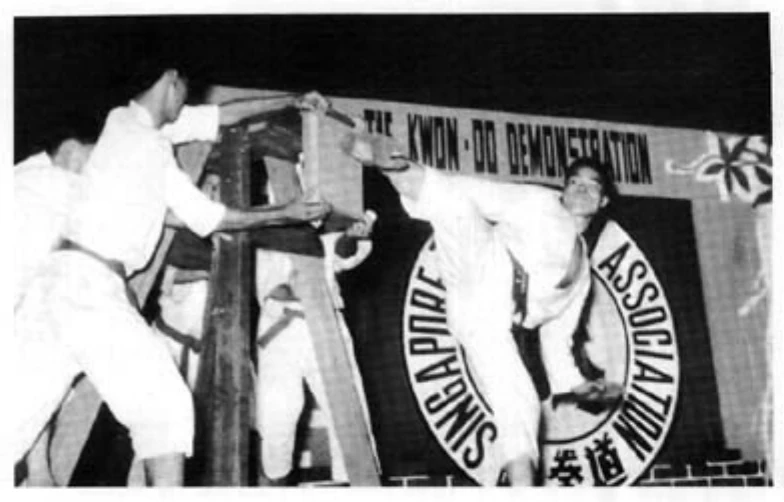
This device is used to hold boards, bricks or tiles for breaking purposes. The advantage of the holder is that the student can practice alone and eliminate the necessity of one or two fellow students’ presence for holding purposes.
The holder consists of a wide and a narrow side. The former holds boards while the latter holds bricks or tiles.
The height varies according to the user, though four feet will usually be the ideal height. The narrow side must be covered with an iron sheet so that the brick is held firmly.
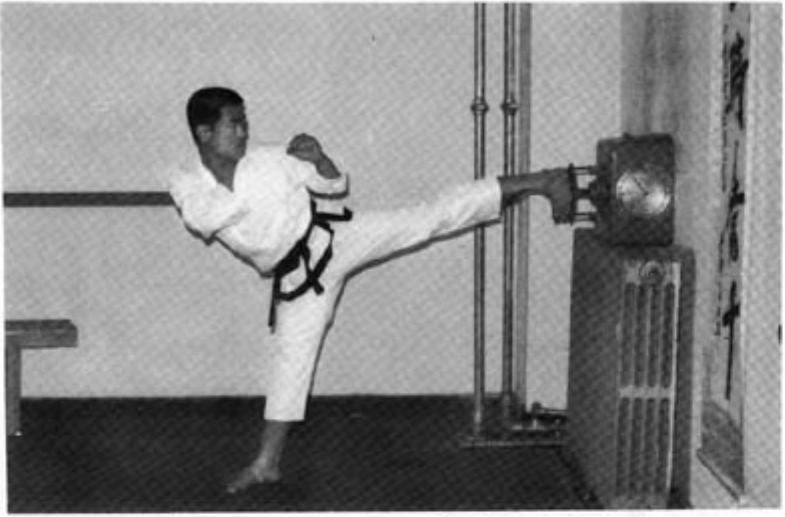
Power Indicator (Wiryok Gi)
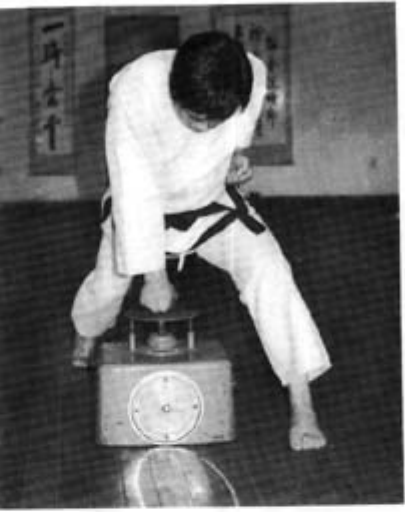
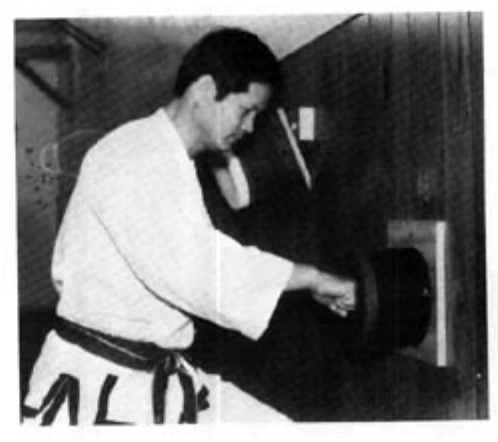
Before the advent of the power indicator, the only way one was able to judge actual power was through the breaking of boards or bricks. One of the drawbacks of this, however, was that the breaking ability of a student in one part of a country could not be compared to a student’s ability in another part of the country. The reason for this is that the consistency of boards and bricks varies from area to area. A student might be able to break four or five pine boards yet not be able to break two pine boards from a neighboring state.
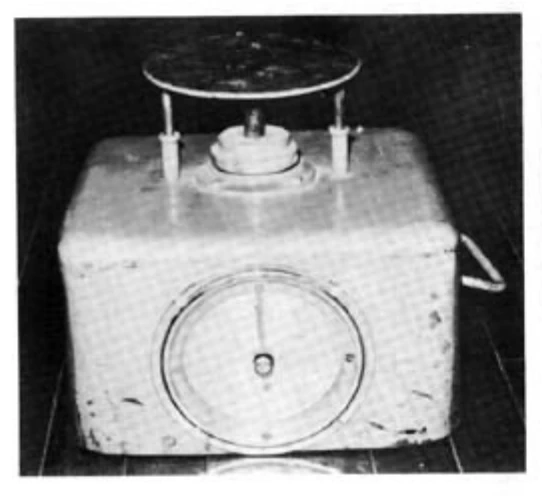
Measuring hand and foot power
Measuring hand and foot power
View original source illustration
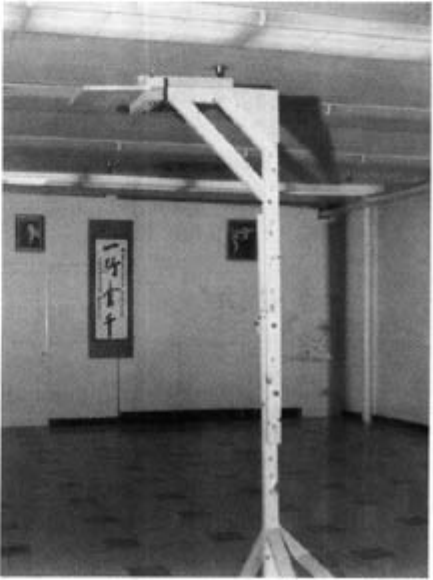
Open original imageSpecial Technique Holder (Tukgi Dae)
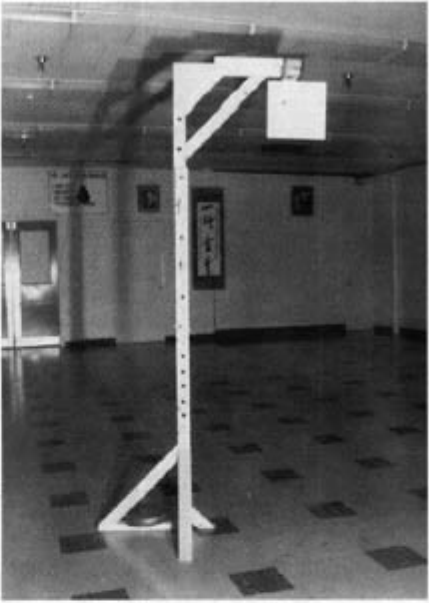
The purpose of this device is to hold the board chiefly for flying high kick, overhead kick and so on, in particular, during competition.
Holder for flying high kicks
Special technique holder for flying high kick
View original source illustration
Open original image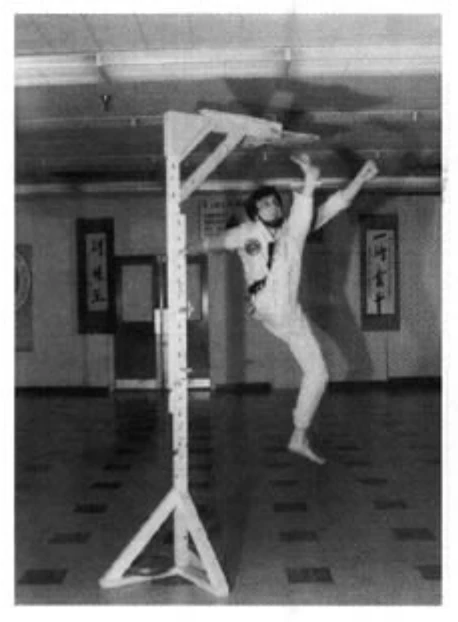
Holder for flying and mid-air kicks
View original source illustration
Open original imageDyna‑strike
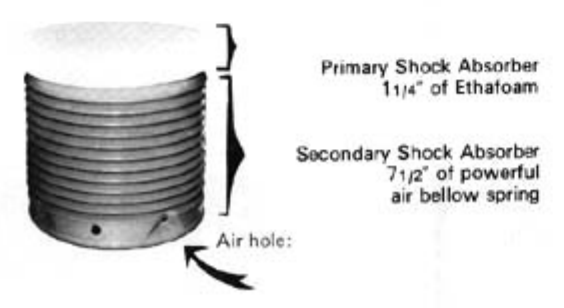
Dyna‑strike serves as fixed and moving targets for all levels of students. It can be punched or kicked harder with full speed as air cushions the blows. It is also an ideal training aid for timing practice when suspended on tree or ceiling. This device was developed by Han Cha Kyo after years of research.
Dyna-strike components
Primary Shock Absorber: 1 1/4 inch of Ethafoam. Secondary Shock Absorber: 7 1/2 inch of powerful air bellow spring. Air hole.
Dyna‑strike shock absorbers and air hole
View original source illustration
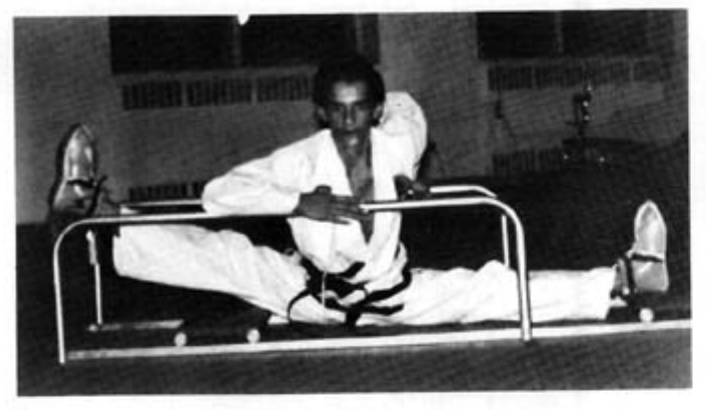
Open original imageStretchociser in use
Stretchociser
Principle of the Stretchociser is directly related to the muscle development which affects performance a great deal in Taekwon‑Do, particularly for a front, side or back kick. The value of Stretchociser is to prevent injuries during training by promoting flexibility of tendons, joints and ligaments while restoring muscle tone for health as well as good appearance. (Designed by J. C. Kim)
Stretchociser in use
View original source illustration
Open original image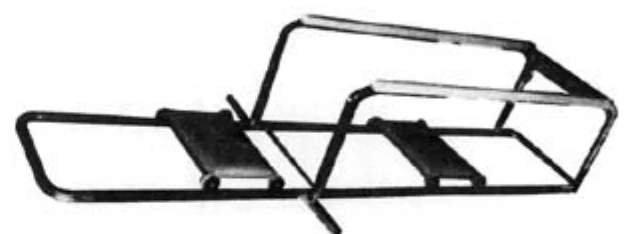
Sources and references
Source Pages: 280, 281, 282, 283
References by passage
- Passage 1: 280
- Passage 2: 280
- Passage 3: 280
- Passage 4: 280
- Passage 5: 280
- Passage 6: 280
- Passage 7: 280
- Passage 8: 281
- Passage 9: 281
- Passage 10: 281
- Passage 11: 281
- Passage 12: 282
- Passage 13: 282
- Passage 14: 282
- Passage 15: 282
- Passage 16: 282
- Passage 17: 283
- Passage 18: 283
- Passage 19: 283
- Passage 20: 283
- Passage 21: 283
- Passage 22: 283
- Passage 23: 283
- Passage 24: 283
- Passage 25: 283