Volume XI
Kwang‑Gae: Introduction and Movements 1–6
Select an image to view it at full size.
This pattern is practised by the 1st degree and above.
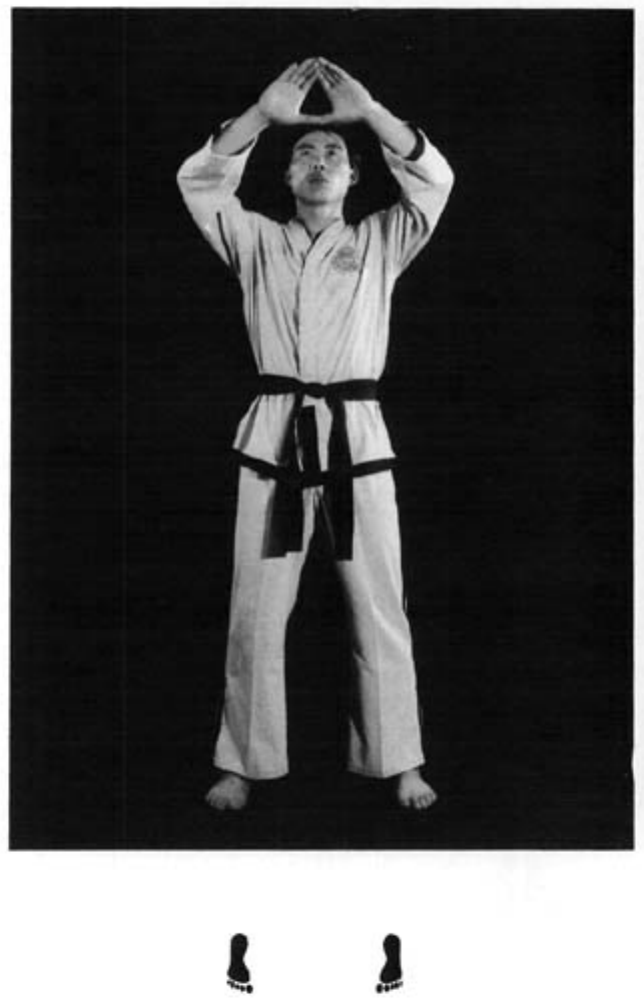
Movements: 39. Ready posture: Parallel stance with a heaven hand.
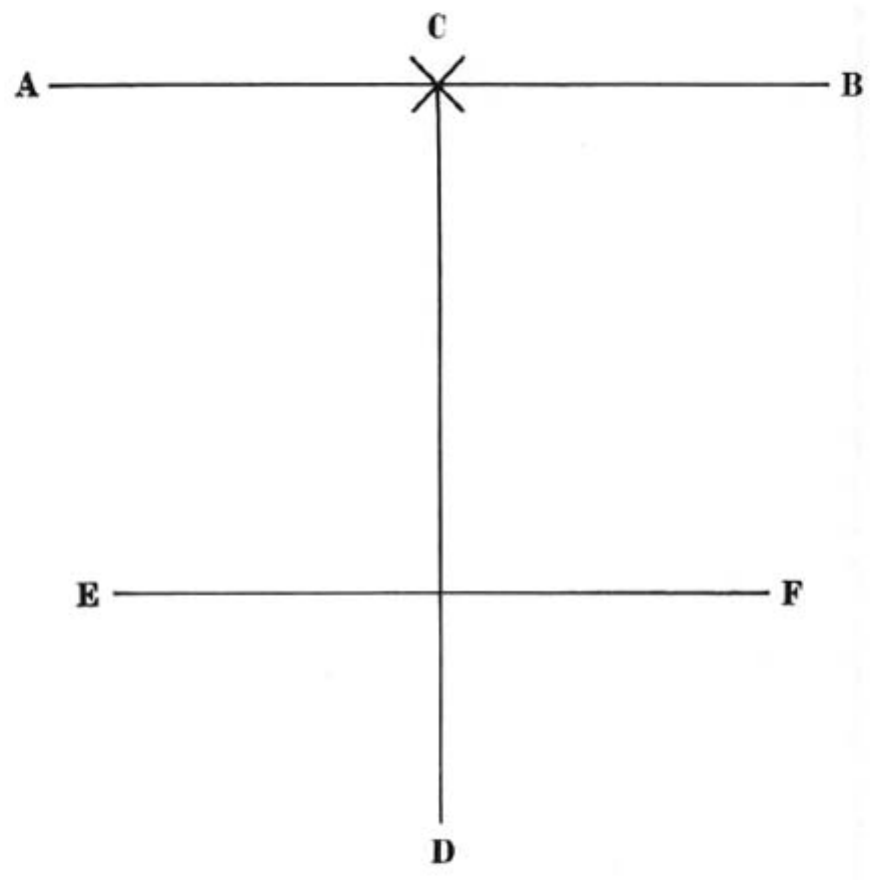
Pattern diagram
DIAGRAM (Yon Moo Son)
Note: This diagram is reversed to help the student to understand and perform from a clearer angle.
Kwang‑Gae source illustration, printed page 36
View original source illustration
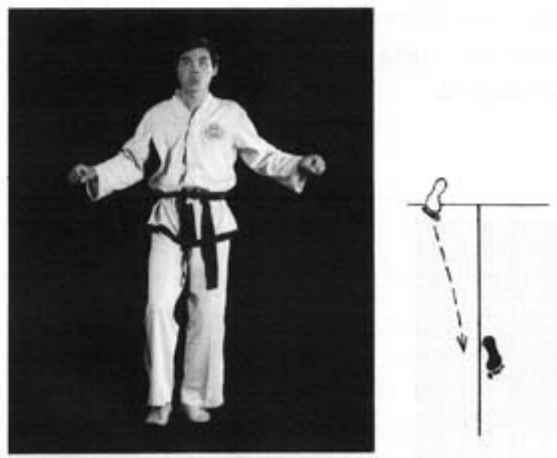
Open original imageReady Posture (Junbi Jase)
Ready posture
Parallel stance with a heaven hand toward D.
Kwang‑Gae source illustration, printed page 37
View original source illustration
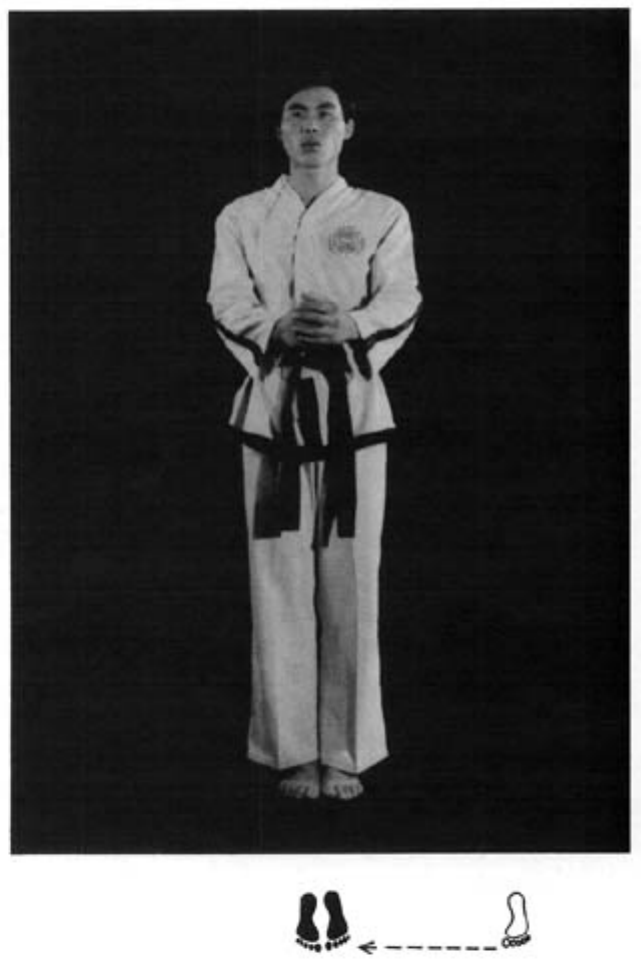
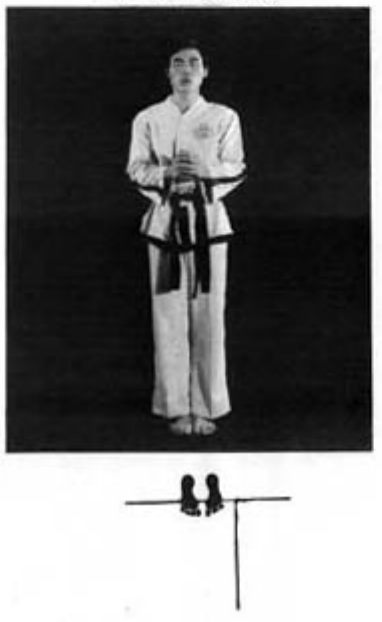
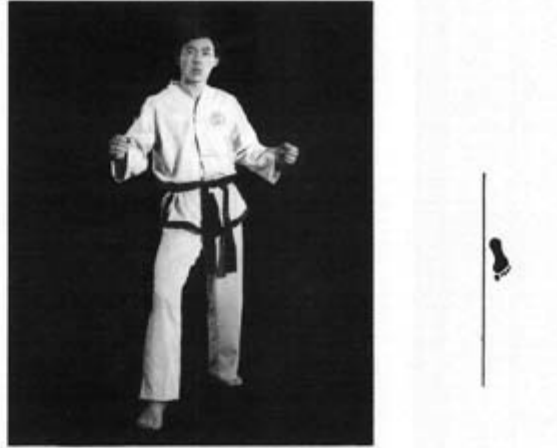
Open original image1. Bring the left foot to the right foot, forming a close ready stance B toward D, bringing both hands in a circular motion.
Movement 1
Close ready stance B toward D.
Kwang‑Gae source illustration, printed page 38
View original source illustration
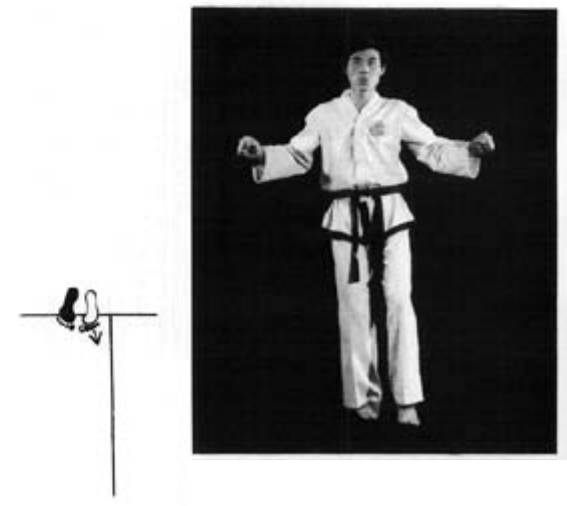
Open original imageMovement 1 sequence
Kwang‑Gae source illustration, printed page 39
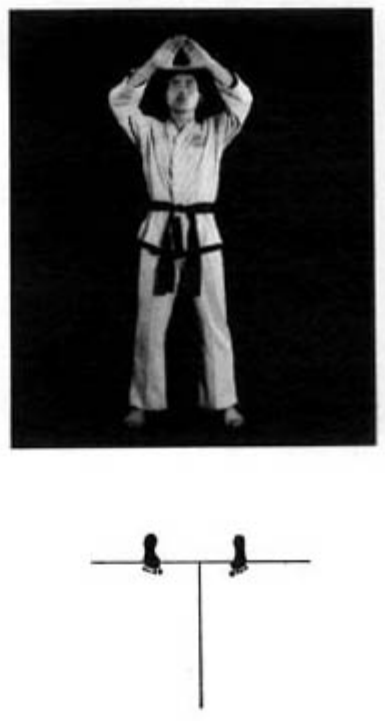
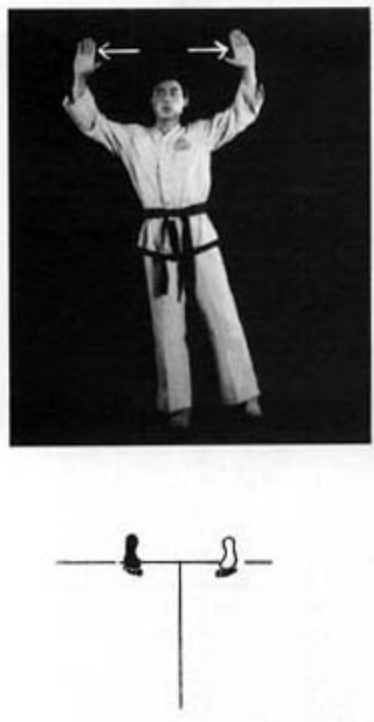
Pull both hands rapidly to the side, describing a straight line.
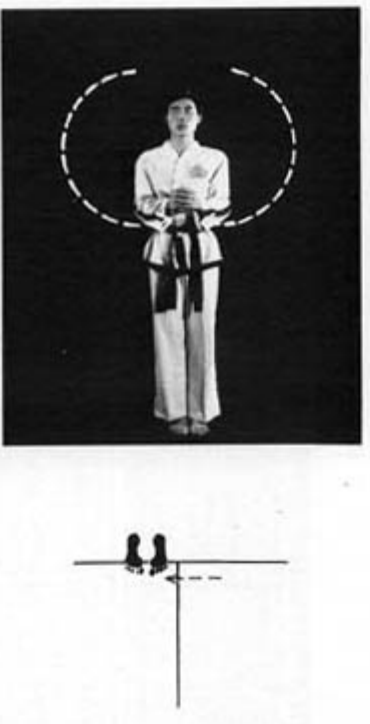
Bring them slowly in front of the navel.
View original source illustration
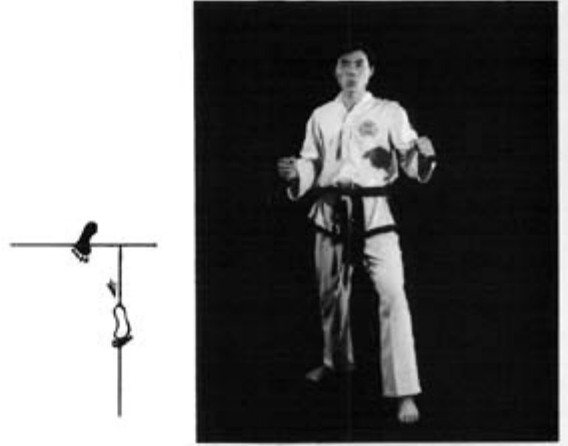
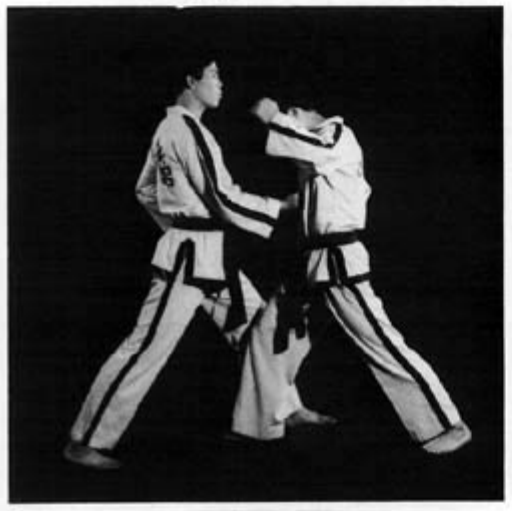
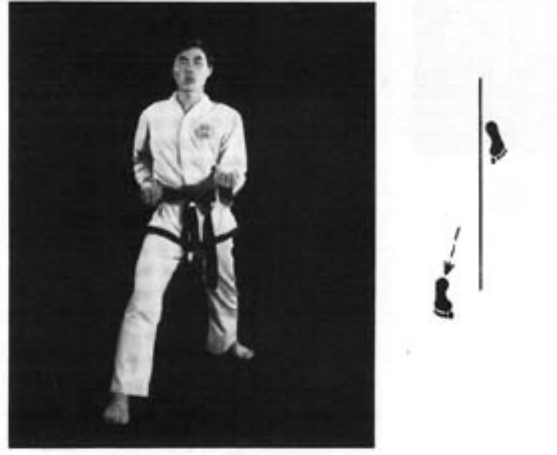
Open original image2. Move the left foot to D, forming a left walking stance toward D while executing an upset punch to D with the right fist. Perform in a slow motion.
Movement 2
Left walking stance upset punch toward D with the right fist.
Kwang‑Gae source illustration, printed page 40
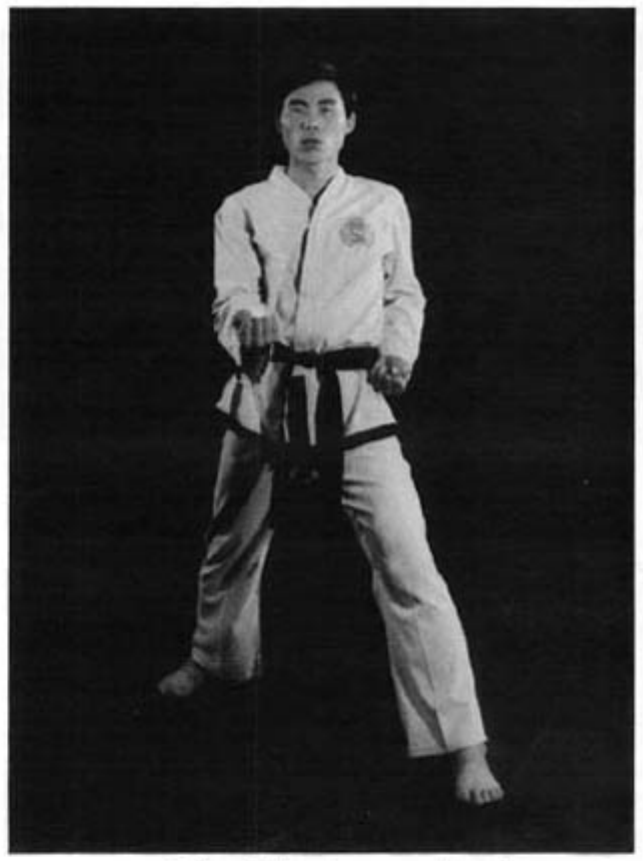
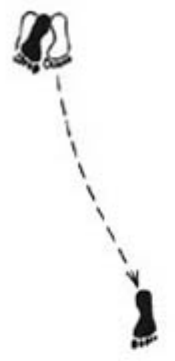
Previous posture
Previous Posture
View original source illustration
Open original imageMovement 2 sequence
Kwang‑Gae source illustration, printed page 41
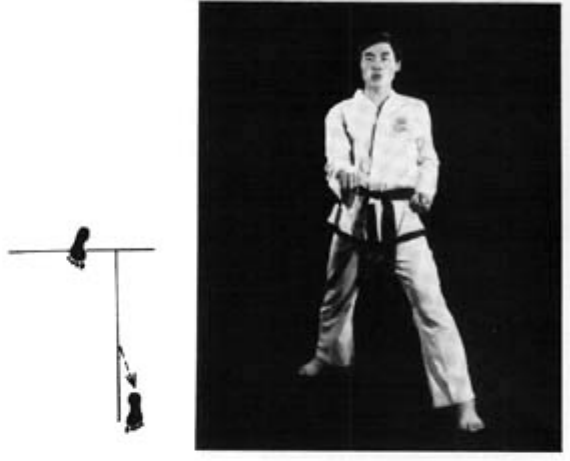
The fist reaches the target in a circular motion.
Application
Application
Side View
View original source illustration
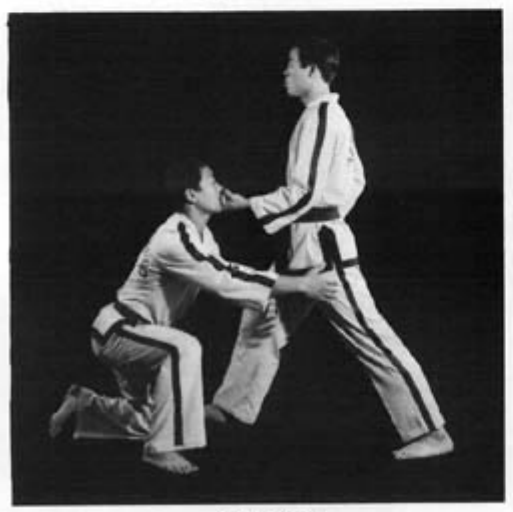
Open original image3. Move the right foot to D, forming a right walking stance toward D while executing an upset punch to D with the left fist. Perform in a slow motion.
Movement 3
Right walking stance upset punch toward D with the left fist.
Kwang‑Gae source illustration, printed page 42
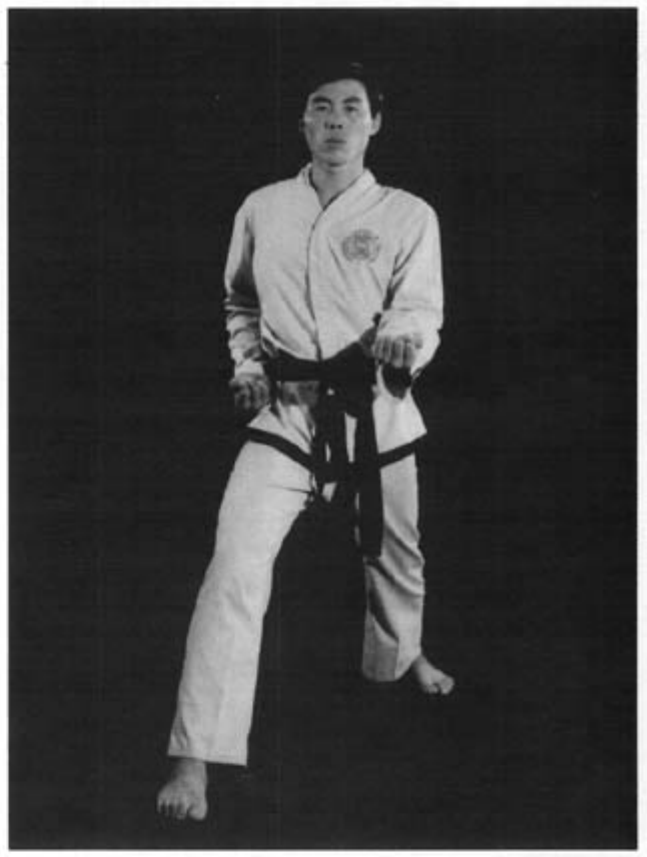
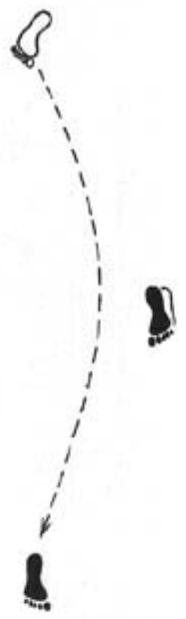
Previous posture
Previous Posture
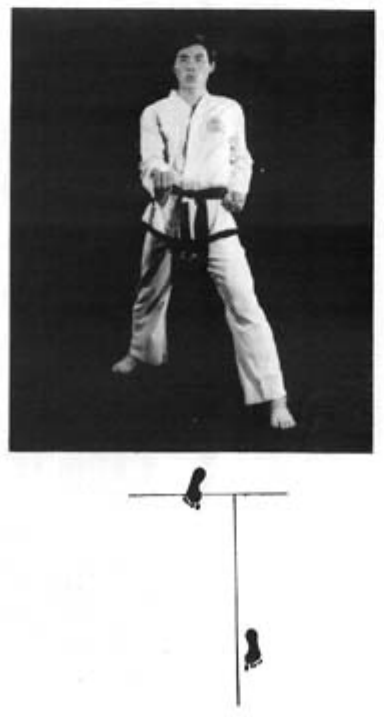
View original source illustration
Open original imageMovement 3 sequence
Kwang‑Gae source illustration, printed page 43
The fist reaches the target in a circular motion.
Application
Application
Side View
View original source illustration
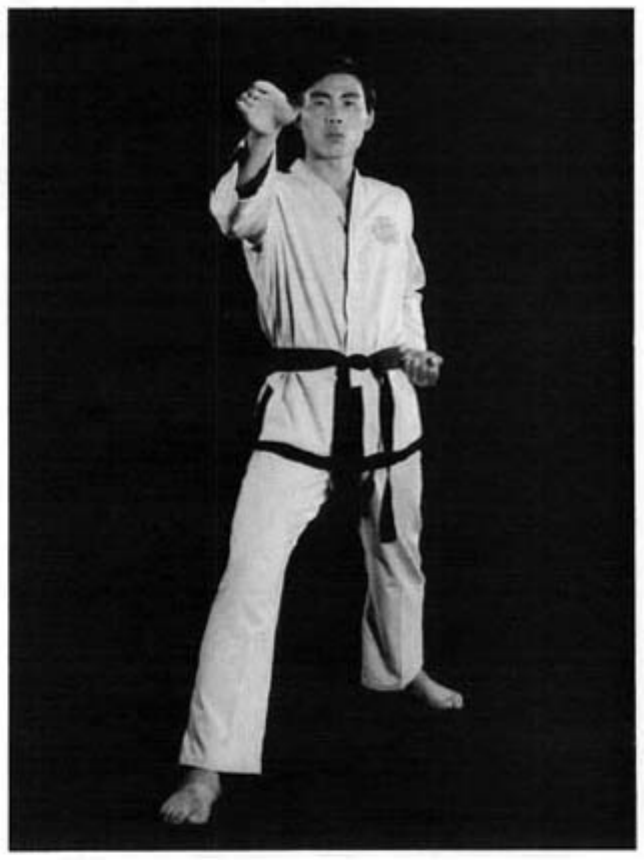
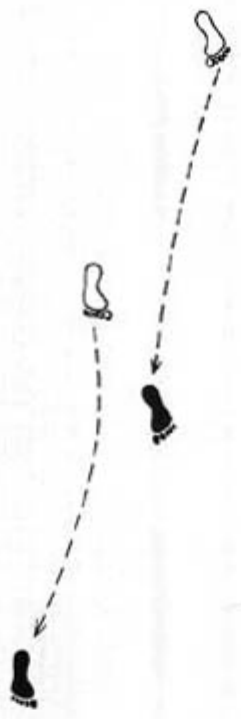
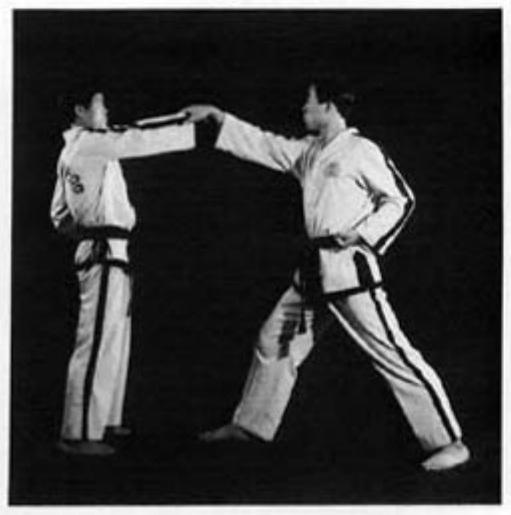
Open original image4. Move the left foot to the side front of the right foot, and then move the right foot to D, forming a right walking stance toward D, at the same time executing a high hooking block to D with the right palm. Perform in a double stepping motion.
Movement 4
Right walking stance palm hooking block toward D with the right palm.
Kwang‑Gae source illustration, printed page 44
View original source illustration
Open original imageMovement 4 sequence
Kwang‑Gae source illustration, printed page 45
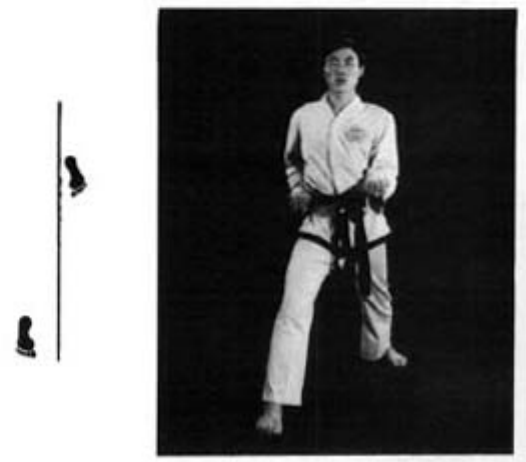
Previous Posture
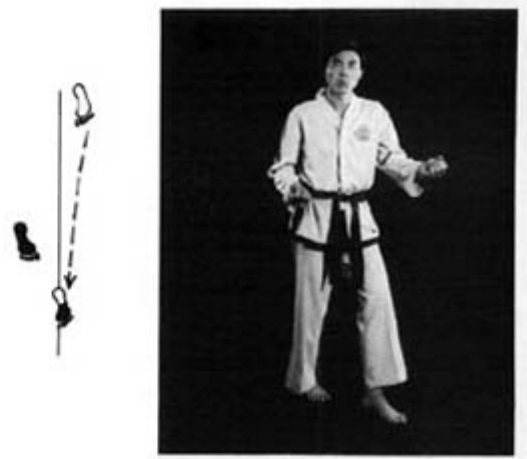
Keep the body half facing D, pivoting the right foot, with the left heel slightly off the ground.
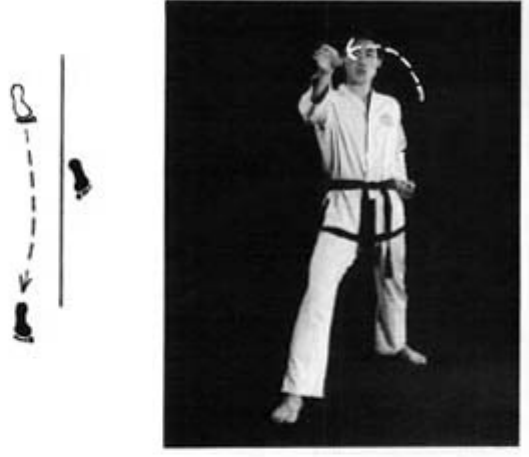
The palm reaches the target in an arc motion.
Application
Application
Side View
View original source illustration
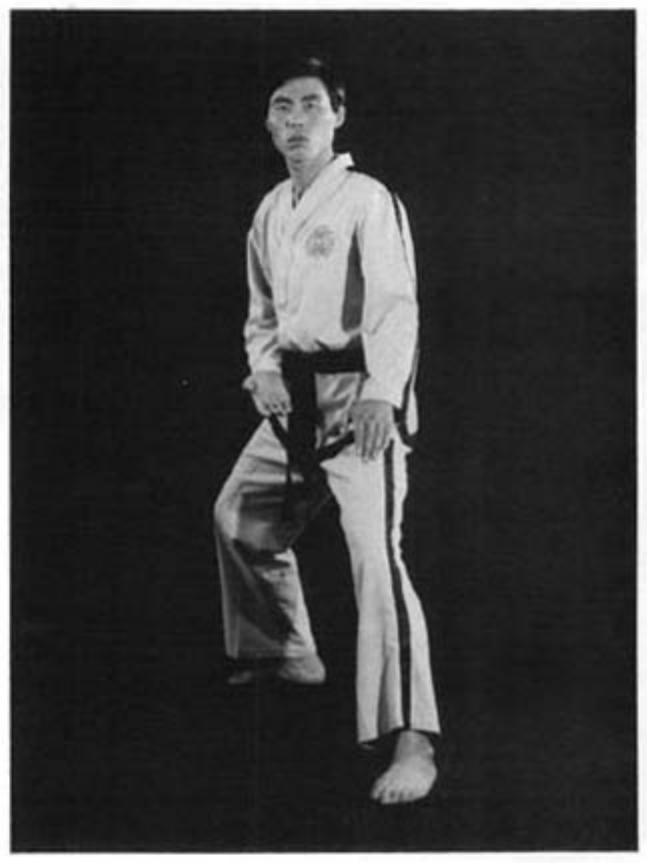
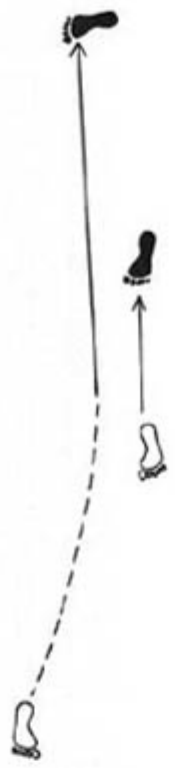
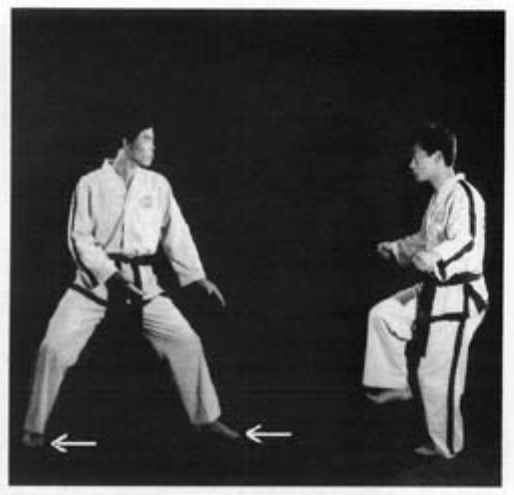
Open original image5. Move the right foot to C in a sliding motion to form a right L‑stance toward D, at the same time executing a low guarding block to D with a knife‑hand.
Movement 5
Right L‑stance knife‑hand low guarding block toward D.
Kwang‑Gae source illustration, printed page 46
View original source illustration
Open original imageMovement 5 sequence
Kwang‑Gae source illustration, printed page 47
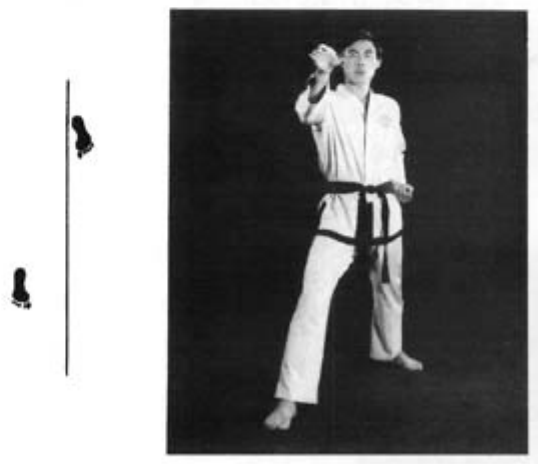
Previous Posture
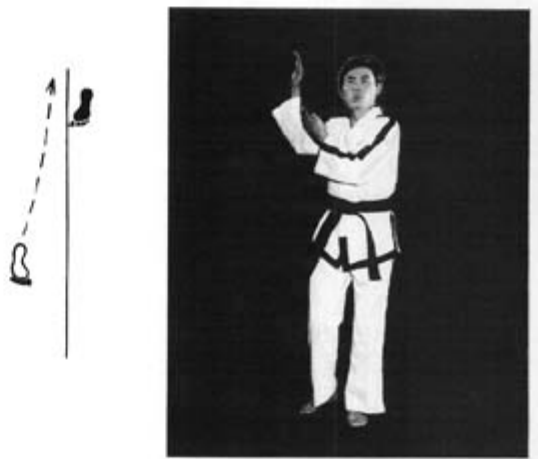
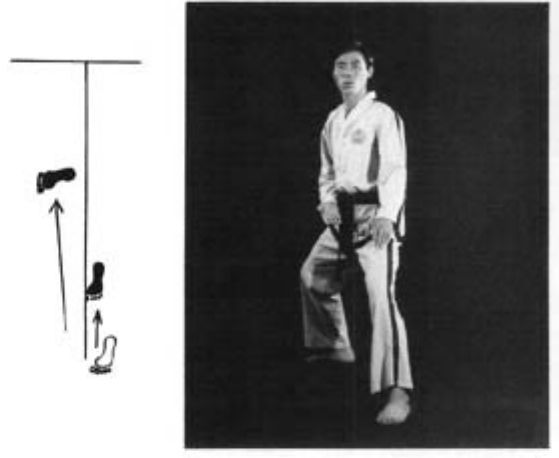
Application
Application
Side View
View original source illustration
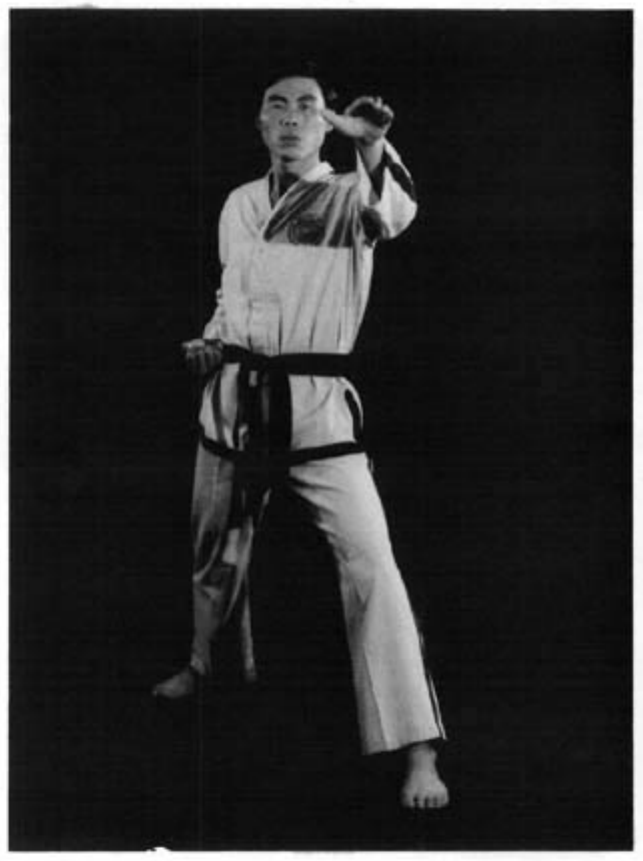
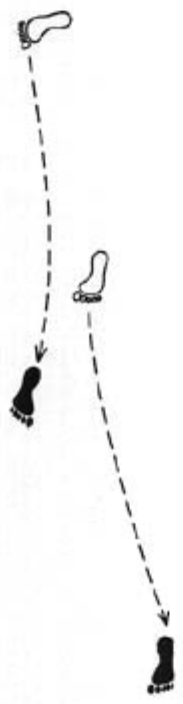
Open original image6. Move the right foot to the side front of the left foot and then move the left foot to D, forming a left walking stance toward D while executing a high hooking block to D with the left palm. Perform in a double stepping motion.
Movement 6
Left walking stance left palm high hooking block toward D.
Kwang‑Gae source illustration, printed page 48
View original source illustration
Open original imageMovement 6 sequence
Kwang‑Gae source illustration, printed page 49
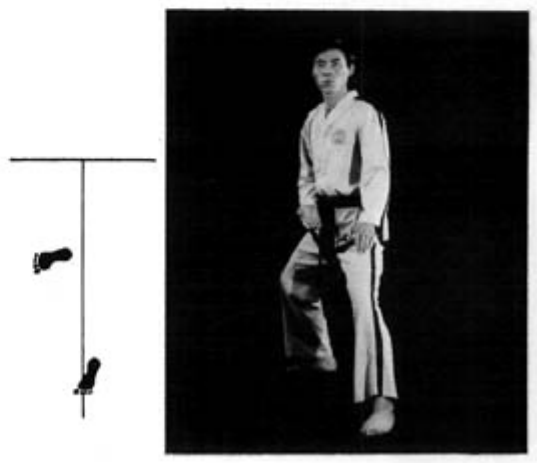
Previous Posture
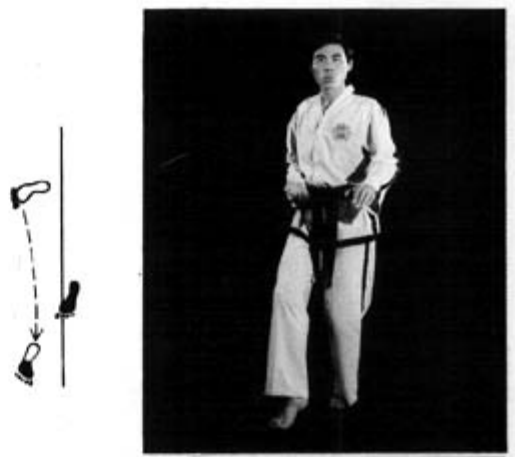
Keep the body half‑facing D, pivoting the left foot, with the right heel slightly off the ground.
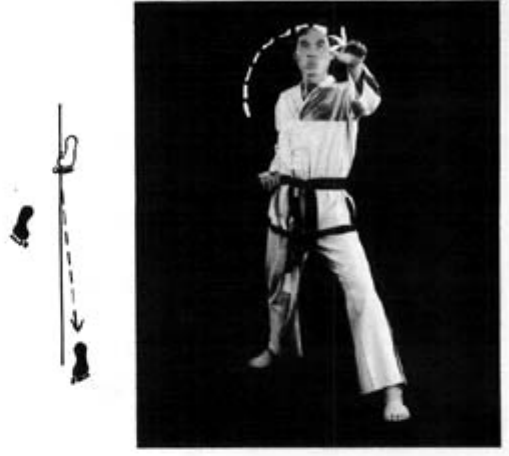
The palm reaches the target in an arc motion.
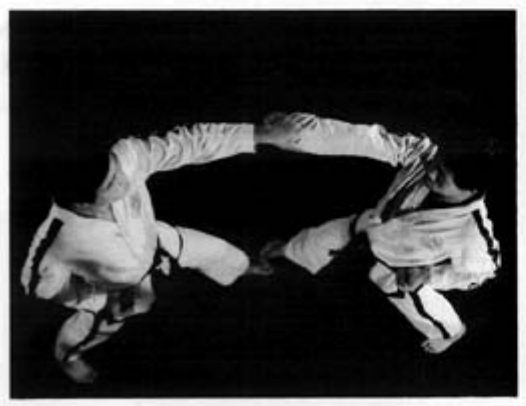
Application
Application
Top View
View original source illustration
Open original imageSources and references
Source Pages: 35, 36, 37, 38, 39, 40, 41, 42, 43, 44, 45, 46, 47, 48, 49
References by passage
- Passage 1: 35
- Passage 2: 35
- Passage 3: 35
- Passage 4: 36
- Passage 5: 36
- Passage 6: 36
- Passage 7: 37
- Passage 8: 37
- Passage 9: 37
- Passage 10: 38
- Passage 11: 38
- Passage 12: 38
- Passage 13: 39
- Passage 14: 39
- Passage 15: 39
- Passage 16: 39
- Passage 17: 40
- Passage 18: 40
- Passage 19: 40
- Passage 20: 40
- Passage 21: 41
- Passage 22: 41
- Passage 23: 41
- Passage 24: 41
- Passage 25: 42
- Passage 26: 42
- Passage 27: 42
- Passage 28: 42
- Passage 29: 43
- Passage 30: 43
- Passage 31: 43
- Passage 32: 43
- Passage 33: 44
- Passage 34: 44
- Passage 35: 44
- Passage 36: 45
- Passage 37: 45
- Passage 38: 45
- Passage 39: 45
- Passage 40: 45
- Passage 41: 45
- Passage 42: 46
- Passage 43: 46
- Passage 44: 46
- Passage 45: 47
- Passage 46: 47
- Passage 47: 47
- Passage 48: 47
- Passage 49: 48
- Passage 50: 48
- Passage 51: 48
- Passage 52: 49
- Passage 53: 49
- Passage 54: 49
- Passage 55: 49
- Passage 56: 49
- Passage 57: 49