Volume VIII
Techniques for the Beginner or 10th Grade Holder
Select an image to view it at full size.
Techniques for the Beginner or 10th Grade Holder
Important
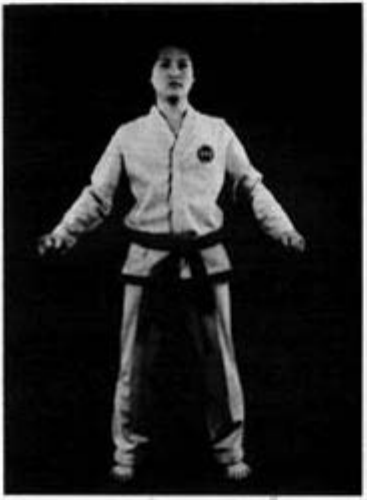
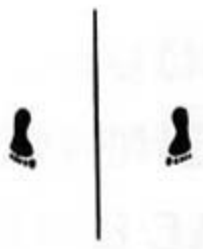
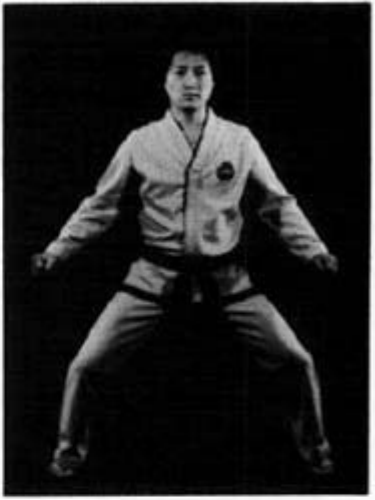
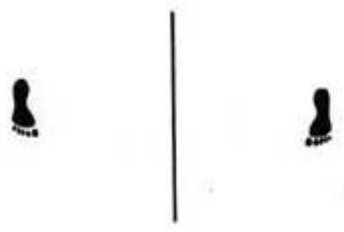
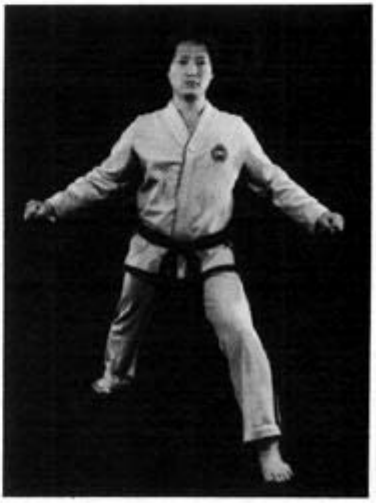
Due to the distortion of distance apparent in photographs, the angle of the feet in stances may appear slightly out of position. The student, therefore, is encouraged to refer to the feet illustrations rather than the photograph itself.
Parallel stance
Beginner technique plate, printed page 24
Sitting stance
View original source illustration
Open original imageWalking stance: views and foot positions
Walking Stance (Gunnun Sogi)
Front View; Back View
Beginner technique plate, printed page 25
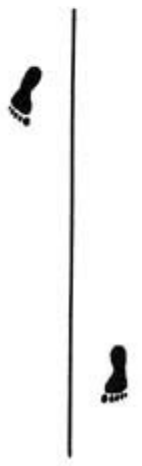
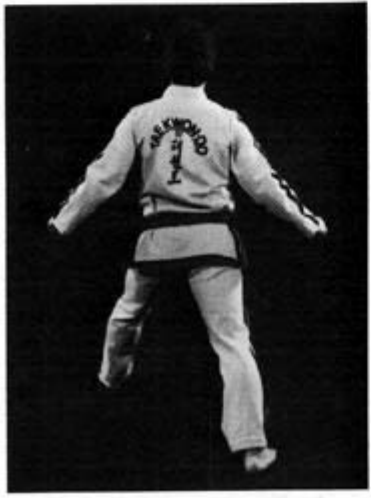
L-stance: views and foot positions
L‑stance (Niunja Sogi)
Front View; Back View
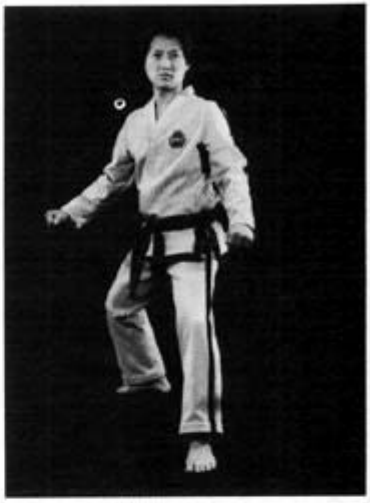
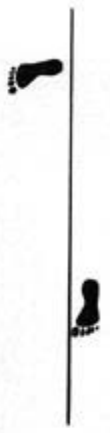
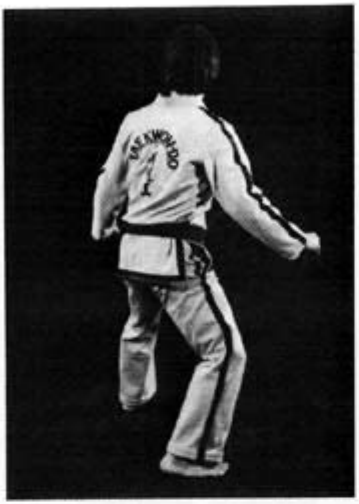
View original source illustration
Open original imageStance (Sogi)
Parallel stance: posture and dimensions
Parallel Stance (Narani Sogi)
Front View; Side View
Beginner technique plate, printed page 26
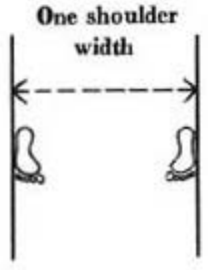
One shoulder width
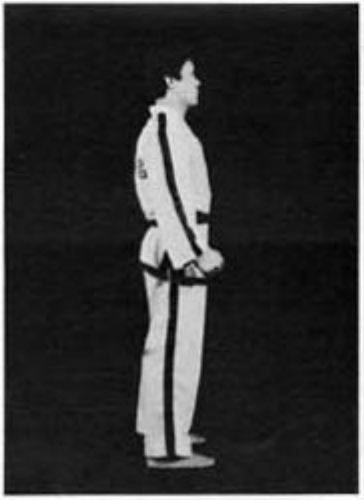
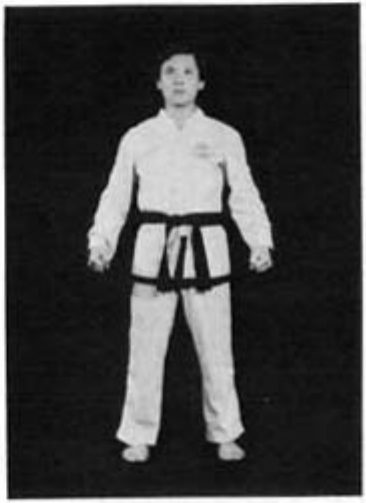
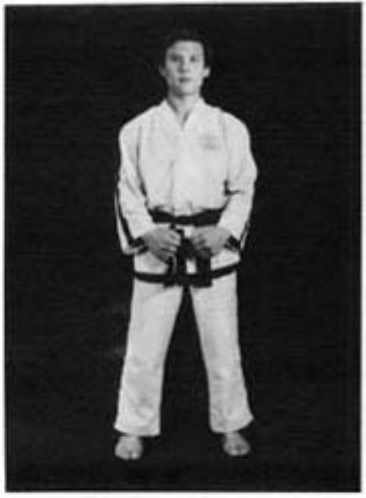
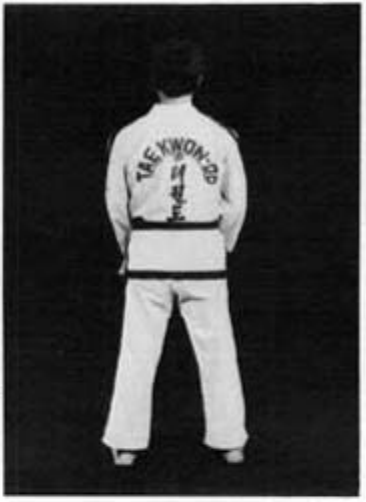
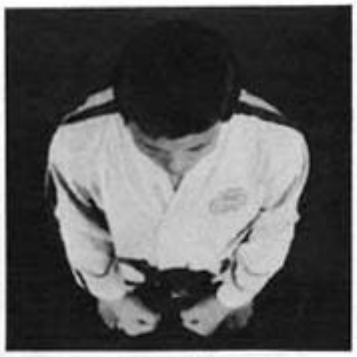
Parallel ready stance: three views
Parallel Ready Stance (Narani Junbi Sogi)
Front View; Back View; Top View
View original source illustration
Open original imageWalking stance: dimensions and views
Walking Stance (Gunnun Sogi)
Side View; Back View
Beginner technique plate, printed page 27
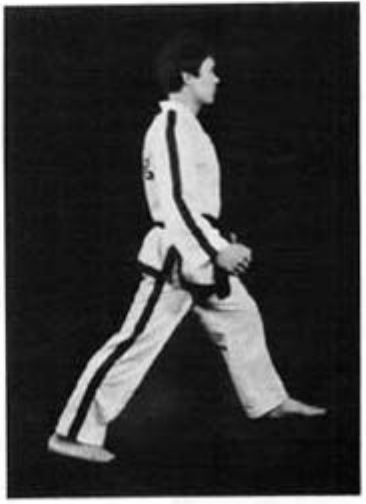
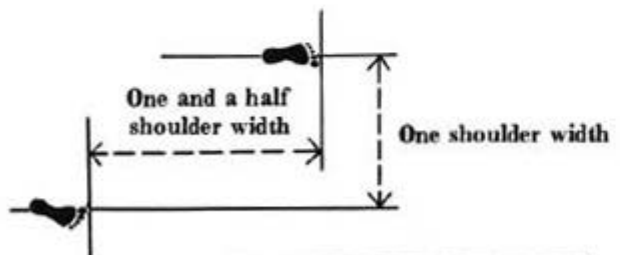
One and a half shoulder width; One shoulder width
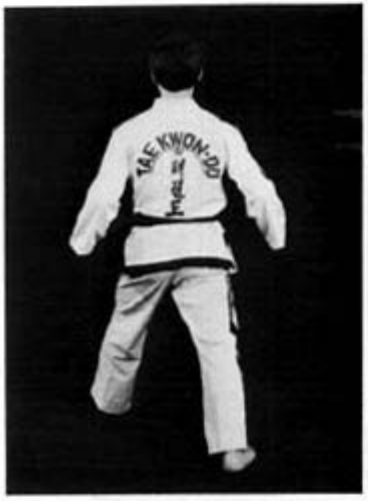
Right and left walking stances
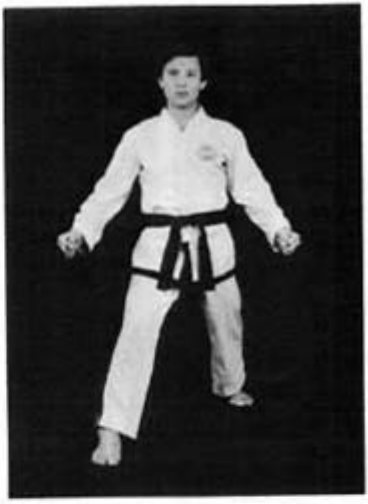
Right Walking Stance — Front View
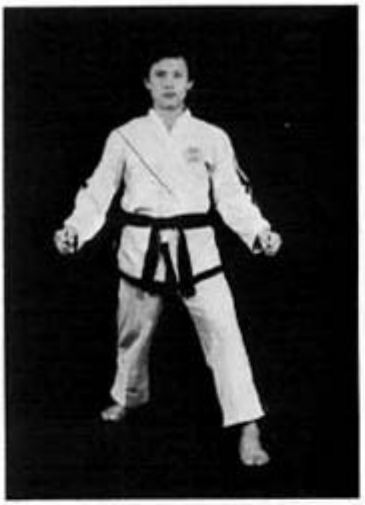
Left walking stance — Front View
View original source illustration
Open original imageWalking Stance Forearm Low Block (Gunnun So Palmok Najunde Makgi)
Low block: front, side and top views
Front View; Side View; Top View
Beginner technique plate, printed page 28
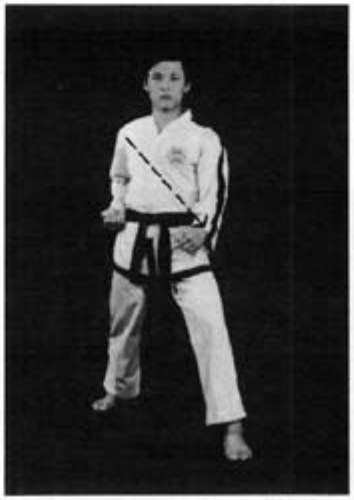
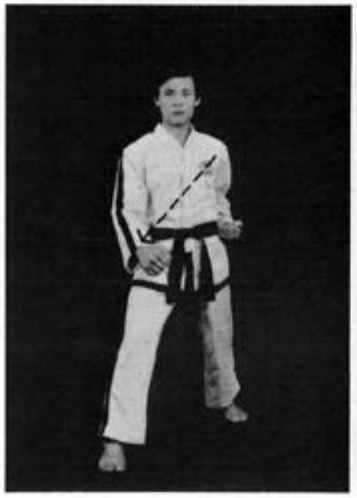
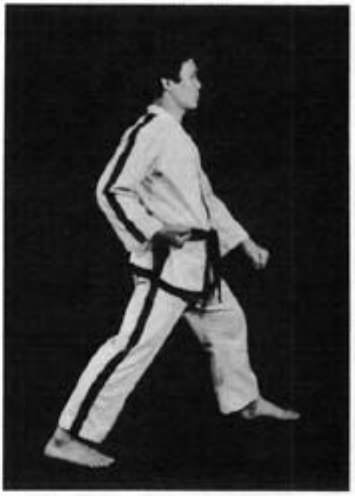
1. The forearm reaches the same level as the lower abdomen of the defender.
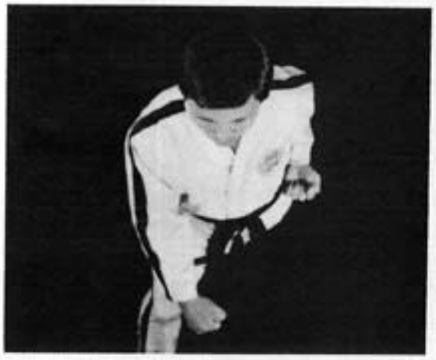
2. The body becomes half facing the opponent.
View original source illustration
Open original imageWalking Stance Middle Front Punch (Gunnun So Kaunde Ap Jirugi)
Middle front punch: front, side and top views
Front View; Side View; Top View
Beginner technique plate, printed page 29
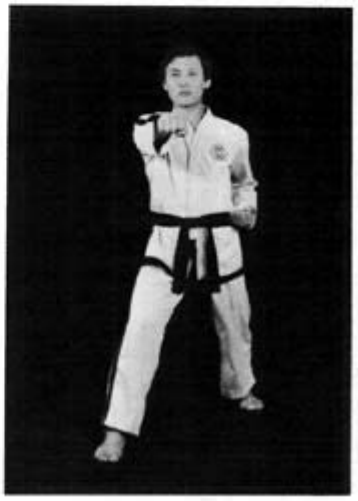
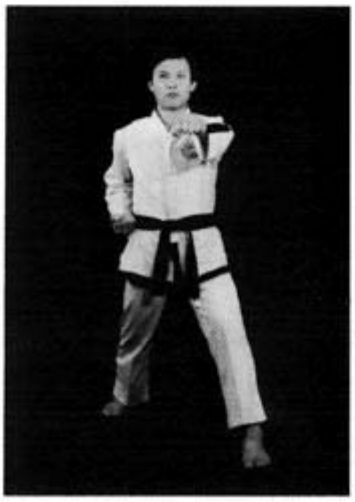
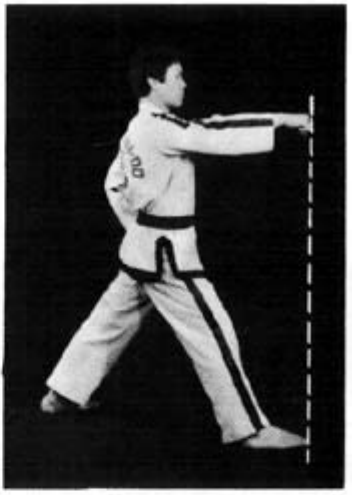
1. The fist forms a vertical line with the toes.
2. The fist reaches the same level as the shoulder of the attacker.
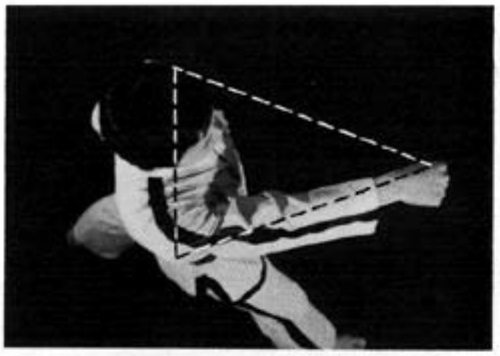
3. The fist is brought to the center of the attacker’s body.
View original source illustration
Open original imageWalking Stance Knife‑hand Low Block (Gunnun So Sonkal Najunde Makgi)
Knife-hand low block: front, back and top views
Front View; Back View; Top View
Beginner technique plate, printed page 30
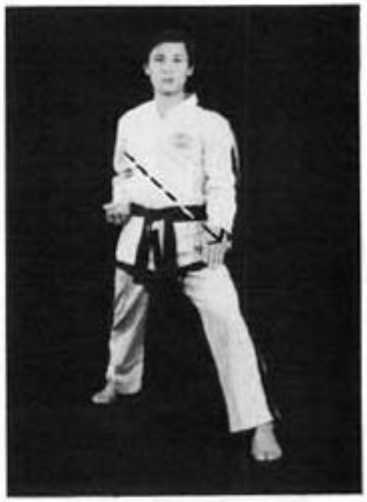
1. The knife‑hand reaches the same level as the scrotum of the defender.
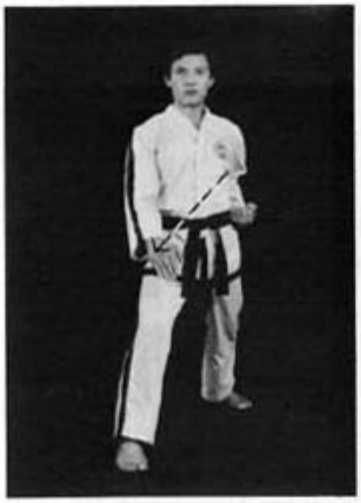
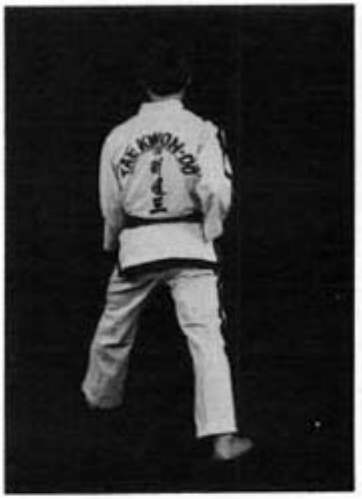
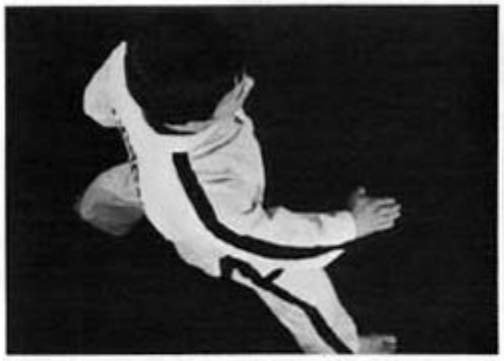
2. The body becomes half facing the opponent.
View original source illustration
Open original imageWalking Stance Inner Forearm Middle Block (Gunnun So An Palmok Kaunde Makgi)
Inner forearm middle block: front, side and top views
Front View; Side View; Top View
Beginner technique plate, printed page 31
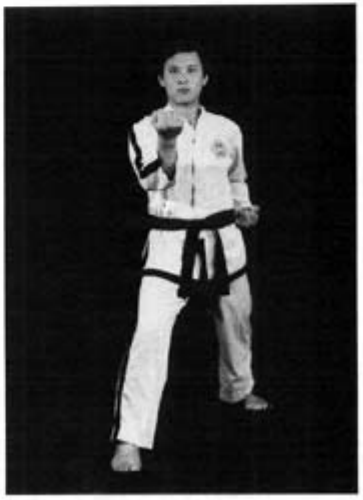
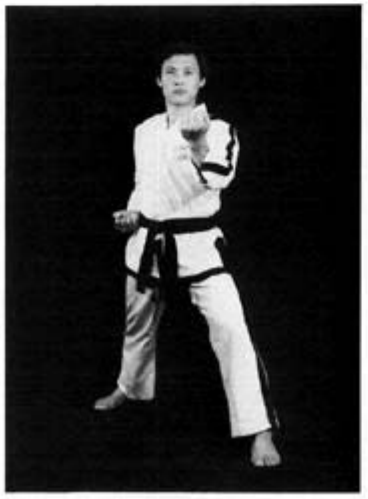
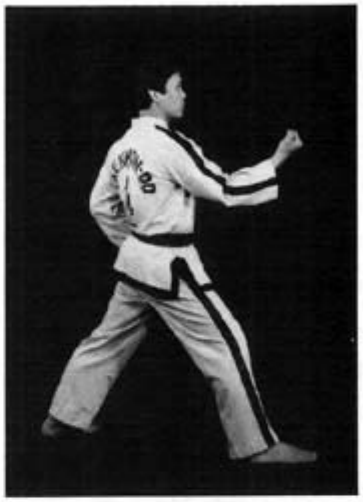
1. The fist reaches the same level as the shoulder of the defender.
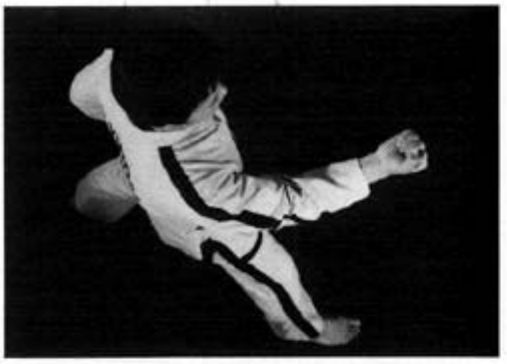
2. The body becomes half facing the opponent.
3. The forearm becomes full facing the opponent.
View original source illustration
Open original imageStepping (Omkyo Didigi)
Forward and backward stepping
Stepping forward; Stepping backward
1. The body must always be half facing when stepping backward and forward.
2. Stepping is executed in an outward curved line.
3. The knee of the stationary leg springs slightly up during the stepping motion.
Beginner technique plate, printed page 32


View original source illustration
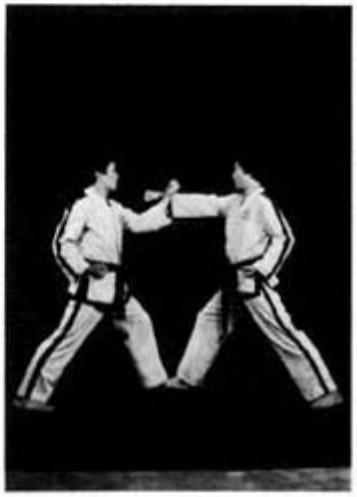
Open original imageInside and Outside blocks (An Makgi Wa Bakat Makgi)
Inside block: forearm and tibia
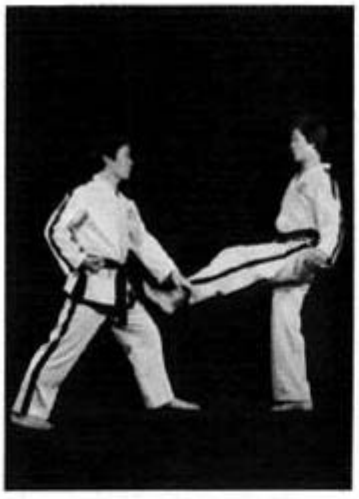
Inside Block (An Makgi) — The block is executed at the opponent’s inner forearm. The block is executed at the opponent’s inner tibia.
Side View
Beginner technique plate, printed page 33
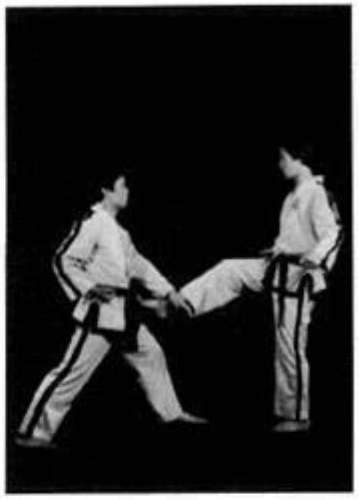
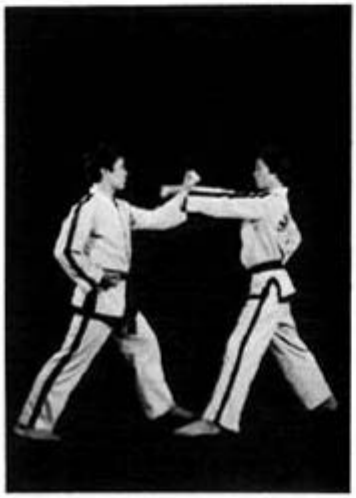
Outside block: forearm and tibia
Outside Block (Bakat Makgi) — The block is executed at the opponent’s outer forearm. The block is executed at the opponent’s outer tibia.
View original source illustration
Open original imageTaekwon-Do calligraphy
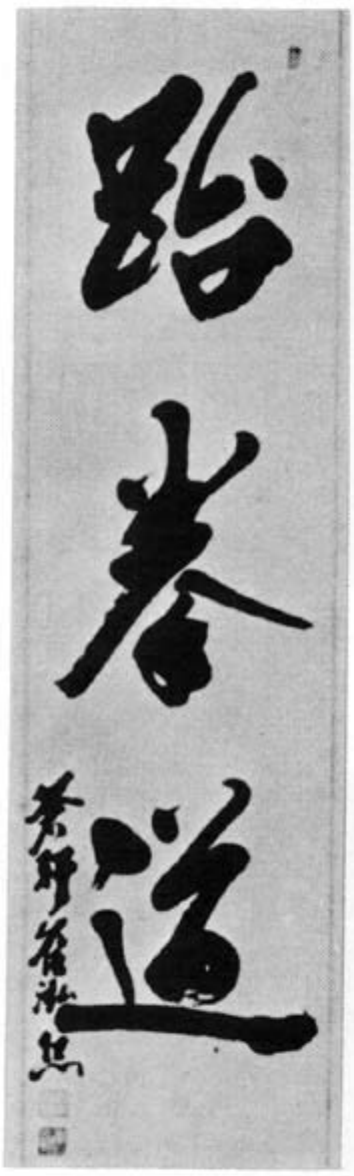
Taekwon‑Do in Chinese Character
View original source illustration
Open original imageSources and references
Source Pages: 23, 24, 25, 26, 27, 28, 29, 30, 31, 32, 33, 34
References by passage
- Passage 1: 23
- Passage 2: 23
- Passage 3: 24
- Passage 4: 24
- Passage 5: 24
- Passage 6: 24
- Passage 7: 24
- Passage 8: 25
- Passage 9: 25
- Passage 10: 25
- Passage 11: 25
- Passage 12: 25
- Passage 13: 26
- Passage 14: 26
- Passage 15: 26
- Passage 16: 26
- Passage 17: 26
- Passage 18: 26
- Passage 19: 26
- Passage 20: 27
- Passage 21: 27
- Passage 22: 27
- Passage 23: 27
- Passage 24: 27
- Passage 25: 27
- Passage 26: 28
- Passage 27: 28
- Passage 28: 28
- Passage 29: 28
- Passage 30: 28
- Passage 31: 29
- Passage 32: 29
- Passage 33: 29
- Passage 34: 29
- Passage 35: 29
- Passage 36: 29
- Passage 37: 30
- Passage 38: 30
- Passage 39: 30
- Passage 40: 30
- Passage 41: 30
- Passage 42: 31
- Passage 43: 31
- Passage 44: 31
- Passage 45: 31
- Passage 46: 31
- Passage 47: 31
- Passage 48: 32
- Passage 49: 32
- Passage 50: 32
- Passage 51: 32
- Passage 52: 32
- Passage 53: 32
- Passage 54: 33
- Passage 55: 33
- Passage 56: 33
- Passage 57: 33
- Passage 58: 33
- Passage 59: 34