Volume IV
Step‑Turning
Select an image to view it at full size.
Step‑Turning
The advantage of this technique is the ability to face an opponent in any direction while being able to instantly change the direction and body position as well as covering a wide distance.
For exercise purposes, this turning is executed in the opposite direction, in a 180 degree radius, however, it can be executed clockwise, counter‑clockwise, forward or backward.
The step‑turning can also be performed in any combination of shifting or sliding motion.
Walking, L- and sitting stances are common though occasionally a fixed or diagonal stance is used.
Footwork — surviving portions of the two-page diagram
Step‑Turning: original technique sequence and diagrams, printed page 294; continued on the following page
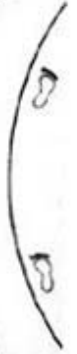
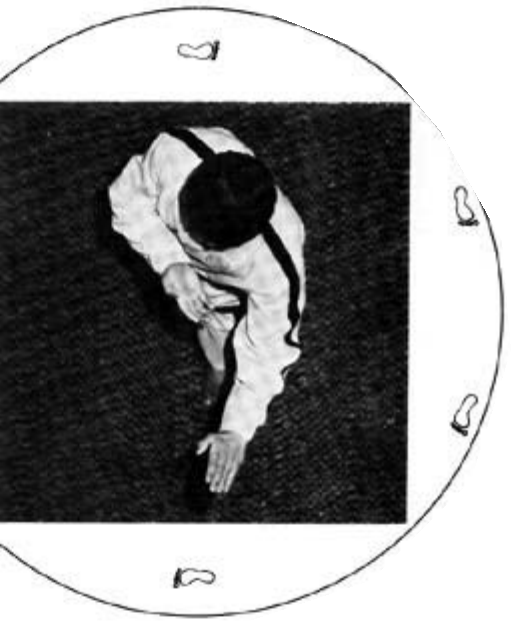
Facing an opponent — clockwise
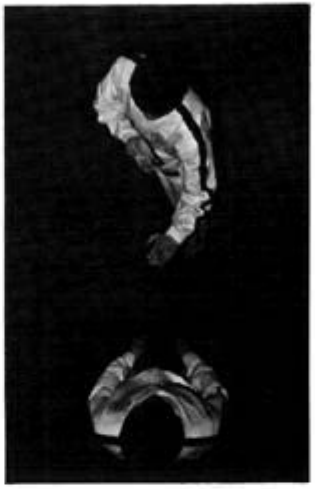
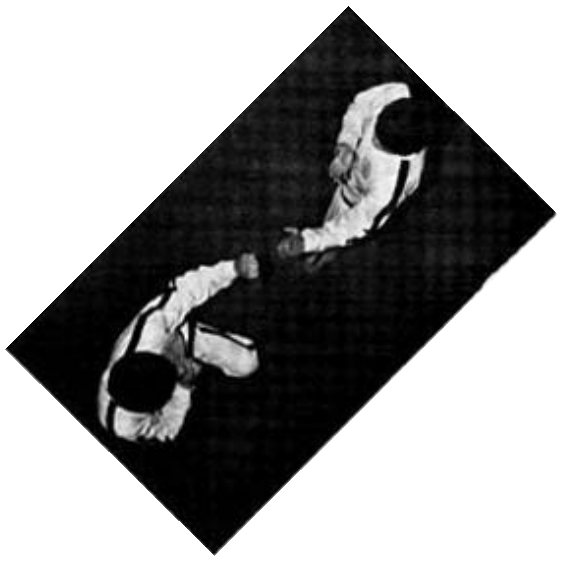
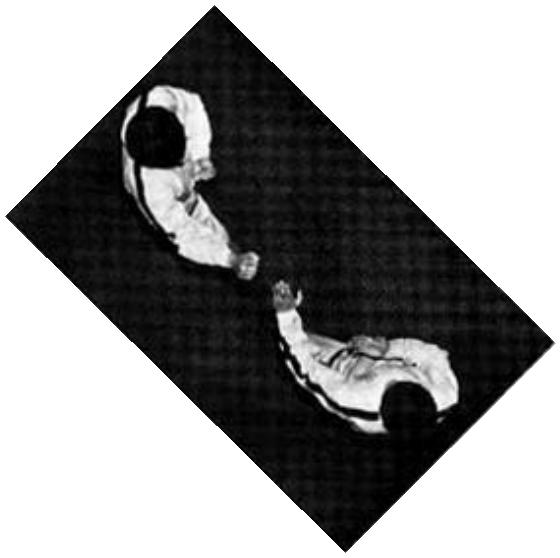
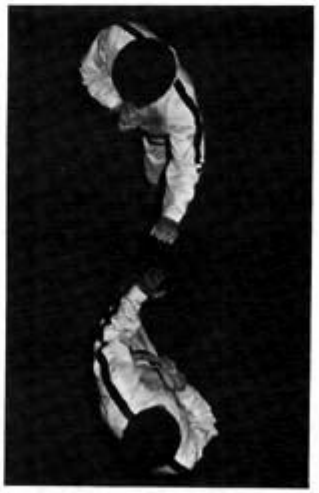
Facing an opponent — counterclockwise
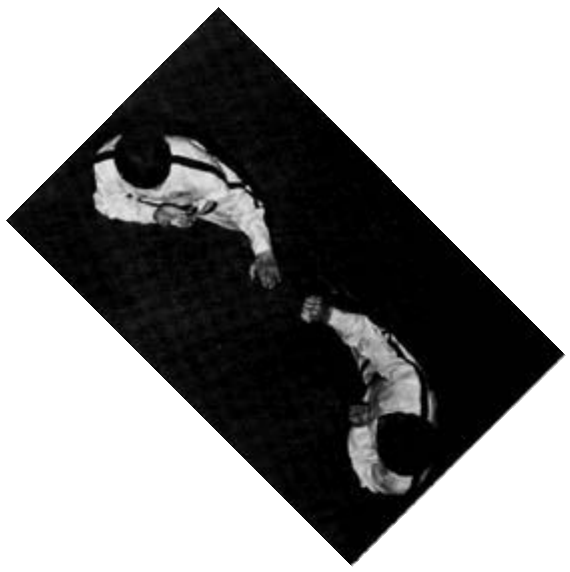
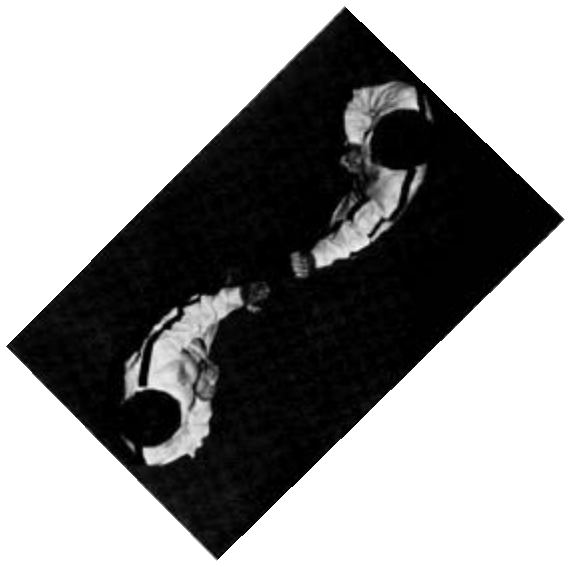
View original source illustration
Open original imageSource continuation
Step‑Turning: original technique sequence and diagrams, printed page 295; continuation from the previous page
View original source illustration
Open original imageInitial stance and foot position
Forward Step‑Turning. From a Right Walking Stance.
Step‑Turning: original technique sequence and diagrams, printed page 296
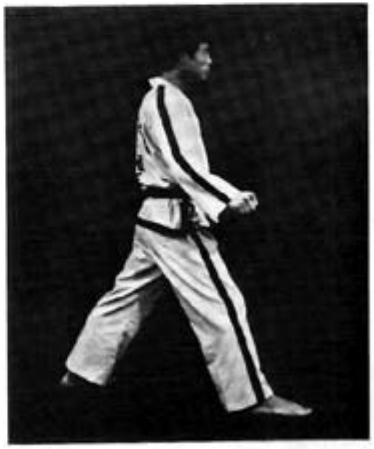
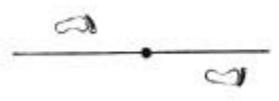
Forward step-turning — clockwise
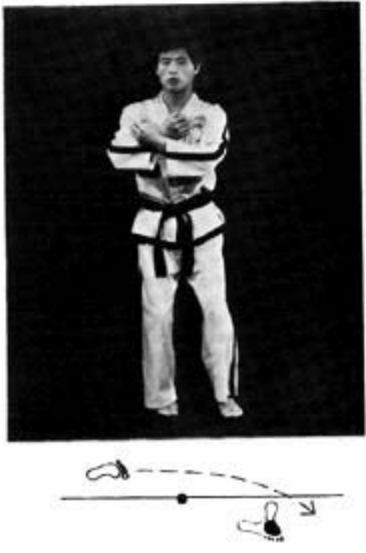
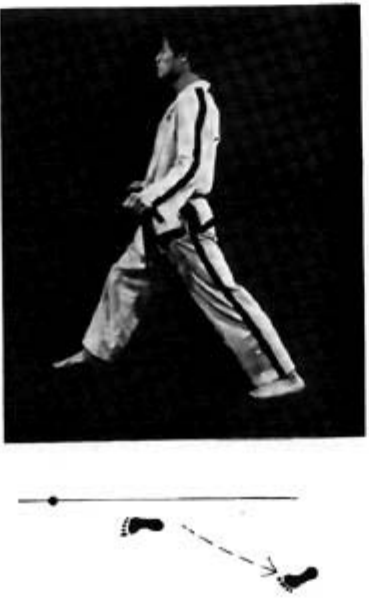
Forward step-turning — counterclockwise
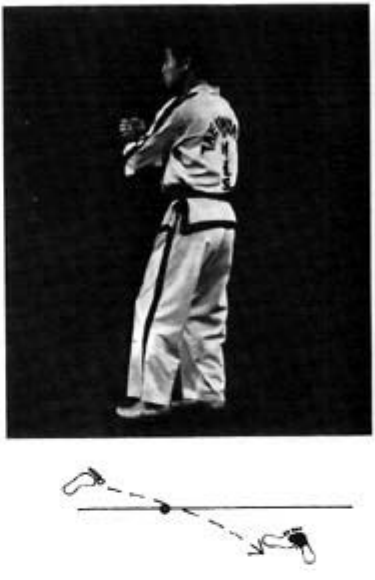
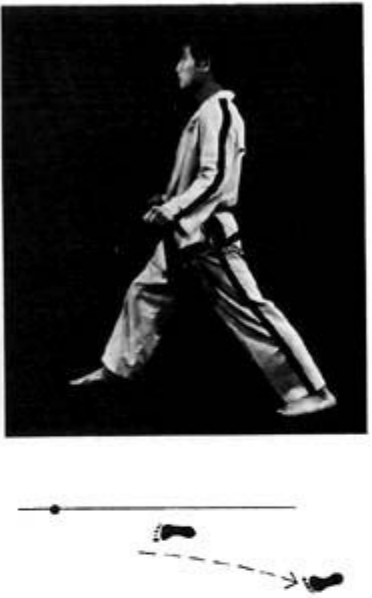
View original source illustration
Open original imageBackward step-turning — clockwise
Backward Step‑Turning. From a Left Walking Stance.
Step‑Turning: original technique sequence and diagrams, printed page 297
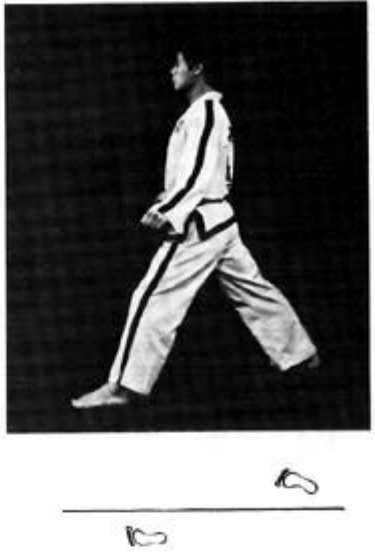
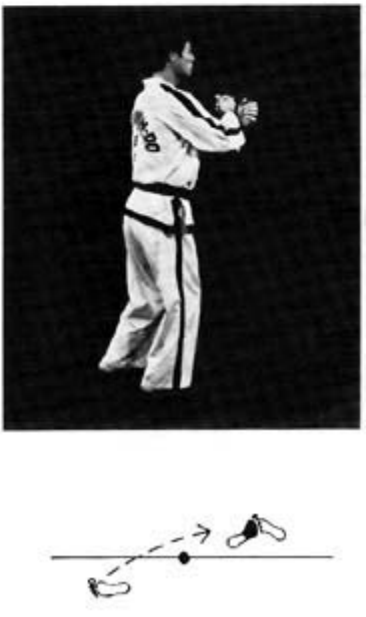
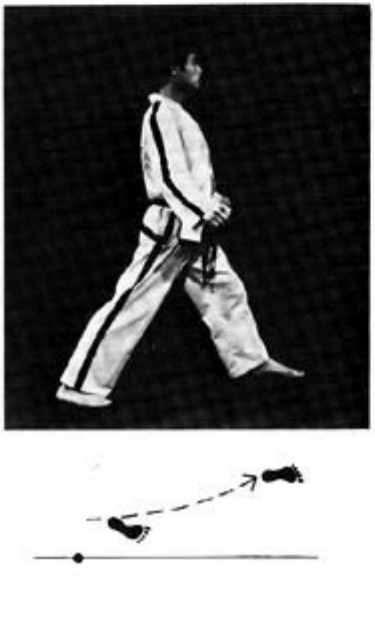
Backward step-turning — counterclockwise
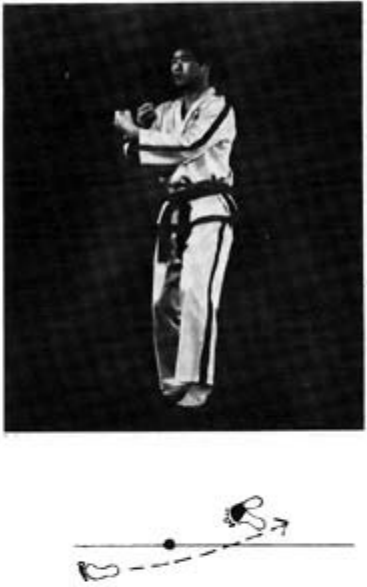
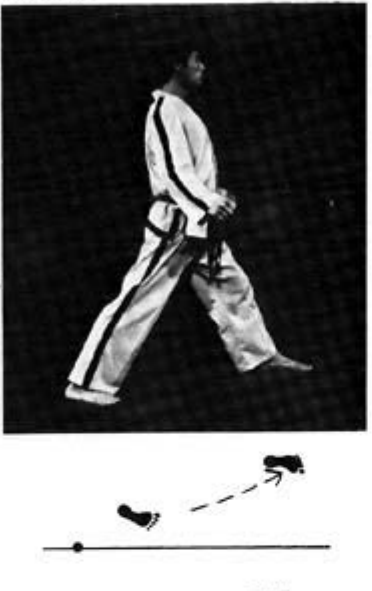
View original source illustration
Open original imageForward step-turning — counterclockwise
Forward Step‑Turning. From a Right L‑Stance. Backward Step‑Turning.
Step‑Turning: original technique sequence and diagrams, printed page 298
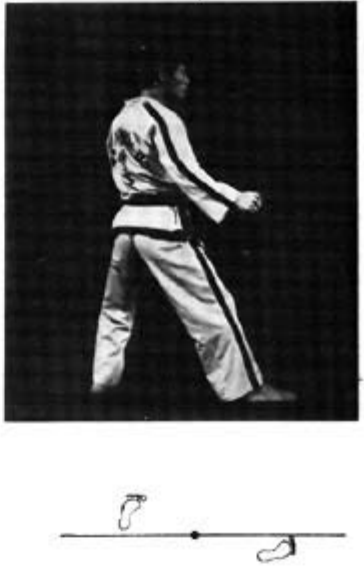
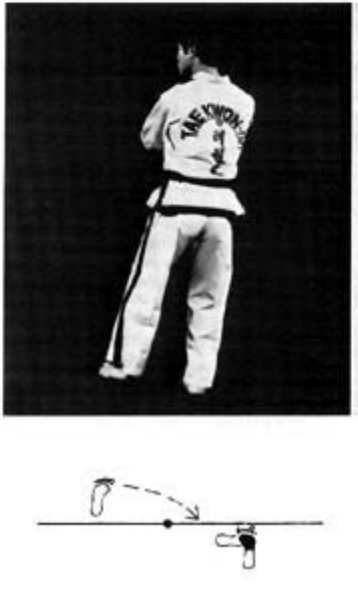
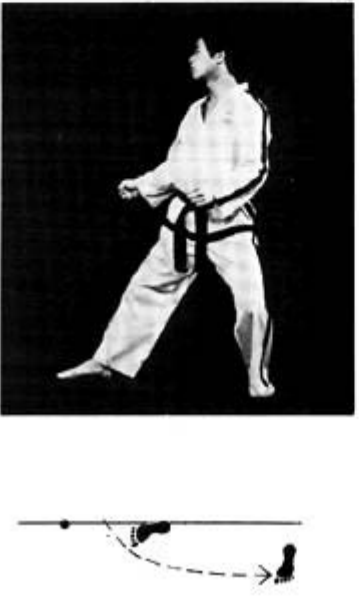
Backward step-turning — clockwise
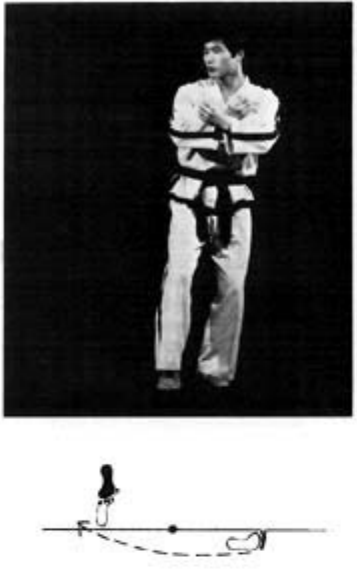
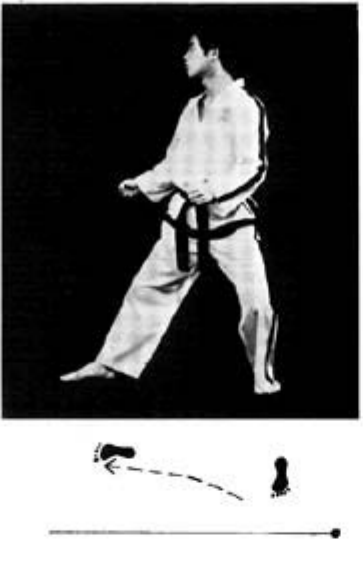
Application to other stances
The same principle is applicable to a fixed stance.
View original source illustration
Open original imageSideways step-turning — counterclockwise
Sideway Step‑Turning. From a Sitting Stance.
Step‑Turning: original technique sequence and diagrams, printed page 299
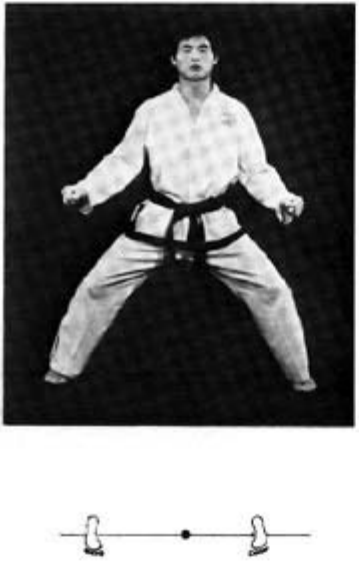
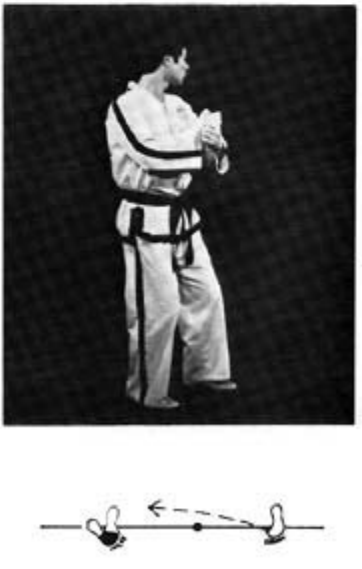
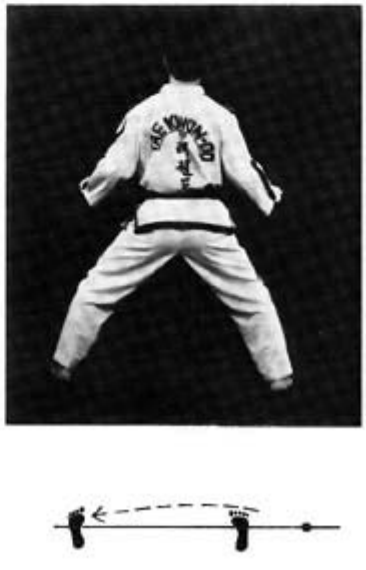
Sideways step-turning — clockwise
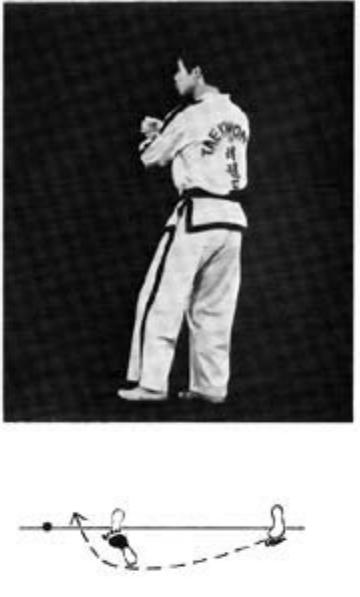
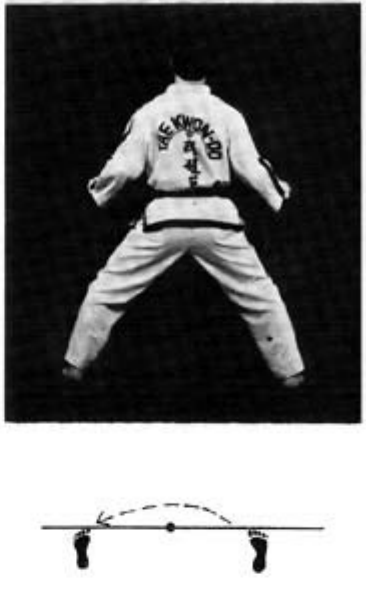
Application to other stances
The same principle is applicable to a diagonal stance.
View original source illustration
Open original imageSources and references
Source Pages: 294, 295, 296, 297, 298, 299
References by passage
- Passage 1: 294
- Passage 2: 294
- Passage 3: 294
- Passage 4: 294
- Passage 5: 294
- Passage 6: 294
- Passage 7: 294
- Passage 8: 295
- Passage 9: 296
- Passage 10: 296
- Passage 11: 297
- Passage 12: 297
- Passage 13: 298
- Passage 14: 298
- Passage 15: 298
- Passage 16: 299
- Passage 17: 299
- Passage 18: 299