Additional Techniques for Pattern Toi‑Gye
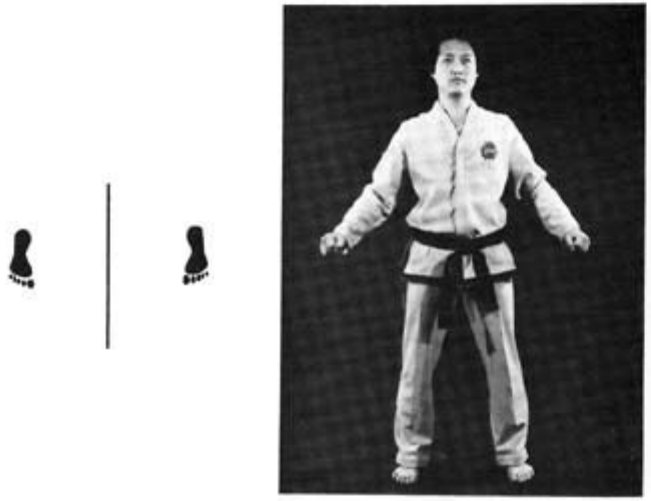
Parallel stance
IMPORTANT
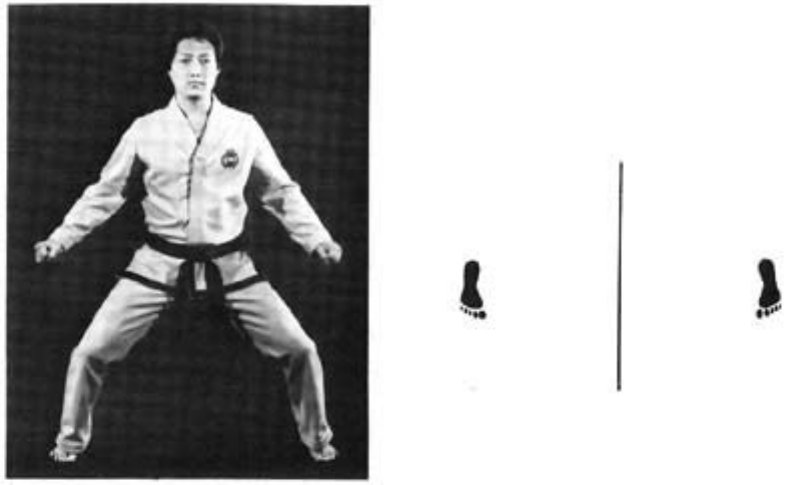
Due to the distortion of distance apparent in photographs, the angle of the feet in stances may appear slightly out of position. The student, therefore, is encouraged to refer to the feet illustrations rather than the photograph itself.
Parallel Stance (Narani Sogi)
Sitting stance
Sitting Stance (Annun Sogi)
View original source illustration
Open original imageWalking stance
Walking Stance (Gunnun Sogi)
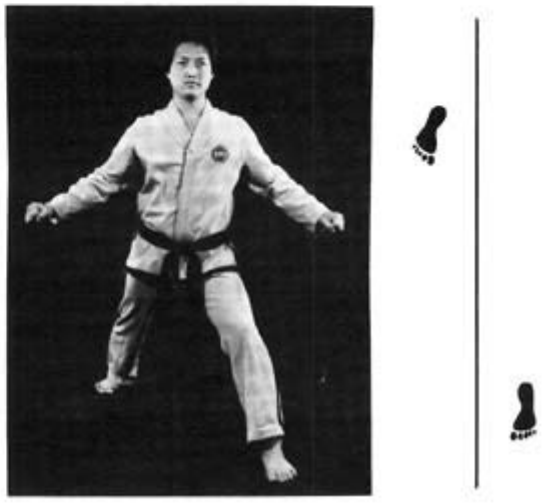
Front View
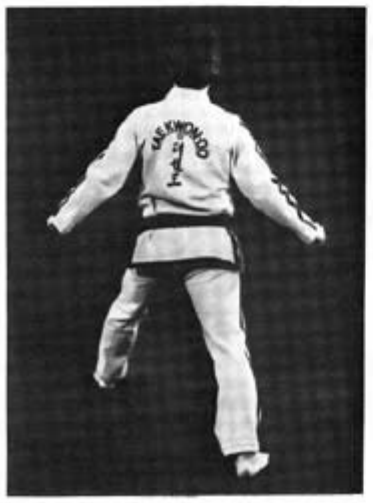
Back View
L-stance
L‑Stance (Niunja Sogi)
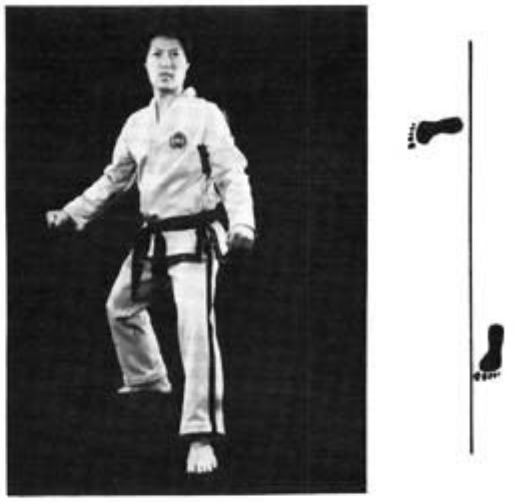
Front View
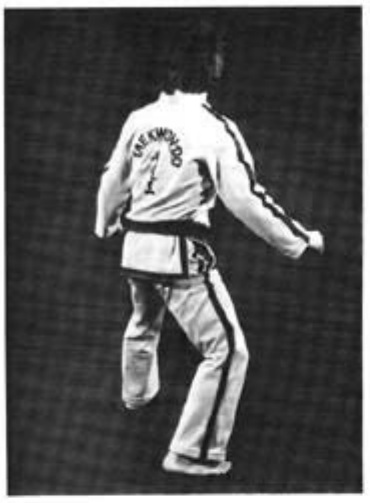
Back View
View original source illustration
Open original imageUpset fingertip low thrust
Walking Stance Upset Fingertip Low Thrust (Gunnun So Dwijibun Sonkut Najunde Tulgi)
The fingertip reaches the same level as the pubic region.
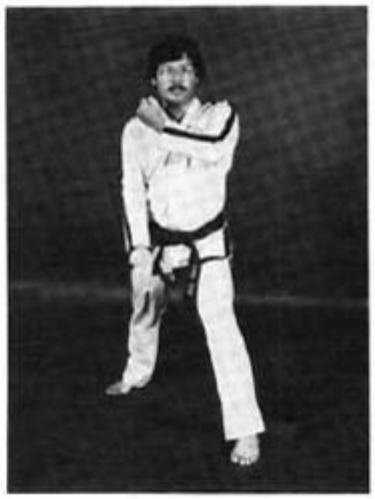
Front View
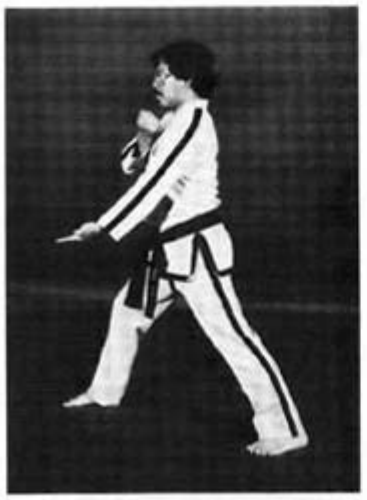
Side View
Back-fist side back strike
Close Stance Back Fist Side Back Strike (Moa So Dung Joomuk Yopdwi Taerigi)
The back fist reaches the eye level of the attacker.
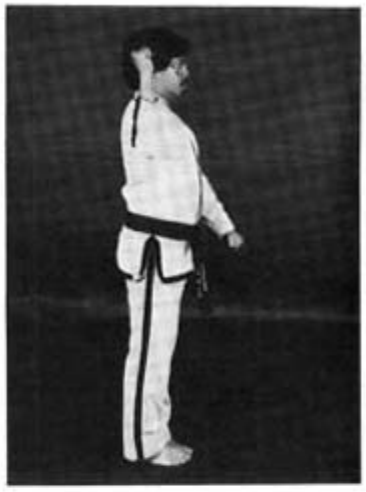
Side View
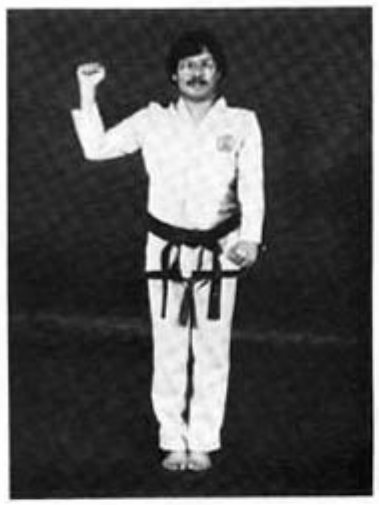
Front View
View original source illustration
Open original imageX-fist pressing block
Walking Stance X‑Fist Pressing Block (Gunnun So Kyocha Joomuk Noollo Makgi)
The crossed point reaches the same level as the lower abdomen of the defender.
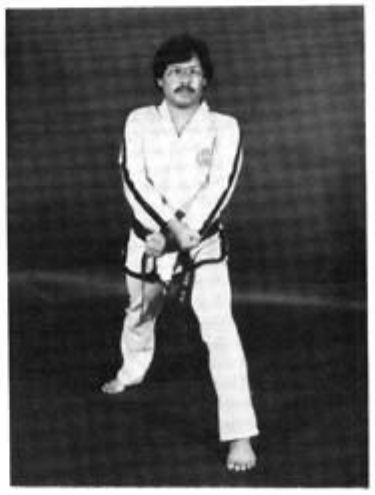
Front View
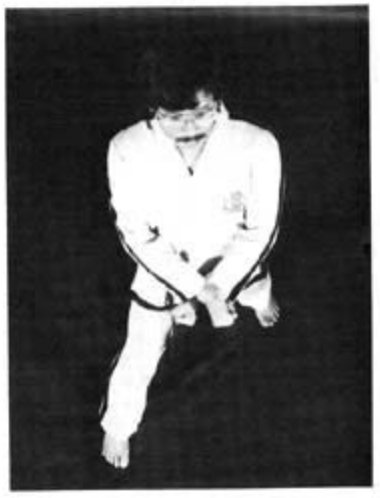
Top View
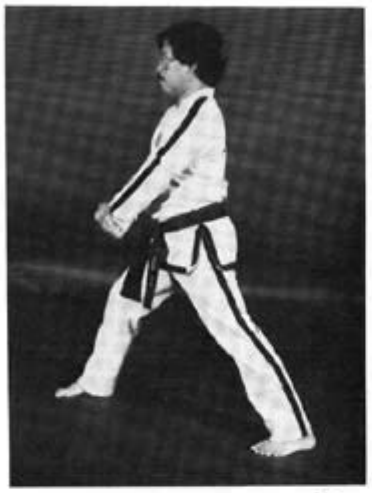
Side View
View original source illustration
Open original imageW-shape block
Sitting Stance Outer Forearm W‑Shape Block (Gunnun So Bakat Palmok San Makgi)
The outer forearms reach the same level as the philtrum of the defender.
Editorial note: The original English heading says Sitting Stance, while its romanized Korean caption says Gunnun So. Both are retained from the source.
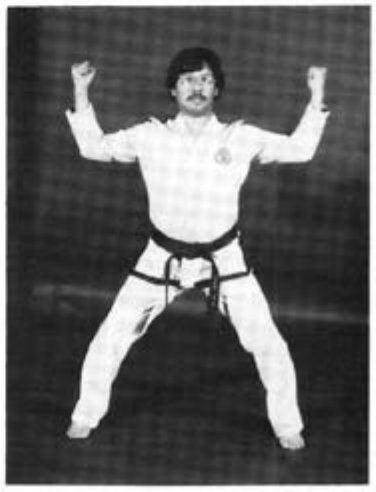
Front View
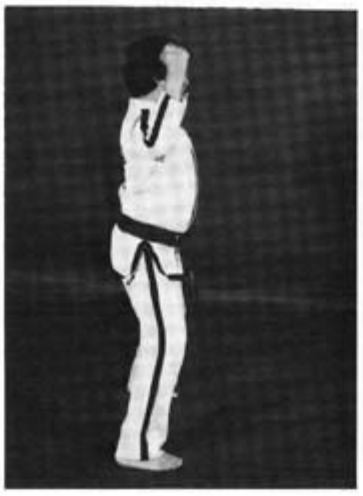
Side View
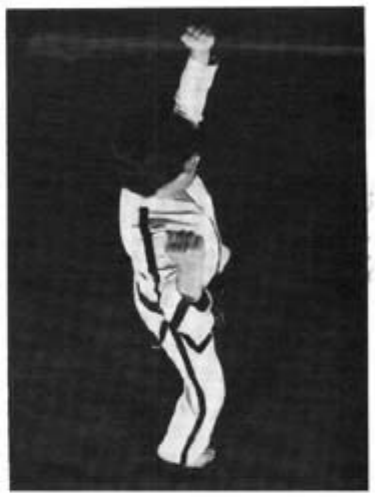
Top View
View original source illustration
Open original imageKnee upward kick
Knee Upward Kick (Moorup Ollyo Chagi)
The palms become level with the elbows.
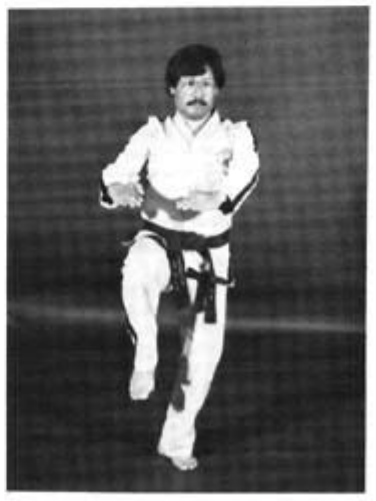
Front View
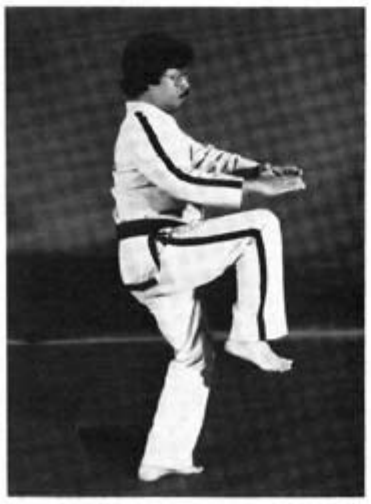
Side View
Flat fingertip high thrust
Walking Stance Flat Fingertip High Thrust (Gunnun So Opun Sonkut Nopunde Tulgi)
The fingertip reaches the same level as the forehead of the attacker.
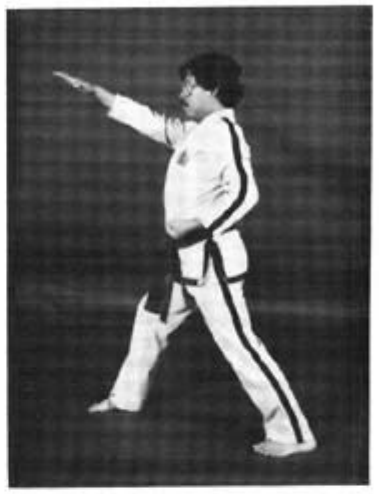
Side View
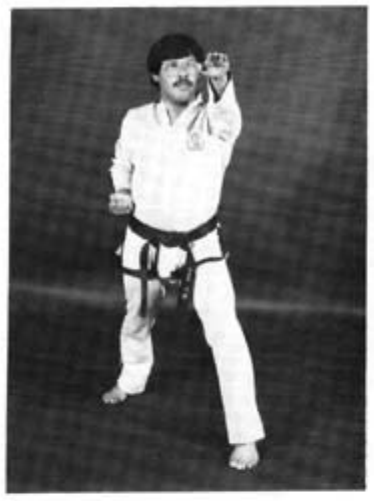
Front View
View original source illustration
Open original imageDouble forearm low pushing block
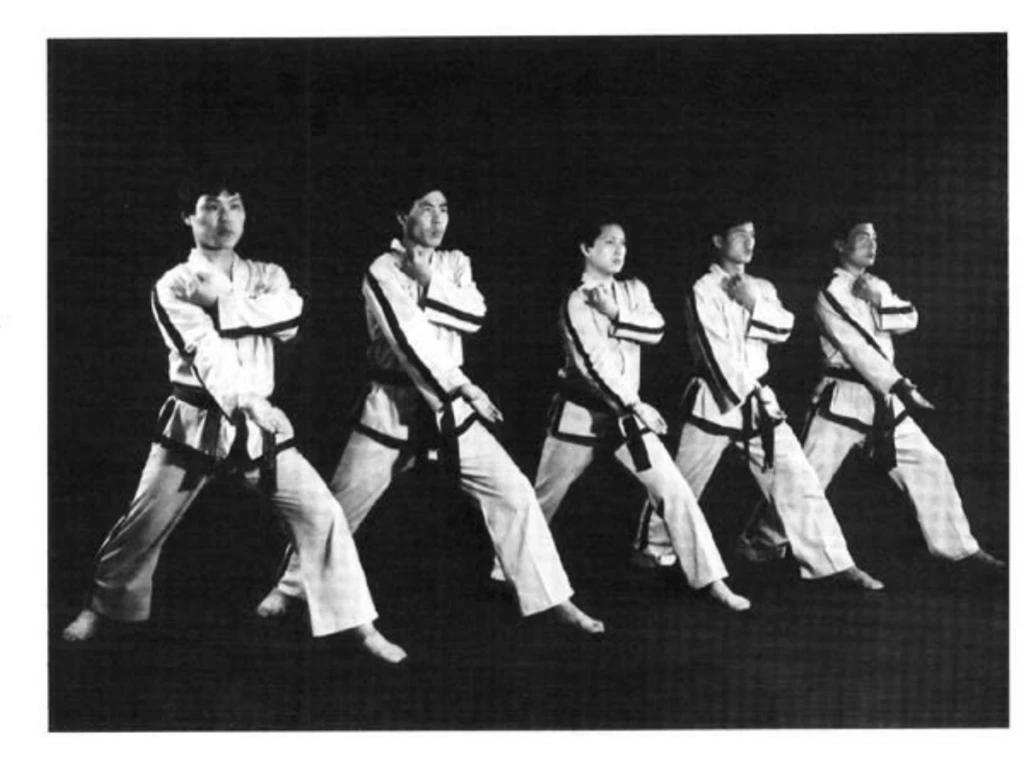
L‑Stance Double Forearm Low Pushing Block (Niunja So Doo Palmok Najunde Miro Makgi)
The inner forearm reaches the same level as the lower abdomen of the defender.
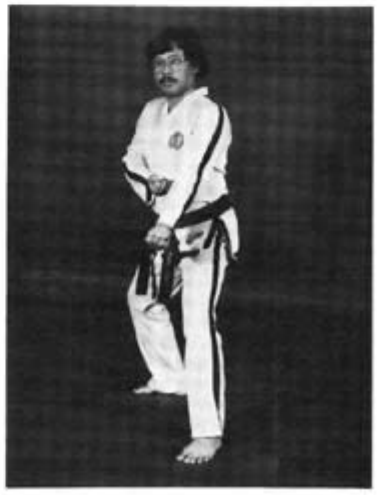
Front View
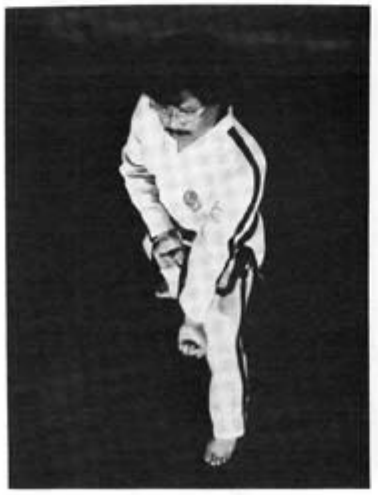
Top View
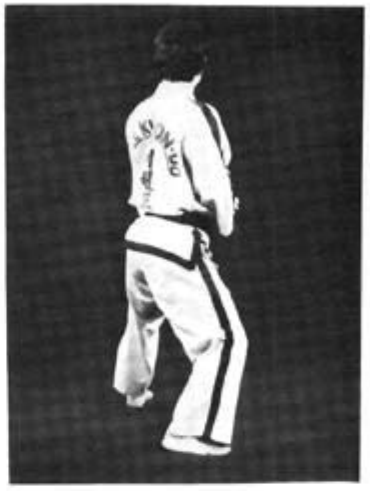
Back View
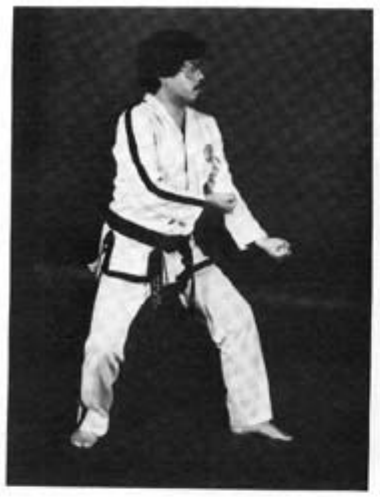
Side View
View original source illustration
Open original imageBack-fist high strike
L‑Stance Back Fist High Strike (Niunja So Dung Joomuk Nopunde Taerigi)
The back fist reaches slightly above the temple of the attacker.
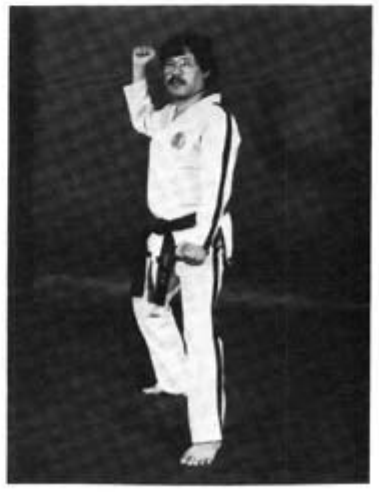
Front View
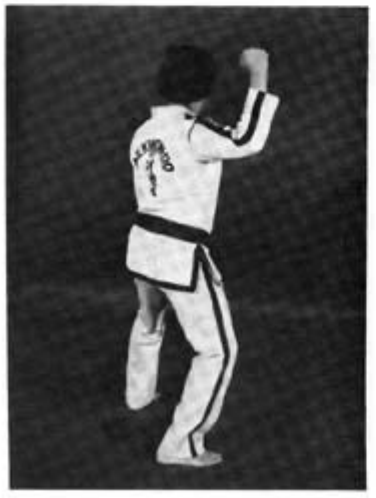
Back View
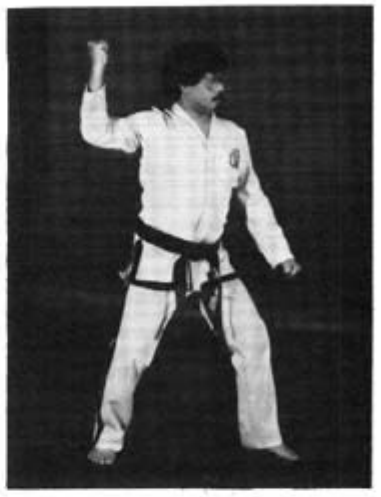
Side View
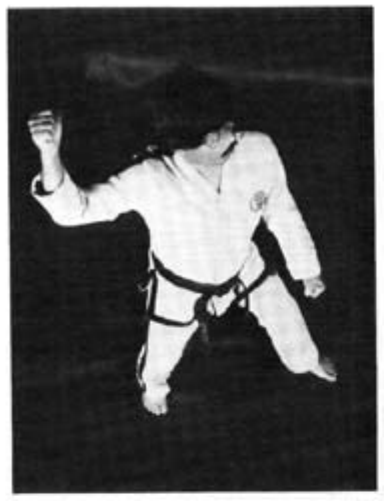
Top View
View original source illustration
Open original imageX-stance pressing block
X‑Stance X‑Fist Pressing Block (Kyocha So Kyocha Joomuk Noollo Makgi)
The cross point reaches the same level as the lower abdomen.
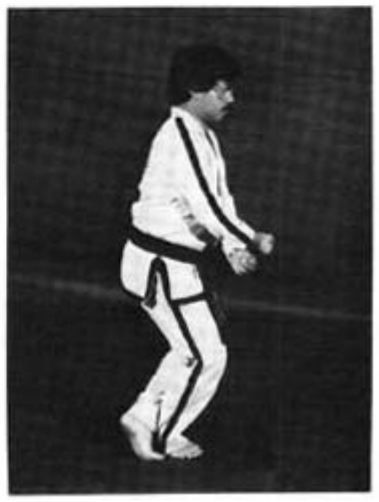
Side View
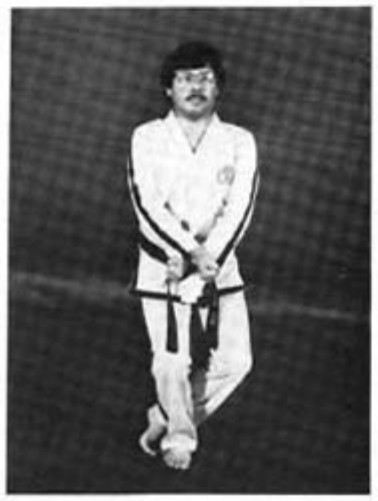
Front View
Low knife-hand guarding block
L‑Stance Knife‑Hand Low Guarding Block (Niunja So Sonkal Najunde Daebi Makgi)
The blocking knife‑hand reaches the same level as the scrotum while the other is brought in front of the lower abdomen.
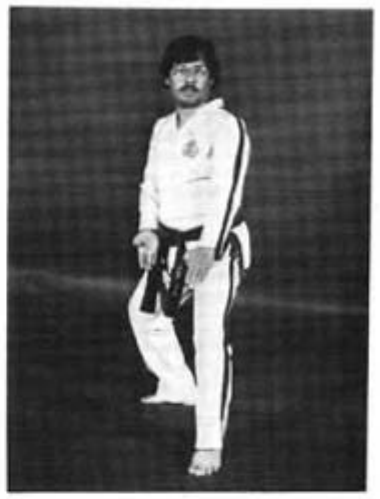
Front View
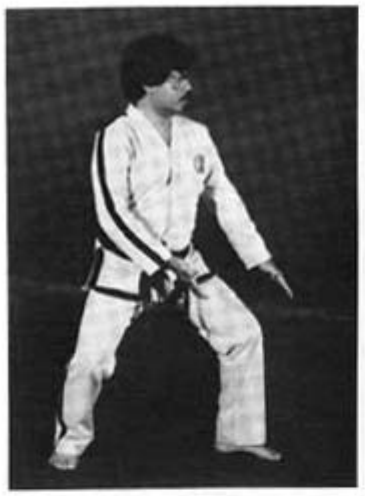
Side View
View original source illustration
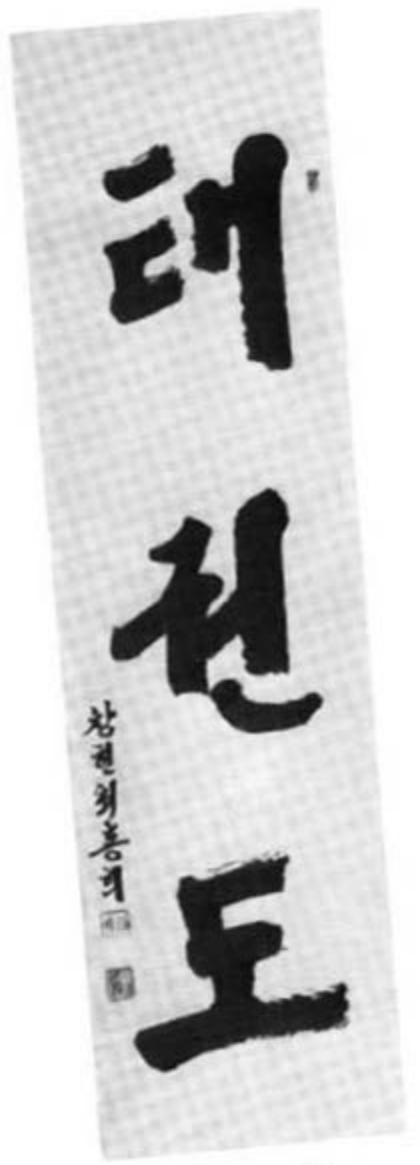
Open original imageTaekwon-Do calligraphy
Taekwon‑Do in Korean Character
View original source illustration
Open original imageOriginal group demonstration of double forearm low pushing block.
Sources and references
Source Pages: 21, 22, 23, 24, 25, 26, 27, 28, 29, 30, 31, 32
References by passage
- Passage 1: 21
- Passage 2: 21
- Passage 3: 22
- Passage 4: 22
- Passage 5: 22
- Passage 6: 22
- Passage 7: 22
- Passage 8: 23
- Passage 9: 23
- Passage 10: 23
- Passage 11: 23
- Passage 12: 23
- Passage 13: 23
- Passage 14: 23
- Passage 15: 24
- Passage 16: 24
- Passage 17: 24
- Passage 18: 24
- Passage 19: 24
- Passage 20: 24
- Passage 21: 24
- Passage 22: 24
- Passage 23: 24
- Passage 24: 25
- Passage 25: 25
- Passage 26: 25
- Passage 27: 25
- Passage 28: 25
- Passage 29: 25
- Passage 30: 26
- Passage 31: 26
- Passage 32: 26
- Passage 33: 26
- Passage 34: 26
- Passage 35: 26
- Passage 36: 26
- Passage 37: 27
- Passage 38: 27
- Passage 39: 27
- Passage 40: 27
- Passage 41: 27
- Passage 42: 27
- Passage 43: 27
- Passage 44: 27
- Passage 45: 27
- Passage 46: 28
- Passage 47: 28
- Passage 48: 28
- Passage 49: 28
- Passage 50: 28
- Passage 51: 28
- Passage 52: 28
- Passage 53: 29
- Passage 54: 29
- Passage 55: 29
- Passage 56: 29
- Passage 57: 29
- Passage 58: 29
- Passage 59: 29
- Passage 60: 30
- Passage 61: 30
- Passage 62: 30
- Passage 63: 30
- Passage 64: 30
- Passage 65: 30
- Passage 66: 30
- Passage 67: 30
- Passage 68: 30
- Passage 69: 31
- Passage 70: 31
- Passage 71: 32
- Passage 72: 32