Volume VI
Exercises 4–8: Walking Stance Punches and Low Blocks
Select an image to view it at full size.
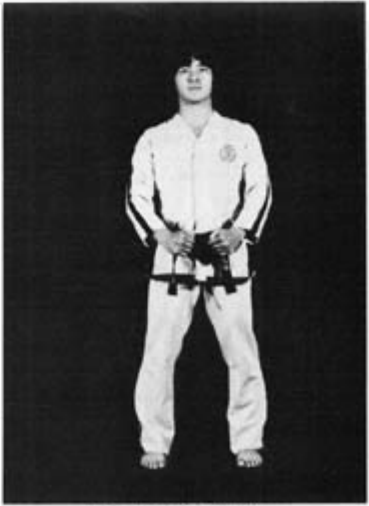
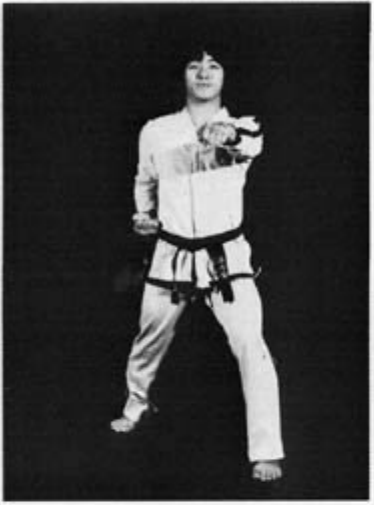
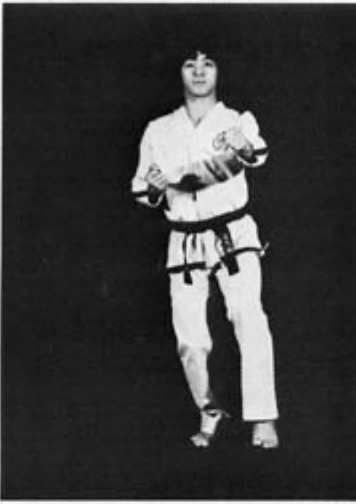
4. Walking Stance Spot Obverse Punch (Gunnun So Gujari Baro Jirugi)
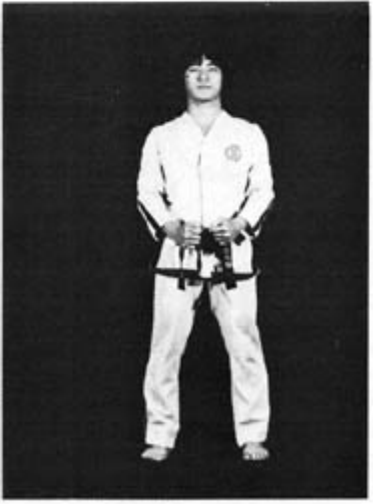
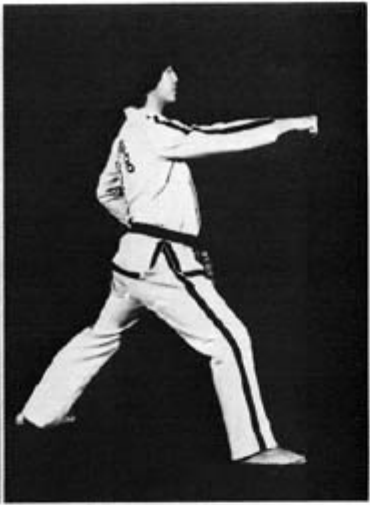
i. Commence (Sijak): Move the right foot to D, forming a right walking stance toward D while punching to D with the right fist, and then bring the right foot back to a ready posture.
Right walking stance punch
Exercise sequence and original captions, printed page 38
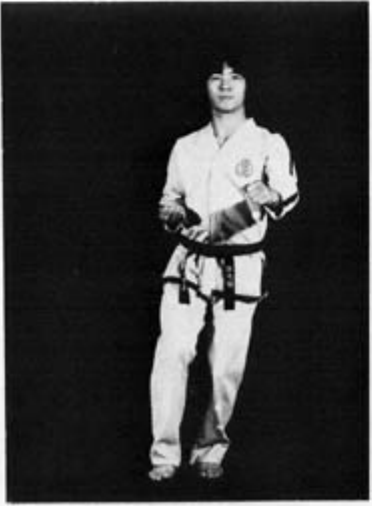
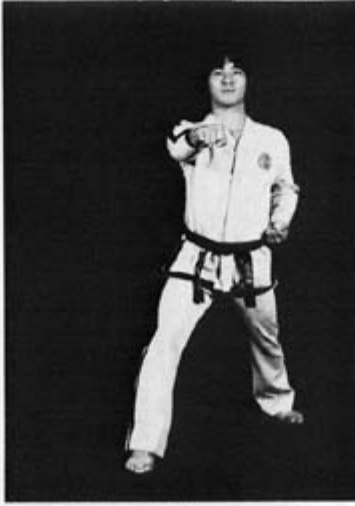
Left walking stance punch and return
ii. Move the left foot to D, forming a left walking stance toward D while punching to D with the left fist, and then bring the left foot back to a ready posture. Repeat i and ii.
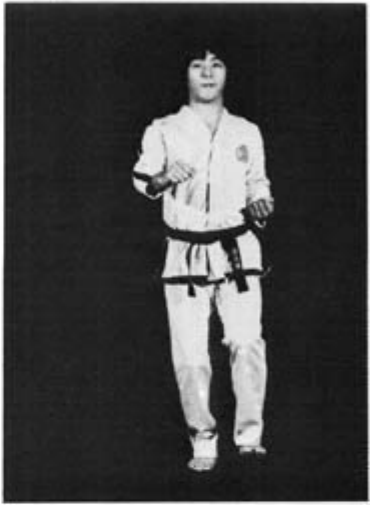
View original source illustration
Open original imageTop view
Top View. Side View.
Exercise sequence and original captions, printed page 39
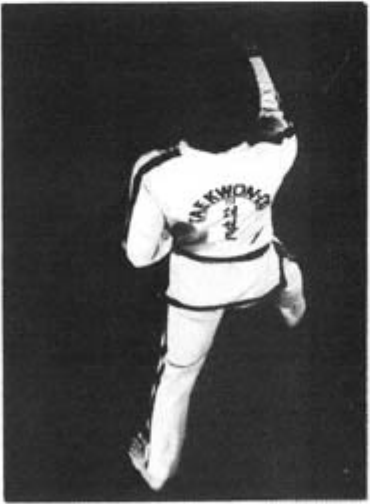
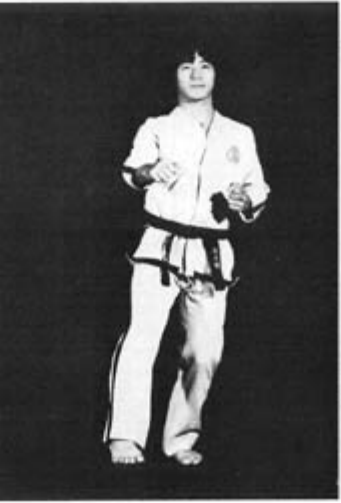
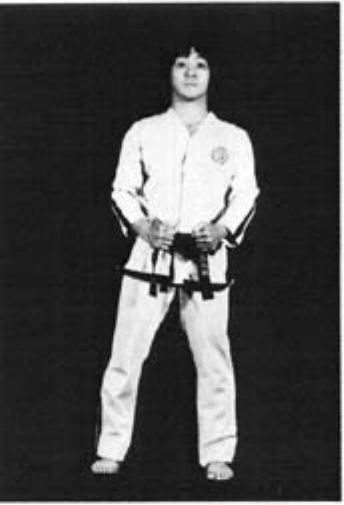
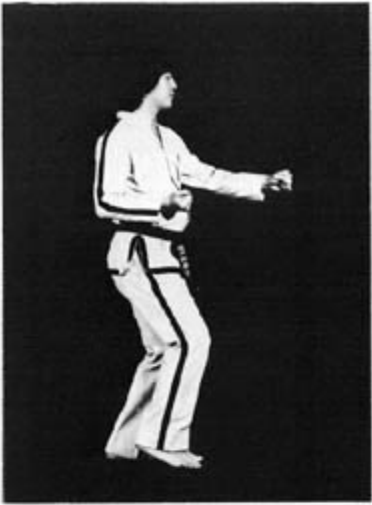
Punch preparation: side view
At the start of the punch; pull the punching fist toward the hip while extending the other fist to the front, and then execute the punch.
Be sure to perform these two actions in one smooth motion.
View original source illustration
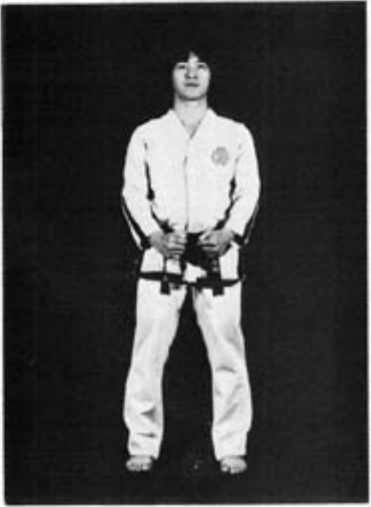
Open original image5. Walking Stance Forearm Spot Low Obverse Block (Gunnun So Palmok Gujari Najunde Baro Makgi)
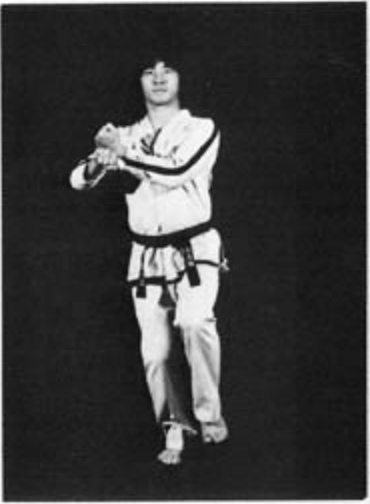
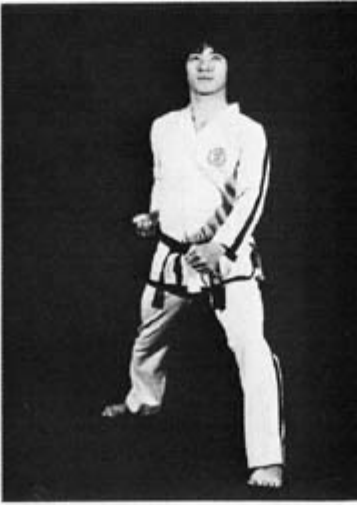
i. Commence: Move the left foot to B to form a left walking stance toward B while blocking to B with the left forearm, and then bring the left foot back to a ready posture.
Left forearm low block
Exercise sequence and original captions, printed page 40
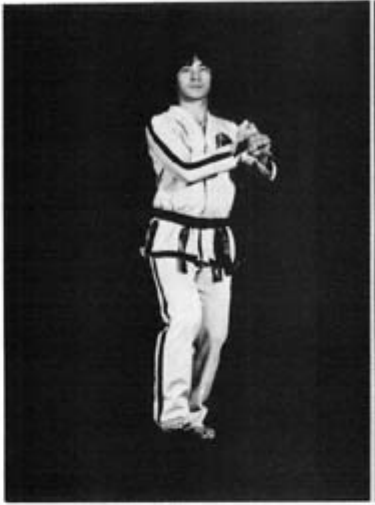
Right forearm low block and return
ii. Move the right foot to A, forming a right walking stance toward A while blocking to A with the right forearm, and then bring the right foot back to a ready posture.
Repeat i and ii.
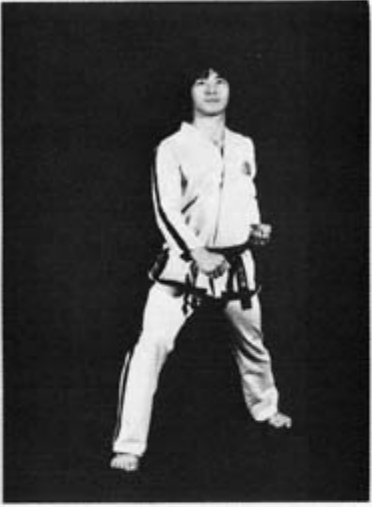
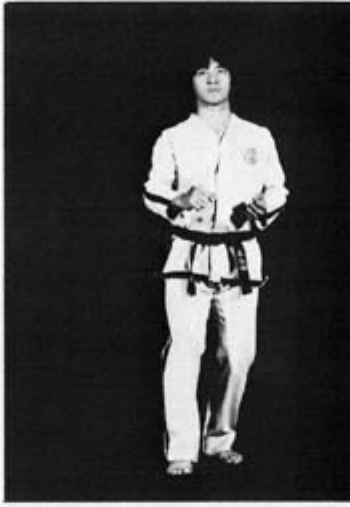
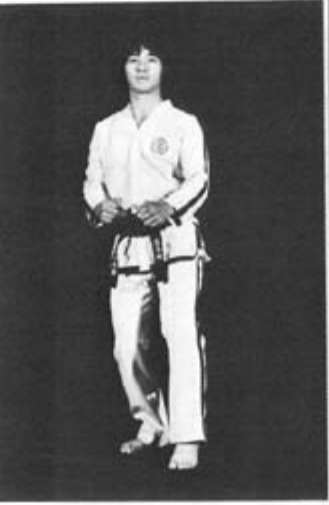
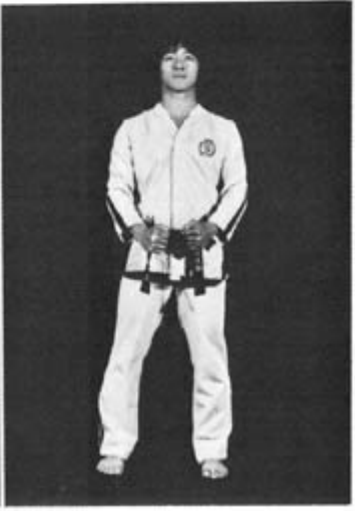
View original source illustration
Open original imageForearm low block: side view
Side View.
The reason for keeping the back forearm crossed at the start of blocking is to observe the revolving principle.
Exercise sequence and original captions, printed page 41
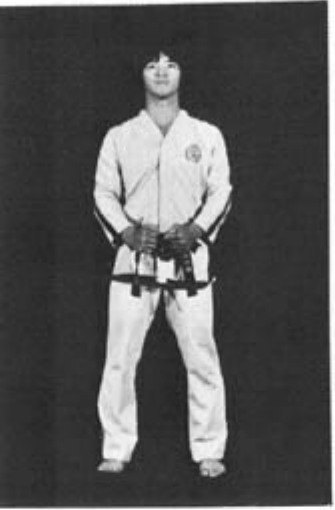
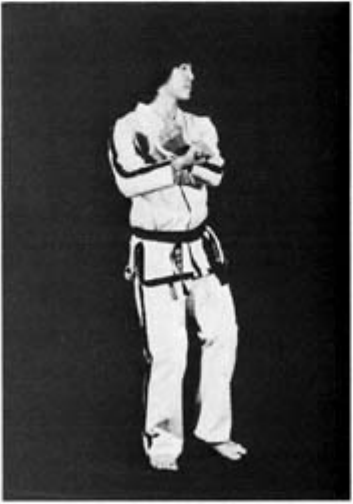
Keep the back forearms crossed in front of the right chest, placing the left forearm on the other and vice‑versa.
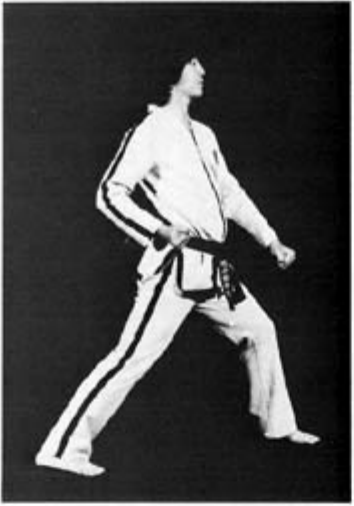
Keep the body half facing the target at the moment of block.
View original source illustration
Open original image6. Walking Stance Knife‑Hand Spot Low Obverse Block (Gunnun So Sonkal Gujari Najunde Baro Makgi)
This procedure of exercise is exactly the same as that of the forearm spot low obverse block.
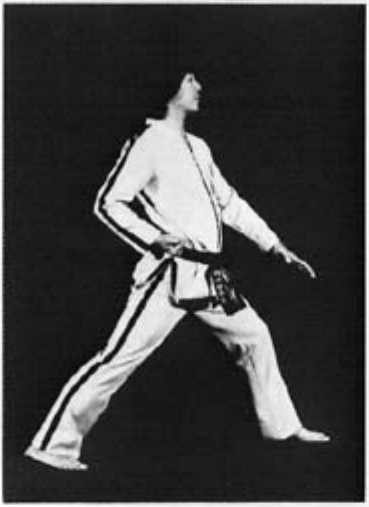
Left knife-hand low block
Exercise sequence and original captions, printed page 42
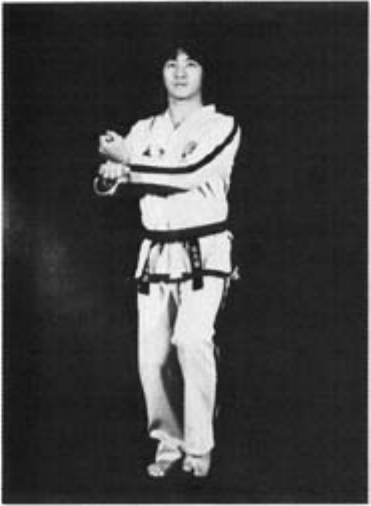
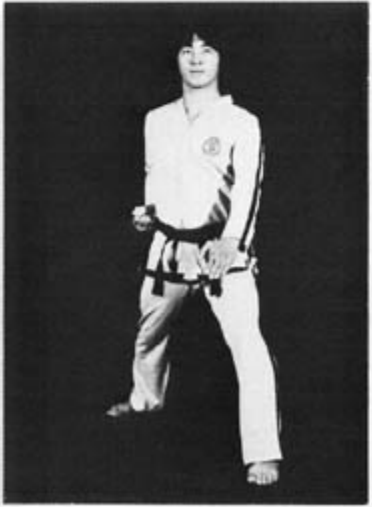
Right knife-hand low block
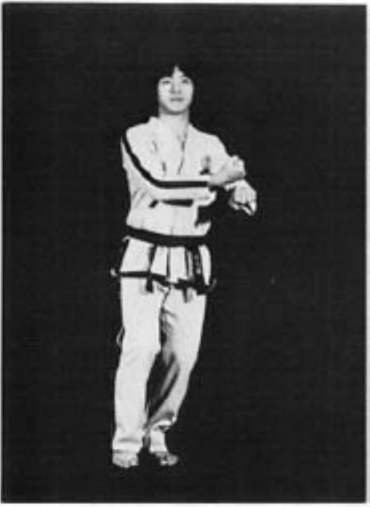
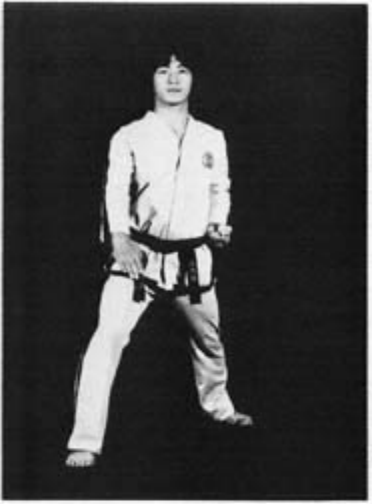
Knife-hand low block: side view
Side View.
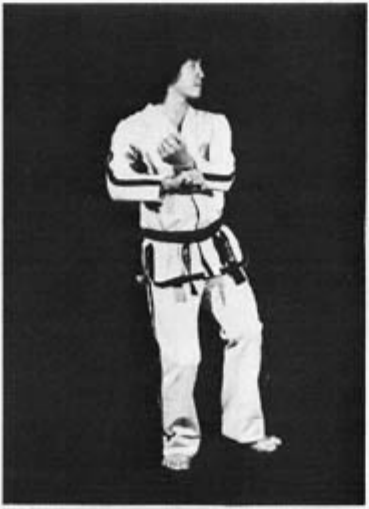
Keep the back forearms crossed in front of the rib cage.
View original source illustration
Open original image7. Walking Stance Stepping Obverse Punch (Gunnun So Omkyo Didimyo Baro Jirugi)
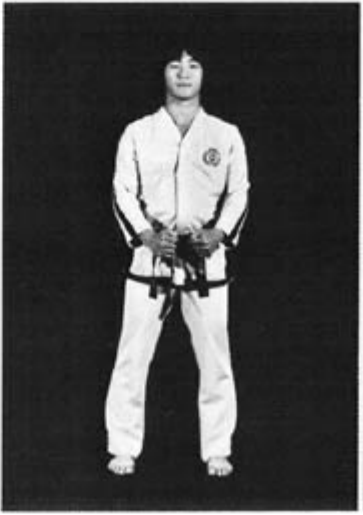
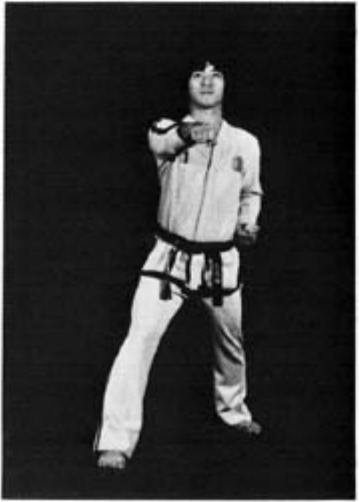
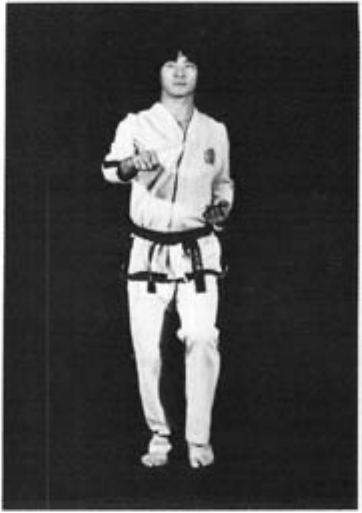
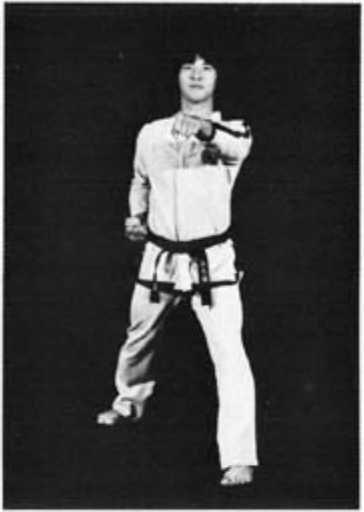
a. Forward Stepping Punch (Jillo Nagagi)
i. Move the right foot to D forming a right walking stance toward D while punching to D with the right fist.
Repeat i and ii.
Forward stepping: right punch
Exercise sequence and original captions, printed page 43
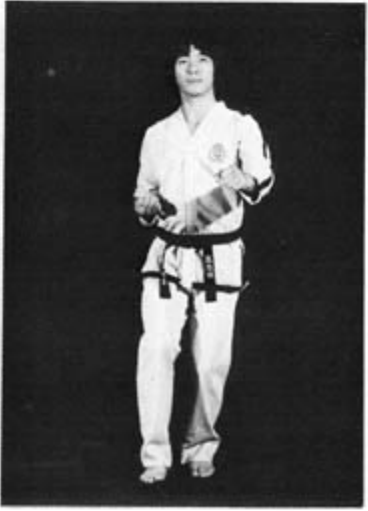
Forward stepping: left punch
ii. Move the left foot to D, forming a left walking stance toward D while punching to D with the left fist.
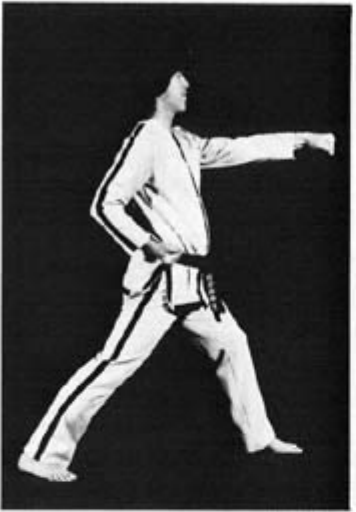
Side view
Side View.
View original source illustration
Open original imageb. Backward Stepping Punch (Jillo Duruogi)
Assume a left walking stance toward D.
i. Move the left foot to C, forming a right walking stance toward D while punching to D with the right fist.
Backward stepping: right punch
Exercise sequence and original captions, printed page 44
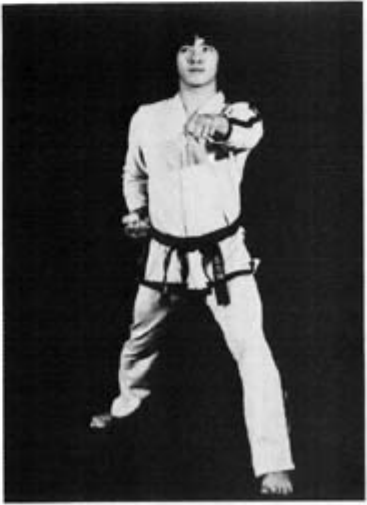
Previous Posture.
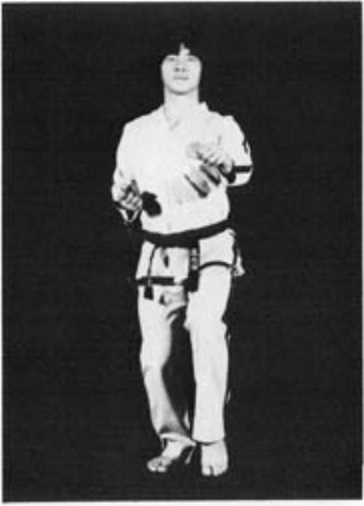
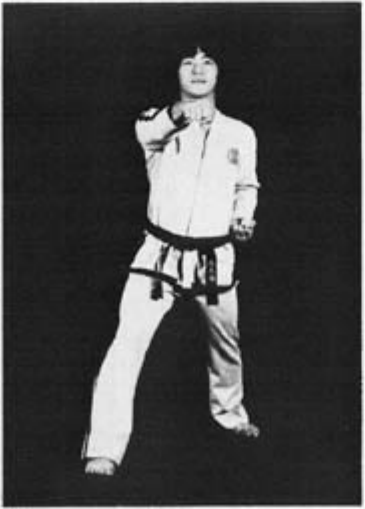
Backward stepping: left punch
ii. Move the right foot to C, forming a left walking stance toward D while punching to D with the left fist. Repeat i and ii.
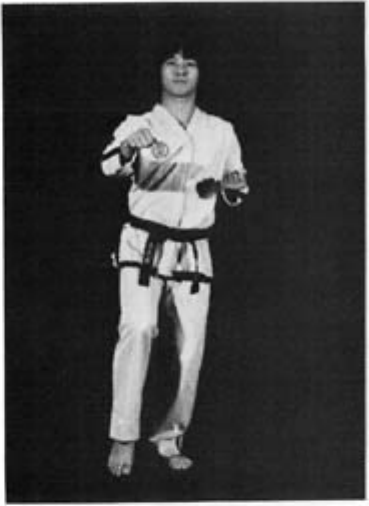
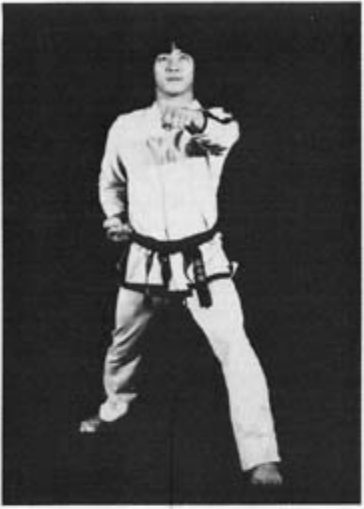
Side view
Side View.
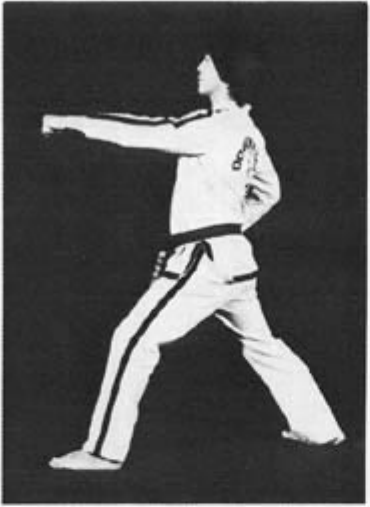
View original source illustration
Open original imagec. Spot‑Turning (Gujari Dolgi)
Assume a left walking stance toward D.
Turn clockwise, pivoting with the left foot or right foot to form a right walking stance toward C while punching to C with the right fist.
Counter clockwise turning is not possible.
The ball of the foot must be used as a pivot.
Group practice
Exercise sequence and original captions, printed page 45
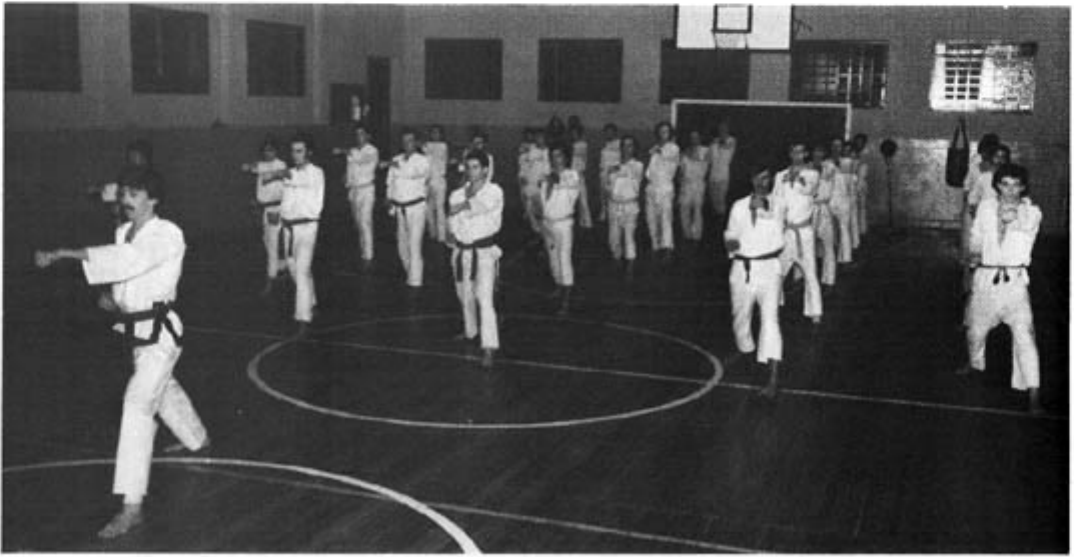
Pivot on the right foot
Pivoting with the right foot. Pivoting with the left foot.
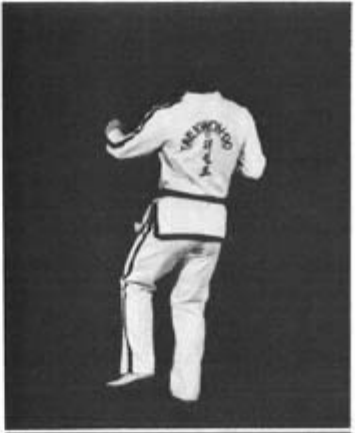
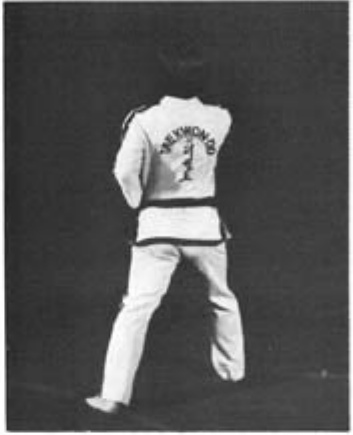
Pivot on the left foot
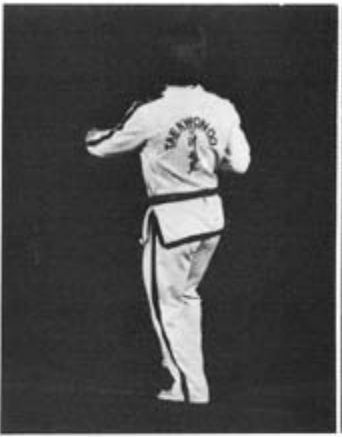
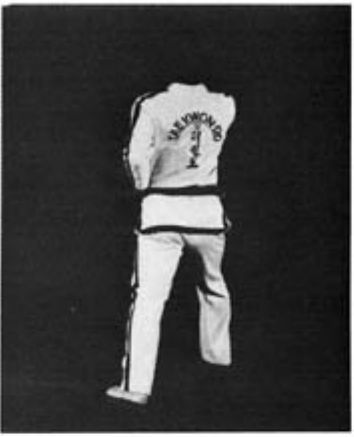
View original source illustration
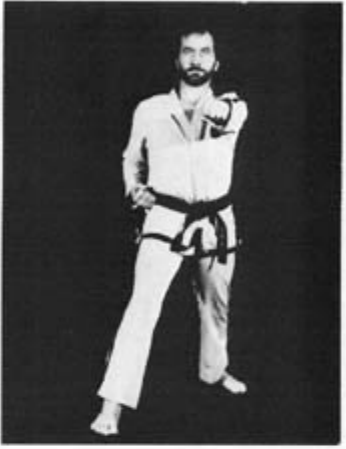
Open original image8. Walking Stance Spot Reverse Punch (Gunnun So Gujari Bandae Jirugi)
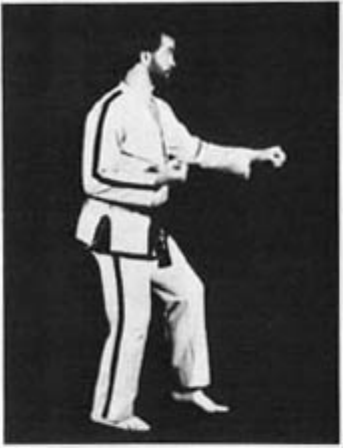
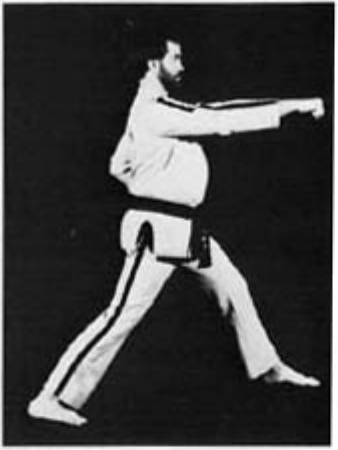
i. Move the left foot to D to form a left walking stance toward D while punching to D with the right fist and then bring the left foot back to a ready posture.
Right reverse punch and return
Exercise sequence and original captions, printed page 46
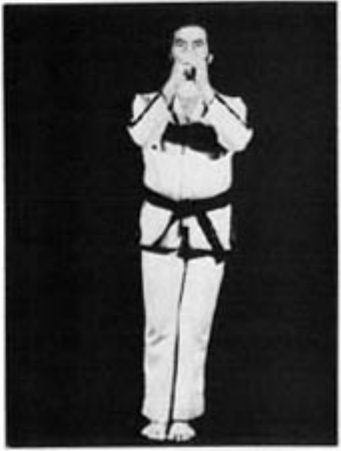
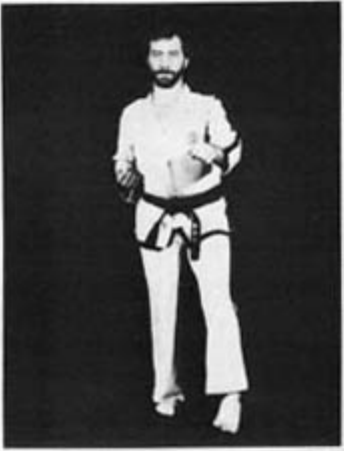
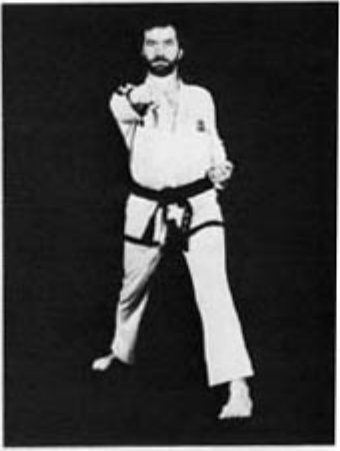
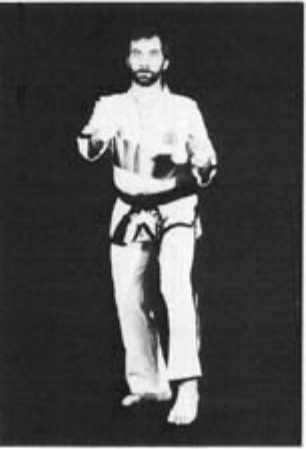
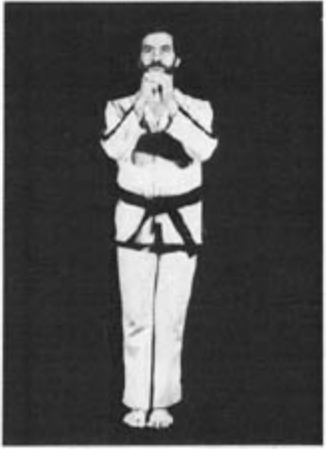
Right reverse punch: side view
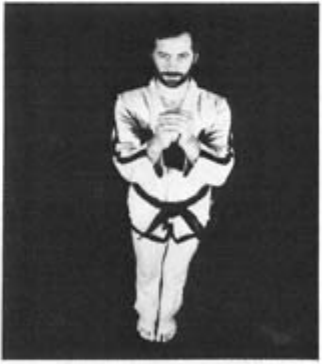
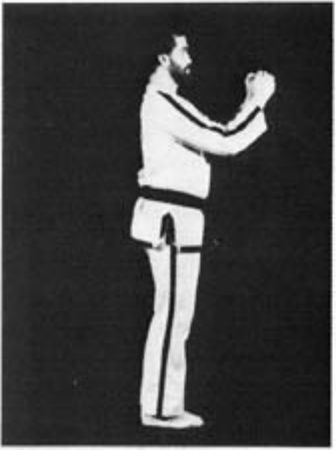
Ready Posture. Side View.
View original source illustration
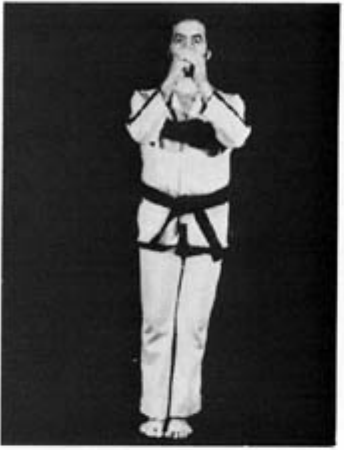
Open original imageReady posture: alternate views
Top View. Side View.
Exercise sequence and original captions, printed page 47
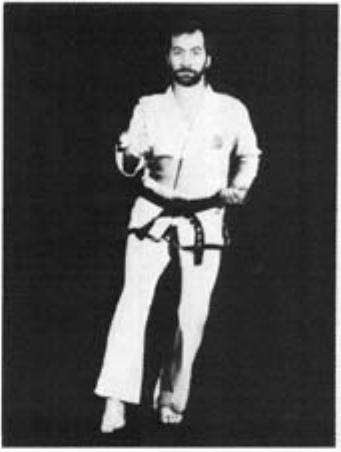
Left reverse punch and return
ii. Move the right foot to D, forming a right walking stance toward D while punching to D with the left fist and then bring the right foot back to a ready posture.
Repeat i and ii.
View original source illustration
Open original imageSources and references
Source Pages: 38, 39, 40, 41, 42, 43, 44, 45, 46, 47
References by passage
- Passage 1: 38
- Passage 2: 38
- Passage 3: 38
- Passage 4: 38
- Passage 5: 38
- Passage 6: 38
- Passage 7: 38
- Passage 8: 39
- Passage 9: 39
- Passage 10: 39
- Passage 11: 39
- Passage 12: 40
- Passage 13: 40
- Passage 14: 40
- Passage 15: 40
- Passage 16: 40
- Passage 17: 40
- Passage 18: 40
- Passage 19: 41
- Passage 20: 41
- Passage 21: 41
- Passage 22: 41
- Passage 23: 41
- Passage 24: 42
- Passage 25: 42
- Passage 26: 42
- Passage 27: 42
- Passage 28: 42
- Passage 29: 43
- Passage 30: 43
- Passage 31: 43
- Passage 32: 43
- Passage 33: 43
- Passage 34: 43
- Passage 35: 43
- Passage 36: 43
- Passage 37: 43
- Passage 38: 44
- Passage 39: 44
- Passage 40: 44
- Passage 41: 44
- Passage 42: 44
- Passage 43: 44
- Passage 44: 44
- Passage 45: 45
- Passage 46: 45
- Passage 47: 45
- Passage 48: 45
- Passage 49: 45
- Passage 50: 45
- Passage 51: 45
- Passage 52: 46
- Passage 53: 46
- Passage 54: 46
- Passage 55: 46
- Passage 56: 46
- Passage 57: 47
- Passage 58: 47
- Passage 59: 47
- Passage 60: 47