Volume VI
Exercises 1–3: Parallel, Close and Sitting Stance Punches
Select an image to view it at full size.
Method of Exercise (Yonsup Bop)
1. Parallel Stance Punch (Narani So Jirugi)
Ready posture (Junbi Jase): Attention stance.
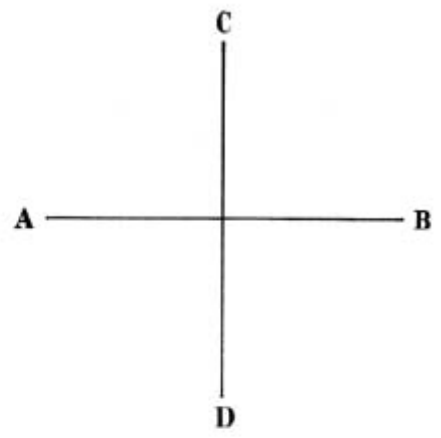
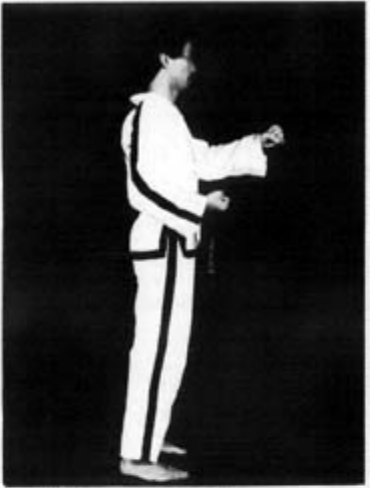
At the command of “parallel stance punch ready” (Narani so jirugi junbi): move the left foot from an attention stance to form a parallel stance toward D while extending the left fist to D horizontally.
Preparing the parallel stance punch
Exercise sequence and original captions, printed page 29
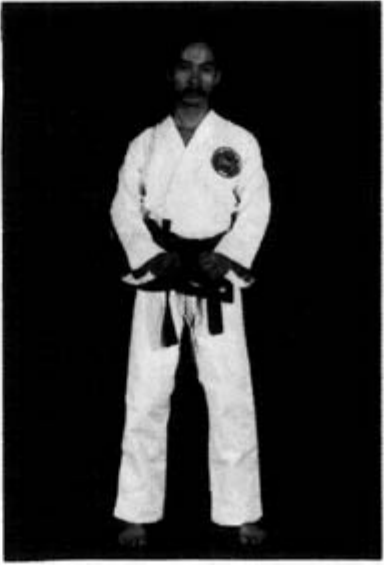
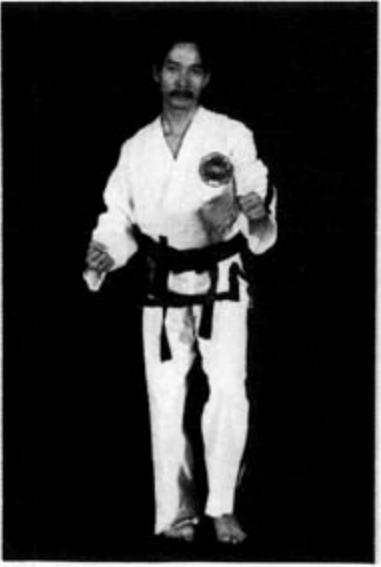
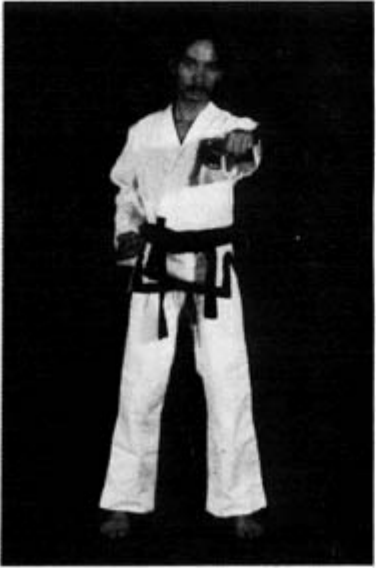
Side view and direction diagram
Ready Posture. Direction diagram. Side View.
View original source illustration
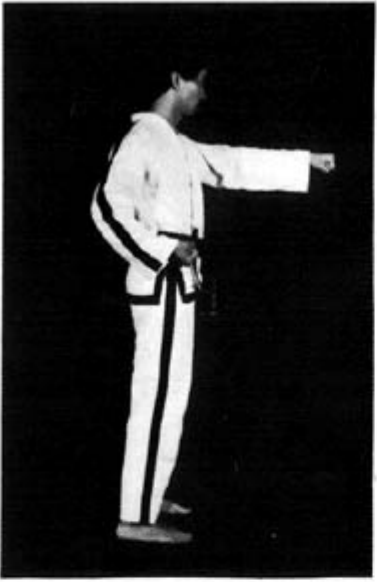
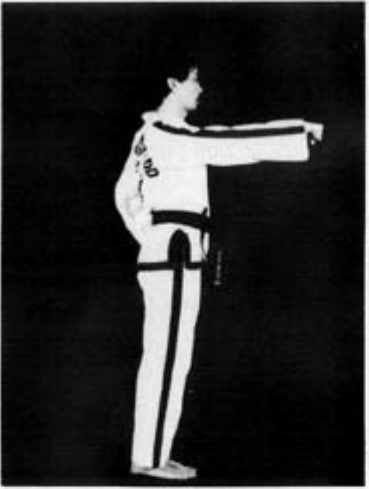
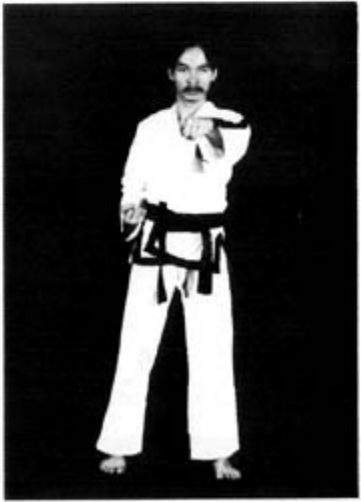
Open original imagei. At the command of “commence” (Sijak): Punch to D with the right fist while maintaining the same stance toward D.
Right punch: front view
Top View. Previous posture. Side View.
Exercise sequence and original captions, printed page 30
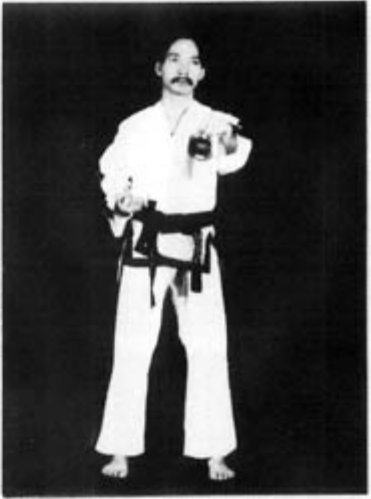
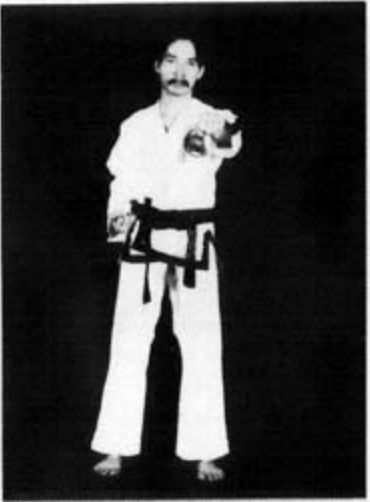
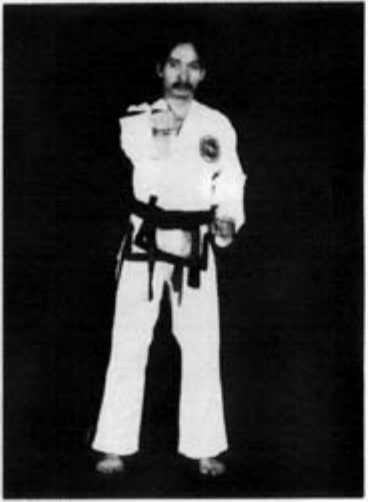
Right punch: side view
Keep both heels slightly off the ground.
Top view
View original source illustration
Open original imageii. Punch to D with the left fist while maintaining the same stance toward D.
After repeating i and ii at the command of “Stop” (Guman); bring the left foot back to a ready posture or attention stance.
At the start of the punch, keep both heels slightly off the ground and then execute a punch. Be sure to perform these two actions in one smooth motion. The same principle is applicable to a close stance punch.
Left punch
Exercise sequence and original captions, printed page 31
Keep both heels slightly off the ground.
Return to ready posture
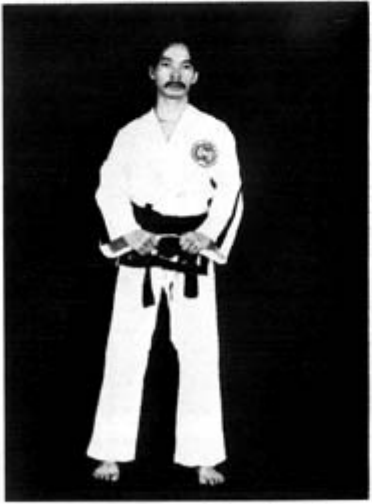
Bring the left foot back to a ready posture.
Group practice
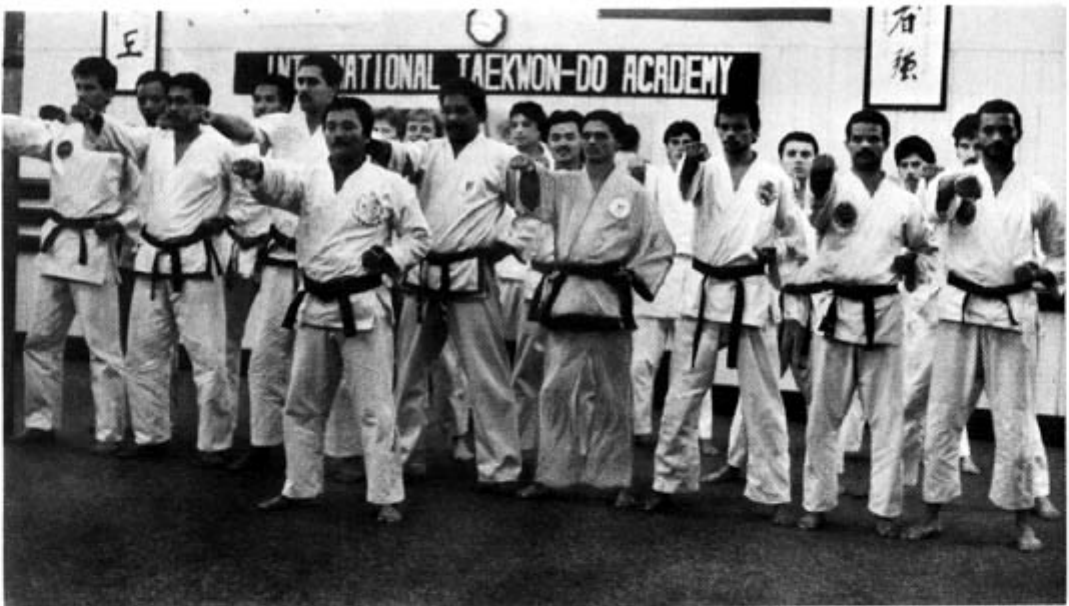
View original source illustration
Open original image2. Close Stance Punch (Moa So Jirugi)
Ready posture (Junbi Jase): Parallel ready stance.
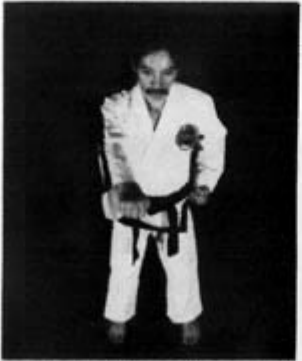
At the command of close stance punch (Moa So Jirugi Junbi): Bring the left foot to the right foot, forming a close stance toward D while extending the left fist to D horizontally.
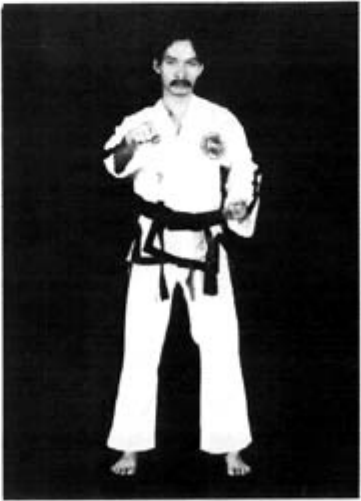
i. At the command of commence (Sijak): Punch to D with the right fist while maintaining the same stance toward D.
Preparing the close stance punch
Parallel ready stance. Side View.
Exercise sequence and original captions, printed page 32
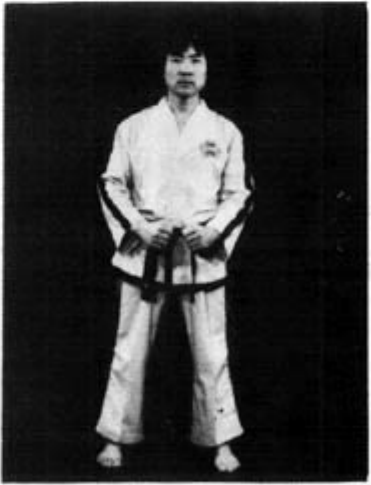
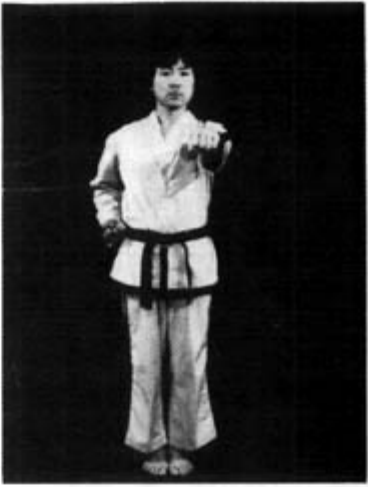
Right punch: front view
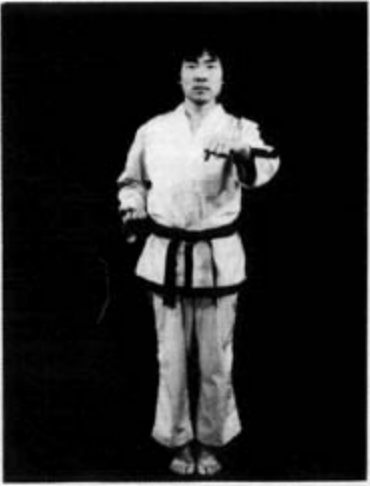
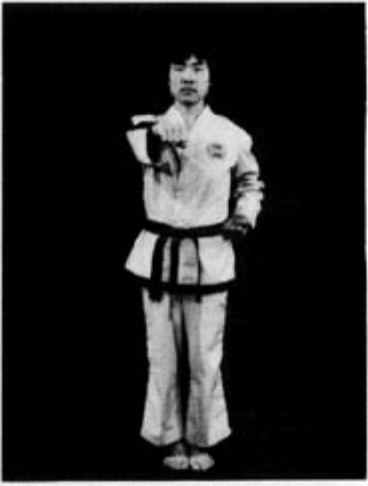
Right punch: side view
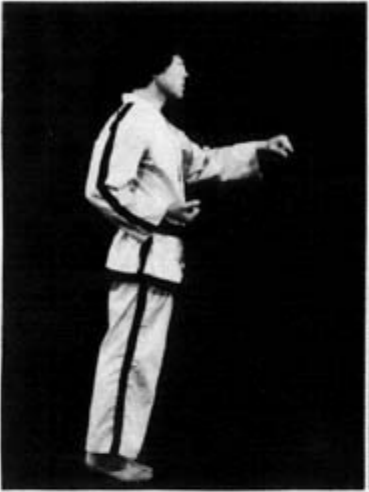
Keep both heels slightly off the ground.
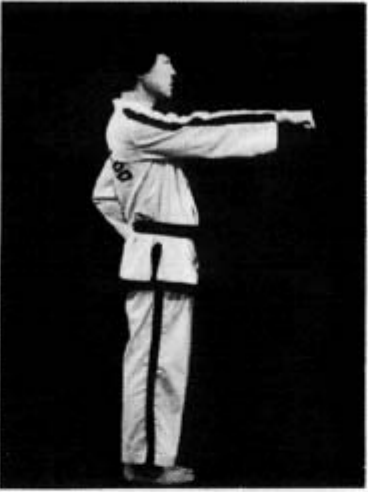
View original source illustration
Open original imageii. Punch to D with the left fist while maintaining the same stance toward D.
After repeating i and ii, at the command of “Stop” (Guman); bring the left foot back to a ready posture or parallel ready stance.
Left punch
Exercise sequence and original captions, printed page 33
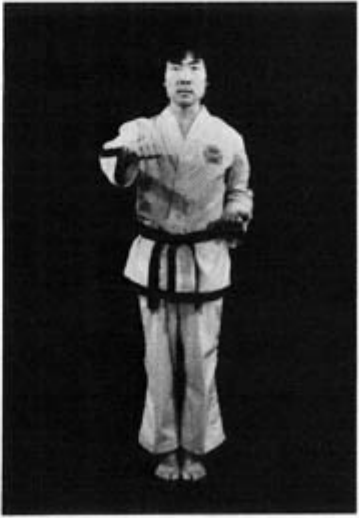
Keep both heels slightly off the ground.
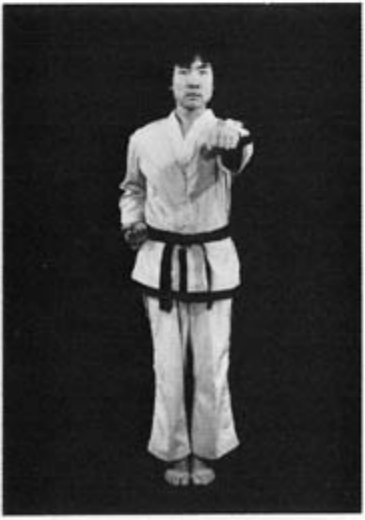
Return to ready posture
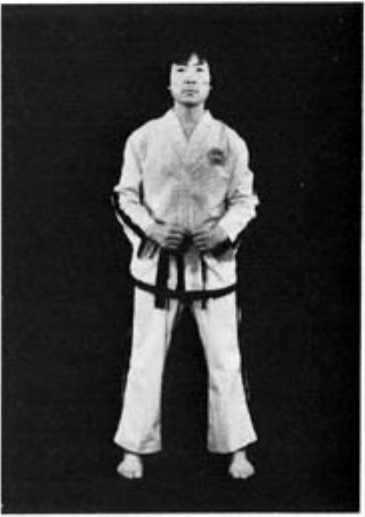
Bring the left foot back to a ready posture.
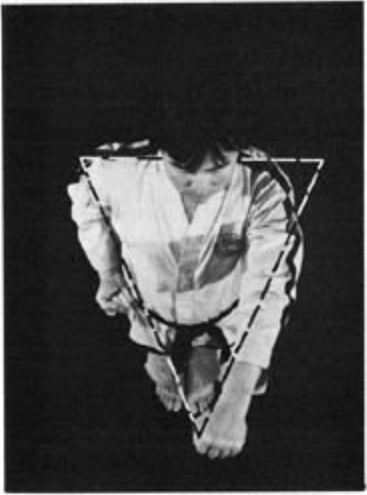
Punch alignment: top view
Top View.
The fist must be at the center of the attacker’s body at the moment of impact. The same principle is applicable to the parallel stance punch, sitting stance punch, and walking stance punch as far as a front punch is concerned.
View original source illustration
Open original image3. Sitting Stance Punch (Annun So Jirugi)
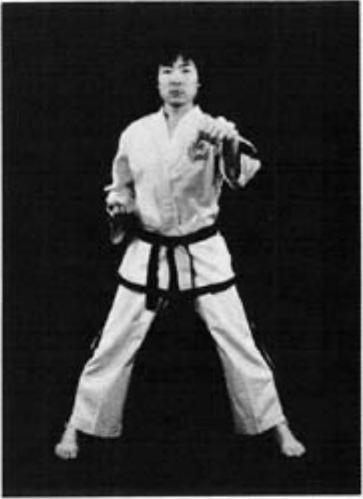
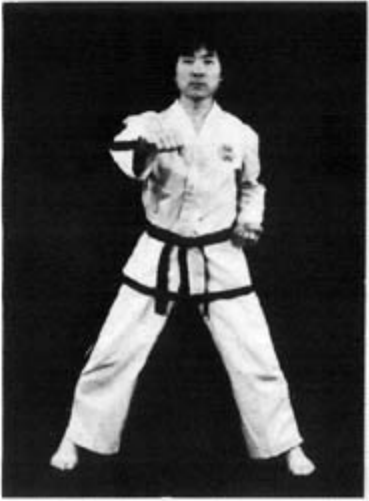
At the command of “sitting stance punch ready”. Move the left foot to B, forming a sitting stance toward D while extending the left fist to D horizontally.
Preparing the sitting stance punch
Exercise sequence and original captions, printed page 34
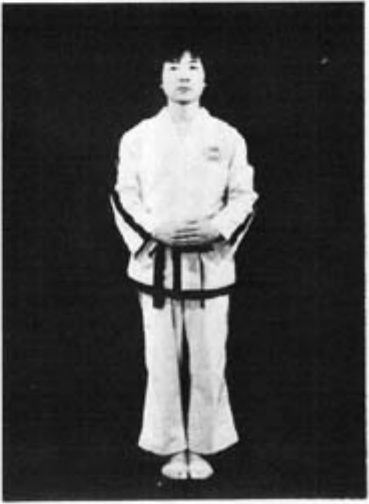
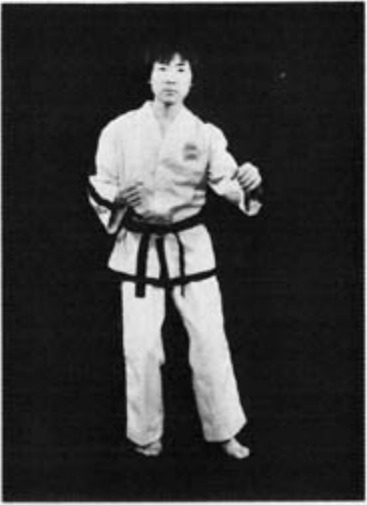
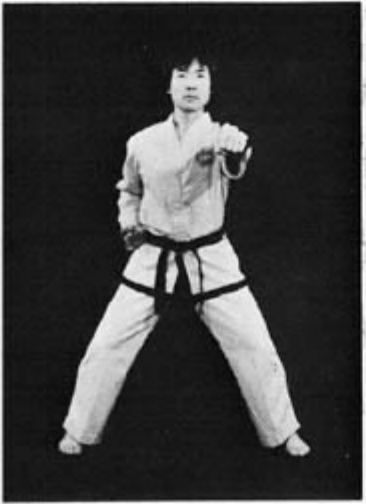
Right punch
i. At the command of “commence”; Punch to D with the right fist while maintaining the same stance toward D.
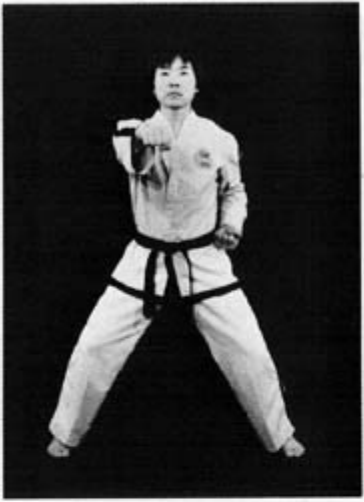
Side view
Side View.
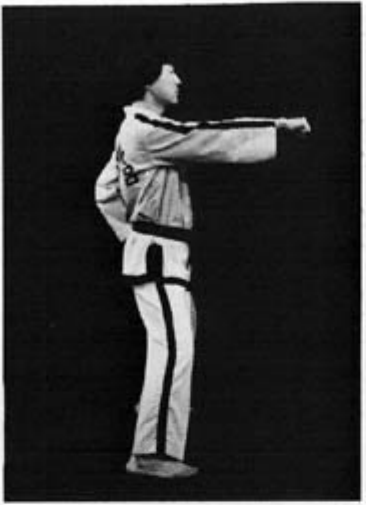
View original source illustration
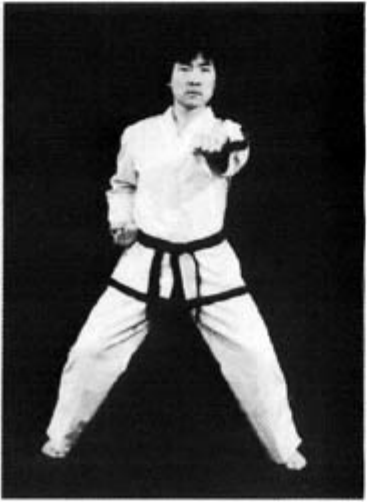
Open original imageii. Punch to D with the left fist while maintaining the same stance toward D.
Left punch
Exercise sequence and original captions, printed page 35
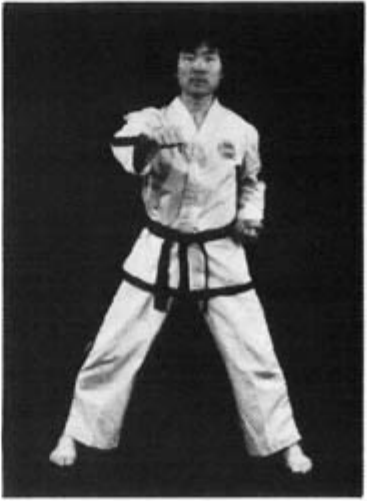
Previous Posture.
Raise the body slightly.
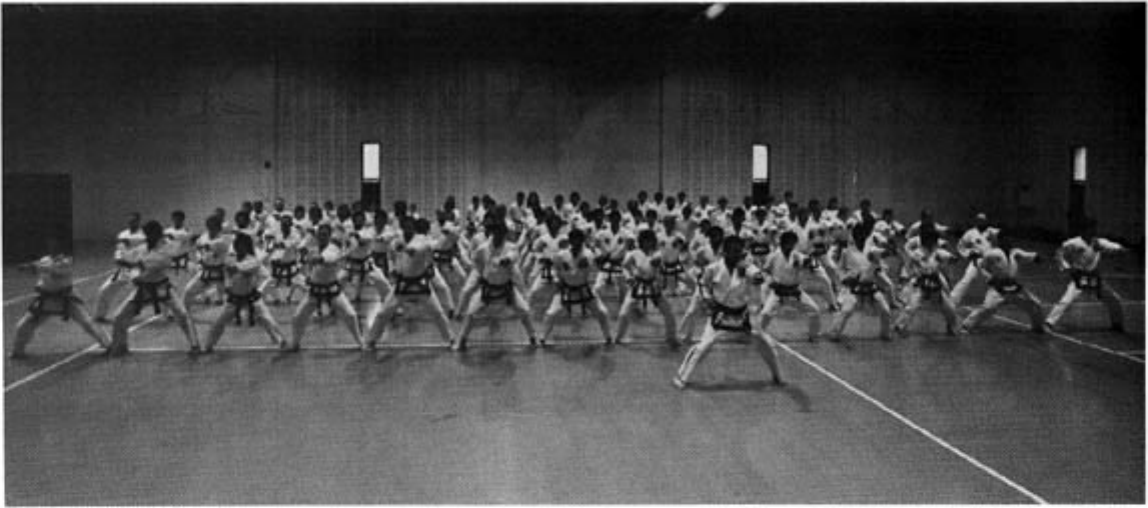
Group practice
View original source illustration
Open original imageiii. Punch to D With the right fist while maintaining the same stance toward D.
After repeating ii and iii, at the command of “stop”; bring the left foot back to a ready posture or close ready stance B.
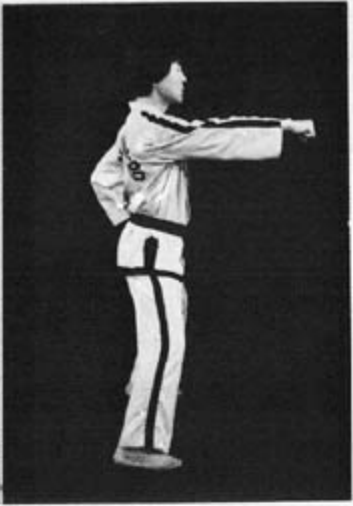
At the start of the punch, raise the body slightly and then execute a punch. Be Sure to perform these two actions in one smooth motion.
Right punch: front view
Exercise sequence and original captions, printed page 36
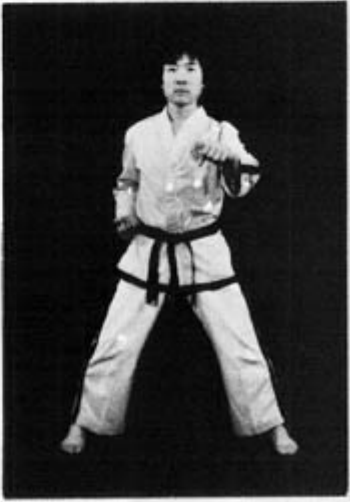
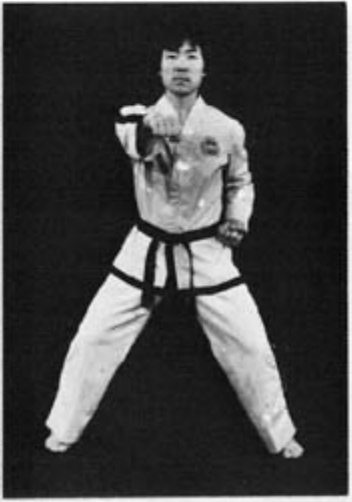
Right punch: side view
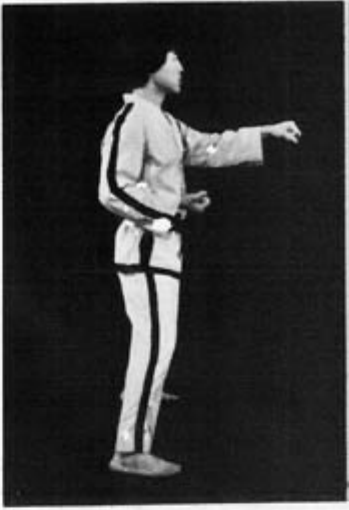
Side View. Raise the body slightly.
Return to ready posture
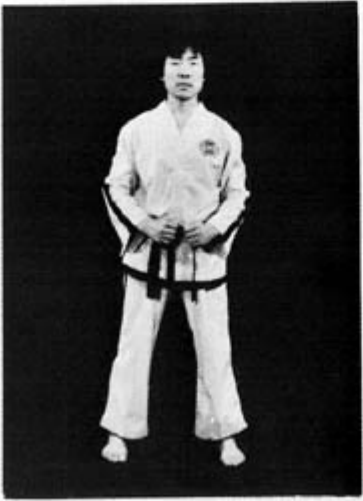
Bring the left foot back to a ready posture.
View original source illustration
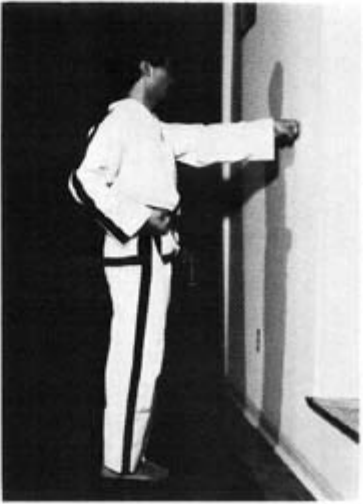
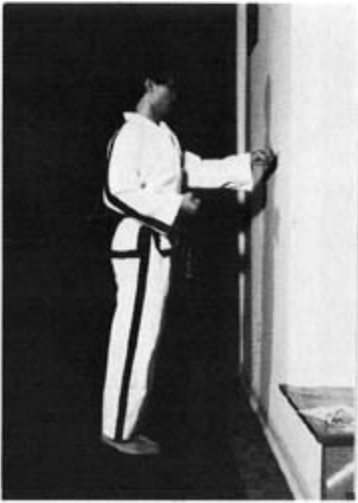
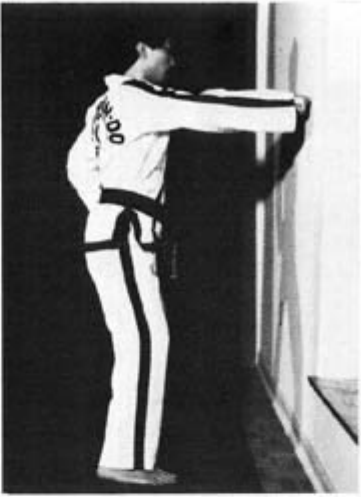
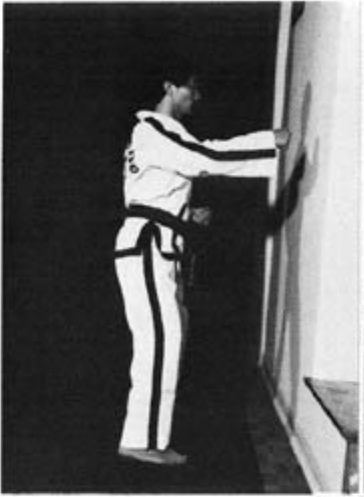
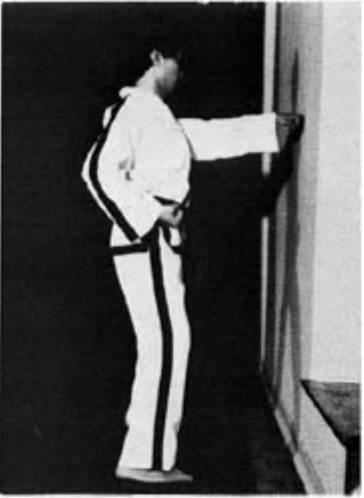
Open original imageIn parallel stance, close stance and sitting stance it is highly desirable to conduct the punching exercise at a distance of one full arm’s length against a forging post or a wall. This will prevent throwing the shoulder since the beginner cannot possibly punch beyond the hard surface.
Wall practice: parallel stance
Exercise sequence and original captions, printed page 37
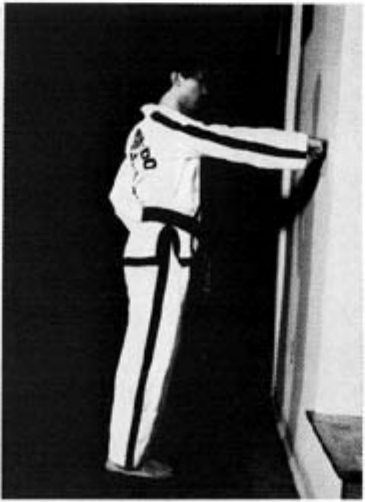
Wall practice: sitting stance
View original source illustration
Open original imageSources and references
Source Pages: 29, 30, 31, 32, 33, 34, 35, 36, 37
References by passage
- Passage 1: 29
- Passage 2: 29
- Passage 3: 29
- Passage 4: 29
- Passage 5: 29
- Passage 6: 29
- Passage 7: 29
- Passage 8: 30
- Passage 9: 30
- Passage 10: 30
- Passage 11: 30
- Passage 12: 31
- Passage 13: 31
- Passage 14: 31
- Passage 15: 31
- Passage 16: 31
- Passage 17: 31
- Passage 18: 32
- Passage 19: 32
- Passage 20: 32
- Passage 21: 32
- Passage 22: 32
- Passage 23: 32
- Passage 24: 32
- Passage 25: 33
- Passage 26: 33
- Passage 27: 33
- Passage 28: 33
- Passage 29: 33
- Passage 30: 33
- Passage 31: 33
- Passage 32: 34
- Passage 33: 34
- Passage 34: 34
- Passage 35: 34
- Passage 36: 34
- Passage 37: 34
- Passage 38: 34
- Passage 39: 35
- Passage 40: 35
- Passage 41: 35
- Passage 42: 35
- Passage 43: 36
- Passage 44: 36
- Passage 45: 36
- Passage 46: 36
- Passage 47: 36
- Passage 48: 36
- Passage 49: 37
- Passage 50: 37
- Passage 51: 37