Volume VI
Fundamental Exercises: Introduction and Stance Illustrations
Select an image to view it at full size.
Important
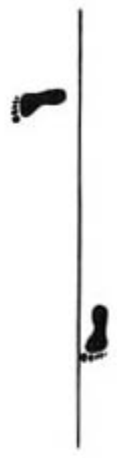
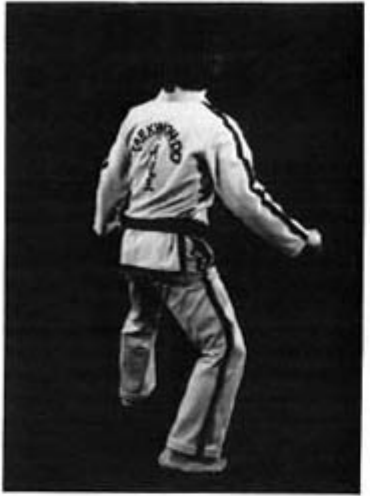
Due to the distortion of distance apparent in photographs, the angle of the feet in stances may appear slightly out of position. The student, therefore, is encouraged to refer to the feet illustrations rather than the photograph itself.
Parallel stance
Parallel and sitting stances with foot‑position diagrams
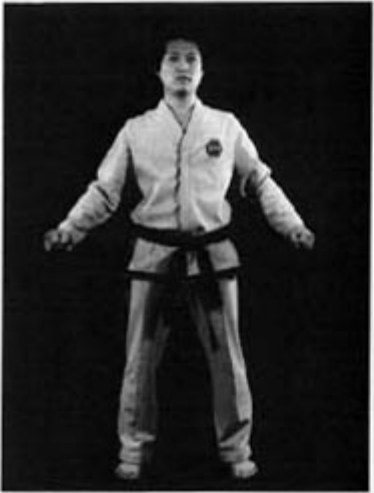
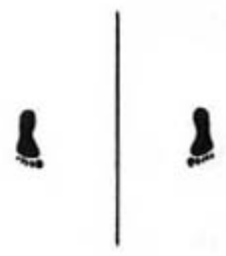
Sitting stance
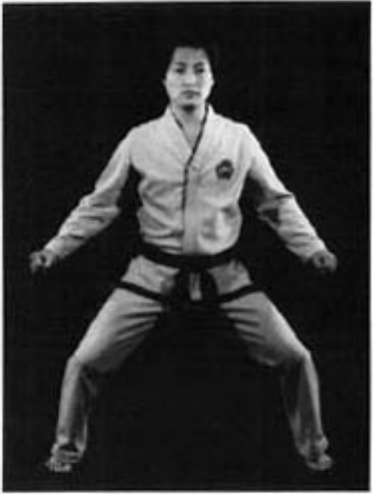
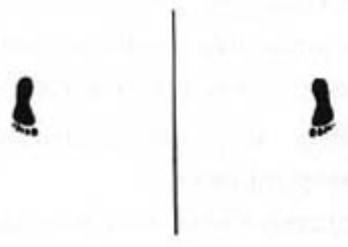
View original source illustration
Open original imageWalking stance (Gunnun Sogi)
Walking Stance (Gunnun Sogi) and L‑Stance (Niunja Sogi): front and back views
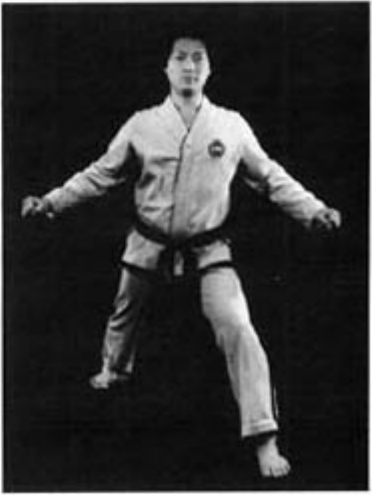
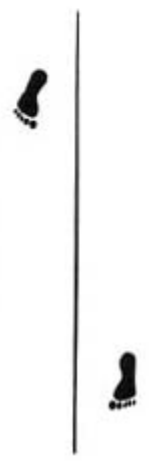
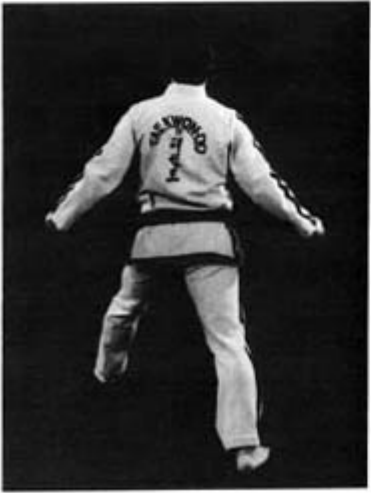
L-stance (Niunja Sogi)
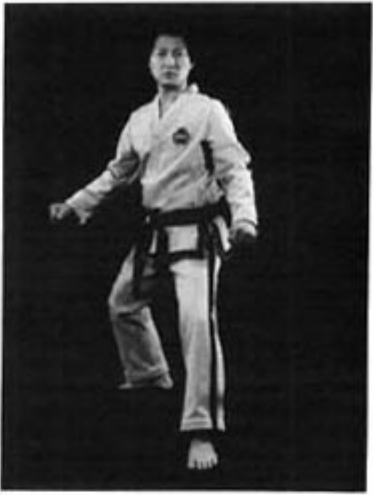
View original source illustration
Open original image
Fundamental Exercises (Gibon Yonsup)
Certainly the most important asset any training hall can have is a good instructor. There is no substitute for well‑trained, intelligent, perceptive and patient instructor. Occasionally, however, a student may find himself in an area where he is not able to train under a qualified instructor; or a student may find the need to practice by himself from time to time; or there may be instances when an individual is sincerely anxious to learn Taekwon‑Do but neither has the means nor time to travel to a distant training hall. In these cases, a dedicated person may be able to use this book as a guide. To truly gain complete comprehension of these techniques, however, a student will have to spend some time under the tutelage of a black belt instructor.
The sequence of fundamental exercises described here is neither absolute nor inflexible. It is, however, a sequence found to be most beneficial for the student, especially beginners.
Fundamental exercises are considered the back bone of Taekwon‑Do, for the students can learn a great number of additional movements which are found neither in patterns nor sparrings.
Obviously the pattern cannot be performed effectively without sufficient knowledge of the fundamental movements involved. The student is therefore advised to exercise each fundamental movement correctly and thoroughly one by one before attempting to practise his pattern or sparring.
The object of this volume is to give the students (from beginners to 2nd degree black belt holders) clear purpose, principle method and a logical procedure of exercise of each fundamental movement.
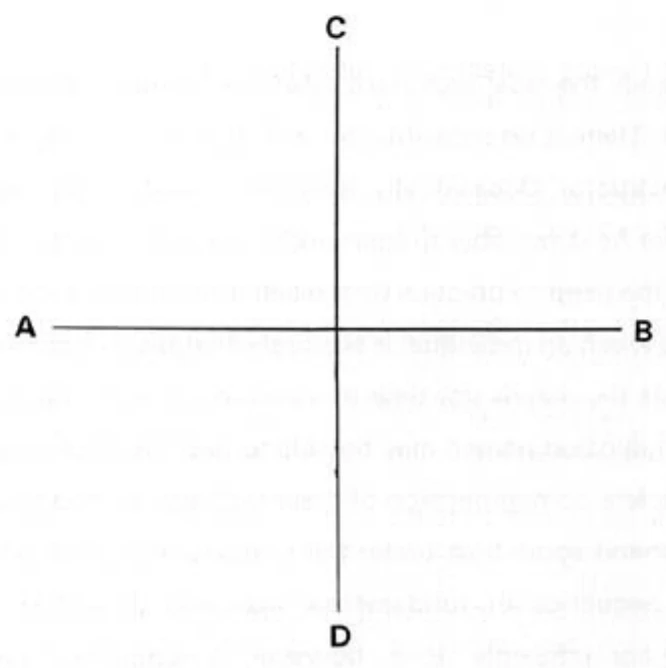
Direction Diagram (Bang Hyang Pyo)
This is a guide to show the four directions the student will follow during the performance of an exercise.
Important
This must be thoroughly studied by all students before moving into exercise.
Sources and references
Source Pages: 14, 15, 16, 17, 18
References by passage
- Passage 1: 14
- Passage 2: 14
- Passage 3: 14
- Passage 4: 14
- Passage 5: 15
- Passage 6: 16
- Passage 7: 16
- Passage 8: 17
- Passage 9: 17
- Passage 10: 17
- Passage 11: 17
- Passage 12: 17
- Passage 13: 17
- Passage 14: 18
- Passage 15: 18
- Passage 16: 18
- Passage 17: 18
- Passage 18: 18