Volume VI
Volume VI: Contents, Author and Tenets
Select an image to view it at full size.
Opening material from Volume VI of the Encyclopedia of Taekwon‑Do by Gen. Choi Hong Hi. The contents below retain the printed references; the synopsis itself begins on printed page 389 rather than the contents page’s stated 387.
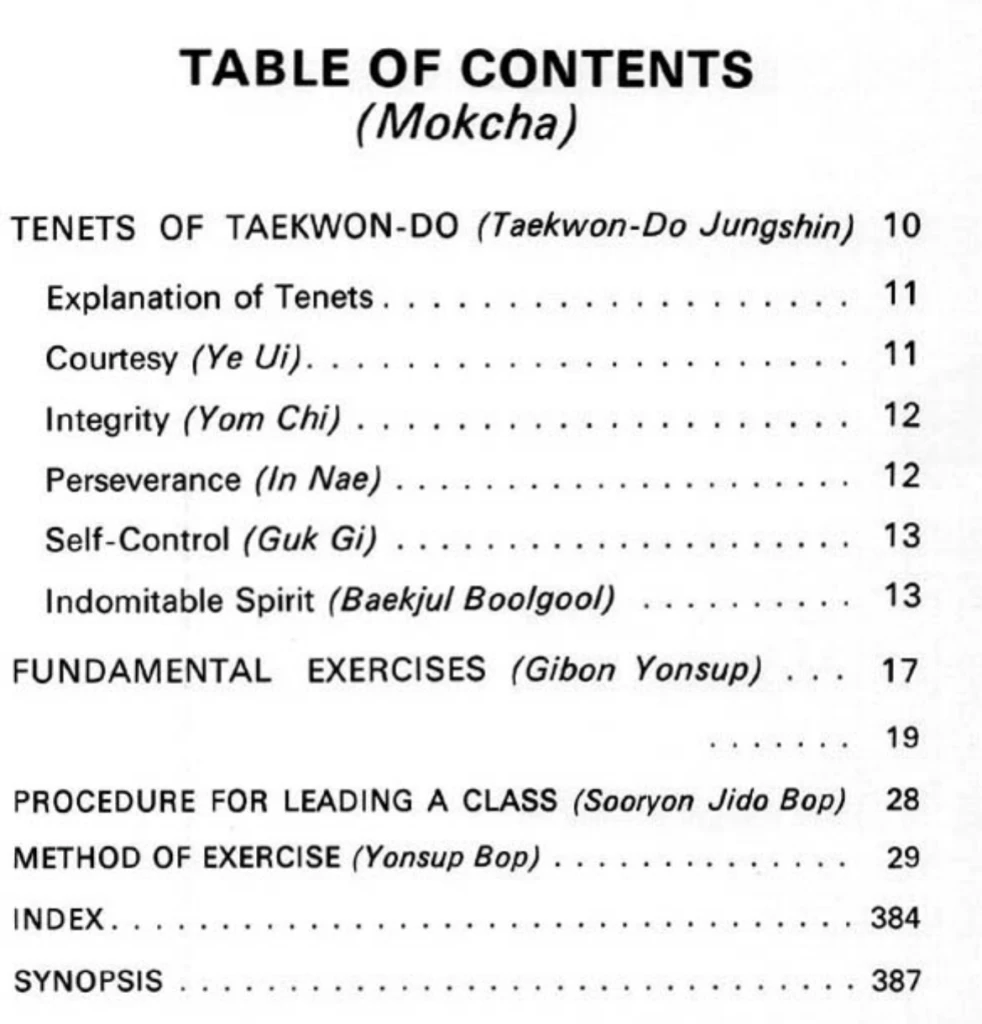
Tenets of Taekwon‑Do (Taekwon‑Do Jungshin) — 10
Explanation of Tenets — 11
Courtesy (Ye Ui) — 11
Integrity (Yom Chi) — 12
Perseverance (In Nae) — 12
Self‑Control (Guk Gi) — 13
Indomitable Spirit (Baekjul Boolgool) — 13
Fundamental Exercises (Gibon Yonsup) — 17
Unlabelled contents reference — 19
Procedure for Leading a Class (Sooryon Jido Bop) — 28
Method of Exercise (Yonsup Bop) — 29
Index — 384
Synopsis — 387
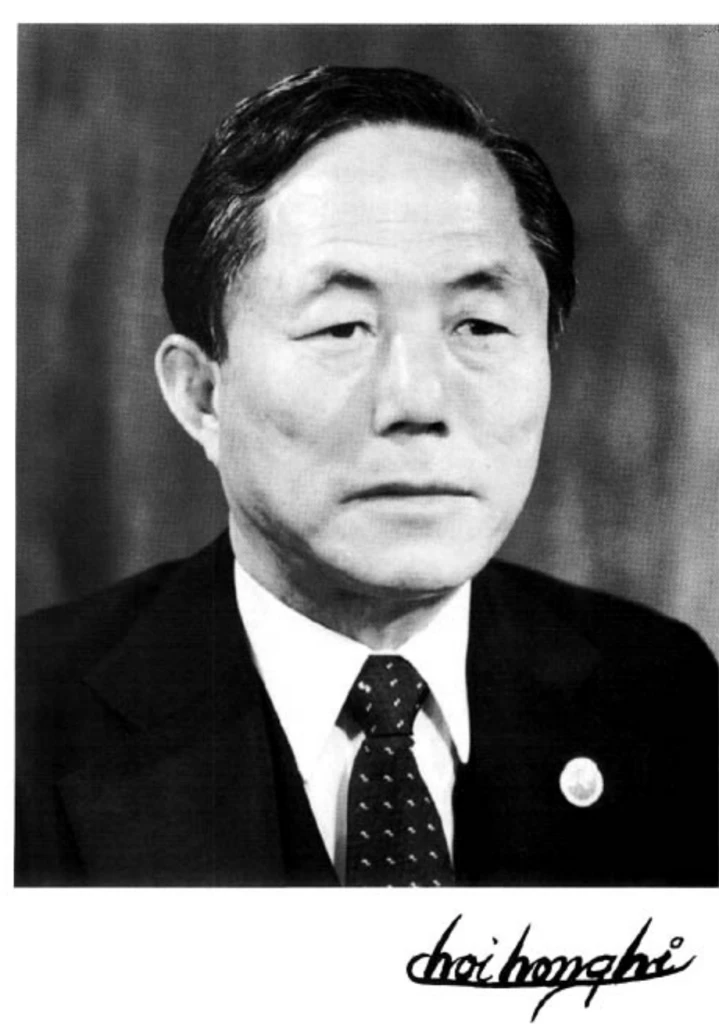
Gen. Choi Hong Hi
GEN. CHOI HONG HI — President, International Taekwon‑Do Federation (caption in the original edition).
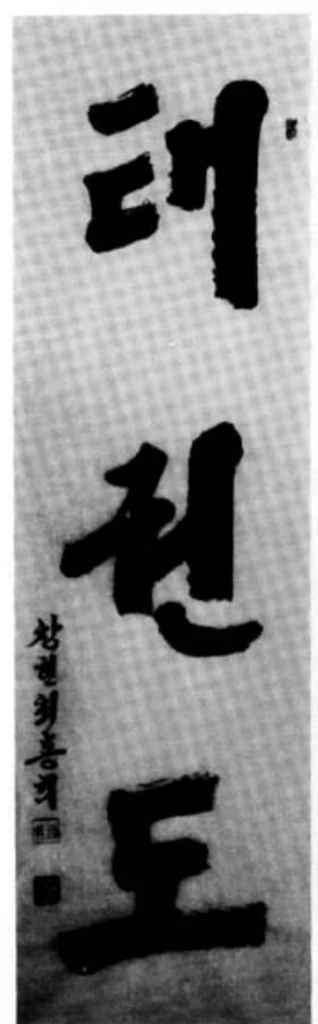
Taekwon‑Do in Korean and Chinese Characters
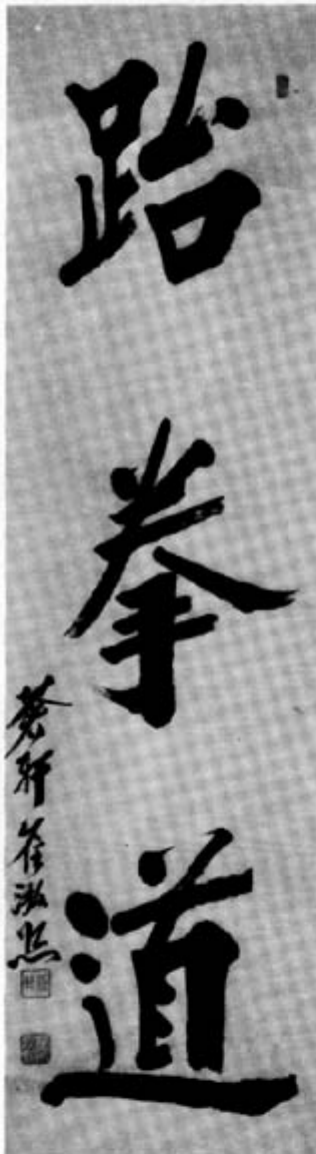
Chinese calligraphy
Taekwon‑Do in Chinese Character
View original source illustration
Open original image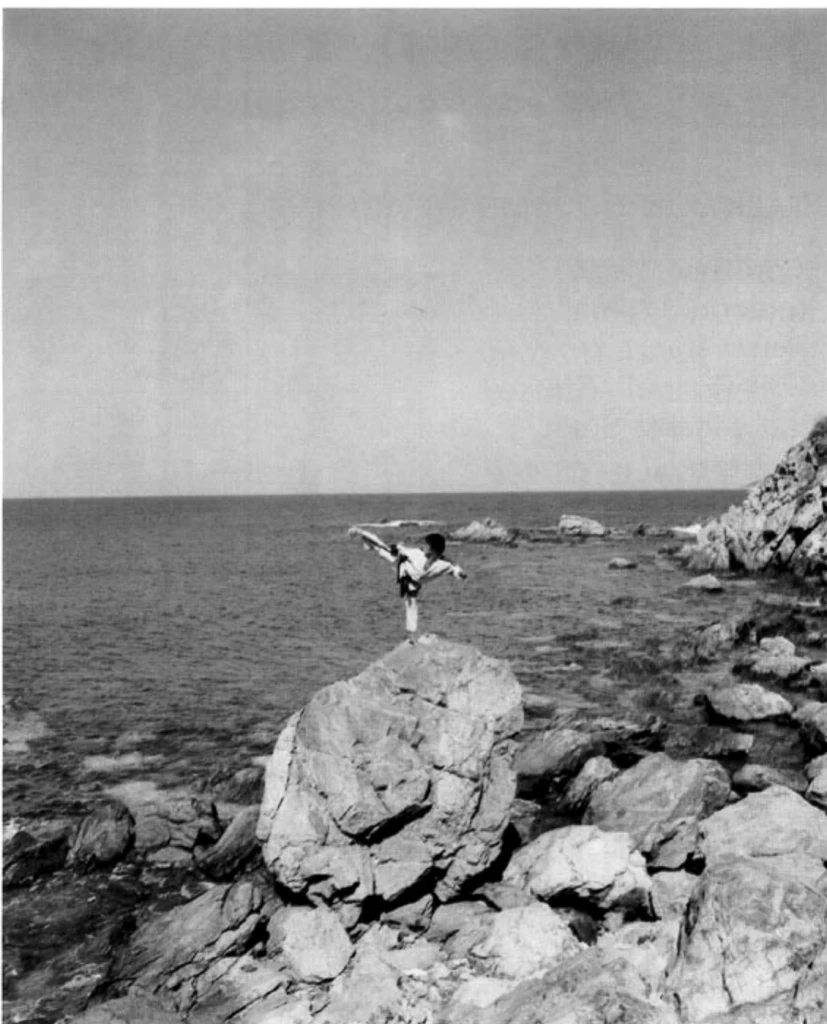
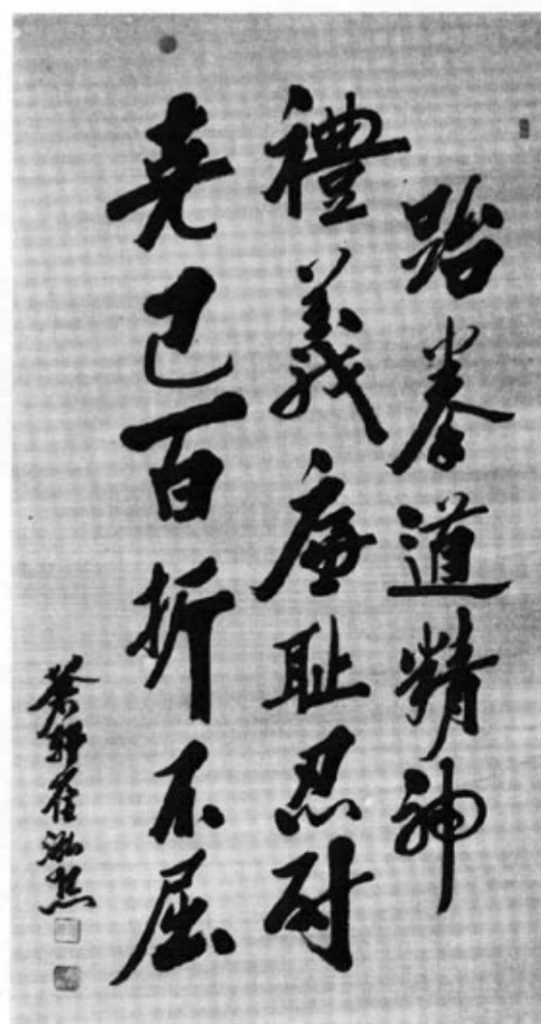
The Tenets of Taekwon‑Do (Taekwon‑Do Jungshin)
TAEKWON‑DO AIMS TO ACHIEVE
Courtesy (Ye Ui)
Integrity (Yom Chi)
Perseverance (In Nae)
Self‑Control (Guk Gi)
Indomitable Spirit (Baekjul Boolgool)
Explanation of Tenets
Needless to say, the success or failure of Taekwon‑Do training depends largely on how one observes and implements the tenets of Taekwon‑Do which should serve as a guide for all serious students of the art.
Courtesy (Ye Ui)
Taekwon‑Do students should attempt to practise the following elements of courtesy to build up their noble character and to conduct the training in an orderly manner as well.
1) To promote the spirit of mutual concessions
2) To be ashamed of one’s vices, contempting those of others
3) To be polite to one another
4) To encourage the sense of justice and humanity
5) To distinguish instructor from student, senior from junior, and elder from younger
6) To behave oneself according to etiquette
7) To respect others’ possessions
8) To handle matters with fairness and sincerity
9) To refrain from giving or accepting any gift when in doubt
Integrity (Yom Chi)
In Taekwon‑Do, the word integrity assumes a looser definition than the one usually presented in Webster’s dictionary. One must be able to define right and wrong, and have the conscience, if wrong, to feel guilt. Listed are some examples, where integrity is lacking:
1. The instructor who misrepresents himself and his art by presenting improper techniques to his students because of a lack of knowledge or apathy.
2. The student who misrepresents himself by “fixing” breaking materials before demonstrations.
3. The instructor who camouflages bad techniques with luxurious training halls and false flattery to his students.
4. The student who requests rank from an instructor, or attempts to purchase it.
5. The student who gains rank for ego purposes or the feeling of power.
6. The instructor that teaches and promotes his art for materialistic gains.
7. The student whose actions do not live up the words.
8. The student who feels ashamed to seek opinions from his juniors.
Perseverance (In Nae)
There is an old Oriental saying, “Patience leads to virtue or merit”. “One can make a peaceful home by being patient for 100 times.” Certainly, happiness and prosperity are most likely brought to the patient person. To achieve something, whether it is a higher degree or the perfection of a technique, one must set his goal, then constantly persevere. Robert Bruce learned his lesson of perseverance from the persistant efforts of a lowly spider. It was this perseverance and tenacity that finally enabled him to free Scotland in the fourteenth century. One of the most important secrets in becoming a leader of Taekwon‑Do is to overcome every difficulty by perseverance.
Confucius said; “one who is impatient in trivial matters can seldom achieve success in matters of great importance.”
Self‑Control (Guk Gi)
This tenet is extremely important inside and outside the do jang, whether conducting oneself in free sparring or in one’s personal affairs. A loss of self‑control in free sparring can prove disasterous to both student and opponent. An inability to live and work within one’s capability or sphere is also a lack of self‑control.
According to Lao‑Tzu “the term of stronger is the person who wins over oneself rather than someone else.”
Indomitable Spirit (Baekjul Boolgool)
“Here lie 300, who did their duty,” a simple epitaph for one of the greatest acts of courage known to mankind.
Although facing the superior forces of Xerxes, Leonidas and his 300 Spartans at Thermopylae showed the world the meaning of indomitable spirit. It is shown when a courageous person and his principles are pitted against overwhelming odds.
A serious student of Taekwon‑Do will at all times be modest and honest. If confronted with injustice, he will deal with the belligerent without any fear or hesitation at all, with indomitable spirit, regardless of whosoever and however many the number may be.
Confucius declared, “it is an act of cowardice to fail to speak out against injustice.”
As history has proven those who have pursued their dreams earnestly and strenuously with indomitable spirit have never failed to achieved their goals.
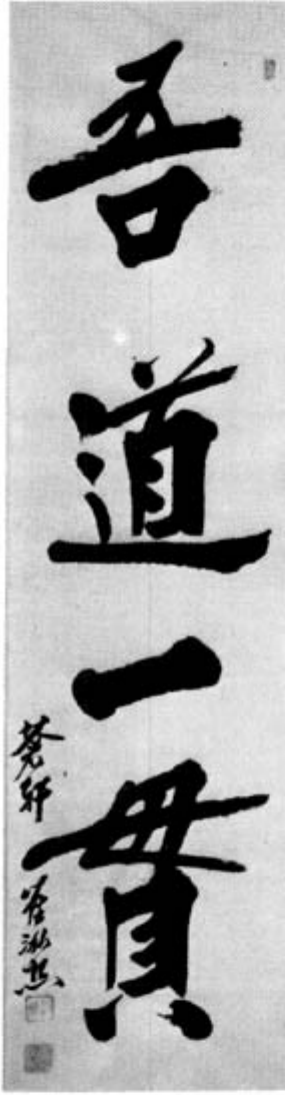
Pursue one’s own goal
“Pursue one’s own goal”
View original source illustration
Open original imageSources and references
Source Pages: 6, 7, 8, 9, 10, 11, 12, 13
References by passage
- Passage 1: 6
- Passage 2: 6
- Passage 3: 6
- Passage 4: 6
- Passage 5: 6
- Passage 6: 6
- Passage 7: 6
- Passage 8: 6
- Passage 9: 6
- Passage 10: 6
- Passage 11: 6
- Passage 12: 6
- Passage 13: 6
- Passage 14: 6
- Passage 15: 6
- Passage 16: 6
- Passage 17: 7
- Passage 18: 7
- Passage 19: 7
- Passage 20: 8
- Passage 21: 8
- Passage 22: 8
- Passage 23: 9
- Passage 24: 10
- Passage 25: 10
- Passage 26: 10
- Passage 27: 10
- Passage 28: 10
- Passage 29: 10
- Passage 30: 10
- Passage 31: 10
- Passage 32: 11
- Passage 33: 11
- Passage 34: 11
- Passage 35: 11
- Passage 36: 11
- Passage 37: 11
- Passage 38: 11
- Passage 39: 11
- Passage 40: 11
- Passage 41: 11
- Passage 42: 11
- Passage 43: 11
- Passage 44: 11
- Passage 45: 12
- Passage 46: 12
- Passage 47: 12
- Passage 48: 12
- Passage 49: 12
- Passage 50: 12
- Passage 51: 12
- Passage 52: 12
- Passage 53: 12
- Passage 54: 12
- Passage 55: 12
- Passage 56: 12
- Passage 57: 12
- Passage 58: 13
- Passage 59: 13
- Passage 60: 13
- Passage 61: 13
- Passage 62: 13
- Passage 63: 13
- Passage 64: 13
- Passage 65: 13
- Passage 66: 13
- Passage 67: 13