Volume V
Two‑Step Sparring: Principles and Procedure
Select an image to view it at full size.
B. Two‑Step Sparring (Ibo Matsogi)
The main purpose of this sparring is to acquire a mixed technique of hand and foot parts, the attacker therefore, must use both the hand and the foot alternately.
It is, however, entirely optional wether the attacker uses the hand or the foot first. As in the case of three step sparring there are two methods of practise.
(1) The attack is executed only while stepping forward and the defense while stepping backward.
(2) Both the attack and the defense are executed while stepping either forward or backward.
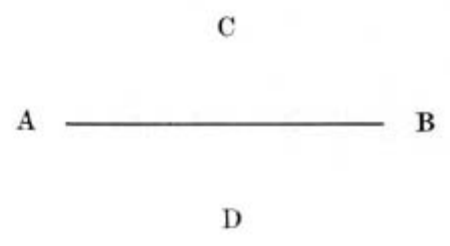
a. The distance between X and Y is basically the same as that of three step sparring, though it can be flexible.
Direction diagram
Direction Diagram
View original source illustration
Open original imageTypical Procedure of Two‑Step Sparring
Ready procedure
Typical ready procedure
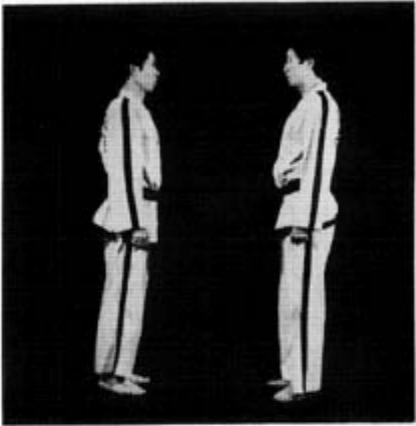
b. X and Y take an attention stance on line AB facing each other.
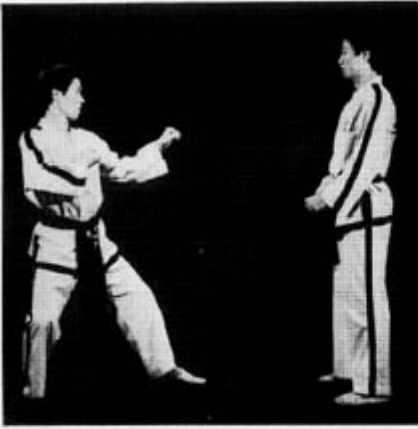
1. At the command of “two‑step sparring ready (Ibo Matsogi Junbi)”: X: Move the right foot to A forming a right L‑stance while executing a forearm guarding block.
Y: Take a parallel ready stance moving the left foot. Both X and Y shout “Ya” as a ready signal.
View original source illustration
Open original imageMethod one: movement sequence
Method One
Methods one and two: original sequence and arrows
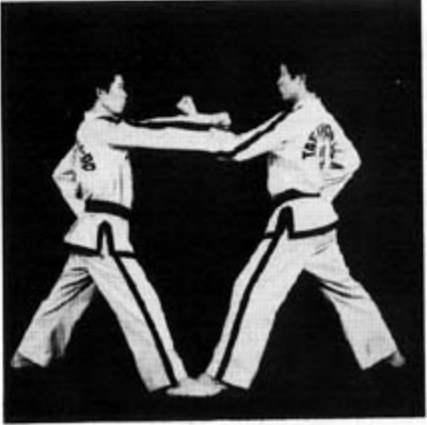
2. At the command of “commence”: i. X: Move the right foot to B, forming a right walking stance toward B while punching with the right fist.
Y: Move the right foot to B to form a left walking stance toward A while executing a side block with the left inner forearm.
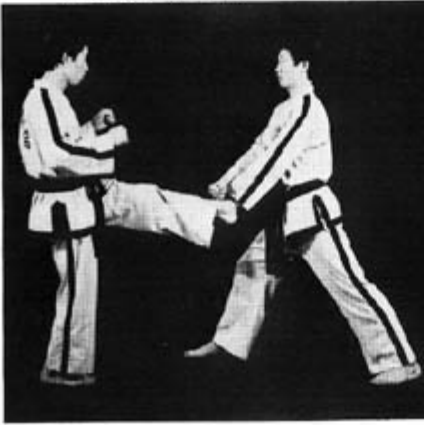
ii. X: Execute a low front snap kick to the lower abdomen with the left foot.
Y: Move the left foot to B, forming a right walking stance toward A while executing a pressing block with an X‑fist.
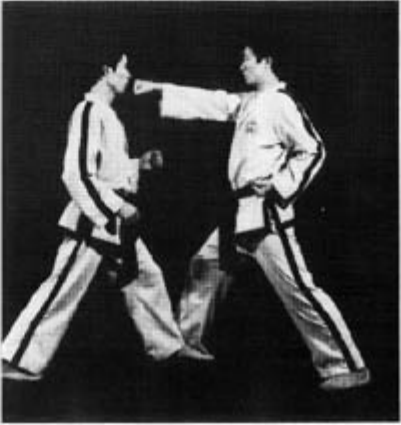
Y: Execute a high punch with the right fist.
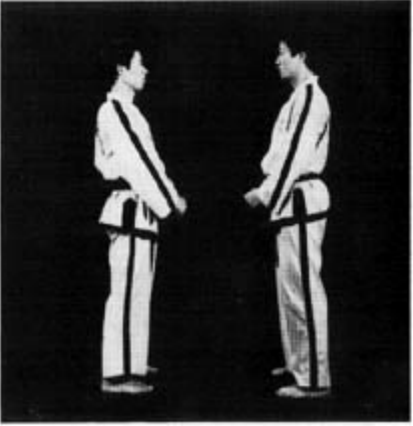
3. At the command of “stop”: Both X and Y bring the right foot respectively to form a parallel ready stance.
Method two: movement sequence
Method Two
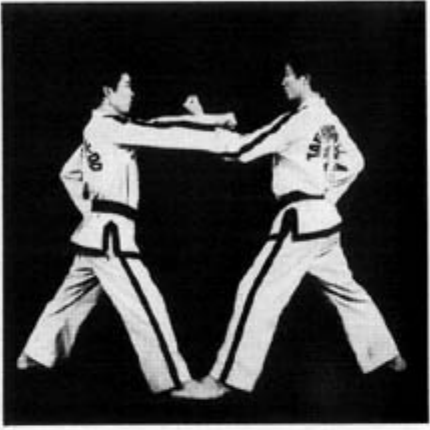
2. At the command of “commence”: i. X: Move the left foot to A, forming a right walking stance toward B while punching with the right fist.
Y: Move the left foot to A, forming a left walking stance toward A while executing a side block, with the left inner forearm.
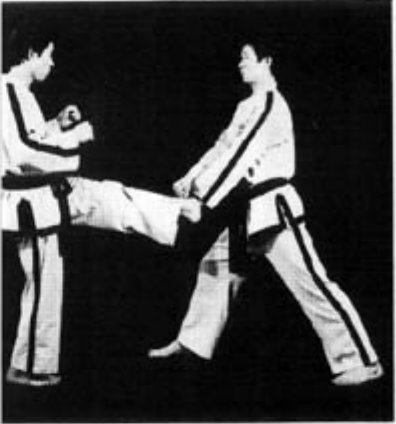
ii. X: Execute a low front snap kick to the lower abdomen with the right foot.
Y: Execute a pressing block with an X‑fist.
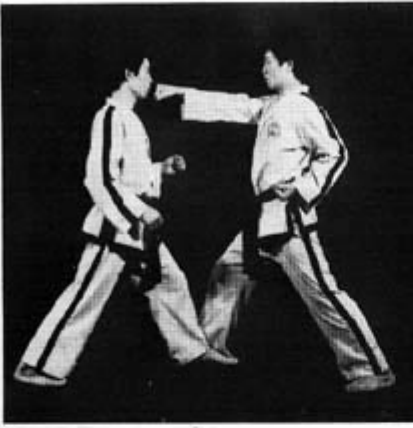
Y: Execute a high punch with the right fist.
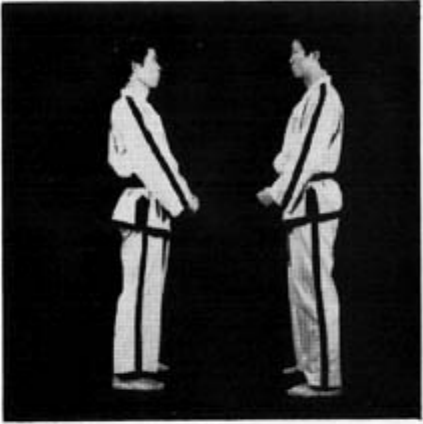
3. At the command of “stop”: Both X and Y bring the right foot respectively to form a parallel ready stance.
View original source illustration
Open original imageSource continuation
Methods one and two: original sequence and arrows
View original source illustration
Open original imageSources and references
Source Pages: 91, 92, 93
References by passage
- Passage 1: 91
- Passage 2: 91
- Passage 3: 91
- Passage 4: 91
- Passage 5: 91
- Passage 6: 91
- Passage 7: 91
- Passage 8: 91
- Passage 9: 91
- Passage 10: 91
- Passage 11: 91
- Passage 12: 91
- Passage 13: 91
- Passage 14: 92
- Passage 15: 92
- Passage 16: 92
- Passage 17: 92
- Passage 18: 92
- Passage 19: 93
- Passage 20: 93
- Passage 21: 92
- Passage 22: 92
- Passage 23: 92
- Passage 24: 92
- Passage 25: 92
- Passage 26: 93
- Passage 27: 93
- Passage 28: 92
- Passage 29: 93