Volume V
Self‑Defence: Releasing a Single‑Hand Grab
Select an image to view it at full size.
Self‑Defence Techniques (Hosin Sul)
These techniques are not only the most interesting in Taekwon‑Do but also the most advanced. They are in every sense, for a practical self‑defense. These techniques are the logical application of various motions acquired from patterns, sparring, and fundamental movements to be used against a sudden attack by an armed or unarmed opponent.
The defender must know how to make use of his or her opponent’s momentum and force, while utilizing his or her dynamic and reflexive actions against momentarily undefended target.
Certainly, these self‑defense techniques can only be effective if the student take the time to constantly train with them under realistic conditions.
How To Release From a Grab (Jappyosul Tae)
It is unlikely that a Taekwon‑Do black belt will ever be grabved by an assailant. Below is illustrated a technique, however, that can be effective.
Releasing is performed in three different ways: either by a direct attack to a vulnerable or vital spot, breaking the joint of the attacking hand or arm, or by a logical releasing motion which is usually accompanied by a counter attack.
Since this technique might be used against a physically strong opponent, the defender should not attempt to pull but rather to push the grabbing hand or foot at the same time coordinating the body to make use of the opponent’s momentum and the instinctive pulling motion of the opponent with rare exceptions.
Legend: A — Attacking motion. B — Breaking motion. R — Releasing motion.
Initial grab
Grab release examples, printed page 279
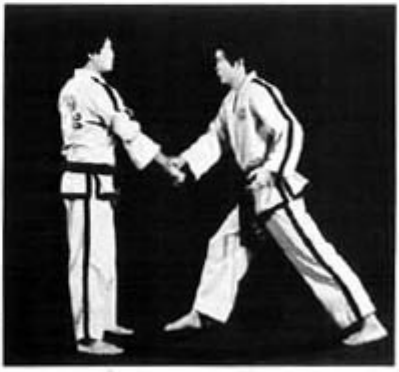
A. While Standing
1. Opponent grabs with one hand.
Release and upward punch
Grab release examples, printed page 279
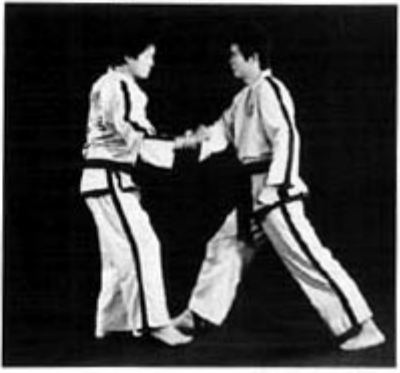
Twist the right arm clockwise, moving the right foot forward.
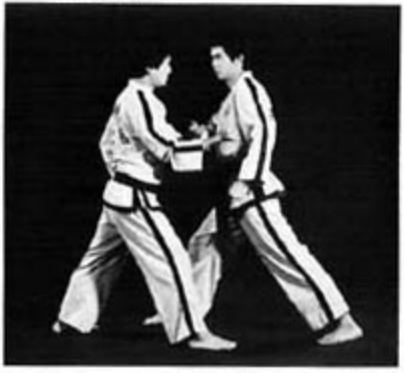
Release while forming a right walking stance.
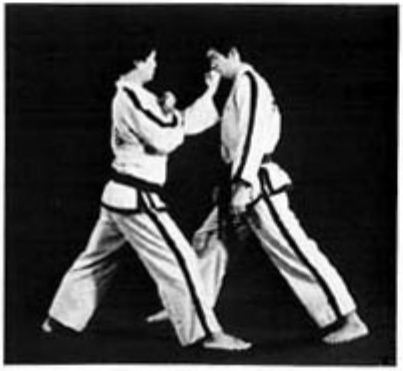
Execute an upward punch with the left fist.
Alternative: wrist break
Grab release examples, printed page 279
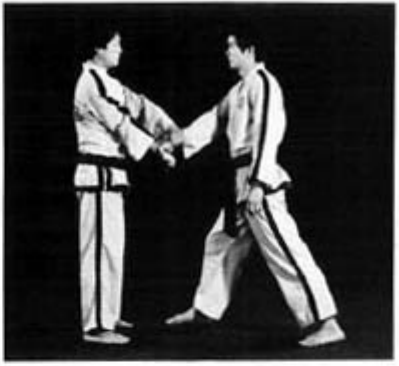
Grab the opponent’s inner forearm with the left hand.
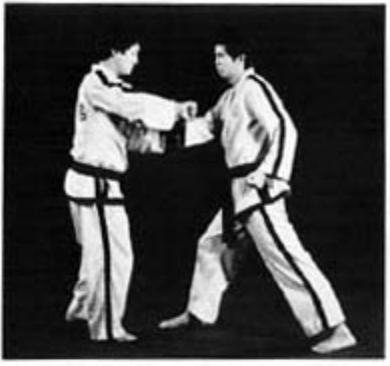
Twist both hands, moving the left foot to the rear.
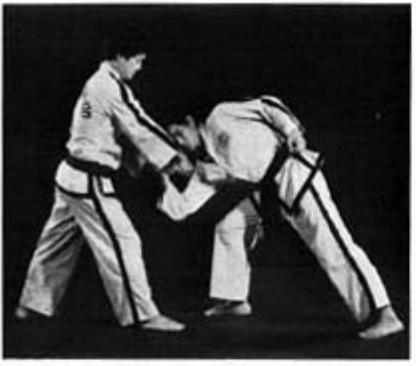
Pull both hands downward while forming a right walking stance to break the wrist.
View original source illustration
Open original imageRelease and knife-hand strike
R — Releasing motion.
Grab release examples, printed page 280
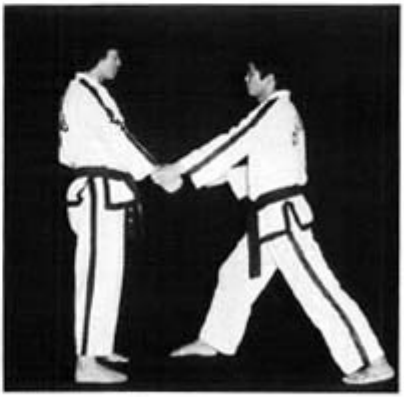
Twist the right arm counter‑clockwise until the back fist faces upward, moving the right foot forward.
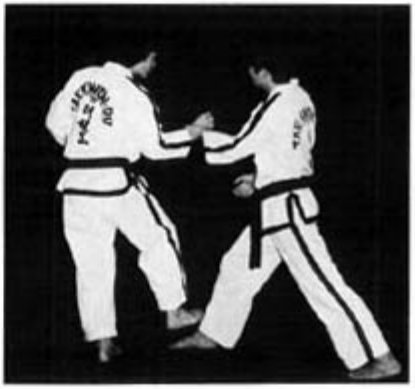
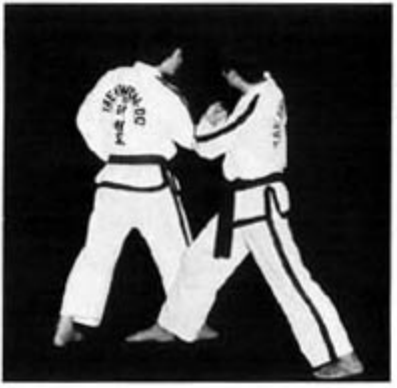
Release while forming a right walking stance.
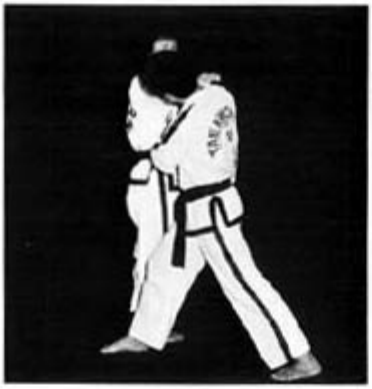
Strike with the knife‑hand while forming a close stance, bringing the left foot to the right foot.
Release: top views
Grab release examples, printed page 280
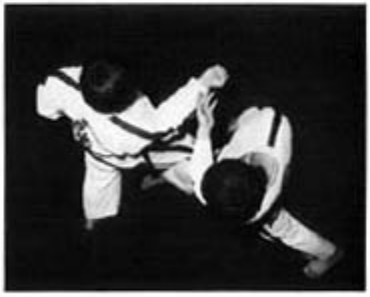
Top View.
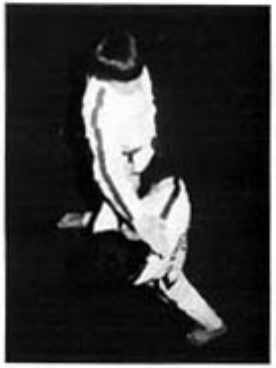
Alternative: wrist and elbow break
B — Breaking motion.
Grab release examples, printed page 280
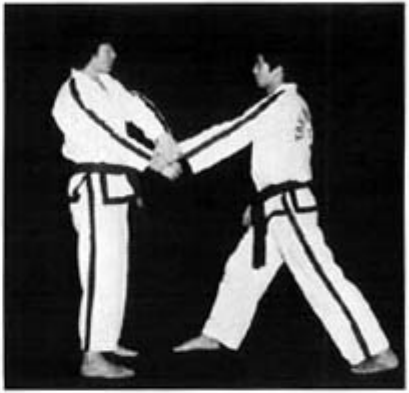
Grab the opponent’s left back hand with the left hand.
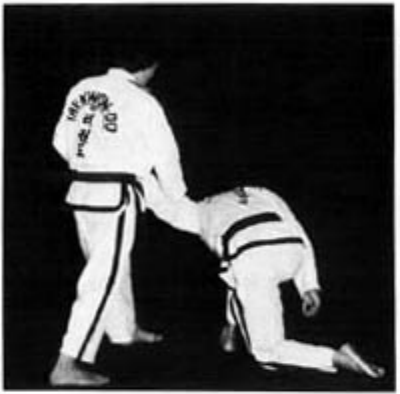
Twist counter‑clockwise to break the wrist and the elbow joint, moving the left foot forward.
Breaking motion: top view
Grab release examples, printed page 280
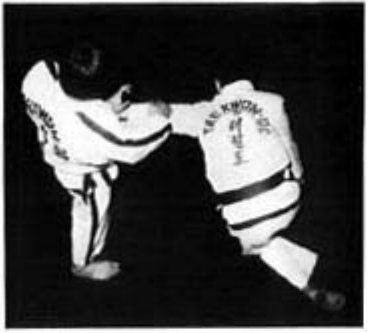
Top View.
View original source illustration
Open original imageInitial grab: two alternative responses
Grab release examples, printed page 281
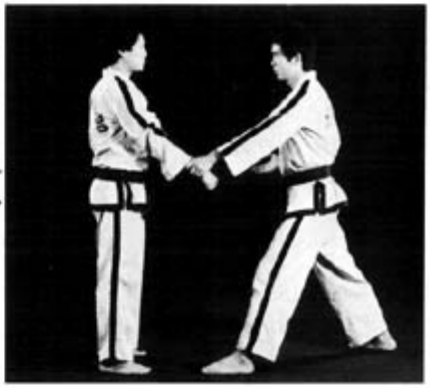
Release and dodging knife-hand strike
Grab release examples, printed page 281
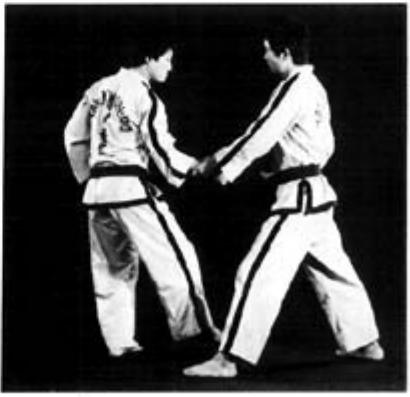
Twist the right arm clockwise, moving the right foot forward.
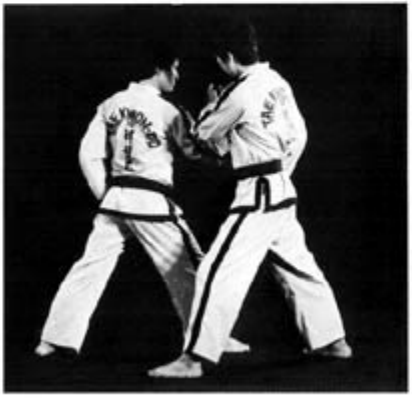
Release while forming a right walking stance.
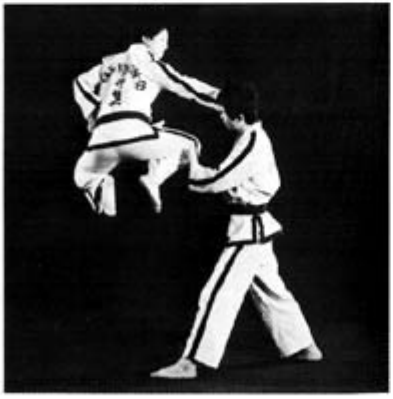
Dodging strike with the right knife‑hand while flying away from the opponent.
Alternative: wrist break
Grab release examples, printed page 281
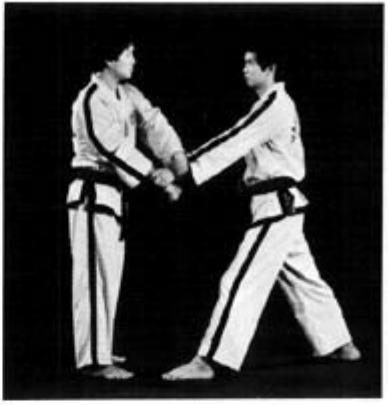
Grab the opponent’s left under forearm with the left hand.
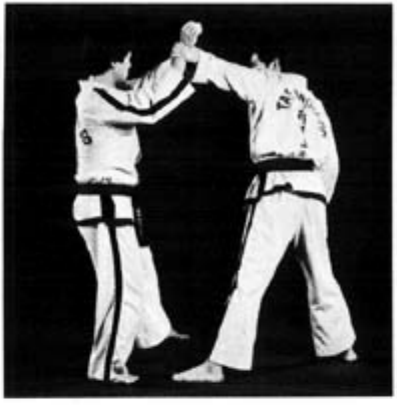
Raise both hands, twisting counter‑clockwise while moving the left foot forward.
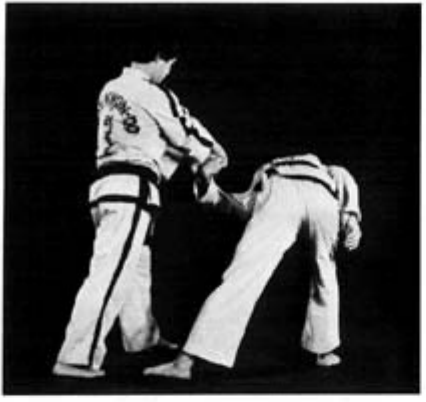
Bend the opponent’s wrist with the right hand while holding the arm with the left hand.
View original source illustration
Open original imageRelease and dodging front snap kick
R — Releasing motion.
Grab release examples, printed page 282
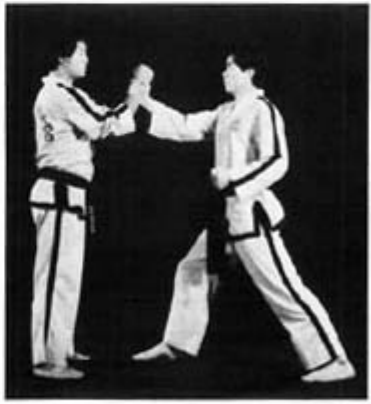
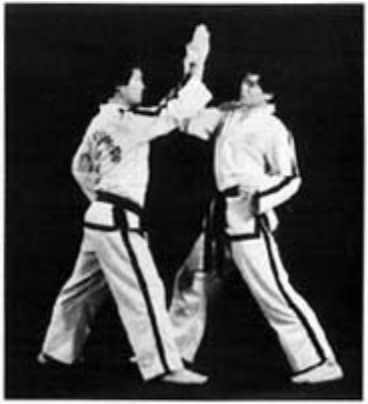
Push the right arm forward rapidly while forming a right walking stance.
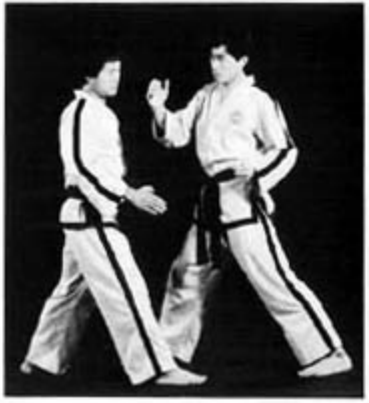
Press the opponent’s right thenar with the right knife‑hand to release.
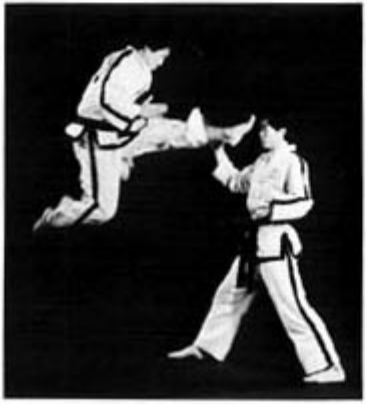
Dodging front snap kick with the left foot while flying away from the opponent to A.
Alternative: elbow break
B — Breaking motion.
Grab release examples, printed page 282
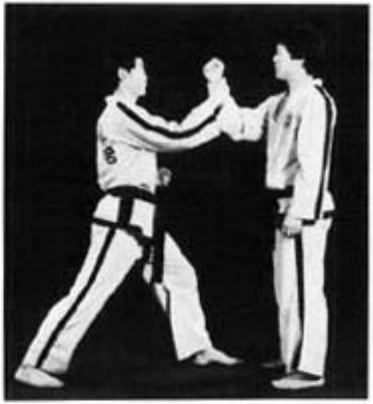
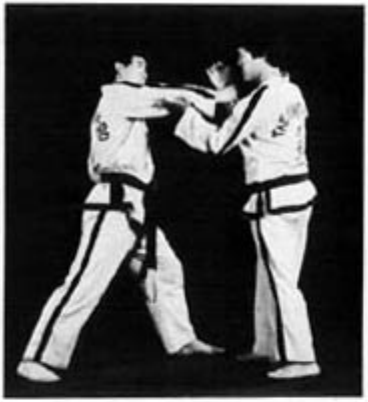
Hold the opponent’s elbow joint with the left palm.
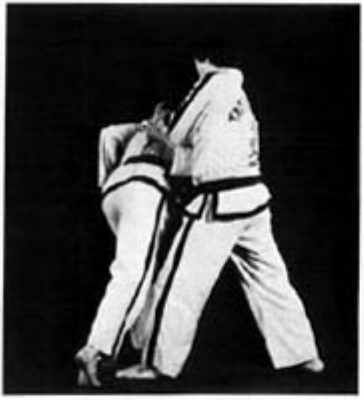
Twist clockwise while pressing the opponent’s elbow joint with the left palm, moving the left foot forward.
View original source illustration
Open original imageInitial grab
Grab release examples, printed page 283
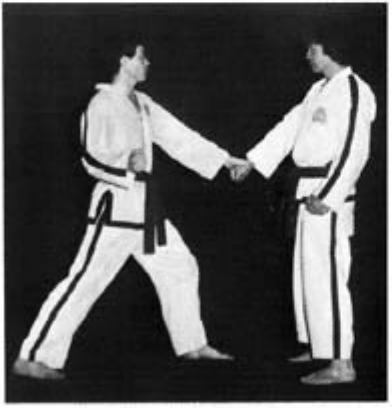
Release and back-fist strike
R — Releasing motion.
Grab release examples, printed page 283
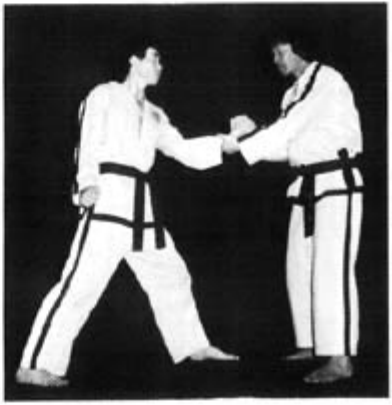
Twist the right arm clockwise, moving the left foot to D.
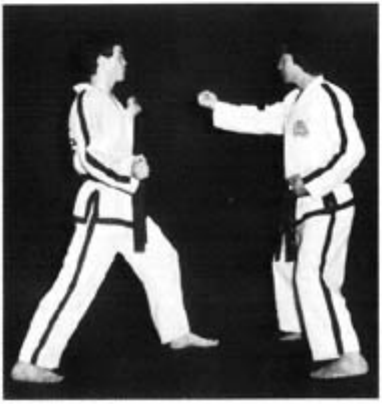
Release while forming a shifting stance.
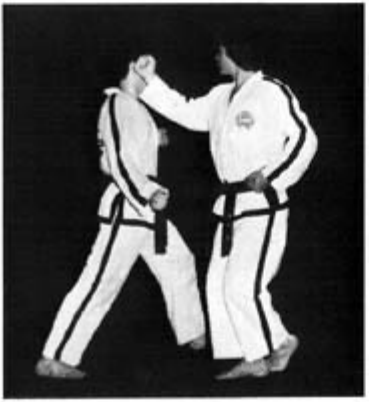
Strike with the right back fist while forming a right X‑stance.
Alternative: breaking motion
B — Breaking motion.
Grab release examples, printed page 283
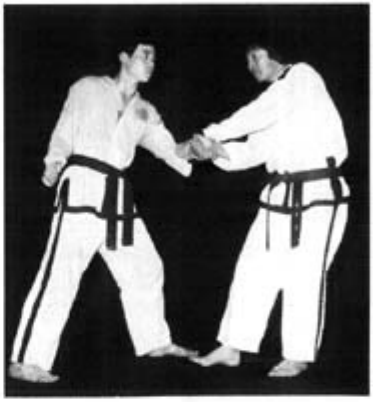
Grab the opponent’s left back hand with the left hand, moving the right foot forward.
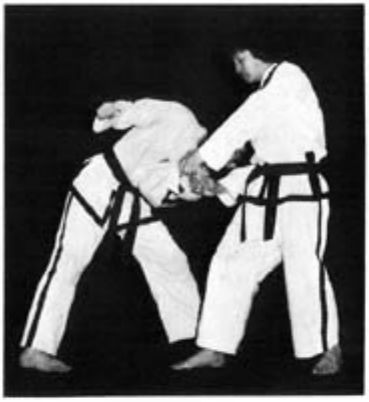
Twist the right arm clockwise until the palm faces upward, pushing both hands.
Breaking motion: top view
Grab release examples, printed page 283
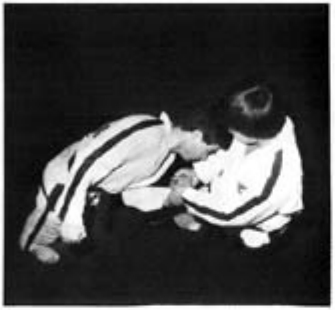
Top View.
View original source illustration
Open original imageInitial grab: two alternative responses
Grab release examples, printed page 284
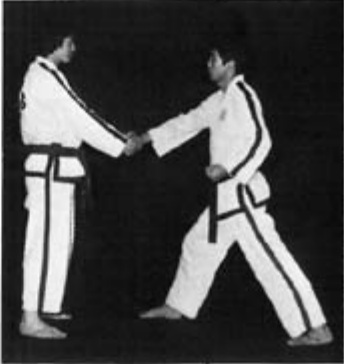
Wrist break
B — Breaking motion.
Grab release examples, printed page 284
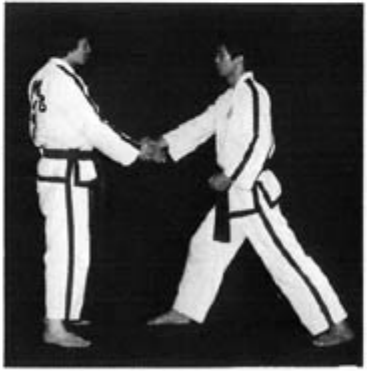
Grab the opponent’s right back hand with the left hand, moving the left foot forward.
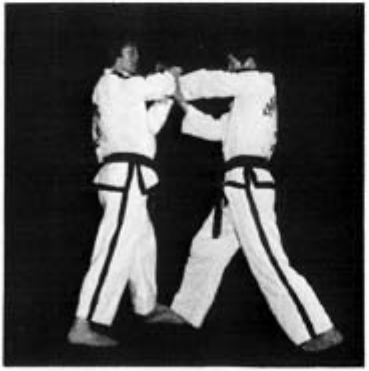
Raise both hands, twisting clockwise to break the wrist.
Alternative: release and palm strike
R — Releasing motion.
Grab release examples, printed page 284
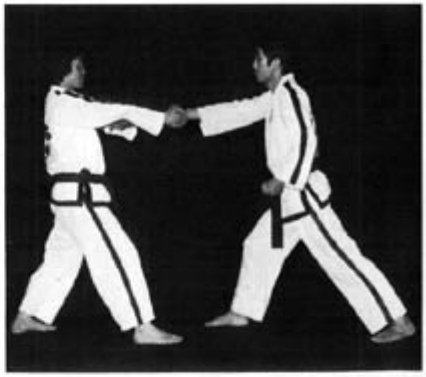
Bring the left back hand under the right elbow joint while moving the right foot forward.
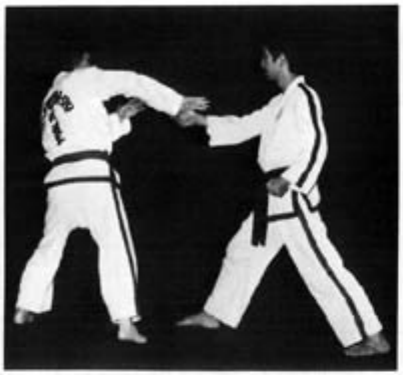
Release by twisting the right hand together with the body counter‑clockwise.
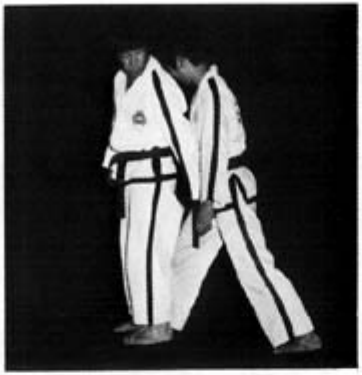
Strike the scrotum with the left palm while forming a close stance.
View original source illustration
Open original imageSources and references
Source Pages: 278, 279, 280, 281, 282, 283, 284
References by passage
- Passage 1: 278
- Passage 2: 278
- Passage 3: 278
- Passage 4: 278
- Passage 5: 278
- Passage 6: 278
- Passage 7: 278
- Passage 8: 278
- Passage 9: 278
- Passage 10: 278
- Passage 11: 279
- Passage 12: 279
- Passage 13: 279
- Passage 14: 279
- Passage 15: 279
- Passage 16: 279
- Passage 17: 279
- Passage 18: 279
- Passage 19: 279
- Passage 20: 280
- Passage 21: 280
- Passage 22: 280
- Passage 23: 280
- Passage 24: 280
- Passage 25: 280
- Passage 26: 280
- Passage 27: 280
- Passage 28: 280
- Passage 29: 280
- Passage 30: 281
- Passage 31: 281
- Passage 32: 281
- Passage 33: 281
- Passage 34: 281
- Passage 35: 281
- Passage 36: 281
- Passage 37: 282
- Passage 38: 282
- Passage 39: 282
- Passage 40: 282
- Passage 41: 282
- Passage 42: 282
- Passage 43: 282
- Passage 44: 282
- Passage 45: 283
- Passage 46: 283
- Passage 47: 283
- Passage 48: 283
- Passage 49: 283
- Passage 50: 283
- Passage 51: 283
- Passage 52: 283
- Passage 53: 283
- Passage 54: 284
- Passage 55: 284
- Passage 56: 284
- Passage 57: 284
- Passage 58: 284
- Passage 59: 284
- Passage 60: 284
- Passage 61: 284