Volume IV
Flying Scissors‑Shape and High Kicks
Select an image to view it at full size.
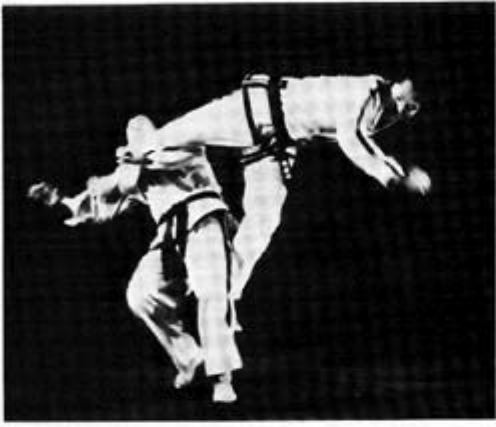
Flying Sissors‑Shape Kick (Twimyo Kawi Chagi)
The purpose of this technique is to take down the opponent by trapping the body or the leg. This is also effectively used while holding a second person with both hands.
Flying scissors-shape kick
Flying scissors‑shape kick, sequence and application; continued on page 139
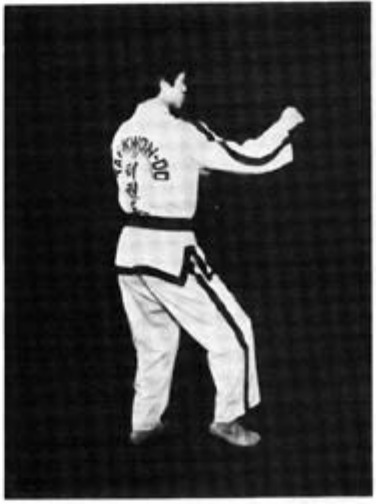
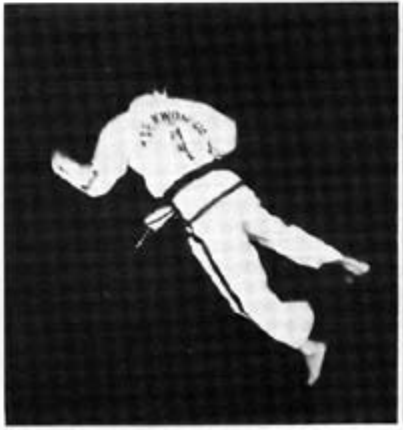
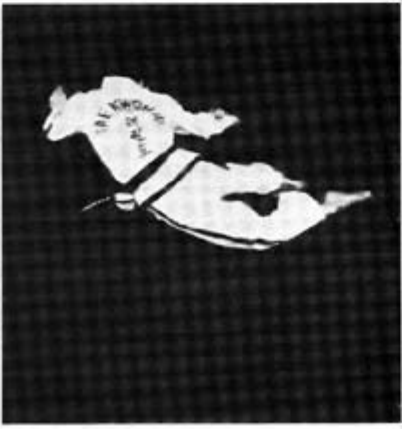
Application and fall
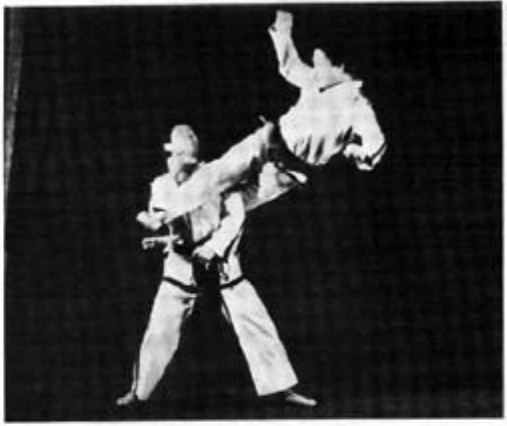
View original source illustration
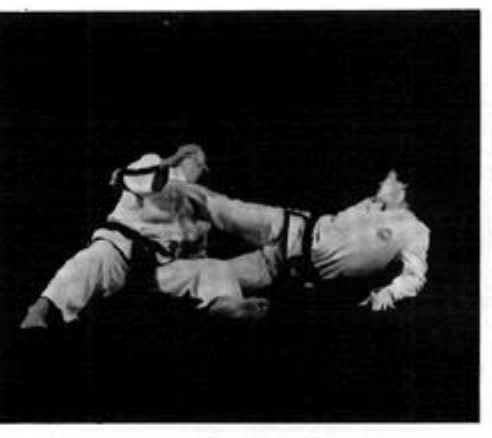
Open original imageFinal fall
Flying scissors‑shape kick: final fall, continued from page 138
View original source illustration
Open original imageFlying high side kick
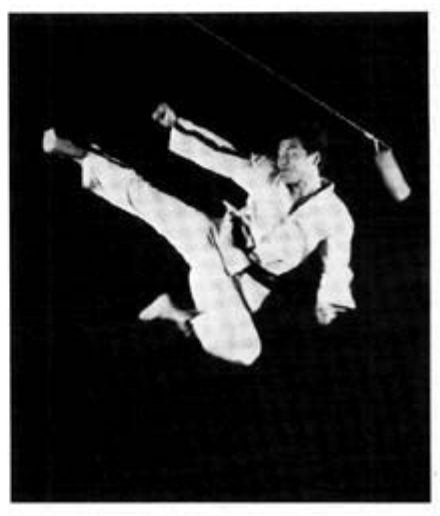
Flying High Side Kick (Twimyo Nopi Yop Chagi)
The principles of kicking procedure are the same as those of a flying side piercing kick except that the position of the foot is higher than the hip at the moment of impact.
Flying high side kick demonstration
View original source illustration
Open original image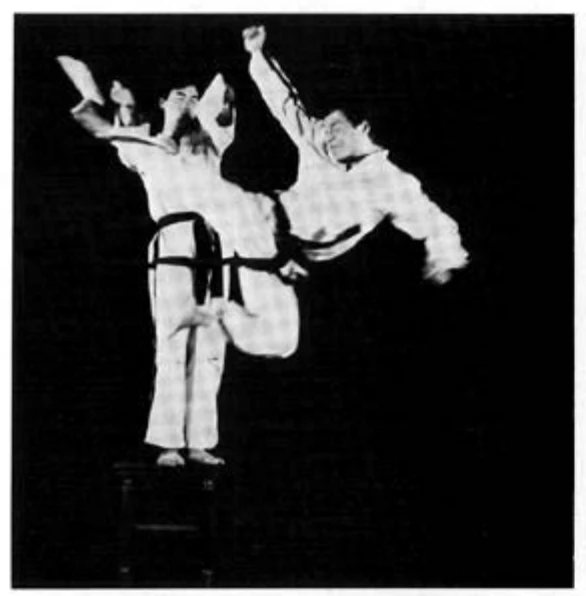
Flying high turning kick
Flying High Turning Kick (Twimyo Nopi Dollyo Chagi)
The principle of kicking is the same as that of a flying turning kick except that the toes are slightly higher than the heel at the moment of impact.
Flying high turning kick
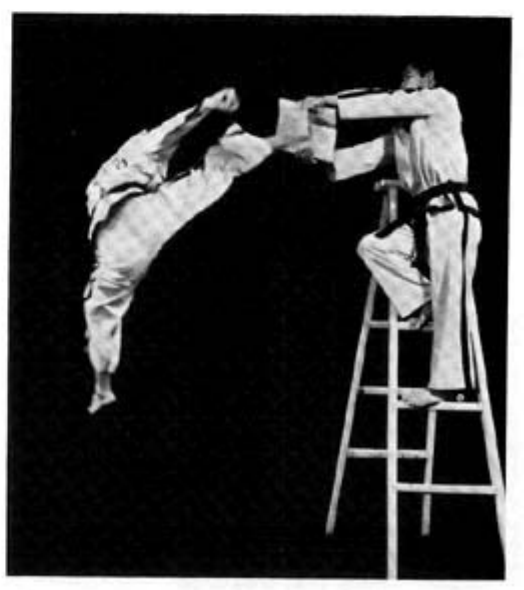
View original source illustration
Open original imageFlying high reverse turning kick
Flying High Reverse Turning Kick (Twimyo Nopi Bandae Dollyo Chagi)
The method of kicking is the same as the flying reverse turning kick but the heel is slightly higher than the toes at the moment of impact.
Flying high reverse turning kick
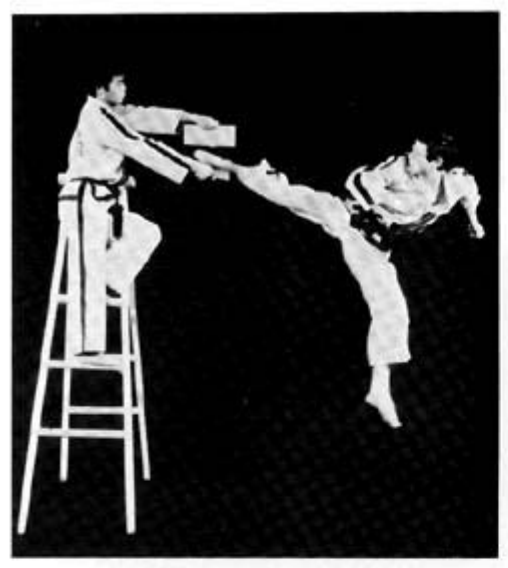
View original source illustration
Open original imageSources and references
Source Pages: 138, 139, 140
References by passage
- Passage 1: 138
- Passage 2: 138
- Passage 3: 138
- Passage 4: 138
- Passage 5: 139
- Passage 6: 139
- Passage 7: 139
- Passage 8: 139
- Passage 9: 139
- Passage 10: 140
- Passage 11: 140
- Passage 12: 140
- Passage 13: 140
- Passage 14: 140
- Passage 15: 140