Sokdo wa Banung
It is essential for the students of Taekwon‑Do to understand the relation of the speed and the execution time of techniques in order to apply them effectively.
Achieving precise measurements of these factors has been very difficult due to the great speed at which Taekwon‑Do techniques are performed. However, in April of 1973, I conducted an experiment to measure the precise speed and execution time of various techniques.
The approach used was multi‑flash Strobo photography. Two EG&G control units—model 553‑11 (serial No. 248 and No. 256), and two flashes in reflectors were used to record movements on film. This experiment was conducted at the M.I.T. Strobo lab with special permission from Professors Edgerton and Miller.
Results of the experiment are presented below:
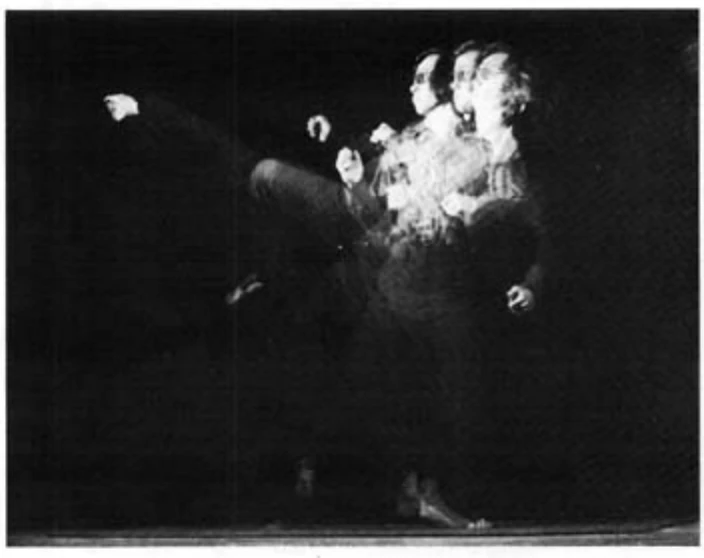
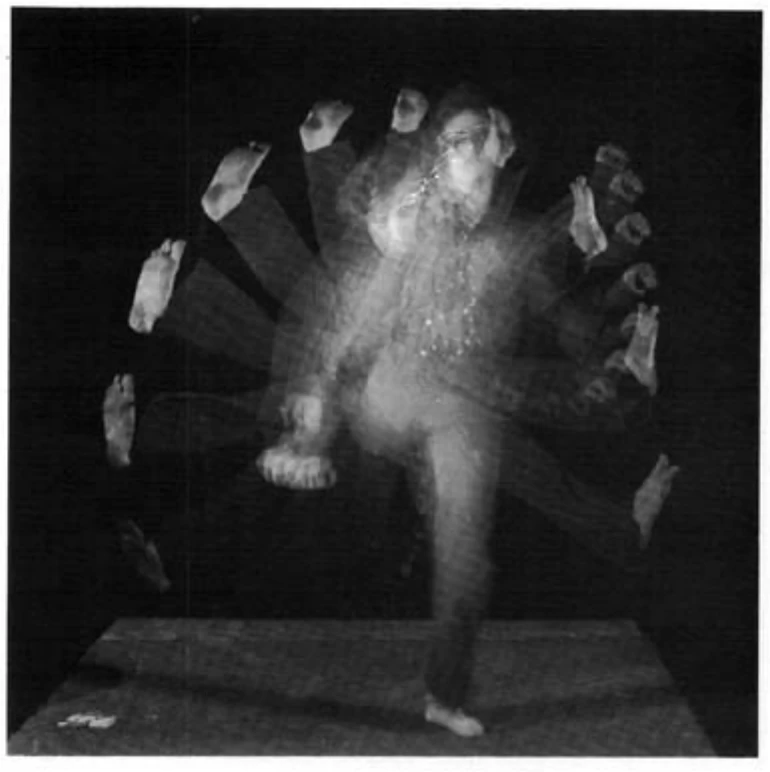
One remarkable fact is that the execution times of the above kicks are shorter than the normal reflex time, which means that it is impossible for anyone to block these kicks unless he can detect them before the leg is lifted off the floor; i.e., know what kick is coming before it is executed.
Normal reflex time is the elapsed time of reflex action. Reflex action consists of behavior in which the reactions usually occur as direct and immediate responses to particular stimuli. Here we are dealing with conditioned reflexes, which can be defined as built‑up adjustments to particular external stimuli; i.e., seeing a punch or kick coming and responding by blocking or moving out of the path. Normal reflex time has been experimentally determined to be around 2/10 of a second, at the quickest.
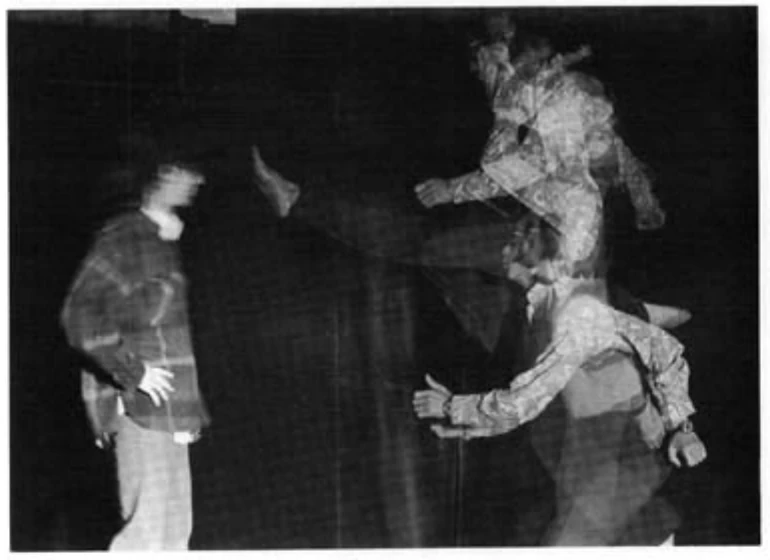
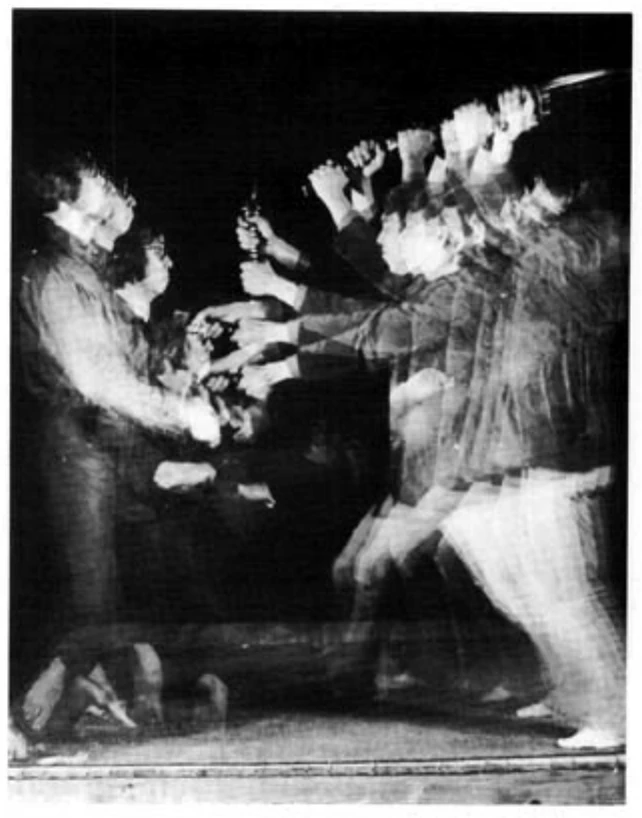
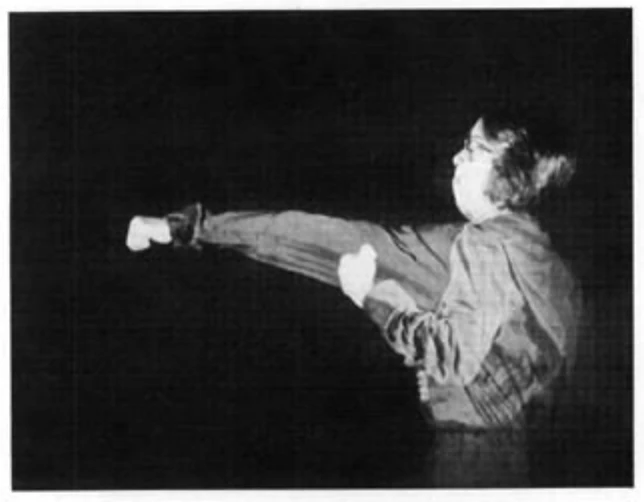
All these techniques cannot be blocked if we wait until an opponent begins to execute them, since the execution times of these techniques are shorter than the time it takes for our reflexes to respond. Therefore, we must be able to detect the on‑coming of these techniques before‑hand. This is the reason why one must gaze at the opponent's eyes at all times and not at the legs or arms.
At this point, it would be advantageous to introduce a formula which will enable the student to further understand the significance of speed in the execution of Taekwon‑Do techniques.
The formula we can use to calculate the power of any technique is:
P = 1/2 MV²
P stands for power. 1/2 is a constant. M stands for mass. V stands for velocity or speed.
This equation clearly reveals why developing speed is the most important factor in developing power.
For example, if the mass is increased by a factor of three (with the speed kept constant) then the power is also increased by a factor of three. But if the speed is increased by a factor of three (with mass kept constant) then the power is increased by a factor of nine.
Hence, with this formula we can measure the power of each technique:
Power = (1/2) x (mass) x (velocity)² = (1/2) x (mass) x (velocity) x (velocity)
And speed (velocity) can be expressed as V = (distance of last interval) x (1/execution time of last interval).
This experiment has been a simple demonstration of how fast and powerful Taekwon‑Do techniques can be practiced properly as taught.
This experiment is contributed by Jae Hun Kim, 3rd degree black belt holder.
Sources and references
Source Pages: 42, 43, 44, 45, 46, 47, 48
References by passage
- Passage 1: 42
- Passage 2: 42
- Passage 3: 42
- Passage 4: 42
- Passage 5: 42
- Passage 6: 42
- Passage 7: 42
- Passage 8: 42
- Passage 9: 43
- Passage 10: 44
- Passage 11: 44
- Passage 12: 44
- Passage 13: 45
- Passage 14: 46
- Passage 15: 47
- Passage 16: 47
- Passage 17: 47
- Passage 18: 47
- Passage 19: 47
- Passage 20: 47
- Passage 21: 47
- Passage 22: 47
- Passage 23: 47
- Passage 24: 47
- Passage 25: 47
- Passage 26: 47
- Passage 27: 48
- Passage 28: 48