Sokdo
Speed is the most essential factor of force or power. Scientifically, force equals mass X acceleration (F=MA) or (P=MV²).
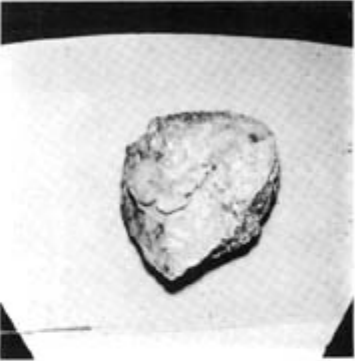
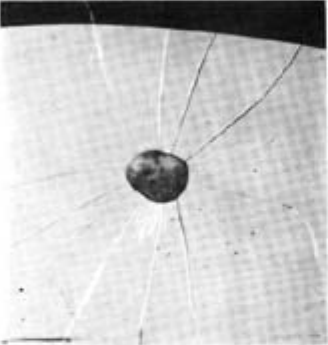
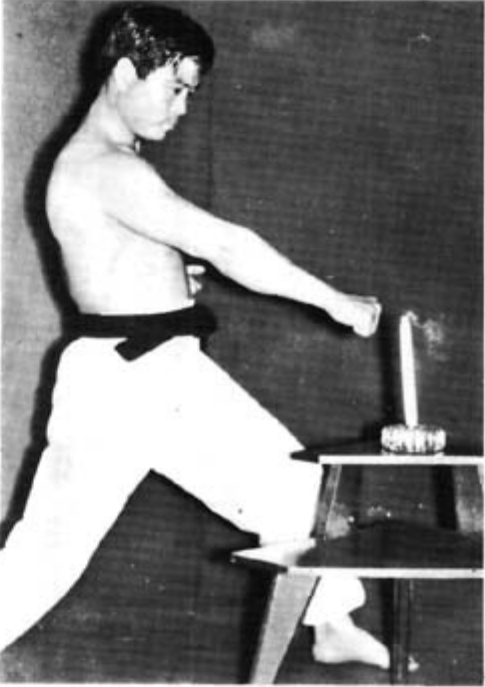
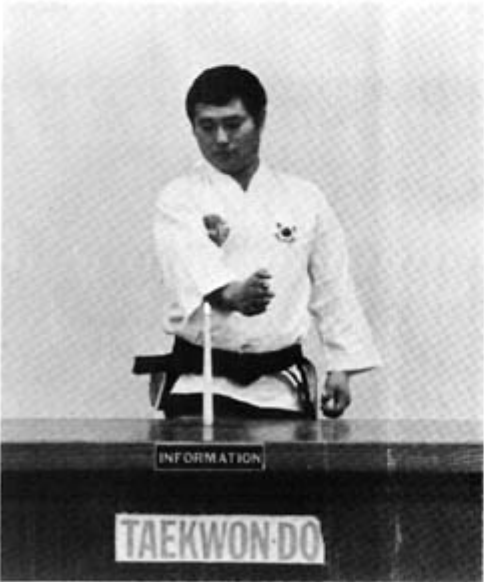
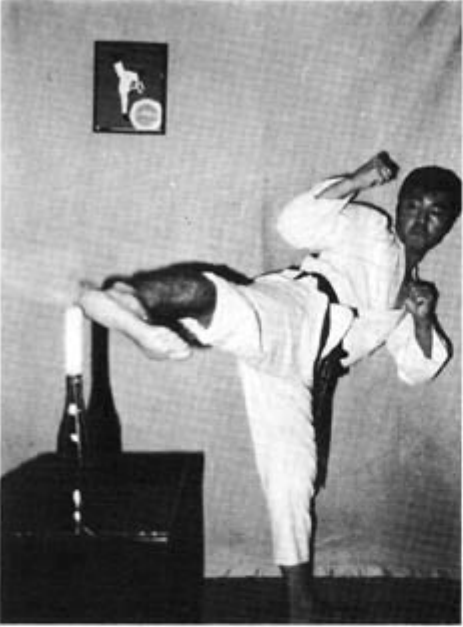
In figure A, a large stone has been gently dropped on a double pane of glass from a height of three inches. On the other hand, in figure B, a small stone has been thrown against the glass with great speed. In figure C, the flat of the hand passed in a slow motion through the flame of the candle with no result to the flame. The candle, however, was put out with a controlled punch or kick stopping within an inch of the flame as shown in figures D and E.
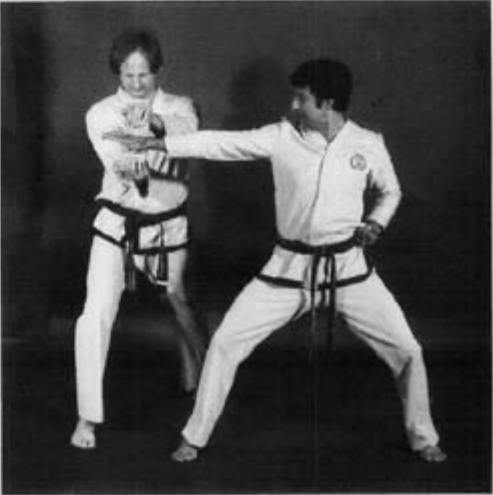
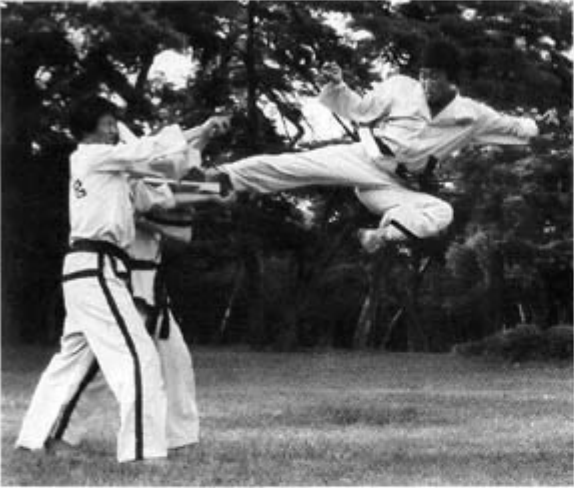
According to the theory of kinetic energy, every object increases its weight as well as speed in a downward movement. This very principle is applied to this particular art of self‑defence, as proved in pages 29 and 30. For this reason, at the moment of impact, the position of the hand normally becomes lower than the shoulder and the foot lower than the hip while the body is in the air.
Reaction force, breath control, equilibrium, concentration and relaxation of the muscles cannot be ignored. However, these are the factors that contribute to the speed and all these factors, together with flexible and rhythmic movements, must be well coordinated to produce the maximum power in Taekwon‑Do.
Speed: comparison
View original source illustration
Open original imageSpeed demonstrations
View original source illustration
Open original imagePunch: point of focus
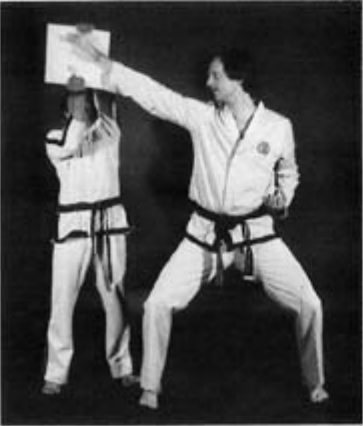
Kick: point of focus
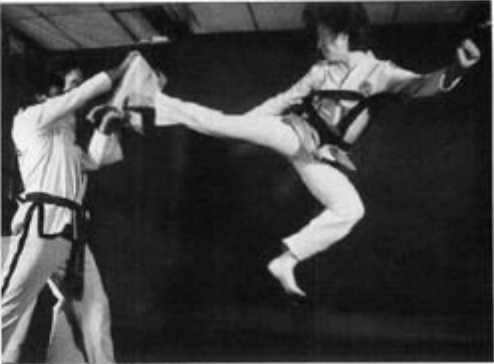
View original source illustration
Open original imageCorrect: blocking sequence
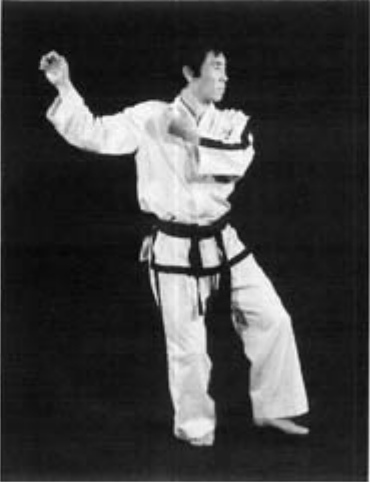
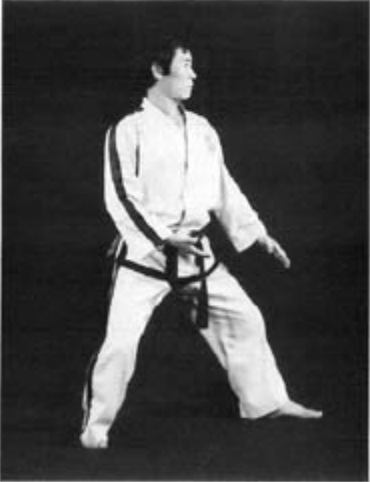
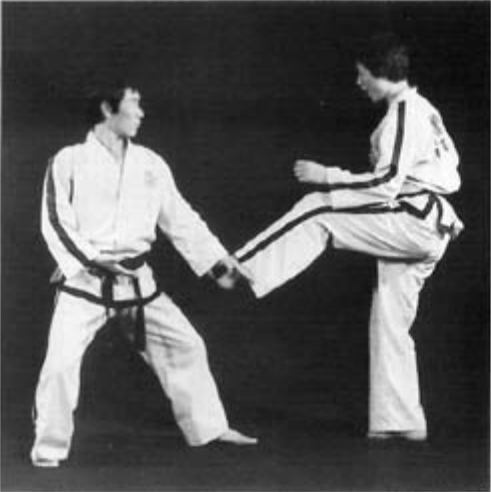
Incorrect: blocking sequence
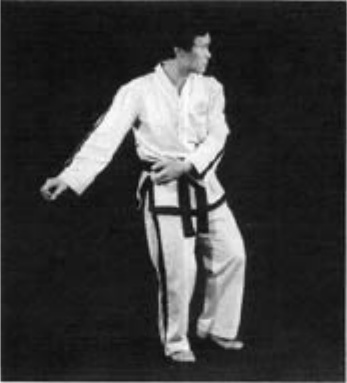
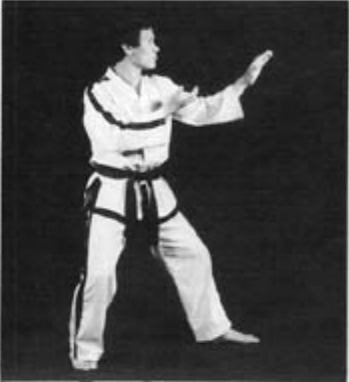
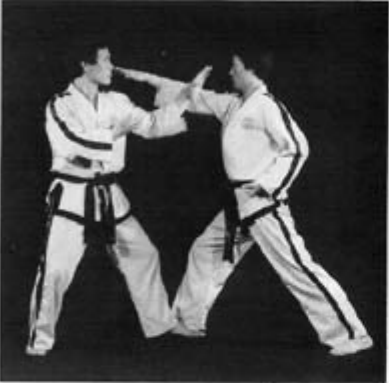
View original source illustration
Open original imageSources and references
Source Pages: 38, 39, 40, 41
References by passage
- Passage 1: 38
- Passage 2: 38
- Passage 3: 38
- Passage 4: 38
- Passage 5: 38
- Passage 6: 38
- Passage 7: 38
- Passage 8: 38
- Passage 9: 39
- Passage 10: 40
- Passage 11: 41
- Passage 12: 38