Volume V
Free Sparring: Flying Techniques and Training Balance
Select an image to view it at full size.
10. Flying Multiple Techniques
A student of Taekwon‑Do is encouraged to use as many multiple techniques as possible such as consecutive, combination or double kicks, punches or strikes. Since most students have the tendency of bobbing or weaving while sparring, the second attack would be effective in case the first misses the target.
This technique is principally used while flying, though occasionally on the ground. A horizontal attack is used against a weaving opponent whereas a vertical attack for bobbing.
Flying horizontal double outward strike
Flying Horizontal Double Outward Strike — Weaving
Flying multiple techniques, printed page 253
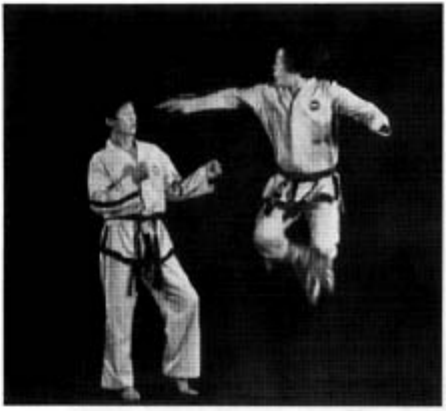
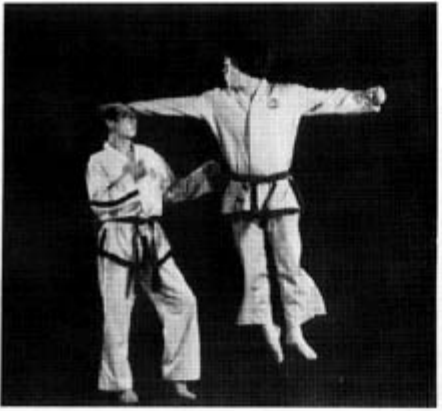
Flying vertical double side punch
Flying Vertical Double Side Punch — Bobbing
Flying multiple techniques, printed page 253
View original source illustration
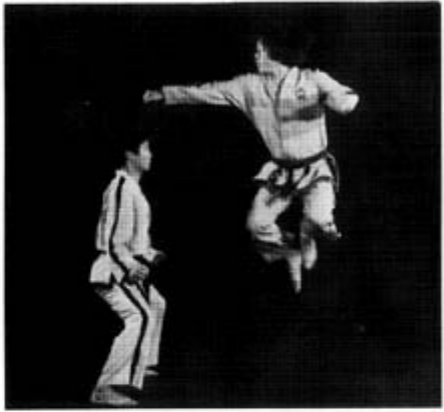
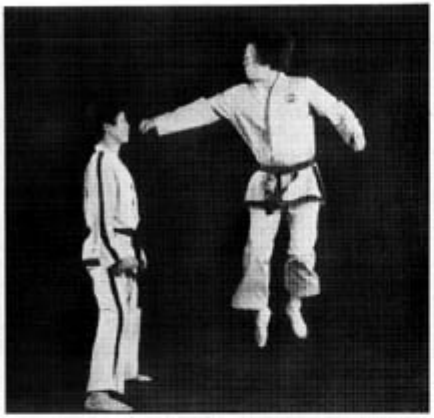
Open original imageFlying vertical double turning kick
Flying Vertical Double Turning Kick — Bobbing
Flying multiple techniques, printed page 254
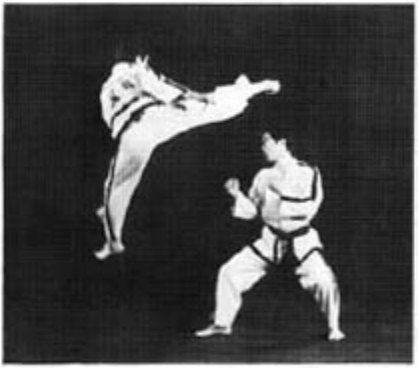
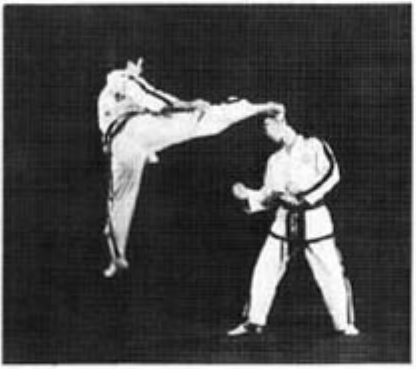
Flying consecutive strike
Flying Consecutive Strike — Back fist, Knife‑hand — Weaving
Flying multiple techniques, printed page 254
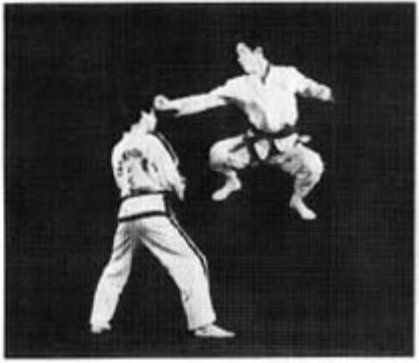
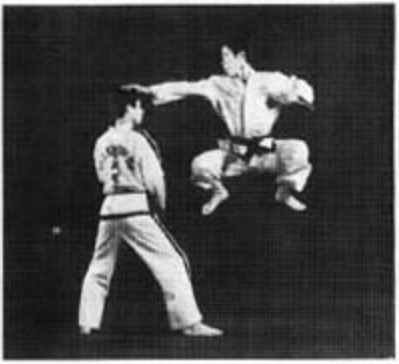
Flying consecutive kick
Flying multiple techniques, printed page 254
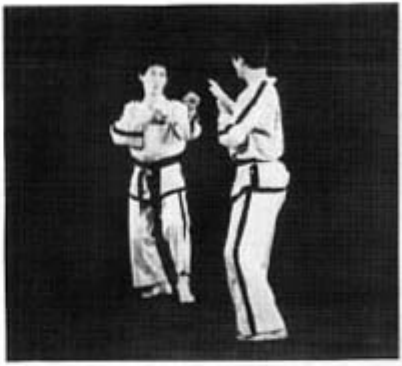
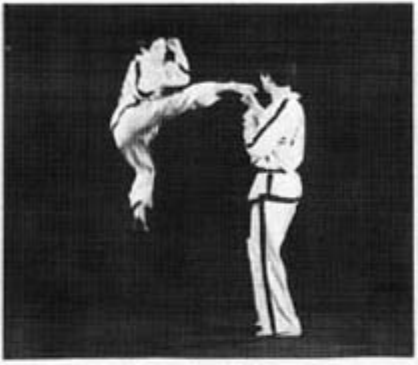
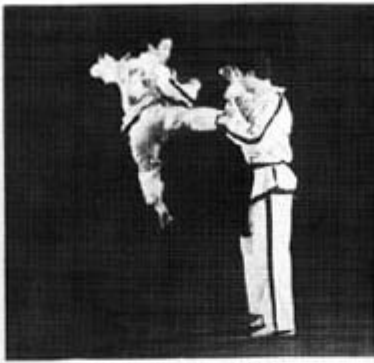
View original source illustration
Open original imageFlying consecutive punch
Flying multiple techniques, printed page 255
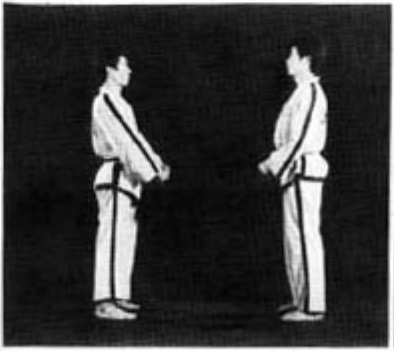
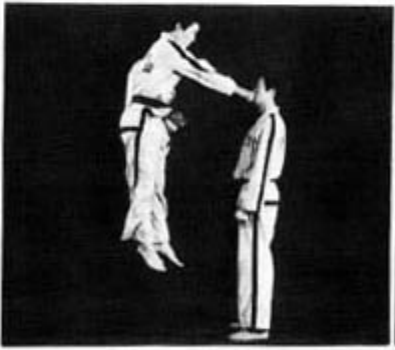
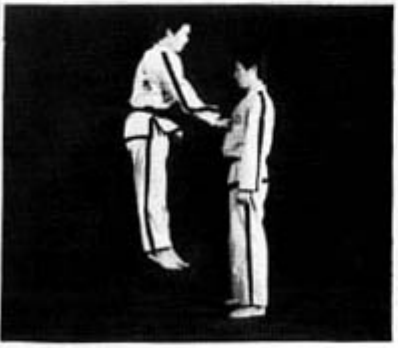
Flying combination punch
Flying Combination Punch — Weaving
Flying multiple techniques, printed page 255
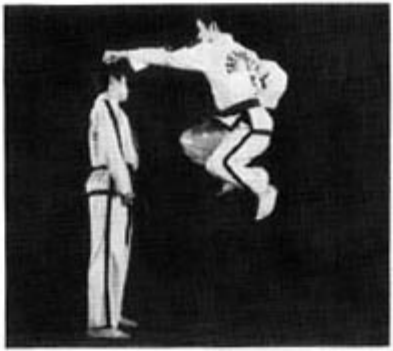
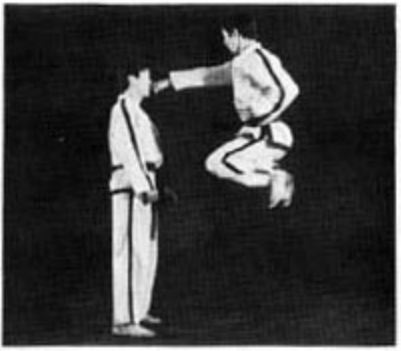
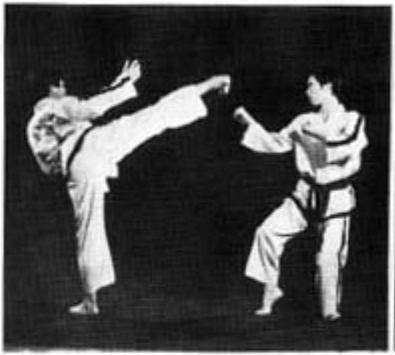
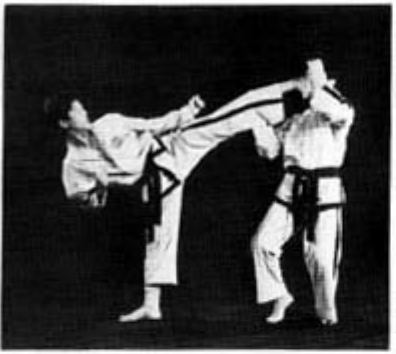
Combination kick
Combination Kick — Dodging
Flying multiple techniques, printed page 255
View original source illustration
Open original image11. Position Change
This technique is accomplished by jumping beyond the opponent, and the main purpose is to create openings on the opponent for a decisive attack, by forcing the opponent to change direction.
This technique has an added advantage of providing a surprise attack while flying, and explains one of the reasons that flying techniques are stressed in Taekwon‑Do, unlike other martial arts.
Jumping past the opponent
Position change examples
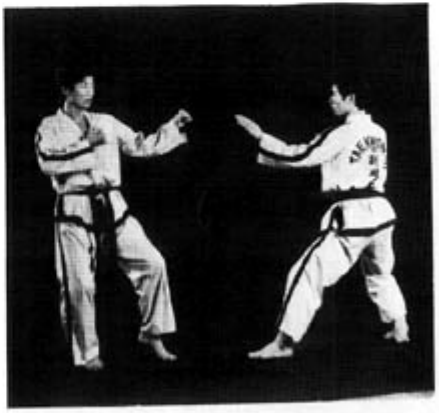
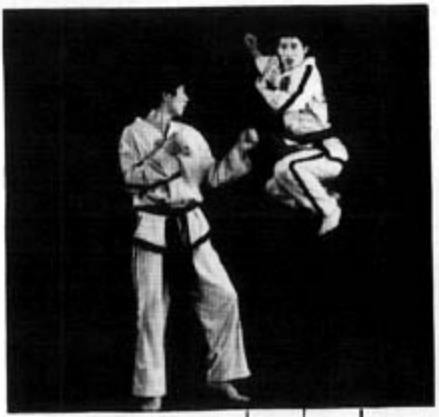
Alternative outcomes after the jump
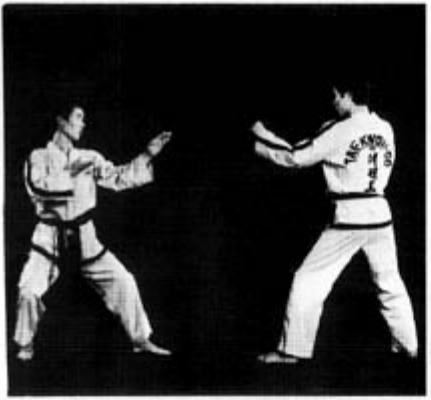
Position has been changed
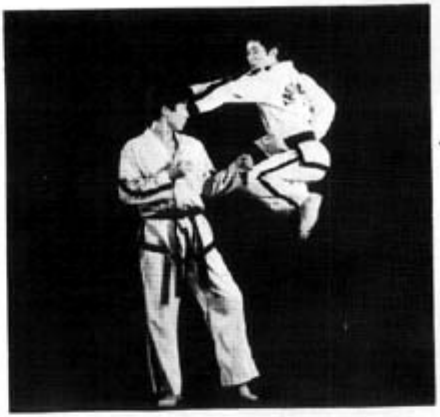
A surprise attack while flying
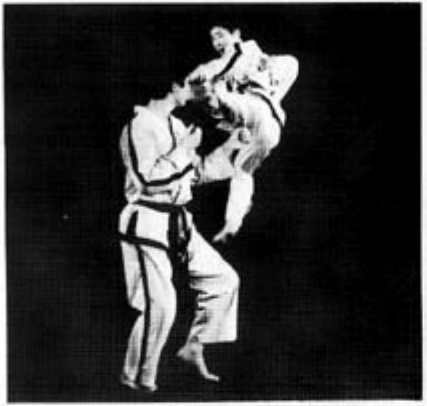
View original source illustration
Open original imageTaekwon‑Do is a martial art because it aims at a noble moral rearmament, good health and a variety of techniques to defend oneself and the weak by discriminating against political involvement and commercialization to embody a just society. Unfortunately, many instructors forgetting this true nature of Taekwon‑Do, rely on showmanship and over emphases free sparring to cover up their lack of technique.
As a result, their students have a tendency toward arrogance once winning a local or national championship without trying to improve and expand their techniques.
Of course, free sparring is very important part of Taekwon‑Do to build courage, experience, sense of victory, ability of performance and significance of participation and so on. However, it should not be the only focus of the training. A student will see free sparring is not a real combat and is a very small part of Taekwon‑Do due to the following limitations.
1. Prohibition of attacking the vital spots.
2. Limited number of attacking tools.
3. Limited number of attacking areas.
4. Limited space for fighting.
5. Limited number of attacking methods.
6. Safety equipment.
7. No full contact and so on.
Accordingly, in free sparring the player can have a chance to exchange less than a dozen fundamental movements, compared to the over 3.000 available.
This is the reason why I emphasize correct training of fundamental movements rather than on free sparring.
Outdoor sparring practice
Outdoor demonstration, printed page 258
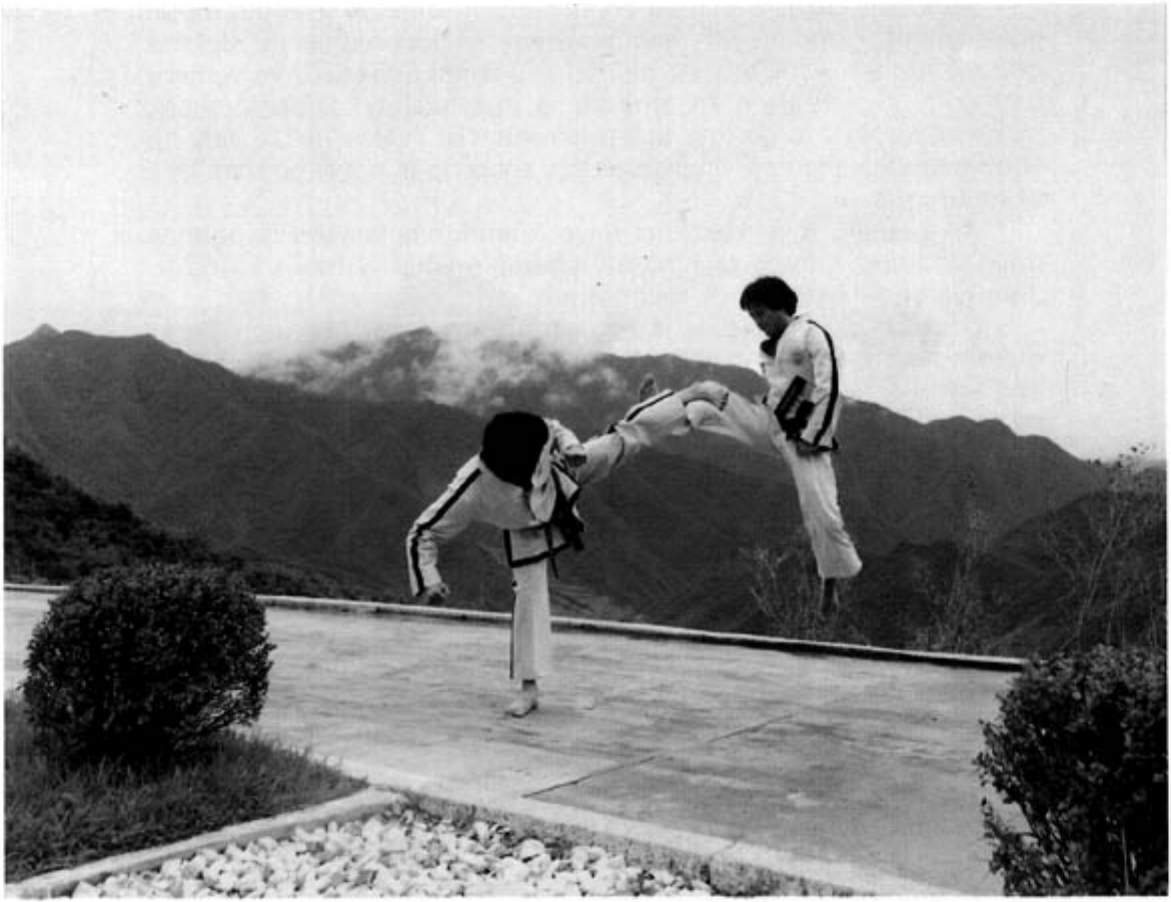
View original source illustration
Open original imageSources and references
Source Pages: 253, 254, 255, 256, 257, 258
References by passage
- Passage 1: 253
- Passage 2: 253
- Passage 3: 253
- Passage 4: 253
- Passage 5: 253
- Passage 6: 253
- Passage 7: 253
- Passage 8: 254
- Passage 9: 254
- Passage 10: 254
- Passage 11: 254
- Passage 12: 255
- Passage 13: 255
- Passage 14: 255
- Passage 15: 255
- Passage 16: 256
- Passage 17: 256
- Passage 18: 256
- Passage 19: 256
- Passage 20: 256
- Passage 21: 256
- Passage 22: 257
- Passage 23: 257
- Passage 24: 257
- Passage 25: 257
- Passage 26: 257
- Passage 27: 257
- Passage 28: 257
- Passage 29: 257
- Passage 30: 257
- Passage 31: 257
- Passage 32: 257
- Passage 33: 257
- Passage 34: 258