Bandong Ryok

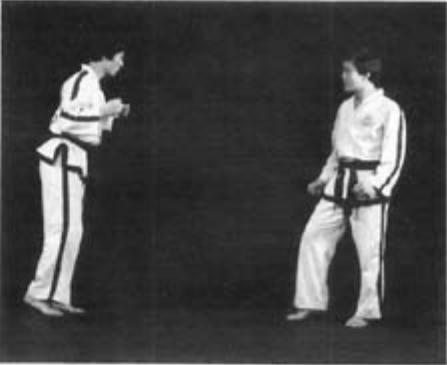
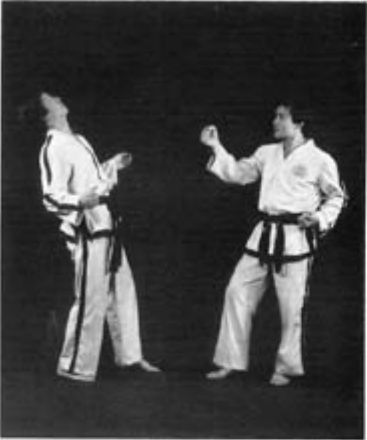
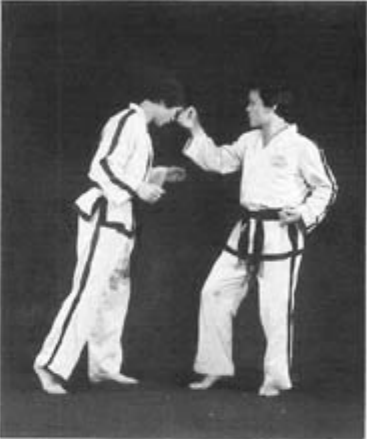
According to Newton's Law, every force has an equal and opposite force. When an automobile crashes into a wall with the force of 2,000 pounds, the wall will return a force of 2,000 pounds; or forcing the end of seasaw down with a ton of weight will provide an upward force of the same weight; if your opponent is rushing towards you at a high speed, by the slightest blow at his head, the force with which you strike his head would be that of his own onslaught plus that of your blow.

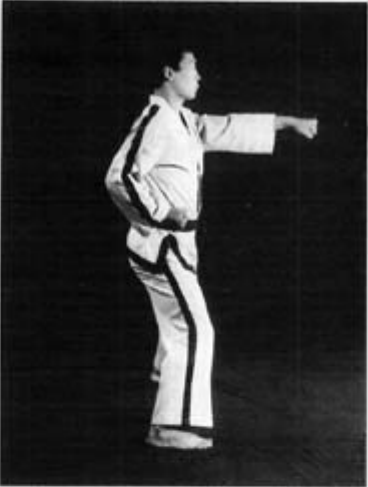
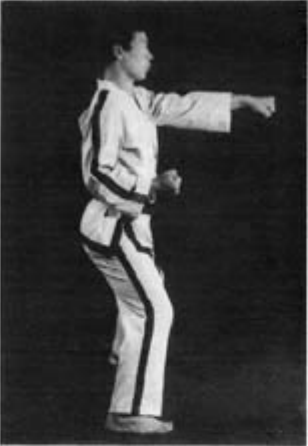
The two forces combined; his, which is large, and yours, which is small are quite impressive. This, then, is the reaction force from the opponent. Another reaction force is your own. A punch with the right fist is aided by pulling back the left fist to the hip.
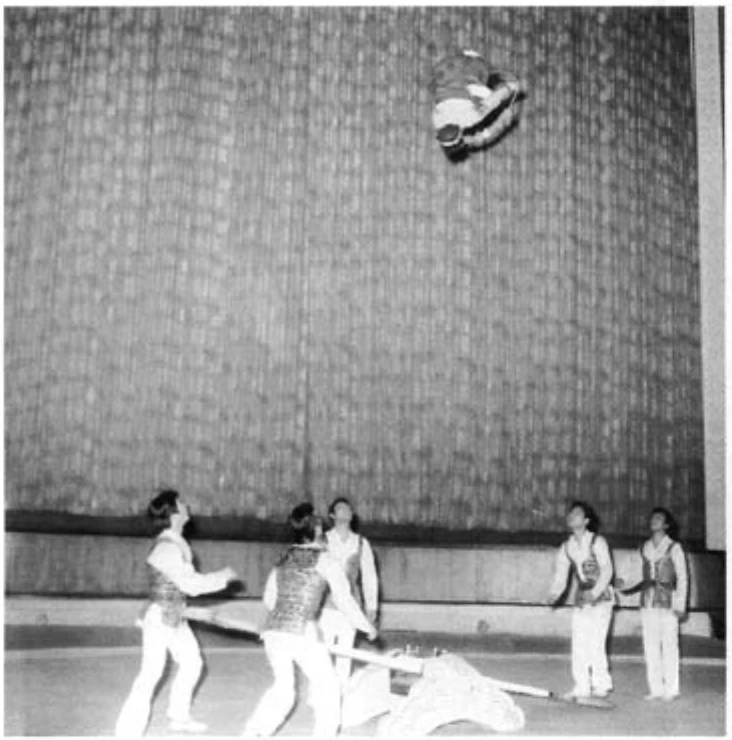
Reaction force demonstration
Demonstration photograph accompanying the explanation of reaction force.

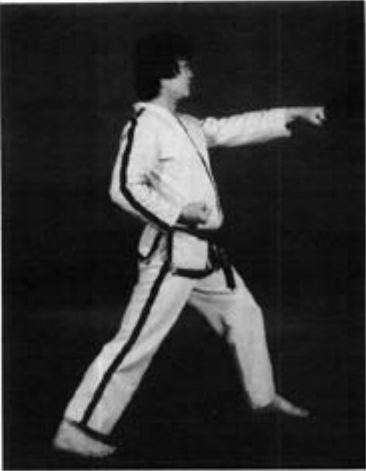
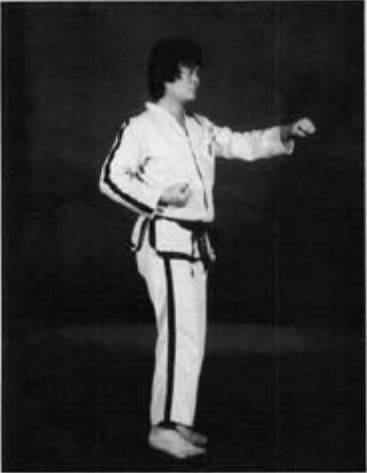
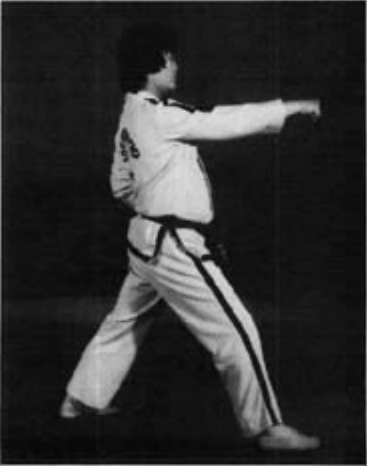
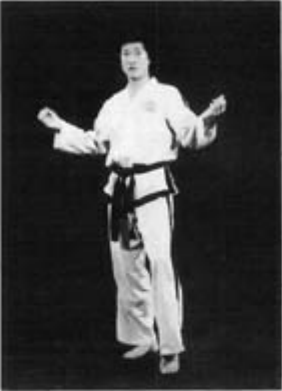
Correct: punching sequence

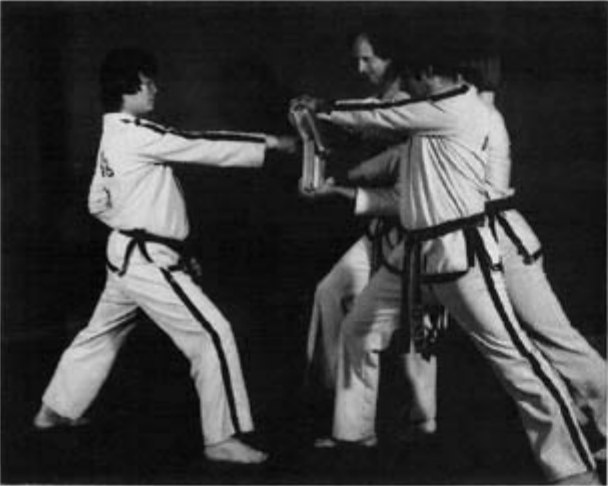
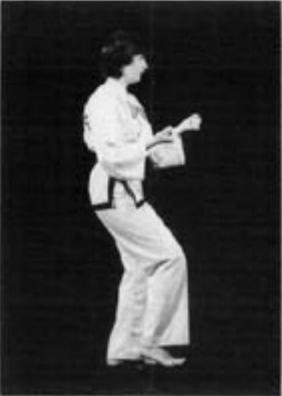
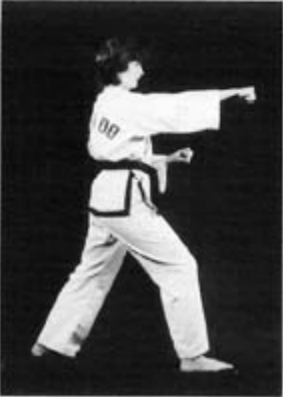
CORRECT: The maximum power is produced because the principle of reaction force is well observed, that is, the opposite fist is pulled to the hip at the moment of impact.
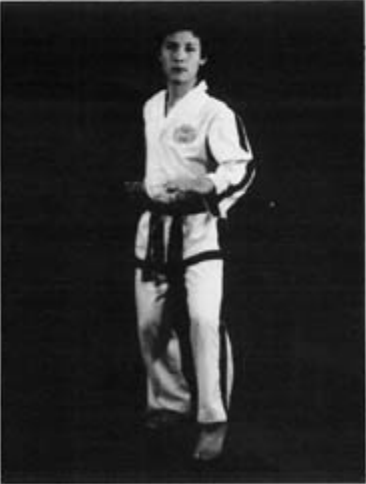
Starting position
1. Starting position
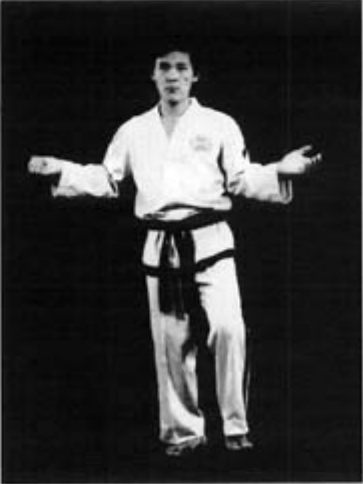
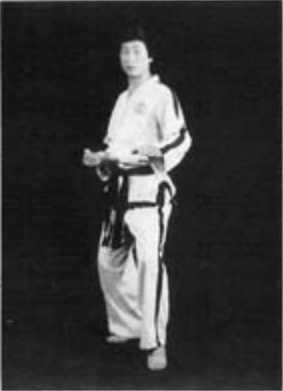
Transition
2. Transition
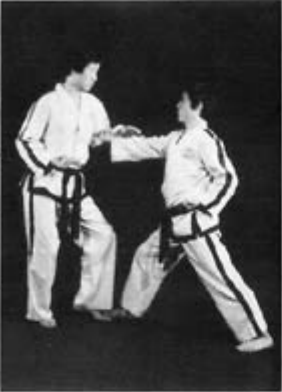
Completed punch
3. Completed punch

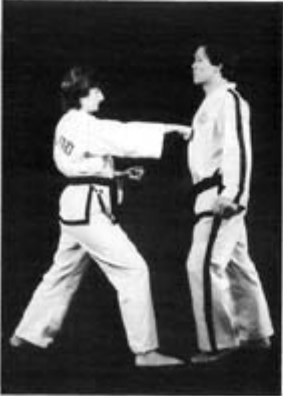
Correct: application

Opposite fist pulled to the hip
View original source illustrationOpen original image

Incorrect: punching sequence

INCORRECT: Less power is produced because the principle of reaction force is ignored, that is, the left fist is not pulled to the hip. The lower comparison labels the left photograph CORRECT; the right is INCORRECT because the right fist fails to be pulled to the hip.
Preparation
1. Preparation
Punch without pulling the opposite fist to the hip
2. Punch without pulling the opposite fist to the hip
Incorrect application
3. Incorrect application

Comparison

Correct: fist pulled to the hip
Incorrect: fist not pulled to the hip
View original source illustrationOpen original image

Correct: blocking sequence

CORRECT: The right fist is pulled to the hip at the moment of the block. INCORRECT: The right fist is not pulled to the hip at the moment of the block.
Preparation
1. Preparation
Block with the right fist pulled to the hip
2. Block with the right fist pulled to the hip
Correct application
3. Correct application

Incorrect: blocking sequence

Preparation
1. Preparation
Block without pulling the right fist to the hip
2. Block without pulling the right fist to the hip
Incorrect application
3. Incorrect application
View original source illustrationOpen original image

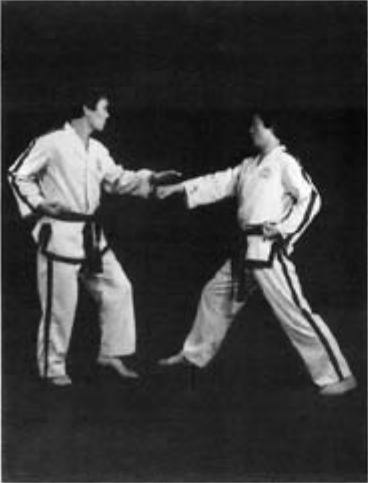
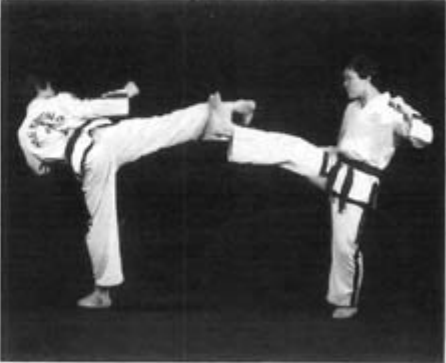
Correct: using the attacker’s momentum
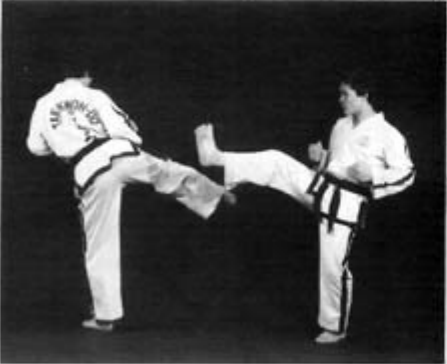
CORRECT: The defender applies the principle of reaction force correctly by using the attacker’s momentum and a minimum of his own power to throw his opponent off balance. The punch is well executed for the same reason mentioned above.
Incoming attack
1. Incoming attack
Defence and loss of balance
2. Defence and loss of balance

Correct: punching application

Starting position
1. Starting position
Approach
2. Approach
Impact
3. Impact
View original source illustrationOpen original image
Sources and references

Source Pages: 15, 16, 17, 18, 19

References by passage
  1. Passage 1: 15
  2. Passage 2: 15
  3. Passage 3: 15
  4. Passage 4: 15
  5. Passage 5: 15
  6. Passage 6: 15
  7. Passage 7: 16
  8. Passage 8: 17
  9. Passage 9: 18
  10. Passage 10: 19
Back to top ↑