Initial necktie grab
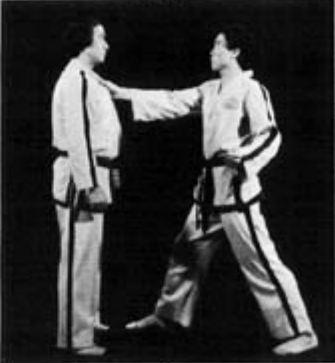
7. Defense from the necktie being grabbed.
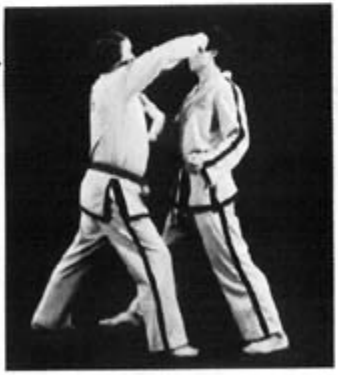
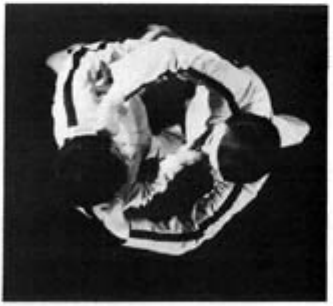
Crescent punch: front and top views
A — Attacking motion.
Execute a crescent punch with a twin fore‑knuckle fist.
Alternative: breaking motion
B — Breaking motion.
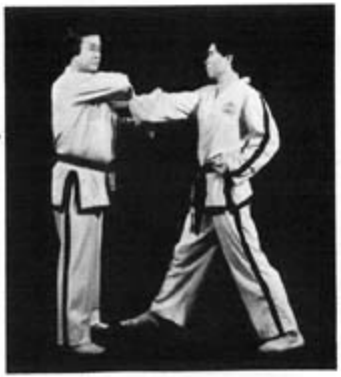
Grab the opponent’s right hand with the right hand.
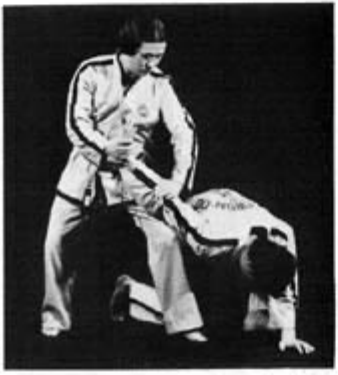
Twist clockwise pressing the elbow joint with the left arm while moving the left foot forward.
Rear choke hold: stamping response
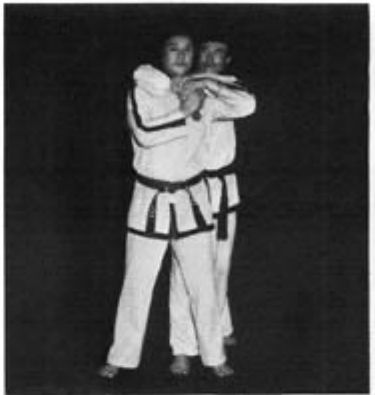
8. Defense from rear choke hold.
A — Attacking motion.
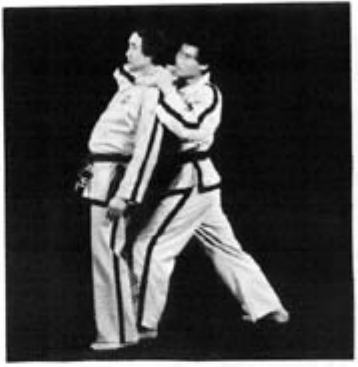
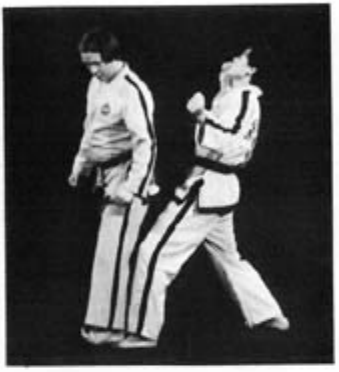
Stamp the opponent’s left instep with the left side sole.
View original source illustration
Open original imageRear choke hold: initial top view
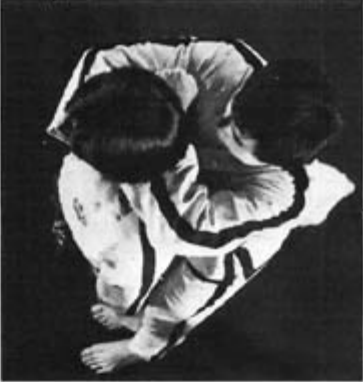
Top View.
Wrist-breaking response
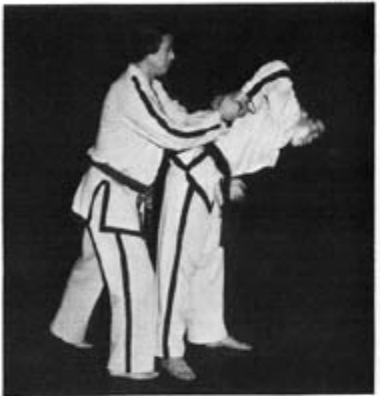
B — Breaking motion.
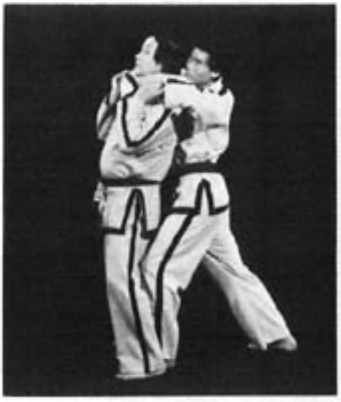
Grab the opponent’s right arm with the right hand and the right back hand with the left hand.
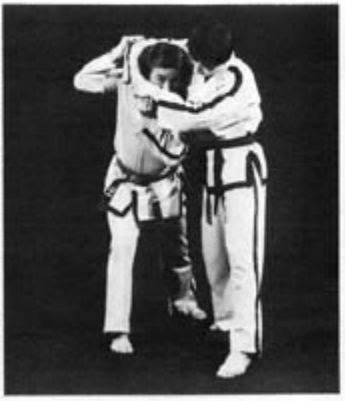
Pull the opponent’s right hand with the left hand, lowering the body.
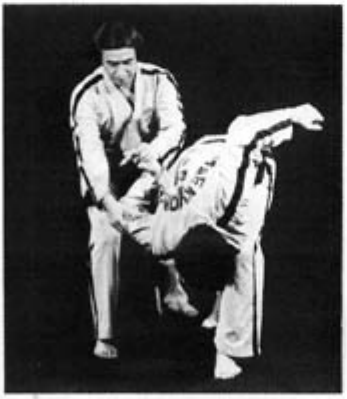
Break the opponent’s right wrist with the right hand, moving the left foot to the rear.
Alternative: back elbow thrust
A — Attacking motion.
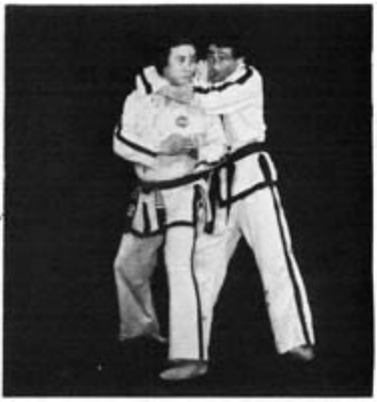
Execute a left back elbow‑thrust, forming a sitting stance.
Alternative: raised-hand wrist break
B — Breaking motion.
Grab the opponent’s right hand with both hands, and then raise them to break the opponent’s right wrist while moving the left foot to the rear.
View original source illustration
Open original imageInitial chest hold from behind
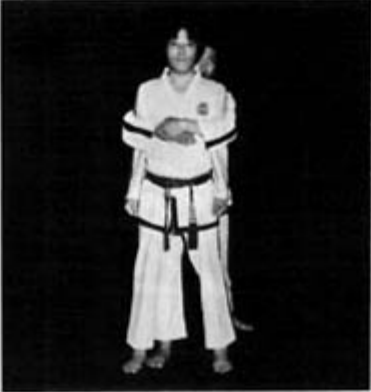
9. When the chest is being held from behind.
Release and elbow thrust
R — Releasing motion.
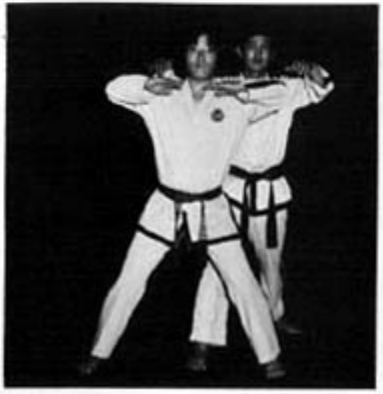
Raise both elbow horizontally while forming a sitting stance, moving the left foot to B.
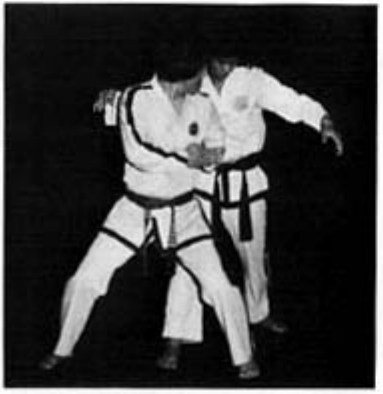
Thrust to C with the right elbow.
Alternative: breaking motion
B — Breaking motion.
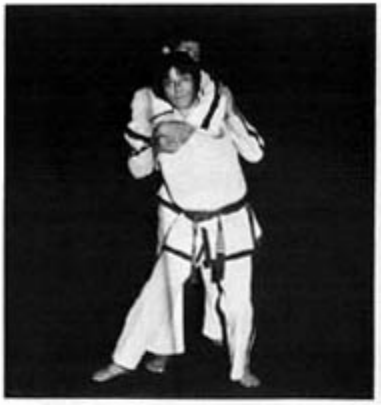
Grab the opponent’s left fore fist with the right hand while moving the left foot to the rear.
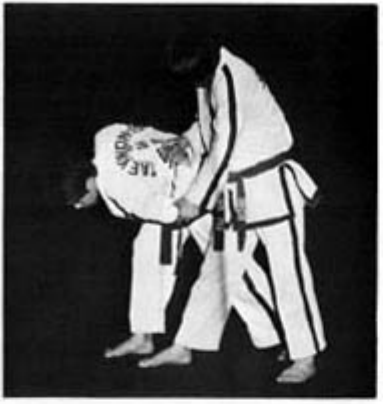
Bend the opponent’s right wrist inward with the left hand while pressing the elbow with the right hand.
View original source illustration
Open original imageInitial waist hold from the front
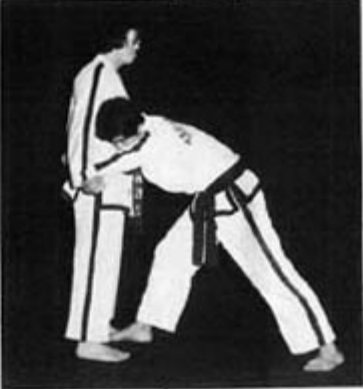
10. When the waist is being held from the front.
Elbow-thrust response
A — Attacking motion.
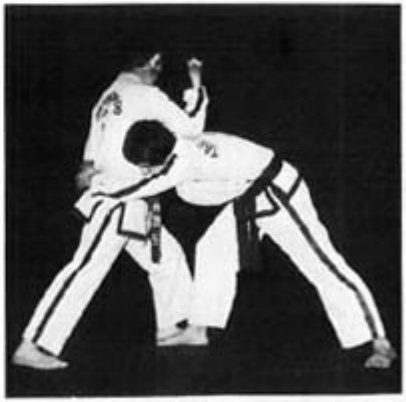
Thrust the small of the back with the right straight elbow while forming a left walking stance, moving the left foot to the rear.
Alternative: releasing motion
R — Releasing motion.
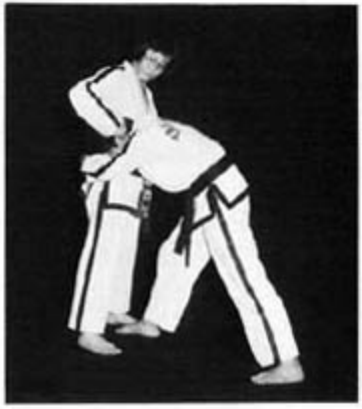
Press the post auricular with the forefinger.
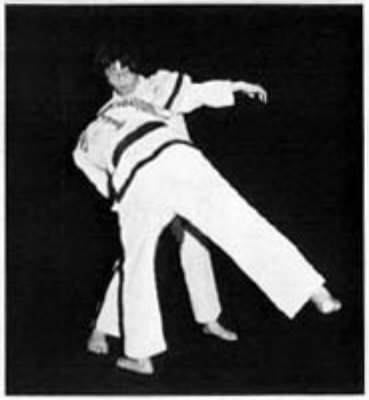
Push the opponent’s body with the left palm while twisting the body clockwise, moving the left foot forward.
Alternative: breaking motion
B — Breaking motion.
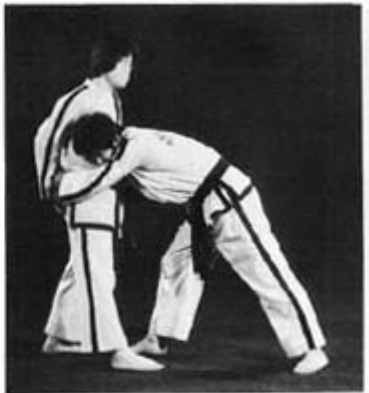
Grab the opponent’s left fingers with the right hand while pressing the left elbow with the left hand.
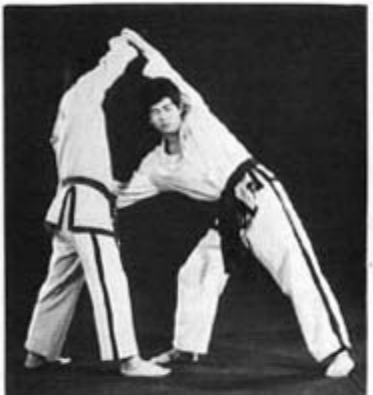
Raise the right hand to turn counter‑clockwise while moving the left foot to the rear.
View original source illustration
Open original imageRear waist hold: release and stamping kick
11. When the waist is being held from behind.
R — Releasing motion.
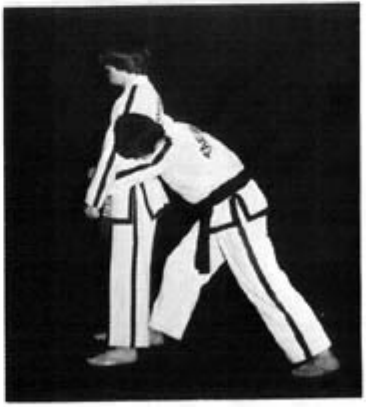
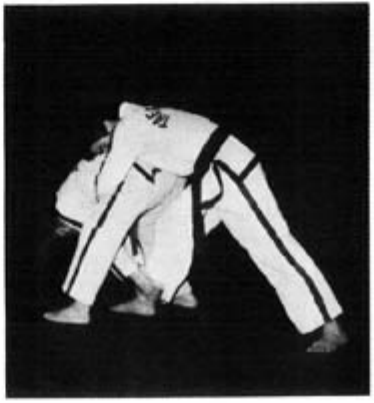
Grab the right leg with both hands, moving the right, or left foot to the rear.
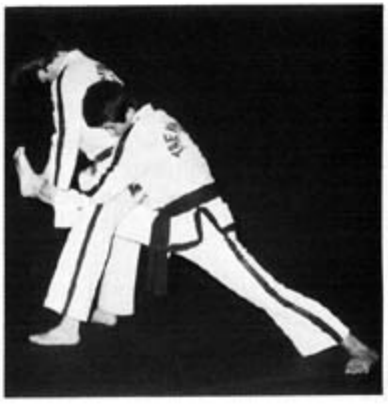
Lift the opponent’s right leg with both hands.
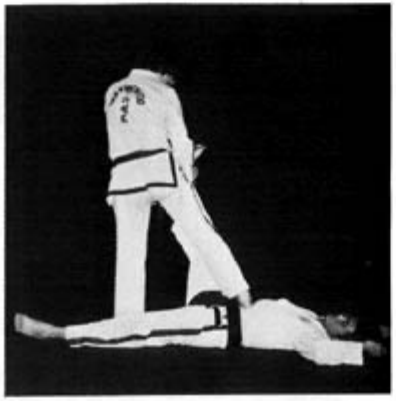
Execute a stamping kick with the right back sole.
Alternative: finger-grip response
B — Breaking motion.
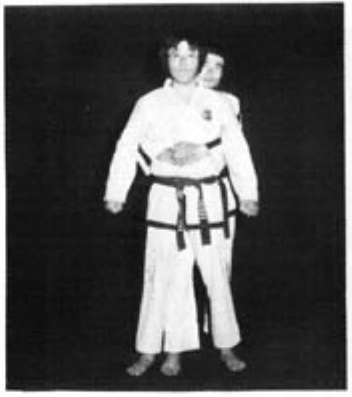
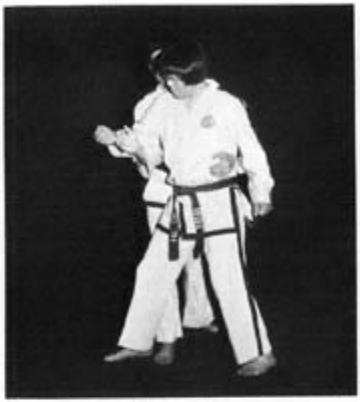
Grab the opponent’s right middle finger with the right hand.
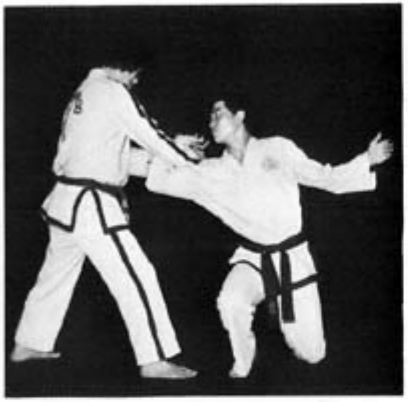
Pull the opponent’s right hand with both hands, moving the left foot to the rear while turning clockwise.
View original source illustration
Open original imageInitial waist hold from the side
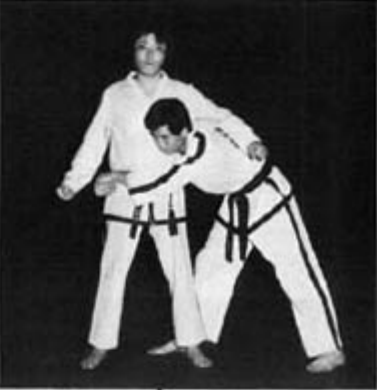
12. When the waist is being held from the side.
Release and stamping kick
R — Releasing motion.
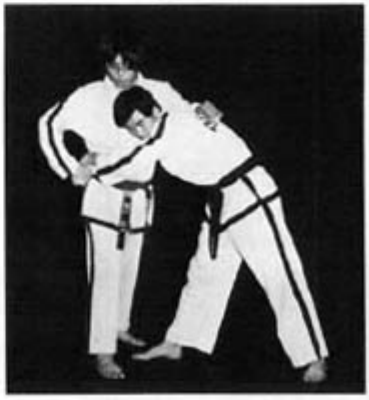
Grab the opponent’s right hand with the right hand, moving the left foot behind the opponent’s right foot.
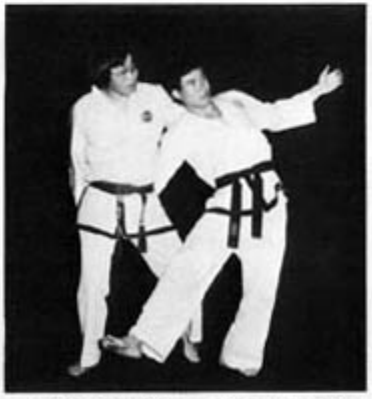
Push the fossa with the left knee while pulling the opponent to the left with the left hand.
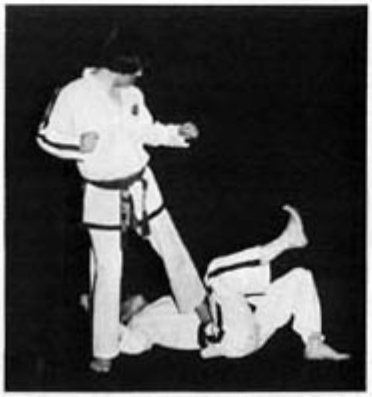
Execute a stamping kick with the left side sole.
Alternative: back snap kick
A — Attacking motion.
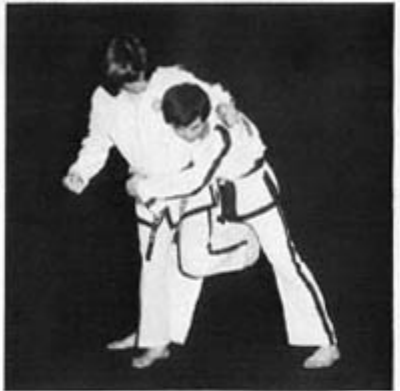
Execute a back snap kick with the left foot.
View original source illustration
Open original imageSources and references
Source Pages: 297, 298, 299, 300, 301, 302
References by passage
- Passage 1: 297
- Passage 2: 297
- Passage 3: 297
- Passage 4: 297
- Passage 5: 297
- Passage 6: 297
- Passage 7: 297
- Passage 8: 297
- Passage 9: 297
- Passage 10: 297
- Passage 11: 297
- Passage 12: 298
- Passage 13: 298
- Passage 14: 298
- Passage 15: 298
- Passage 16: 298
- Passage 17: 298
- Passage 18: 298
- Passage 19: 298
- Passage 20: 298
- Passage 21: 298
- Passage 22: 299
- Passage 23: 299
- Passage 24: 299
- Passage 25: 299
- Passage 26: 299
- Passage 27: 299
- Passage 28: 299
- Passage 29: 299
- Passage 30: 300
- Passage 31: 300
- Passage 32: 300
- Passage 33: 300
- Passage 34: 300
- Passage 35: 300
- Passage 36: 300
- Passage 37: 300
- Passage 38: 300
- Passage 39: 300
- Passage 40: 301
- Passage 41: 301
- Passage 42: 301
- Passage 43: 301
- Passage 44: 301
- Passage 45: 301
- Passage 46: 301
- Passage 47: 301
- Passage 48: 301
- Passage 49: 302
- Passage 50: 302
- Passage 51: 302
- Passage 52: 302
- Passage 53: 302
- Passage 54: 302
- Passage 55: 302
- Passage 56: 302