Volume II
Knife‑Hand, Fingertips and Arc‑Hand
Select an image to view it at full size.
Knife‑Hand (Sonkal)
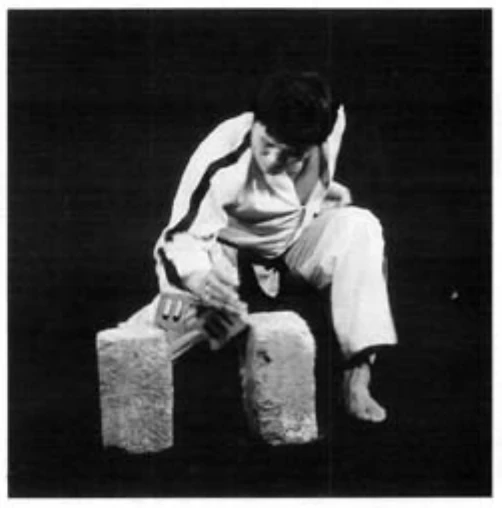
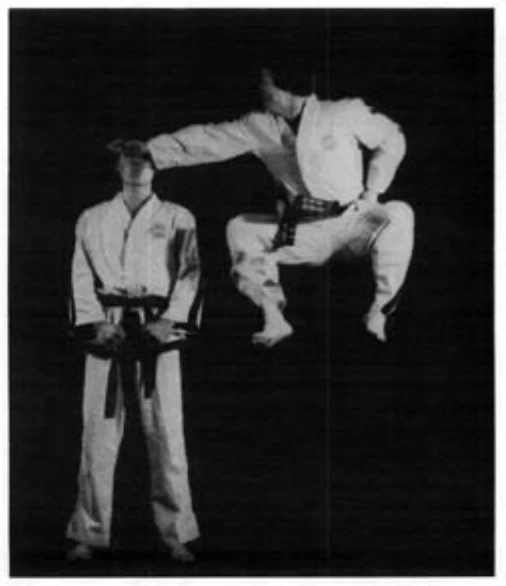
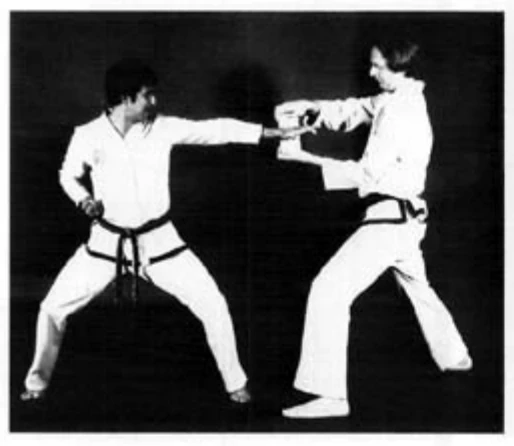
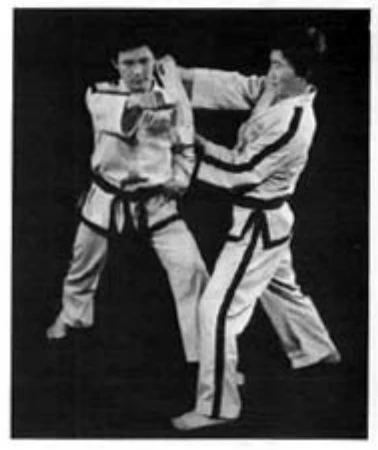
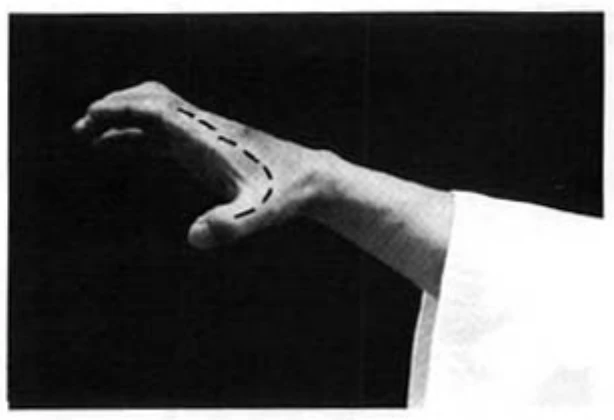
This is a very powerful attacking tool, especially against a side target, and is used for attacking the skull, neck artery, bridge of the nose, temple, philtrum, clavicle, shoulder and floating ribs.
The knife‑hand is also frequently used for blocking.
How to Make a Proper Knife‑Hand
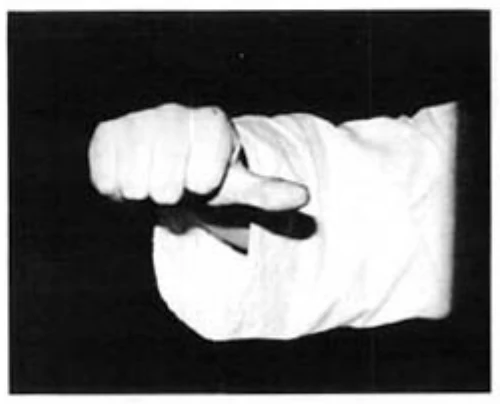
Press four fingers together bending the middle finger and ring finger slightly inward leaving some space between the forefinger and thumb, so that most of the strength is concentrated on the striking part, the surface from the wrist to the main knuckle of the little finger.
An incorrect way of forming a knife‑hand is by pressing the thumb against the forefinger. This will weaken both the knife‑hand and fingertips. In both cases, the joint of the little finger should not be used by beginners due to its weakness.
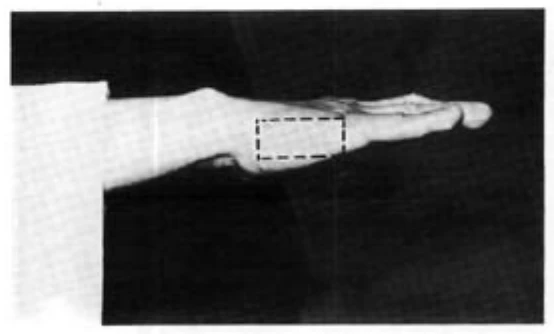
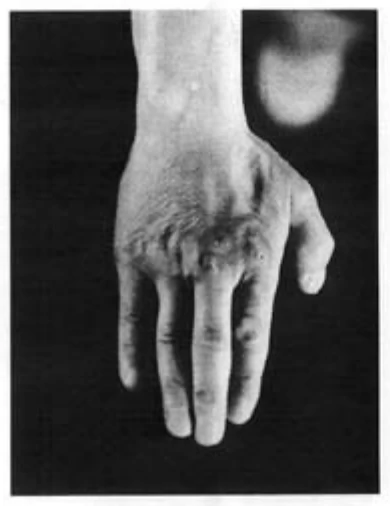
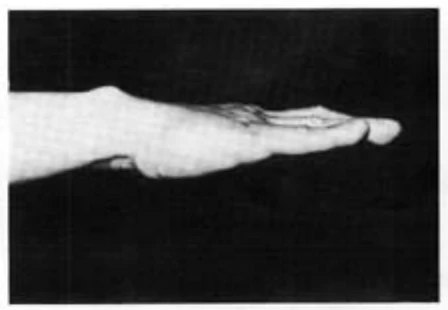
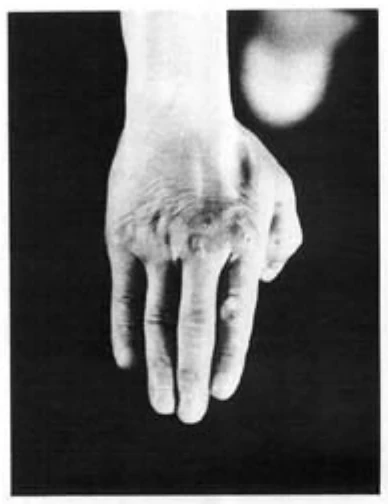
Reverse Knife‑Hand (Sonkal Dung)
It is similar to the knife‑hand except that the thumb is bent sharply toward the palm. It is used for attacking the neck, point of the chin, temple, philtrum, ribs and angle of the mandible. It is frequently used for blocking as well.
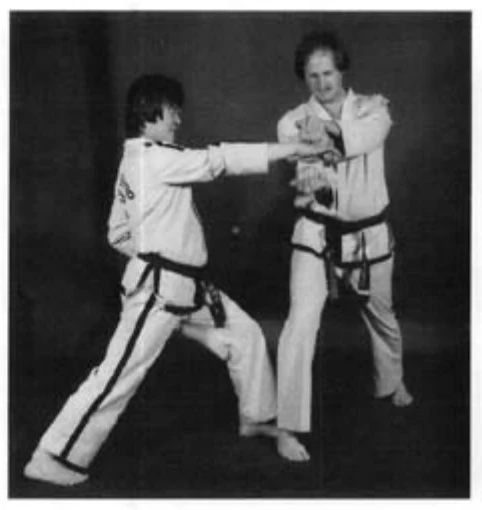
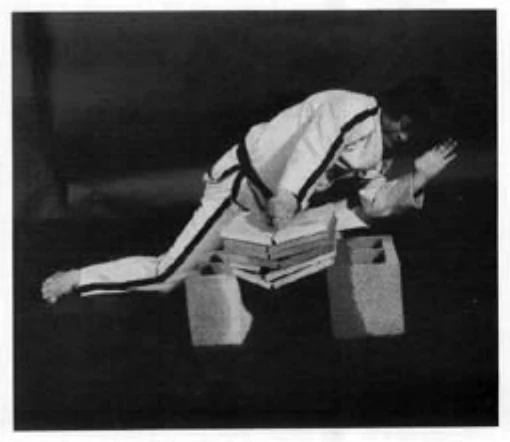
Fingertips (Sonkut)
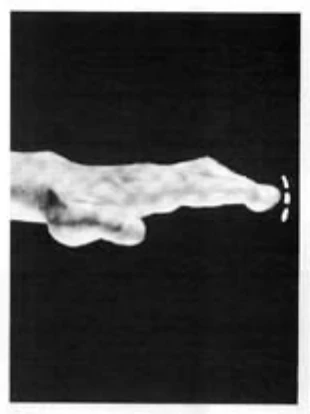
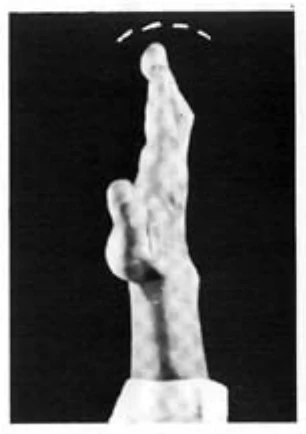
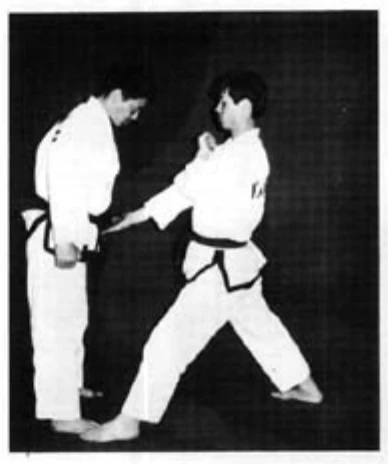
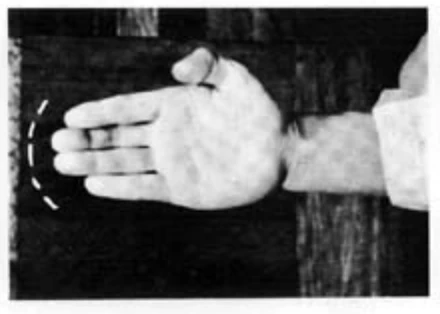
This is a special tool found only in Taekwon‑Do. The usage of it varies according to the target. The form of the hand is just the same as that of a knife‑hand as far as straight, flat and upset fingertips are concerned. The fingertips are the parts used and a great emphasis is placed on evenly aligning the three fingertips—forefinger, middle finger and ring finger.
Flat Fingertip (Opun Sonkut)
The palm is faced downward at the moment of impact. It is chiefly used for attacking the ribs, eyes and occasionally the abdomen.
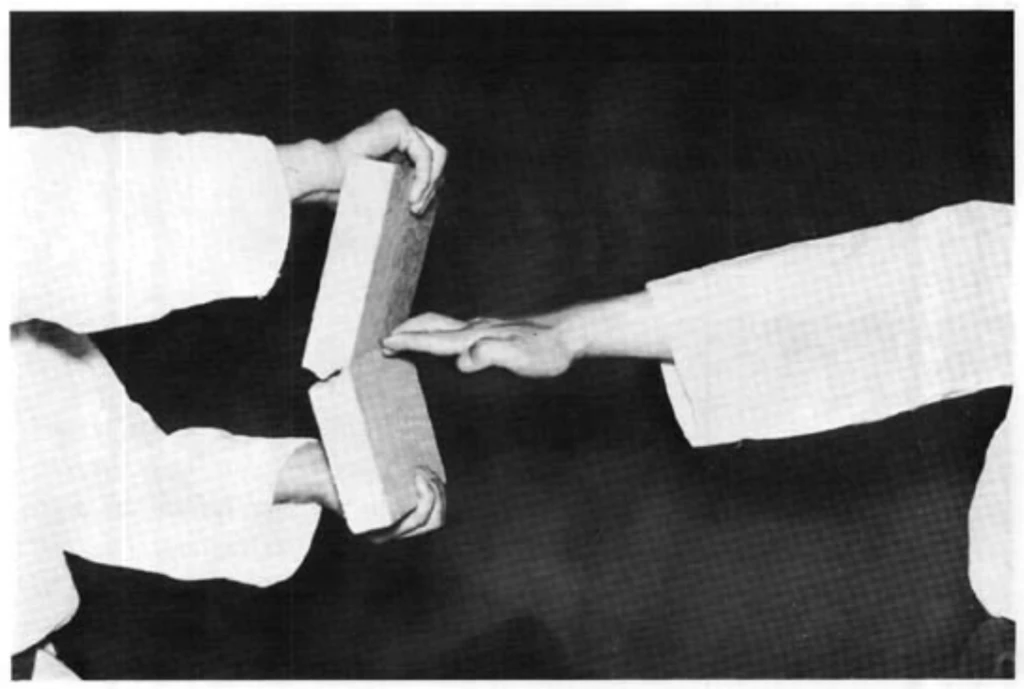
Straight Fingertip (Sun Sonkut)
The palm faces inward at the moment of impact. It is used for thrusting to either the solar plexus or the abdomen.
Upset Fingertip (Dwijibun Sonkut)
The palm faces upward at the moment of impact. It is mainly used for attacking the pubic region floating ribs and lower abdomen, though occasionally the armpit.
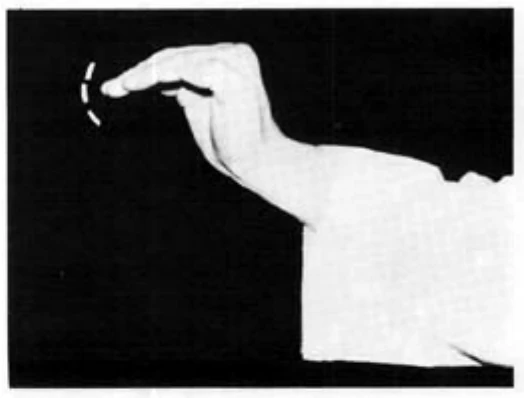
Angle Fingertip (Homi Sonkut)
Bend the main knuckle sharply pressing the secondary knuckle of the forefinger with the thumb until the angle becomes about 90 degrees.
It is especially useful in attacking the eyes or solar plexus from the right angle.
Thumb (Umji)
Extend the thumb out of the forefist. Be sure not to bend any joint of the thumb. It is used to thrust the solar plexus, ribs, eyes, windpipe and armpit.
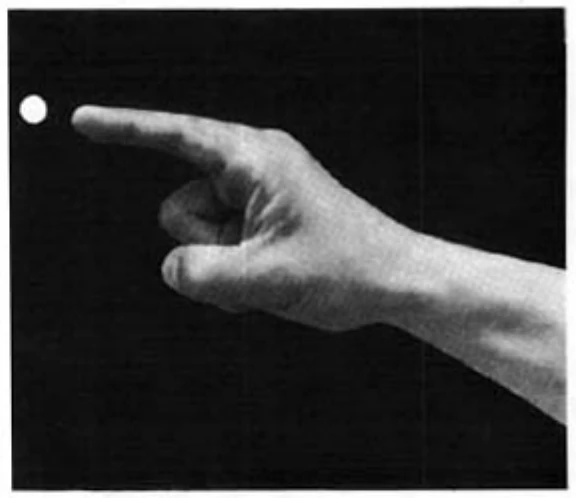
Forefinger (Han Sonkarak)
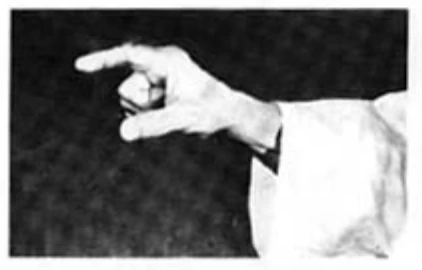
The forefinger is extended, bending slightly while the others are clenched, the thumb pressing the middle finger.
It is mainly used in attacking the eyes, windpipe and mastrid.
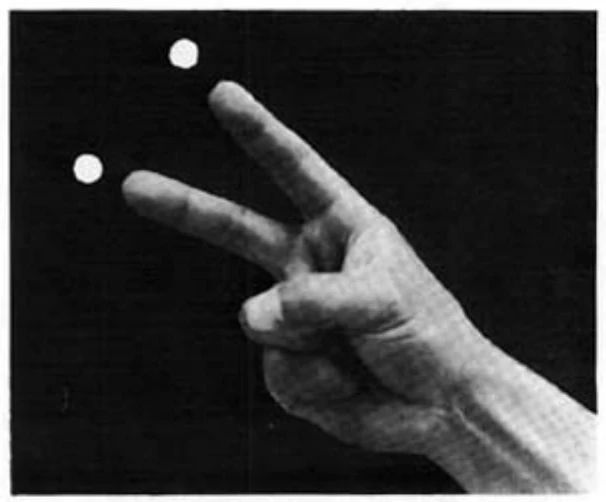
Double Fingertip (Doo Sonkarak)
Forefinger and middle finger are extended, bending slightly while the others are clenched. Press the ring finger with the thumb. This tool can only be utilized against the eyes.
Arc‑Hand (Bandal Son)
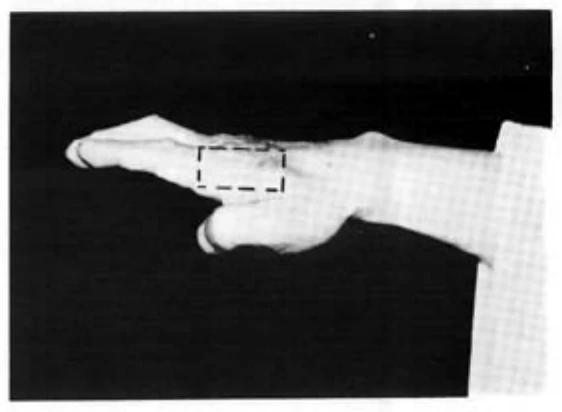
Bend three fingers slightly deeper than the forefinger while the thumb is bent toward the little finger. It is used to attack the Adam's apple, point of the chin and upper neck.
The surface between the secondary knuckle of the forefinger and thumb is used. The arc‑hand is occasionally employed for blocking.
INCORRECT: Three fingers are clenched. This method is not practical since the forefinger is not supported by the three fingers which also become an obstacle when attacking the upper neck.
Back Hand (Sondung)
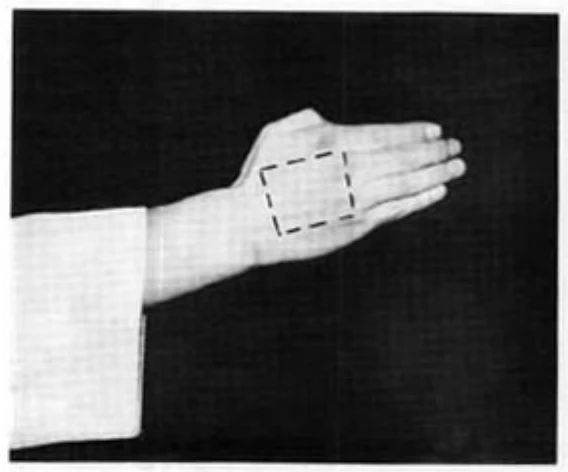
It is an ordinary open hand but by pressing the thumb against the side of the forefinger, it is used for attacking the face, jaw, lips and epigastrium. Occasionally the back hand is used for blocking.
Sources and references
Source Pages: 64, 65, 66, 67, 68, 69, 70
References by passage
- Passage 1: 64
- Passage 2: 64
- Passage 3: 64
- Passage 4: 64
- Passage 5: 64
- Passage 6: 64
- Passage 7: 64
- Passage 8: 64
- Passage 9: 64
- Passage 10: 64
- Passage 11: 64
- Passage 12: 65
- Passage 13: 65
- Passage 14: 65
- Passage 15: 66
- Passage 16: 66
- Passage 17: 66
- Passage 18: 66
- Passage 19: 66
- Passage 20: 67
- Passage 21: 67
- Passage 22: 67
- Passage 23: 67
- Passage 24: 67
- Passage 25: 67
- Passage 26: 68
- Passage 27: 68
- Passage 28: 68
- Passage 29: 68
- Passage 30: 68
- Passage 31: 68
- Passage 32: 68
- Passage 33: 68
- Passage 34: 68
- Passage 35: 68
- Passage 36: 68
- Passage 37: 69
- Passage 38: 69
- Passage 39: 69
- Passage 40: 69
- Passage 41: 69
- Passage 42: 69
- Passage 43: 69
- Passage 44: 69
- Passage 45: 69
- Passage 46: 69
- Passage 47: 69
- Passage 48: 70
- Passage 49: 70
- Passage 50: 70
- Passage 51: 70
- Passage 52: 70
- Passage 53: 70
- Passage 54: 70
- Passage 55: 70
- Passage 56: 70